

There Goes the Fear, the breakthrough 2002 hit single by anthemic British indie-rock trio Doves – singer and bassist Jimi Goodwin, and twin brothers Jez (guitars) and Andy Williams (drums) – is arguably the Manchester band’s quintessential song: like a lot of their work, it bottles a sound that is somehow both melancholic and euphoric.
It's also one of their downright weirdest songs. Opening with a hypnotic and chiming lo-fi guitar riff, the song soon builds – powered by heavy percussion and Goodwin’s melodic and driving bassline – as layers of New Order-esque guitar, atmospheric country-style slide and shimmering synth textures come into play.
Doves were dab hands with music technology, having previously hit it off as 90s dance act Sub Sub.
As the song nears its end, the track unexpectedly moves from rain-lashed Manchester to sun-soaked Rio de Janeiro, with a Brazilian samba drumming breakdown and a carnival vibe.
But it’s There Goes the Fear’s soul-touching chorus that sticks in the head longer than anything else, with soaring vocals by Goodwin, and lyrics that centre on time passing by at speed. The song seems to be urging the listener to not dwell on past regrets, but to move forward.
Released on April 15th 2002, There Goes the Fear was the lead single from the band’s Mercury Prize-nominated second album, The Last Broadcast, which was released later that same month (on April 29th).
The single hit number three in the UK charts. While the radio edit of the song clocks in at four minutes 50 seconds, the full-length album version is just under seven minutes.
“Bloody Nora!” says Jez Williams, when MusicRadar tells him that it’s nearly 25 years since the single brought them to a wider audience: “It makes me feel old, but it’s gone by so f***ing quick. I know that’s a cliché, but it’s true.”
Perhaps one of the most notable stories about the song came via a somewhat unconventional launch strategy, engineered by the band's label, Heavenly. When the single came out, on CD and 10-inch vinyl, it was deleted from stock on the same day as it was released. Heavenly, in partnership with EMI, predicted this ploy would serve as a clever marketing trick and ensure fans rushed to snap up physical copies of the song before the end of the day.
The band themselves, however, weren’t so sure…
“We thought the record company were mad: we were like, ‘You want to do what? You want to delete it as soon as you put it out?’” remembers Williams. “But we went along with it - it was a marketing ploy by EMI - and it worked a treat. I think it got to number two or three.”
Indeed, There Goes the Fear remains Doves’ biggest hit (along with the soul-powered stomper, Black and White Town).
We ask Williams if he was living in Northenden, Manchester, when he came up with the initial guitar riff for There Goes the Fear…
“I was – you’ve done your research!” he says. “I was living in a little terrace house, it had a studio in a box room. We went to [other] studios, but a lot of the work was done there, and the whole of The Last Broadcast was written in that back room. There Goes the Fear came out of a guitar riff, we wrote everything around that riff and the song kind of wrote itself; it was very quick.”
He adds: “The riff originally came from an ice cream van I used to hear round the corner - if you heard it far enough away from where you were, it used to sound a bit sinister. We wanted to get that kind of trippy sound, and we managed to do that by recording it into a dictaphone - those ones you used to get in the ‘70s. You can get plugins that do that now, but we put the riff down on the dictaphone and then put it into a computer. It was all about breaking down the sound and ruining it.”

We tell Williams that There Goes the Fear isn’t the only hit single that was partly made using a dictaphone - Keith Richards recorded the distorted guitar sound on the Stones’ 1968 classic Street Fighting Man by playing acoustic guitars directly into a portable Philips cassette recorder…
“I’ve got that very tape recorder, because I hunted one down,” says Williams. “I’ve done acoustics on it, and it sounds exactly like it. I love getting an impressionistic version of an original sound, so you get a different representation of it - that’s something that’s always interested us as a band and still does.”
The riff that became the foundation for There Goes the Fear was played by Williams on his Gibson ES-335.
“What you’re hearing is the riff playing on a dictaphone, and then we put a bell on it to make it sound like an ice cream van, and then we sandwiched both of those sounds together,” he explains.
There Goes the Fear pulls off that classic Doves trick of managing to sound both uplifting and sad at the same time.
“That’s probably a reflection of us: trying to make the best out of whatever hand you’ve been given. There’s a little bit of a fight and a struggle, but also there are bits of triumph in there,” Williams tells us. “Without overly thinking about it, that’s just what naturally comes out of us.”

The song has those cinematic and communal elements that are hallmarks of Doves’ music. Williams agrees, adding: “The original version we did was really long - like seven and a half minutes.”
Writing on the Doves blog, expanding on the comments the band made during a Twitter Listening Party for The Last Broadcast, Williams said of There Goes the Fear: “We wanted to make it have twists and turns. Keep the arrangement unpredictable / take you on a rollercoaster, so to speak. We worked on that song for a long time - the recording took months to evolve.”
We ask him where the idea for the Brazilian samba rhythms came from.
“Andy suggested we put some kind of movement and travel into it, perhaps as a journey, so, you start in one place and end up in another, like Brazil - it was a psychedelic concept, really. It was a big concept to get into one song,” he says.
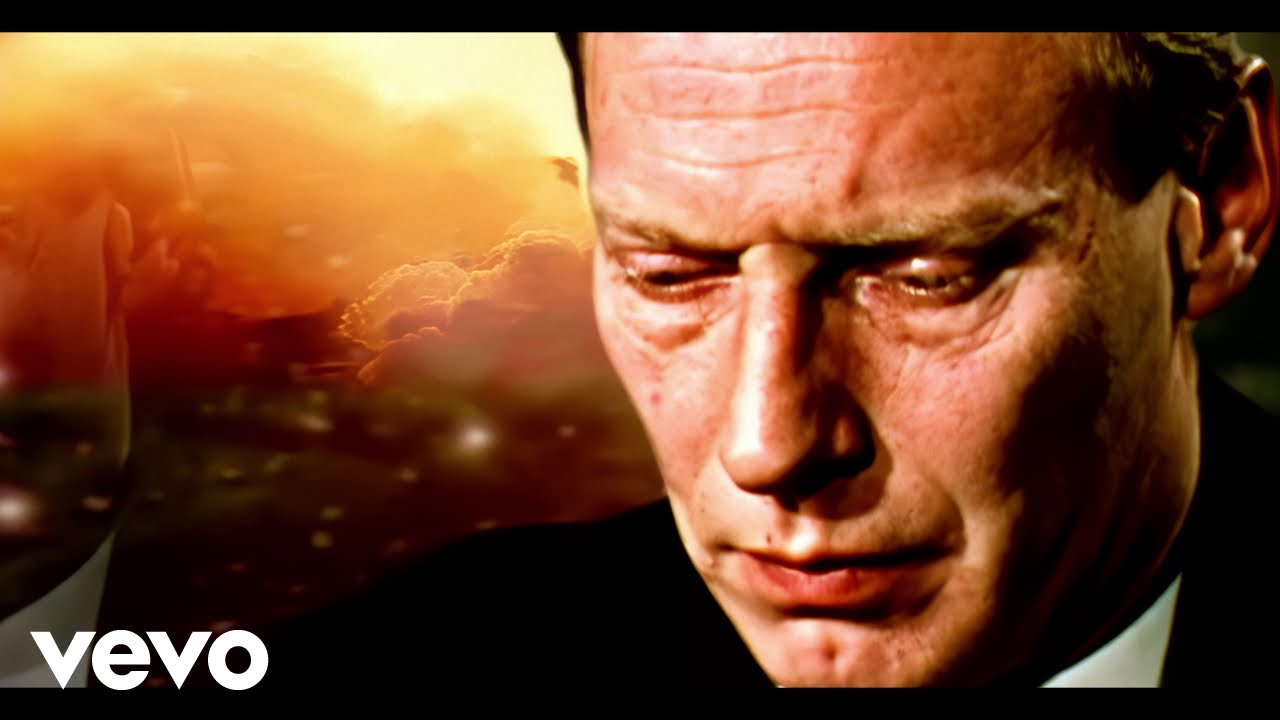
That journey was visually depicted by the surreal, unnerving and trippy music video for the song, which was directed by Julian House and Julian Gibbs. It features a middle-aged man who experiences something of a breakdown/epiphany in a supermarket. Haunted by images of potential roads not taken (mainly consisting of younger, bikini-clad women…) the man hastily runs from his old life – and his wife – and ultimately escapes to Brazil. “We thought that reflected the song perfectly,” says Williams.
The samba drumming outro on There Goes the Fear was performed by Marc Starr and his Manchester City samba group. Starr was an old friend of Goodwin’s.
To capture that huge, reverberating carnival sound, the band recorded the percussionists playing together in the stairwell of the Greenhouse rehearsal studios in Stockport, near Manchester.
“Jimi and Marc had been mates since they were kids, so it seemed the natural thing to get him and the group down to Stockport… so, it was sunny Stockport/Brazil,” laughs Williams.
Doves drummer Andy Williams penned the lyrics for There Goes the Fear. With lines such as, ‘You look to those you love to justify, You turned around and life's passed you by’ and ‘Think of me when you're coming down / But don't look back when leaving town,’ the song deals with the idea of letting go, moving on and not living with regret.
The phrases ‘coming down’ and ‘the fear’ also have their roots in dance music culture - referencing post-clubbing crashing and paranoia, as the drugs wear off…
Writing on the Doves blog, Andy Williams said: “To be honest, remembering back, I was going through a bit of a bad patch at the time and was probably going out and indulging too much. ‘You look to the ones you love to justify, you turned around and life’s passed you’ has a sense of regret but also a lot of hope. The song still resonates for me today. Beautiful vocal from Jimi.”
Andy also told Uncut: “I did the lyrics in my old house in Chorlton. I had a very early demo, just with a floating melody, and I remember being at home with a cassette player, and spending two days rewinding the tape, laboriously going through the whole track, writing lyrics to it with a dictaphone and a lyric book.
“The first lines that came were: ‘You look to those you love to justify / You turned around and life's passed you by.’ That was an in. I thought, ‘right - I can build something around this’, around regret and taking responsibility for the way your life has gone. There’s also quite a positive message as well: move on with your life.”

Jez Williams recalls that There Goes the Fear was the first song that the band wrote for The Last Broadcast. Once that was penned, the rest of the album came together quite speedily.
It took eight months to write, record and mix the Mercury-nominated album: “Believe it or not, that’s quick for us… it was our quickest album ever,” he says.
Doves recorded There Goes the Fear as part of the sessions for The Last Broadcast, which was produced by the band, Steve Osborne, and Max Heyes.
Locations for making the album included Revolution (Manchester), Parr Street Studios (Liverpool), The Dairy (Brixton), 2 kHz (Shepherd's Bush), Real World Studios (Bath), Jez Williams' house and Lynch Mob Studio (North West London).
“There Goes the Fear was more local… before we went to any of those studios, all the stuff was written, mainly at home, between our houses. Once we’d got our shit together, that was when we would say, ‘Let’s go to Revolution in Cheadle Hulme and do it there,’” Williams tells us.
“Don’t forget - in those days, budgets were a lot bigger. They [labels] wouldn’t turn their nose up at 300 grand per album. These days, there is no money, so you’ve got to be smart, but, in those days, you didn’t have to, and, I’ve got to say, it was brilliant! It was a bit more rock ‘n’ roll. When we went to Ireland [to record], we ran up a bar bill of about three grand in a pub that was part of the studio. We thought the beer was free. If we worked with a producer, but it didn’t work out, 100 grand would be written off…”
It did work out with the band’s co-producer Max Heyes, who was responsible for some of the programming on There Goes the Fear.
“He was brilliant - he was very much at the front of tech, and he’d help sculpt the sound. In those days, it was harder to do stuff like that - everything took a lot longer, but he was fantastic,” says Williams.
Writing on the Doves blog, Williams said: “We worked on that song for a long time - the recording took months to evolve. Yet again, Max Heyes really put the hours in. As technology was rudimentary in those days, everything took longer. If you had a crazy sonic idea, it could take weeks of cutting, programming and trial and error sort of thing to get it right.”

Prior to working in a variety of studios across the UK, Doves had their own studio in Cheetham Hill, Manchester. It was a windowless, bunker-like building that had previously been used as a rehearsal room and recording space by New Order. Doves wrote and recorded their early EPs and most of their 2000 debut album, Lost Souls, there.
“We learned from New Order – if you can, get your own studio, and, if you can, record it [your music] yourself – don’t fall into the traps that other bands fall into,” says Williams.
“Doing it ourselves probably saved our bacon! That’s where we learnt how to be a band, and how to control our own sound, and how not to get into a tug of war and be pulled around by certain labels at the time because they were a bit more hands-on back then.”
He adds: “There’s only been a few people that we’ve worked with when it’s worked… So, Ben Hillier, Steve Osborne, Max Heyes and Dan Austin. We’ve tried other producers and it’s not worked out.”
So, what was it like recording in big, expensive studios like Real World after making a record in a windowless bunker in Cheetham Hill?
“For the first couple of days it was like, ‘F***! This is amazing!’ and then it soon wears off. It’s like being in Teletubbyland! Everyone really rates Real World, but it feels like another world, and like you’re tripping all the time!” he says.
The success of There Goes the Fear led to Doves soaring into the mainstream and the band’s music started reaching a much wider audience.
“It definitely helped us to break through to more people. Also, Oasis helped us out early doors too. We supported them on some of their massive gigs back in the early 2000s - they did us a brilliant massive favour,” says Williams.
The Last Broadcast was nominated for the 2002 Mercury Prize where Doves performed There Goes the Fear at the London ceremony, complete with samba drummers on stage. But the band lost out to singer and rapper Ms. Dynamite, who scooped the prize for her debut album, A Little Deeper.
“We’ve got this joke with Doves - we’re always the bridesmaids… Do you know what I mean?” says Williams.
On a more positive note, in 2002, NME voted There Goes the Fear its song of the year, and it was ranked 24th on NME’s Tracks of the Decade list for the 2000s.
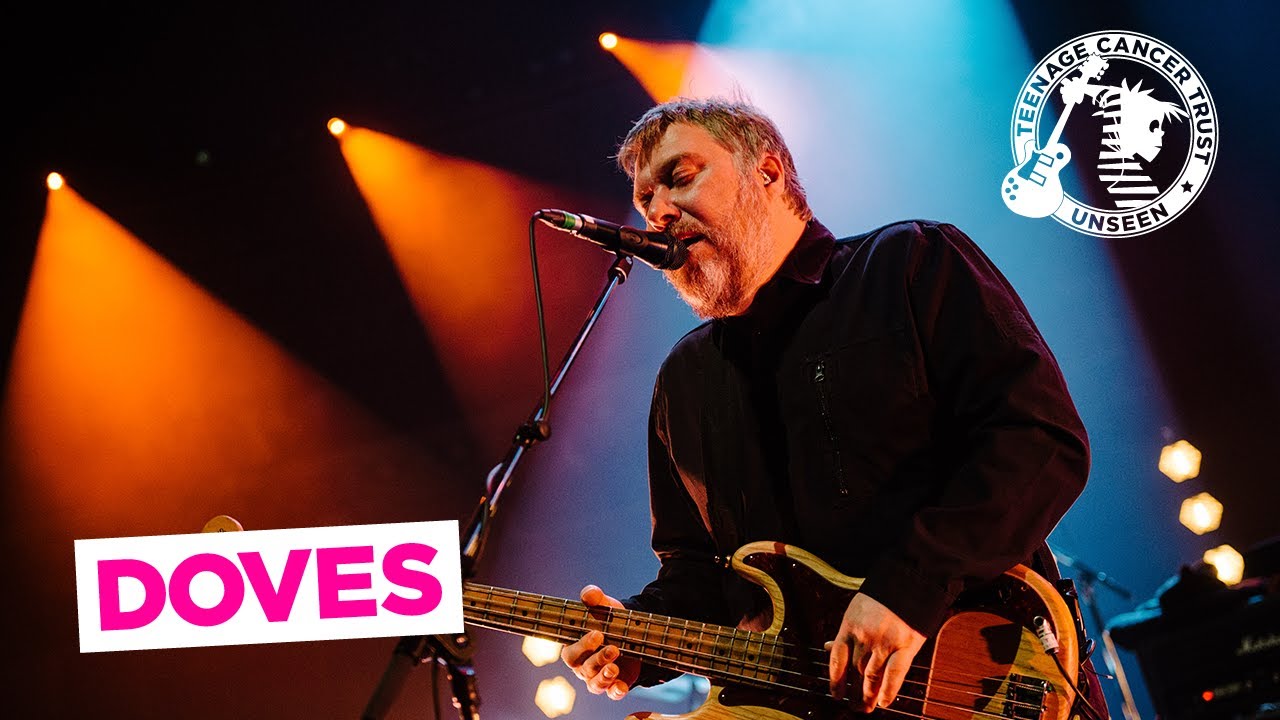
Almost 25 years on from its release, the song is still in Doves’ current live set: “If we didn’t play it, we would get hung up on a cross!” laughs Williams.
“I don’t mind playing it - I’m romantically proud of it, and it’s one of those songs that’s punched through the decades. It’s had a nice life. Don’t hate the hit - that’s why I say.”
