


It is the night before Joe Bonamassa lovingly packs a 1959 Gibson Les Paul Standard into its case and boards a flight to Austin, Texas for the all-star Crossroads Guitar Festival 2026.
Bonamassa is joining MusicRadar to talk about crossing the digital Rubicon with his new signature Fender amp, the Tone Master ’59 Twin-Amp JB Edition. In a way, we are speaking to a changed man; the “king cork-sniffer of vintage amps” has come to terms with the fact that, night after night, the new digital version of one of his all-time favourite vintage tube amps was outperforming the original.
“I was finding some really cool things by using the digital Twin,” says Bonamassa. “The amp was was staying much more consistent throughout the night. It wasn’t getting hot. It wasn’t fatiguing. And, and I was like, ‘Yeah, this is really, really cool.’”
When he played some shows without it and realised that something was missing, that was the “lightbulb moment”. He admits the Tone Master ’59 Twin was “better and more consistent”. So be it. In this game, all you can trust are your your ears. He gladly put his name to it.
But Bonamassa has arrived at a few epiphanies lately, not all of them he is comfortable with.
Having put in the requisite 10,000 hours (and then some), he has a handle on how to play the guitar. He knows his way around the fretboard and, furthermore, has developed a style that’s all his. What he has lost along the way is the joy of discovery – that feeling of stepping on an overdrive pedal and it bringing something different out of him. No matter what he does he still sounds like him.
“This is the thing that bums me out. I’ve come to the part of my playing life, my career, and my journey with guitar playing, where anything that I play – anything – sounds the same to me,” he says.
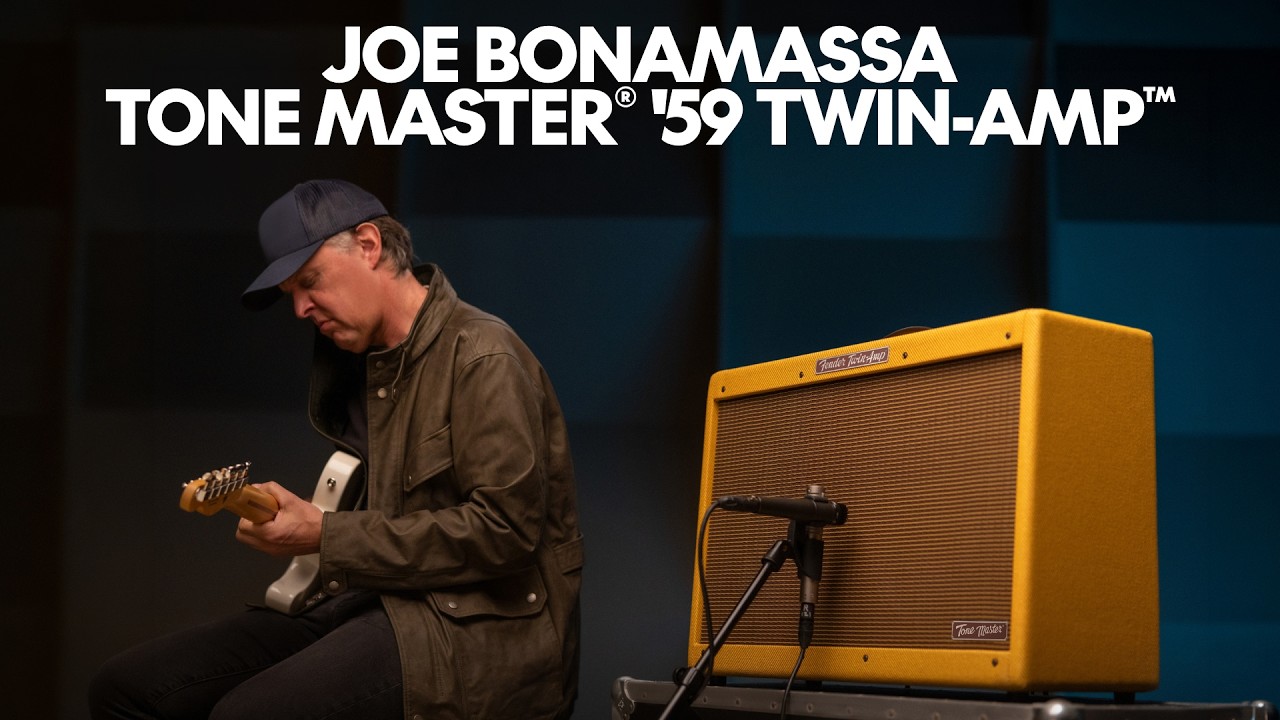
And it doesn’t matter which guitar he picks up, Bonamassa is going to be the hearing the same thing coming out of the speaker.
“When I play a Strat, I’ll twiddle the knobs, kick the settings, and it sounds, well, kind of like me playing a Les Paul,” he says. Ditto with an ES-335 or a Telecaster.
This is of course the sign that you’ve made it; that you have a style. It’s yours. This is the goal, surely, and yet, nonetheless, Bonamassa remembers a more innocent era when a new toy offered the promise of unlocking some great tone secret.
“Like when you used to go through and be like, ‘Oh, man, if I just had this DigiTech DSP-16 I could sound like Robben Ford,’” says Bonamassa. “And then you get it and you figure out Robben Ford sounds like Robben Ford. ‘If only I had a Super Reverb and a Tube Screamer, I could sound like Stevie Ray [Vaughan].’ Then you figure out, ‘I am not going to sound like Stevie Ray.’”
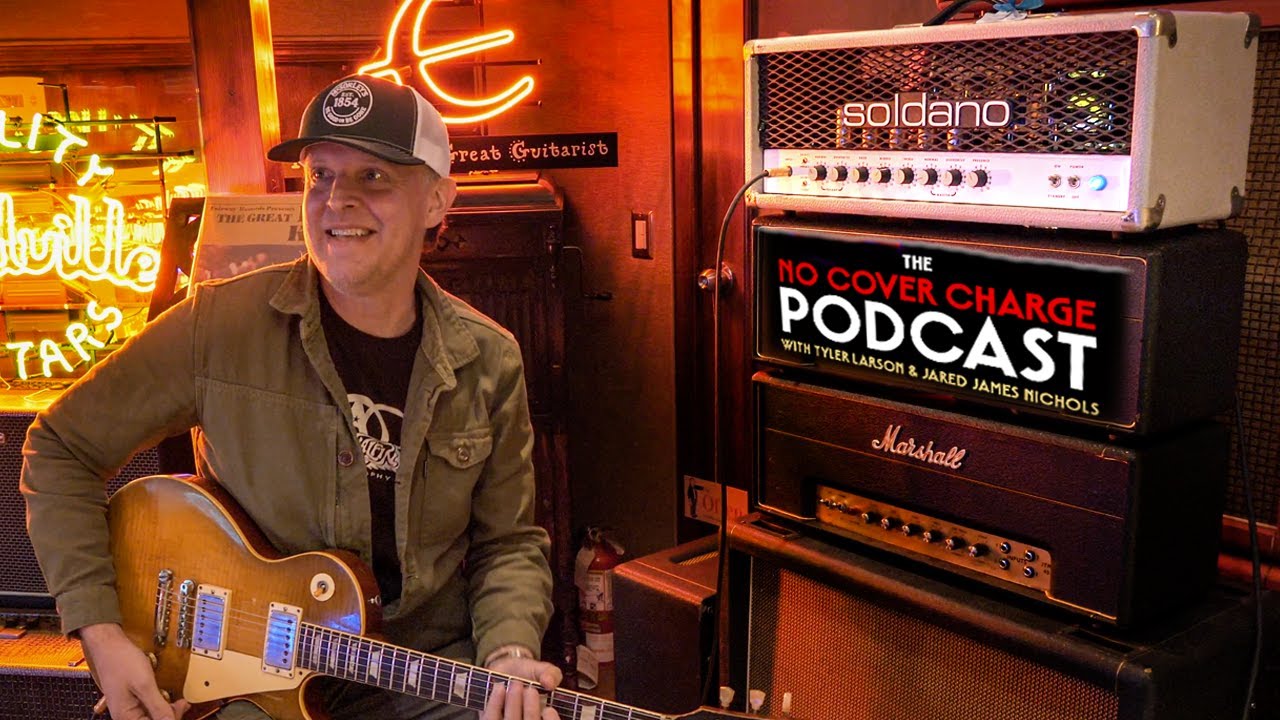
Even owning his hero’s gear has not helped in this regard.
“I own Gary Moore’s Soldano from the Still Got The Blues era,” he says. “I plugged that in for the first time, and I am playing equal parts Gary Moore and early Gov’t Mule riffs on it, and I go, ‘Well it still sounds like me.’ That age of discovery is kind of lost, and it kind of bums you out when you figure it out. Like, it doesn’t matter what you play, it sounds the same.”
Perhaps a pro player has to to hit this plateau before reinvention is on the cards. If that is, indeed, the case, then Bonamassa could do worse than speaking to Eric Clapton about it once he gets to Austin, Texas. Throughout his career, Clapton has been a master of reinvention.
“Yeah, if you listen to Layla versus Farewell to Cream, it’s a totally different guitar player,” says Bonamassa. “Always evolving!”

Bonamassa in good company when when making his pilgrimage to Austin for Crossroads. Eric Clapton has the pulling power to get guitar’s best and brightest to turn up, crank up and play the festival he launched in support of the eponymous addiction recovery centre in Antigua.
This is the Harlem Globetrotters of blues guitar assembling for a good cause. The Tedeschi Trucks Band, Trey Anastasio, John Mayer, Marcus King, Buddy Guy, Billy Gibbons, Bonamassa and more, with Bill Murray calling out their names as they take to the stage.
Like many players who grew up under the influence of Slowhand, Bonamassa has studied his evolution closely. Speaking to MusicRadar in 2021, Bonamassa said Clapton's work in John Mayall's Bluesbreakers was his biggest influence
“I learned to play blues guitar just from playing along to the Beano album,” he said. “More so than even BB King, Freddie or Albert, Muddy Waters, Howlin’ Wolf or Robert Johnson.”
Clapton has been on a journey. There were his Promethean rock ’n’ roll adventures with the Yardbirds. Then came his blues purist phase under Mayall’s watch, then the supergroups Cream and Blind Faith, before a solo career that expanded upon the blues-rock template until it found him recording with Phil Collins and covering Ryuichi Sakamoto synth-pop tracks by the mid ‘80s. Clapton never stood still.
“If you listen to him in the mid ‘70s and the early ‘80s, then when you hear Behind The Sun he went back to Marshalls, but he was with the Strat,” says Bonamassa. “And then he had the Soldano rig with Journeyman – that was one of my favourite sounds – and the Clapton Strat with the mid-boost, and then From The Cradle, he kind of went back, he was playing Strats but he was using a low-power Twin. And then it’s been ever-evolving since.”
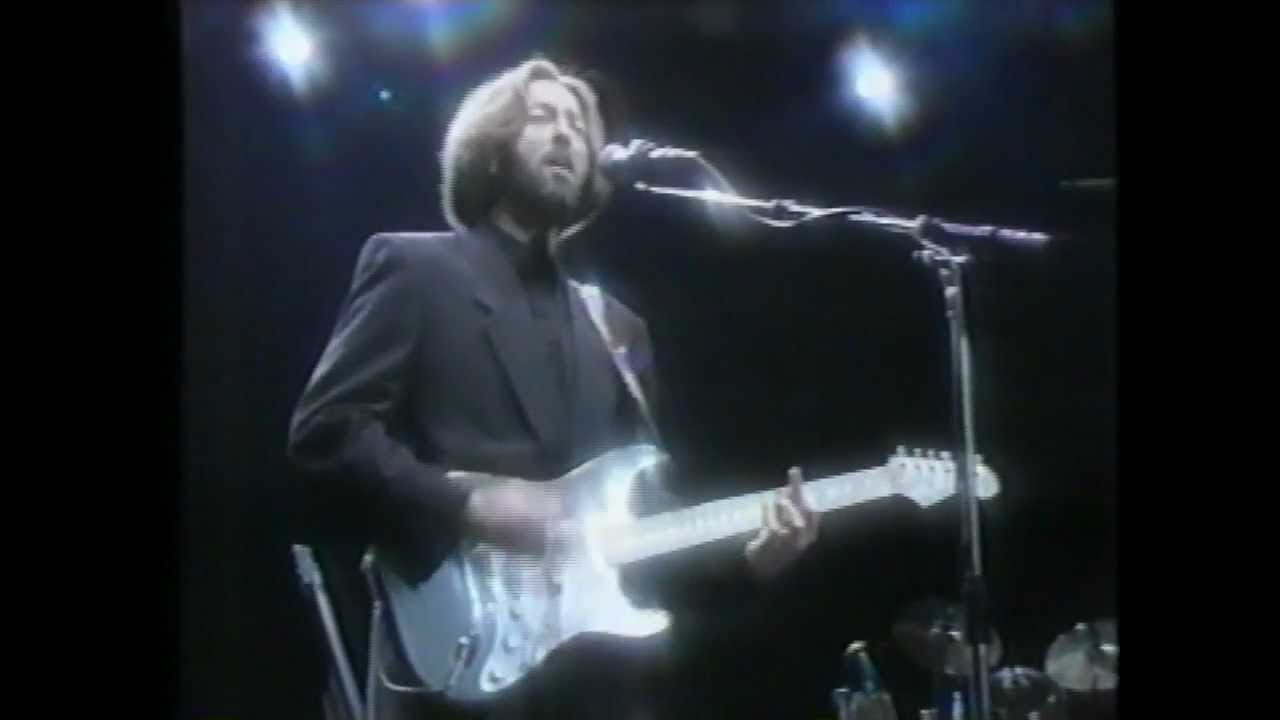
Bonamassa doesn’t even take a beat when running through these eras of Clapton and their rigs.
“He’s always had a Leslie live, for the last 25 years,” he continues. “There’s always a Leslie up there and a couple of Twins. And now I think he’s using the Bandmasters that [Alexander ‘Howard’] Dumble modded for him before he died. He had a Dumble. He had a Dumble at one point that he got from Gruhn’s… Not that I stalk him but I know what he’s using!”
With that in mind, and with Fender paying for the call, we should press Bonamassa and put him on the record – what is the ultimate Fender Strat-era Clapton track?
“Oh, Fender? Oh God, After Midnight,” he says. “I think the fast version of After Midnight, when he had Blackie, and that in-and-out of phase fourth position sound, I think that is my favourite tone. It would be a tie between that and Pretending. I love the tone on Pretending. Two totally different rigs, but both Strats.”
When Bonamassa took to the stage at Austin, Texas’s Moody Center, he duly paid tribute to Clapton. Playing alongside Marcus King and Eric Gales, he performed a cover of Cream’s take on Sitting On Top Of The World, and there was a teaser of Layla, too. And for better or worse, he most likely sounded like himself.
- “I’m the king cork-sniffer of vintage amps… but you cannot deny the fact that it sounded, at least to my ears, better and more consistent”: Fender unveils Joe Bonamassa’s Tone Master Twin – is it really better than the tube version?
- “People will say they are really Phil Collins records. Fine. If that’s all they can hear, they’re not listening properly”: How Eric Clapton’s ‘80s reinvention peaked with Behind The Mask – a song written by Ryuichi Sakamoto and dumped by Michael Jackson
