
Released in 1979, Pop Muzik, the hit single released by Robin Scott under his M alias, provided a template for the pop sound of the eighties, pre-empting the MTV generation with a global message and eye-popping video.
Fast forward more than 45 years, and the track has been enjoying a new life, trending on TikTok with users sharing it online alongside their dance routines.
“I don’t think of those who have helped my track go viral as an audience,” says Robin. “Instead, this TikTok army are like collaborators, taking an idea I put out there and making it their own. It’s very flattering and I’m grateful to be able to bring some colour into people’s lives so they can exploit it for their own ends.”

On release, Pop Muzik went to number one in the US, Canada and elsewhere while it reached number two in the UK. Robin’s social circle at the time included Sex Pistols’ manager Malcolm McLaren and legendary designer Vivienne Westwood. It was on location in Paris, filming punk band The Slits with director Julien Temple, that the ‘M’ concept was conceived.
Since then his musical journey has been full of twists and turns including running indie label Do It, working as a producer and in artist management while also continuing with his own music.
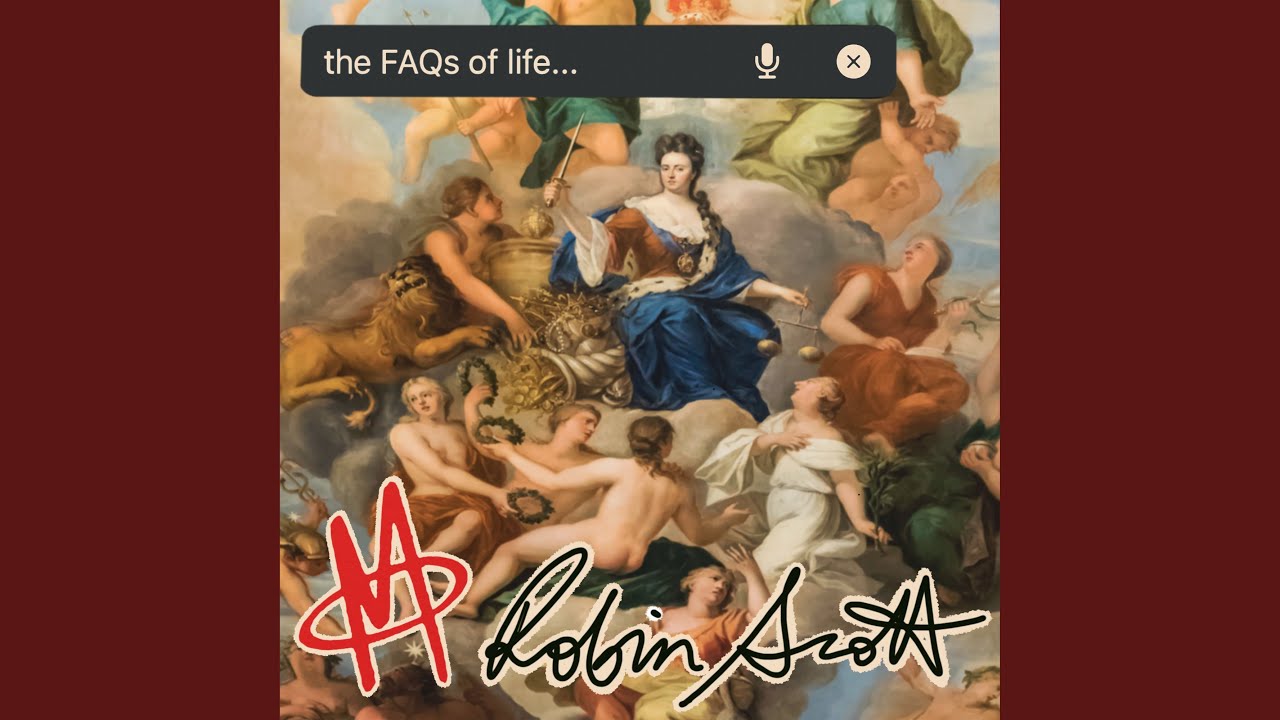
2025 has seen the unveiling of The FAQs of Life, the first music released as M for more than 40 years. It’s a record that continues to push his love for pop, new wave and songwriting forward.
“At one point I saw Pop Muzik as a millstone but it’s actually a passport and a gateway,” Robin explains. “So many people find a formula and they repeat themselves but I never wanted to do that. What it did for me then and is continuing to do now is open up doors to explore other musical genres, styles and sounds.”

Robin’s musical tastes have always leaned towards the eclectic. Initially, he loved folk music lyricists like Leonard Cohen and Bob Dylan, while he also had a passion for avant garde electronic music, including the work of German composer Karlheinz Stockhausen.
“I was really intrigued by Stockhausen,” Robin tells us. “He was experimenting with quadraphonic sound in the early sixties. Creatives like that, they weren’t mainstream at all, so I had my foot in many camps. I just wanted to soak it up and explore what was possible.”
“My record collection was broad and wide, I always loved songs and there were so many artists in the sixties writing amazing ones,” he says. “I also liked those on the cutting edge, acts like Jimi Hendrix, the way he was creating sound textures with his instrument, taking the frontiers of the guitar in exciting and new directions.”
Robin’s first musical forays found him playing folk clubs as a solo artist, sharing bills with emerging artists such as David Bowie and Ralph McTell. In 1972 he won the EMI 'Search For A Star' national talent contest and used the prize money to invest in music production gear.
“I went out and bought a Revox stereo tape machine,” Robin says. “I took it to its limits in terms of what I could do in the bedroom, bouncing tracks backwards and forwards in the stereo image and building convincing pictures from a production perspective. That’s how I first got to grips with sound and effects.”

Robin’s first album, Woman from the Warm Grass, was recorded in Sound Techniques studio, just off London’s King’s Road. Living in the capital at the time, questions of affordability meant the LP was put together in a single day.
“It was tight but it was always about funding to get studio access,” he says. “If you had a label deal, managed to find some downtime or had a connection in the studio that would help and is what I tried to exploit.”
Robin also spent time producing in Paris for Barclay Records as well as at Kingsway Studios, aiming to gain as much knowledge and experience as possible to inform his own creations.
“We were in the analog age with all its limitations but recording was always on my mind, and how to use the studio,” he states.

What would be his biggest song, Pop Muzik was born out of his musical inspirations and is, as Robin describes, a definitive ‘earworm’. With its nagging phrase and hook, it’s impossible to ignore while his vocal delivery is part spoken word, verging on rap. Its quirkiness is partly why the song sits in the minds of listeners.
“I wasn’t modelling myself on rap artists as there weren’t any at the time and I didn’t quite know what I was doing,” Robin says. “But I wanted to use the song to mark a moment, to celebrate the cultural phenomenon of pop. It had been 25 years since 1954, the year of Elvis and the strat.”
“That’s where these soundbites in the lyrics came from and I wanted to produce something that every DJ just had to play. It was either going to work or be a damp squib and it managed to capture a moment.”
The initial version of the track was a three chord rhythm and blues song but Robin wasn’t happy with it. He then decided to record every aspect of the song from the snare to the hi hat separately with John Lewis, a Canadian producer and composer who ran a small studio in Covent Garden.
“He was supported by The Who’s Pete Townsend and worked on the cutting edge of contemporary analogue synths,” says Robin. “I went to him for his help and we worked together on it, ended up with this eight-track version and it felt like I was on to something. Then I took it to Paris, found a studio with an eight-track and a 24-track, bounced it over and continued working on it.”
Pop Muzik would appear on the debut ‘M’ album, New York · London · Paris · Munich - a record finished in Mountain Studios in Montreux. Robin cites his obstinance and commitment to getting the record aligned with his artistic vision as vital to the success of M.

“I worked on it meticulously from a production point of view,” he says. “I was relentless in getting to the right result. If I’d had a producer and I was simply an artist, I don’t think they would have had the patience to listen to what I wanted to do. But if the other versions of ‘Pop Muzik’ had been released, it wouldn’t have happened. The final version sounded quirky and different, it was a kaleidoscope of all these things coming together.”
The video to the hit is another part of its success story. Made by the company behind Queen’s Bohemian Rhapsody and directed by Brian Grant, it was among the first visual accompaniments to a single and helped give M a strikingly arch and contemporary identity, particularly in his guise as a DJ behind an enormous turntable.
“This business came to MCA and asked if the label had any artists who wanted to make a video,” says Robin. “I said I was keen and Kenny Everett had it on his show despite the BBC not entertaining the idea of featuring any indie productions. We made the video, then it ping-ponged around the planet. It was very important in promoting the song, particularly as there was no live act to go with it.”
Fast forward to 2025, and Robin’s new album as M - The FAQs of Life - was initially sparked during the Covid lockdown and the creative possibilities offered by technology.
With restrictions in place, Robin’s ambitions were to maximise the power of his laptop and sketch out as much music as possible. The result is 14 tracks of eclectic artful pop, inspired by tech, the political volatility we’re all exposed to and his own life experiences.
“What I wanted to do was to bring all the disciplines together - so be the writer, producer and artist,” he says. “The tech has become so accessible to so many people with creative acts now democratised. I thought it would be a challenge but we were moving to the Welsh mountains at the time and I thought it could be an interesting place to be, both creatively and in terms of the environment around me.”
Robin put his ideas together, then began reaching out to longstanding collaborators Ali Gavan and Phil Gould to add more flesh to the musical bones he’d drawn out.
“I didn’t want to confine myself to a solo project, I wanted to view it in the same collaborative spirit as previous projects with M,” he says. “I thought this was the way to go, to be totally open minded about it - that’s why it’s M/Robin Scott - because it follows the same openness to collaboration.”

The track AI? is among the highlights on the record, a musical dissection of where technology is taking us and the music industry.
“It’s unnerving people, but I think it’s just another aspect of what’s out there, it’s not the end of human performance or experience,” Robin says. “It is not going away - we’ve got to come to terms with these latest changes and create advantages out of adversity.”
He’s also a fan of how advancements in technology can inform his creative process, particularly Logic’s Stem Splitter. It’s proven to enhance his studio workflow and approach to production.
“If you have a stereo image, you can split it six ways for bass, drums, guitar and more,” he says. “And it’s helped me do exactly what I was looking for with this older track, The Bride of Fortune, with my close friend Vivienne Westwood. The original tapes had been wiped but I was able to revisit it and I’ve been able to do that via this musical evolution afforded by technology.”
“I’ve also been working with Ali on other new versions of my music and he’s extraordinary. I can share stems or material in a pre-mixed state and he will develop ideas around them. We can do this remotely, which we couldn’t do before. This exchange of ideas from wherever we are is so wonderful.”
Robin has also enjoyed working in the studio with his collaborators too, particularly on another album highlight, Crossfire, a song about the ongoing conflict and chaos in the Middle East.
“A pivotal moment in the studio was with Phil when we asked him to do some live recordings,” he says. “Phil came up with this piano idea, we put it down, did a bassline, then I took it away and did a vocal for it and that’s Crossfire, everything fell into place so fast, it was so emotional for me with the situation in Gaza. As artists, creating like this is a way for us to process what’s been happening out there.”
Robin’s advice for aspiring songwriters and producers is to be honest with yourself and to ignore other artists. It’s a maxim that he’s carried with him throughout his musical adventures, a life lived with creative endeavours locked on the future.
“When I was working on my new album, I kept asking myself if I was interested in the track, is it going anywhere? Are we discovering something new? Or am I just repeating myself?,” Robin says. “That’s my criteria, if I feel outside my comfort zone and taking risks, then this is what it’s all about.”
Listen to more of Robin's new music as M over at his official site

