
In the summer of ’69, Roger Hodgson was a 19 year old Beatles fan dreaming of emulating his heroes – and exactly 10 years later he had a No.1 album all over the world.
In British rock band Supertramp, Hodgson and Rick Davies were the leading figures. They wrote and sang the songs. They both played keyboards, although Hodgson was also an accomplished guitarist. And the contrast between them created a unique sound that ranged from progressive rock to pure pop.
At the band’s commercial peak, the 1979 album Breakfast In America held the No.1 spot on the US chart for six weeks.
But it was a long, hard road to the top. And once they got there, the chemistry between Hodgson and Davies was lost forever.
In an interview with MOJO, Hodgson told his side of the Supertramp story, beginning with his introduction to Rick Davies back in 1969 via an advert in weekly music paper Melody Maker.
“The ad said: ‘Genuine opportunity!’” Hodgson recalled. “Rick was putting a band together, sponsored by a rich Dutchman named Stanley Miesegaes. I was one of 400 applicants who auditioned in Shepherd’s Bush. I sang Traffic’s Dear Mr. Fantasy and Rick liked my voice, so we joined forces.”
The early years of Supertramp were tough. The band signed to major label A&M, but their self-titled debut album bombed in 1970, as did their second album, Indelibly Stamped, a year later.
“Our first two albums didn’t do so well,” Hodgson said, “and the band split up in ’72. Stanley Miesegaes had pulled out and we thought about jacking it in – I was going to go traveling through India.
“But I said to Rick, ‘We’ve got some great songs here: School, Bloody Well Right, Dreamer.’
“In fact, we even had Breakfast In America at that point. I’d written it before Supertramp, dreaming of what might lay ahead.”
Revitalised by these new songs, Hodgson and Davies put a new version of the band together with John Helliwell on saxophone, Dougie Thomson on bass and Bob Siebenberg (aka Bob C Benberg) on drums.
Hodgson laughingly recalled: “We took a demo tape to A&M Records, who didn’t even know we were signed to them even though we’d done two albums for them!
“But they liked what they heard, so we went to Somerset, to a farmhouse – because Traffic had done it – and we came up with Crime Of The Century. It was a magical period. Crime was our first hit record.”
School, Bloody Well Right and Dreamer were all featured on Crime Of The Century, a progressive rock masterpiece as deep and meaningful as Pink Floyd’s The Dark Side Of The Moon.

The album was a sleeper hit, eventually peaking at No.4 in the UK.
After that came 1975’s Crisis? What Crisis? – a decent album but nowhere near as powerful as Crime Of The Century.
A significant breakthrough came with 1977’s Even In The Quietest Moments... This was the first Supertramp album to go gold in the US, its success driven by hit single Give A Little Bit.
But the big payoff came with Breakfast In America.
“We relocated the band to Los Angeles,” Hodgson said. “Wives, kids, the lot. But the smog killed me when we were making Breakfast In America.
“The album took eight months to finish – some people would call us anal! It was a very sunny album but the lyrics were pretty dark.
“Rick had a lot of pain in him and it came out in his more cynical songs, while the hurting and questioning in The Logical Song came from me.

“We put these suffering lyrics in these upbeat, melodic songs, and it became a kind of trademark. The frumpy waitress on the album cover summed up Supertramp – we did have that eccentric, quirky approach to things.”
To Hodgson’s mind, it was in this period, at very height of Supertramp’s success, that he and Rick Davies began to drift apart.
“For me, personally, 1979 represented a huge shift,” he said. “My life had been Supertramp and nothing but Supertramp, and suddenly, in the space of one year, Breakfast In America was number one on Billboard for six weeks, I’m married and I had my first child.
“That was the main source of conflict: we were all married and having babies. That made it difficult to keep everyone going in the same direction.”
The follow-up to Breakfast In America arrived three years later. The album Famous Last Words featured Supertramp's last great hit single, It's Raining Again. It also turned out to be Roger Hodgson’s final album with the band.
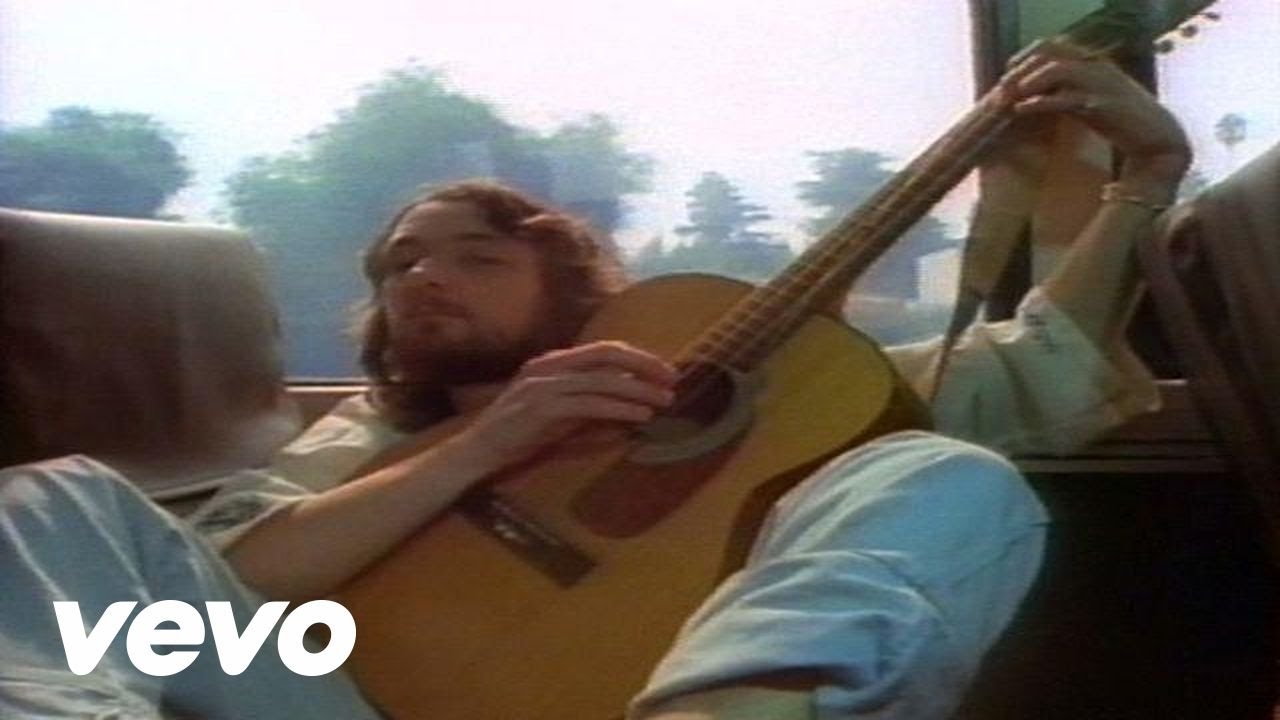
“We did give it one more shot,” Hodgson said. “But we weren’t unified at all, so what could have been a sensational album ended up being very limp and average. We called it Famous Last Words because Rick and I decided we weren’t going through that again. Why continue to put out albums that bad?”
Hodgson left the band for a solo career, while Davies continued with various line-ups of Supertramp.
Rick Davies died on 6 September 2025 at the age of 81.
He and Roger Hodgson were never able to reconcile their differences for a Supertramp reunion, but Hodgson remained philosophical.
As he reflected to MOJO: “If we’d stayed together, in financial terms it would have been more sensible, but that’s not how I make decisions.
“I had set very high ideals for Supertramp. I was brought up on The Beatles, so I saw what music had done for the world and I wanted to do that with Supertramp. And for four or five years, we put out some wonderful music, we made a lot of people happy around the world, and the band itself was very much a family.
“It was a wonderful adventure, but by the end of the Breakfast In America tour the spirit had gone.”
