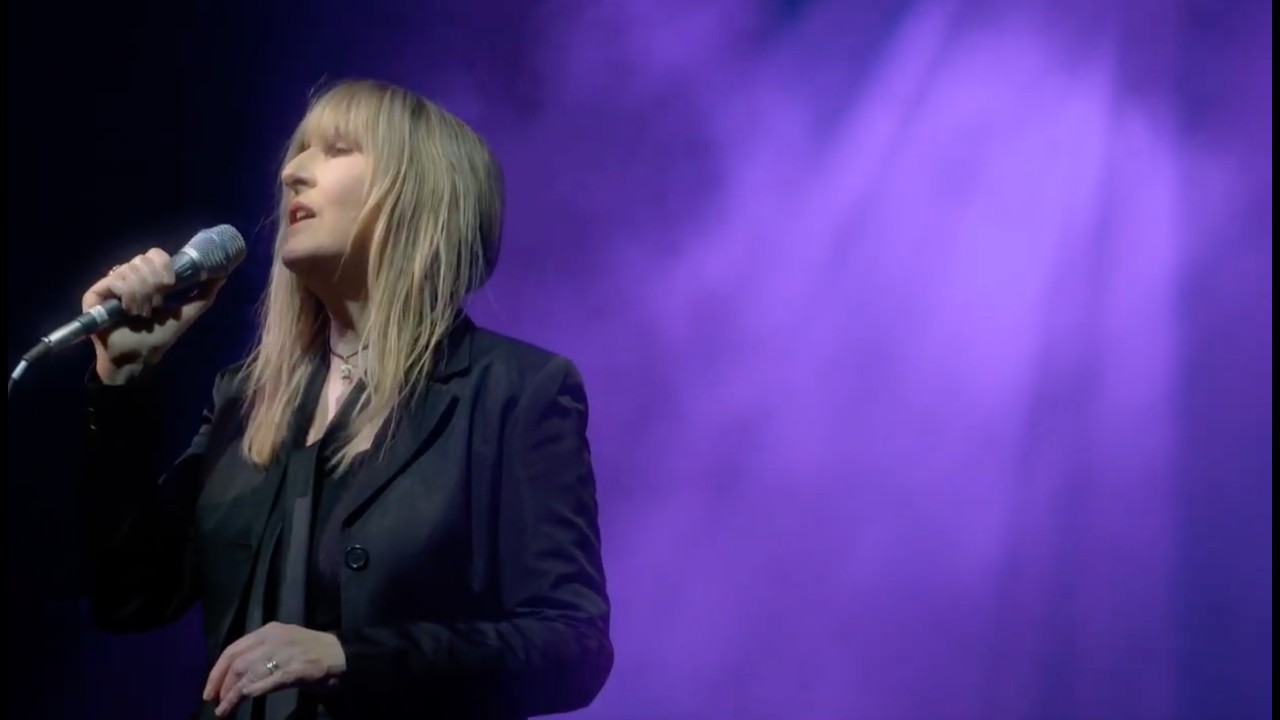
We hear a lot about hit songs having long runs at number one, but spare a thought for those that stayed at number two for numerous consecutive weeks but never managed to hit the top spot.
One notable example is Donna Lewis’s I Love You Always Forever, which peaked at number two on the Billboard Hot 100 almost exactly 30 years ago and remained there for nine weeks.
Born in Cardiff, Wales, Lewis was all but unknown before the song became a hit. Remarkably, what you hear on the finished record is pretty much exactly what Lewis recorded in her home studio – but as we’ll discover, things could have worked out very differently.

These days, it’s taken for granted that you can make a release-quality track from start to finish in your bedroom, but in the mid-’90s, most aspiring songwriters were working with far more limited technology, and Lewis, who had spent years trying to get a record deal in England without success, was one of them.
“I was working with my Tascam PortaStudio eight-track recorder and my little Alesis MMT-8 sequencer [an ‘80s multitrack MIDI recorder that enabled DAWless music-making before DAWless music-making was ever talked about],” she said in an interview with Sony Music Publishing earlier this year.
“I probably manifested that song because I was walking around the streets in Birmingham [UK], and I was thinking to myself, ‘I wonder what it's like to write a song where you get on stage and everybody knows it as soon as you start singing it?’ And so I had this ‘feels like’ [opening line from the song] in my head, that little melody, and got to Martin, my husband's office, and said, ‘Give me some paper. I need to just jot this down. You know, I did some manuscript lines, to write the melody, so I didn't forget it, as we didn't have phones in those days.”
There’s definitely something quaint about the idea of someone rushing to notate a musical idea rather than humming it into a phone or mobile recorder, but Lewis clearly knew she was onto something, and was determined not to lose it.
“I think some songs come on the wind and you just go with it,” she says. “I think that probably took a day or so to write because I was obsessed with the single note sound on the Korg M1 [a synth that Lewis had recently bought] so I started sequencing that, and then adding all these atmospheric sounds around it, and then I was ready for the melodic ideas.”
Discussing the song’s lyrics and title, Lewis explained: “Originally, it was called Lydia when I wrote it because at the time I was reading the book For the Love of Lydia by H E Bates – just a simple romantic novel set in the 1920s in the English countryside – and I just thought, ‘Oh, the verses will work well, you know, falling in love for the first time in this descriptive wonderful world.
“There's a line in the book – ‘I love you always forever, near and far closer together’ – and I just thought that was great. So that ended up being the chorus.”
Lewis has said that she had doubts about this main hook: “I remember trying to rewrite the chorus because it sounded too much like a nursery rhyme,” she told Celebrity Parents Magazine in 2023, “but when I did, it didn’t work, so I kept it the same.”
A good idea, as it turns out, but there were other potential changes along the way that could also have scuppered the song’s ultimate success. The demo eventually got into the hands of Jen Stark, who worked in Atlantic Records’ A&R department, which resulted in Lewis being flown out to the US to meet company boss Doug Morris.
“I wasn't that optimistic because I thought, ‘Oh, probably just another rejection,” Lewis admitted to DJ Bowie Jane in a podcast interview last year. “So I sang a bunch of songs for him, and then he said, ‘Congratulations, we'd like to offer you a record deal. And who do you fancy producing – Trevor Horn, Steve Lipson? And it was like, you know, all my heroes. And so it's a bit like a fairytale at that moment.”
Ultimately, neither Horn or Lipson was available, so Lewis ended up working on I Love You Always Forever with Canadian producer Pierre Marchand. After a while, though, she began to feel like the song was going in a direction that she didn’t like, so she ended up back in New York working with another producer, Kevin Killen.
“I’d recorded everything on my Korg M1 keyboard - the brass organ, the sequence, everything – and then when we came to record it [in the studio] he said, ‘Why don't we get Chris Botti [US trumpeter and composer] in to do all the brass section? OK, that sounds great. And we did a bunch of different things with it. But then when I went to meet with Jason Flom [record company exec] after it was finished, he said, ‘What do you think?’ And I said, ‘I do feel it's lost the magic.’”
At this point, it sounds like frustration was starting to creep in in some quarters: “I did have a couple of people saying, 'Oh God, you're being so obsessive, Donna.’ But it had – it had lost the magic, and so he said, 'Do you know what to do?’ And I said ‘I do.’
“So we went back in the studio. We got rid of – it sounds crazy – we got rid of all the real brass. We brought in all the Korg M1 corny brass organ, everything.”
The result is that, other than a re-recorded vocal, the finished version of I Love You Always Forever is pretty much identical to the demo. “I'm glad I stuck to my guns,” says Lewis. “It was hard, you know, because you can so easily say, ‘OK, yeah, you're right,’ but it definitely lost magic, and so we brought the magic back. And thank God, you know, it did what it's done.”