





MusicRadar Verdict
If you’re after a pair of closed-back cans for mixing duties, the Sennheiser HD 480 Pro is a no-brainer. With fantastic low-end reproduction and a wonderful balance across the full frequency spectrum, they could be just the thing for checking the low end of your mix alongside a pair of studio monitors. Add in excellent isolation characteristics, and you’ve got a do-it-all pair for any mixing or monitoring tasks.
Reasons to buy
- +
Wonderful low-end reproduction.
- +
Lovely balance across the rest of the frequency spectrum.
- +
Excellent isolation characteristics for mixing in noisy environments.
- +
Incredibly comfortable to wear for long periods of time.
Reasons to avoid
- -
Natural width limitations due to the closed-back design.
MusicRadar's got your back Our team of expert musicians and producers spends hours testing products to help you choose the best music-making gear for you. Find out more about how we test.
What is it?
It’s no secret that Sennheiser knows a thing or two about making fantastic studio headphones for mixing music, and it's for that reason that a pair of Sennheiser’s has sat at the top of our buying guide for a long time. Looking at any list online, you'll find most of the top-rated mixing headphones tend to be open back, which makes them less than ideal for mixing on the go or doubling as a tracking pair. Enter the Sennheiser HD 480 Pro, which aims to give you that same reliable performance of a classic mixing headphone, but in a closed-back package.
Comparing this pair to its popular open-back cousin in the Sennheiser HD 490 Pro, the HD 480 is strikingly similar in terms of the key specifications. Both share 38mm dynamic drivers, a 130 Ohm impedance rating, and are available in Pro or Pro Plus versions, which see the addition of a more sturdy case. Both have very similar frequency responses with 3 Hz - 28,7 kHz for the 480s and 5 Hz - 36,1 kHz for the 490s, as well as similar SPL (Sound Pressure Level) stats at 130dB for the 480s and 128dB for the 490s.

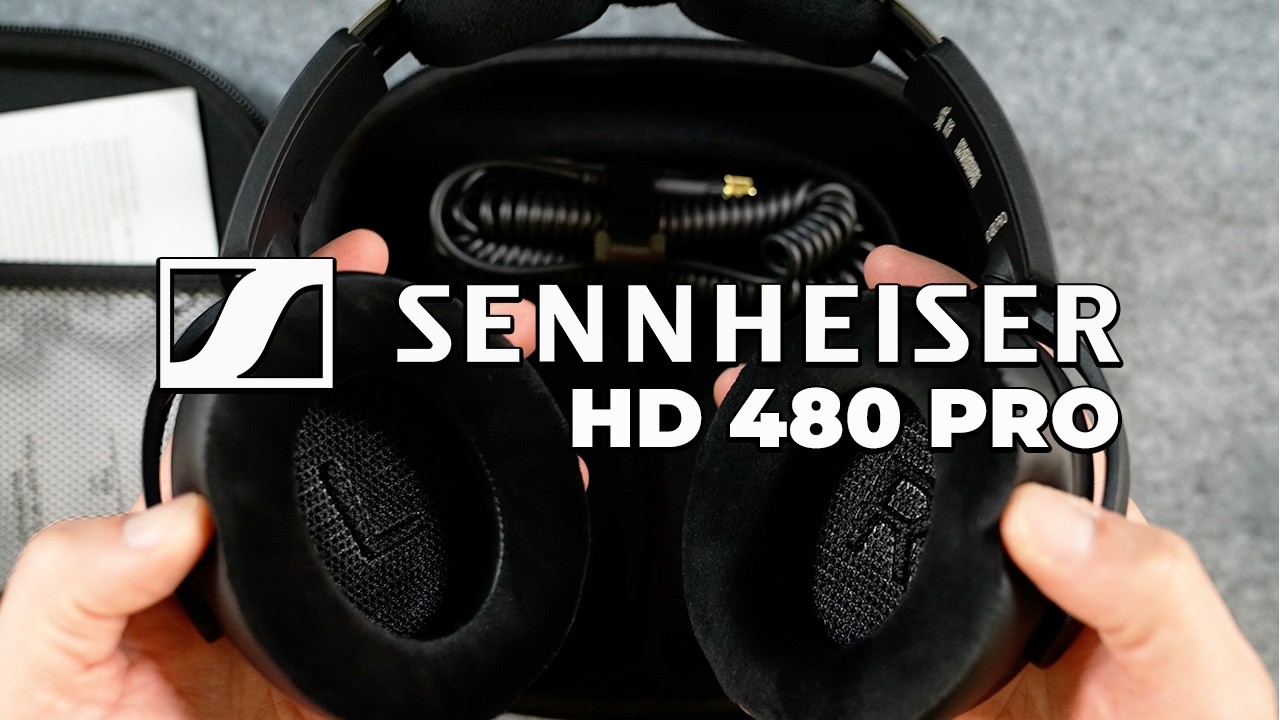
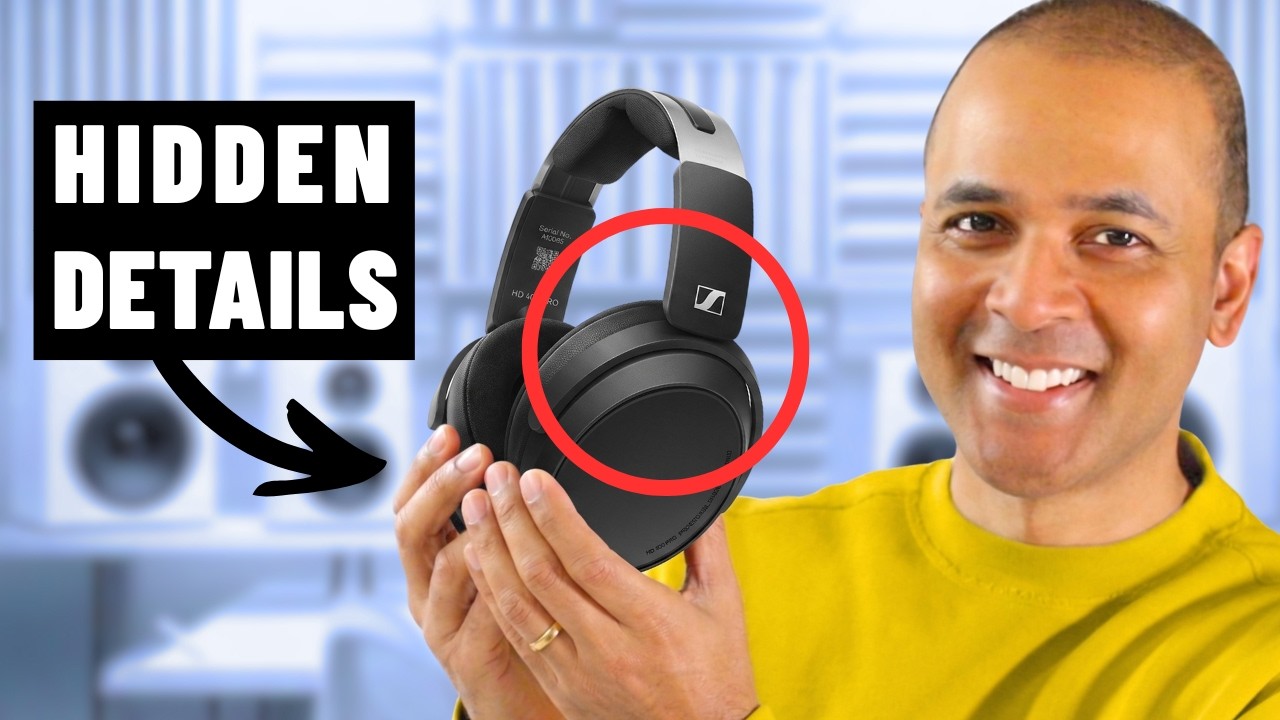
Like the HD 490, the 480s have a detachable cable that can be plugged into either ear cup, and they both have very soft ear pads and a headband cushioning with a detent in the middle to reduce the pressure on the top of your head. The only noticeable difference in terms of aesthetics is that the back of the ear cups is perforated on the HD 490 and solid on the 480, and that with the 490 Pro Plus, there's a second set of mixing-specific ear pads available.
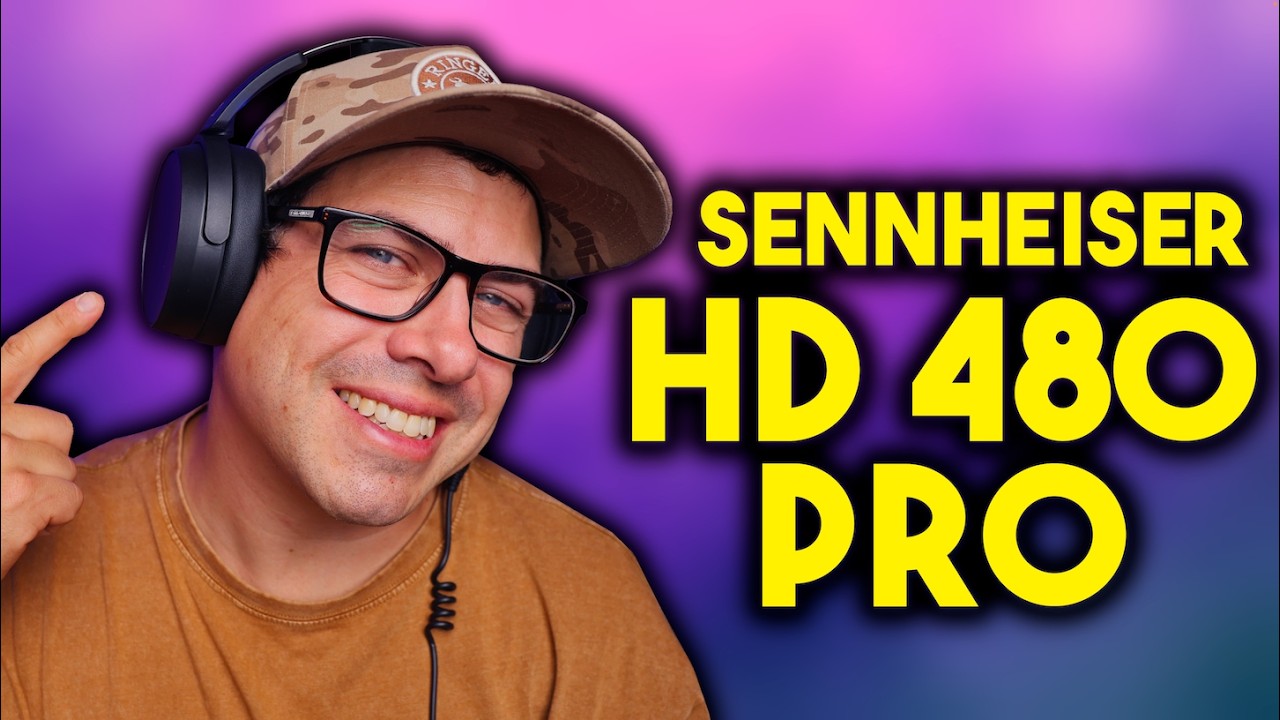
The HD 480 Pro also has some very fancy terms attached to it, including something called multistage passive shielding, which is designed to help isolate the headphones further on top of the closed-back design. It’s also got a ‘Vibration Attenuation System’, a new technology that allegedly prevents distortion. But the most pleasing to engineers and producers will be that Sennheiser has paid close attention to the comfort of these cans, with a mechanical headband design that should fit any size or shape head, and a comfort zone for those who wear glasses.
Performance

I also have a pair of HD 490 Pros in my home studio, so I will do a comparison of sound, but for now, let’s pay attention to the HD 480s. My first impression upon putting them on my head is that they feel pretty much the same as the 490s. There’s a slight difference in weight, but this isn’t noticeable in real-world use, and the 480s are super comfortable thanks to the soft lining of the ear cups and headband.
They fit my head nicely, and I’m a big fan of the oval-shaped ear cups here, which very nicely surround my larger-than-usual lobes without pressing down on them like some other headphones. The detachable cable can be used on either ear cup, which seems like a small detail, but once you’ve made use of it, it’s hard to go back to a headphone without this feature. I frequently move my cans to different studio settings, so this makes sure I can keep things as ergonomic as possible, no matter what I'm doing.

During the course of my testing, I used the 480s in a busy coffee shop, and although some ambience crept through at lower levels, once I got towards the middle and higher volume settings on my laptop, it was easy to block out the din. And the bleed levels? Hard to say, but no one looked at me funny whilst I was blasting the new Mandy, Indiana album.
I also used them in a studio setting, and as the console and live room are in the same space, I needed the cans to monitor while my singer did her vocal takes with a Neumann U87 condenser mic. The isolation was good enough that I couldn’t hear others in the room talking to me whilst the music was still running, which I’ll take as another plus in the isolation column. I also got my singer to wear them while she was tracking to see how the bleed was, and from what I could hear on the multis, it was negligible.

Sticking on my headphone tester playlist, I start with the low end and my go-to sub bass test in Lil Wayne’s ‘A Milli’. The low end is certainly strong with this pair of headphones, robust and full, but without being overpowering to the rest of the mix. It’s the same with James Blake’s ‘Limit To Your Love’ and a couple of Massive Attack tracks, really muscular and present, so I reckon these will be great for seeing how your low end translates if you’re using smaller studio monitors.
Moving on to some busier mixes, Radiohead’s ‘Paranoid Android’ sounds as good as it ever has, with plenty of detail and a great separation between all the different elements of the mix. It bodes well for those using these as a primary mixing can, and that strong low-end is present here too, as well as a nice bit of stereo spread.
A/Bing this with the HD 490s via the dual headphone inputs of my Universal Audio interface, the 480s feel slightly narrower and more closed-in, which is expected due to the design of each. To my ear, the 490s sound a touch brighter and more open, especially when Thom Yorke’s high-pitched vocal kicks in. Moving back to Lil Wayne, there’s clearly less low-end in the 490s, but overall, the sonic characteristics of both are pretty similar. You wouldn’t confuse them for the same pair, but if you already own a set of 490s, I don’t believe you’d benefit enough to justify picking these up, unless you want a really fancy pair of cans for tracking.
Verdict

Overall, I was really impressed with the performance of the Sennheiser HD 480 Pros. I got to live with them for a good few months and they excelled in mixing, monitoring, and casual listening duties, delivering an excellent response across the spectrum, but particularly with low-end detail. For engineers mixing on small studio monitors, these will be a huge asset for checking the bass and sub bass.
They’re incredibly comfortable too, which makes long mixing sessions an absolute breeze. The large, oval ear cups mean they’ll accommodate a wide variety of ear shapes and sizes, and the headband design ensures they can fit pretty much any size and shape head. With a super soft ear cup and headband material, these are supremely comfortable studio headphones.
Of course, they have natural limitations due to the closed-back design. They don’t feel as wide with hard panned elements of the mix, and sound less open than a pair of open-back headphones. The muscular low end might be too much for some producers as well, so if you prefer an open-back design, then check out the HD 490 Pro instead.
MusicRadar verdict: If you’re after a pair of closed-back cans for mixing duties, the Sennheiser HD 480 Pro is a no-brainer. With fantastic low-end reproduction and a wonderful balance across the full frequency spectrum, they could be just the thing for checking the low end of your mix alongside a pair of studio monitors. Add in excellent isolation characteristics, and you’ve got a do-it-all pair for any mixing or monitoring tasks.
Hands-on videos
Alternatives
Specifications
Price |
£369 / $399 / €399 |
Design |
Closed-back, over-ear |
Driver
|
Dynamic, 38mm |
Impedance |
130 Ohm |
Frequency Response |
3 Hz to 28.7 kHz |
Sensitivity |
107 dBSPL (1 kHz/ 1 Vrms), 98 dBSPL (1 kHz/ 1 mW) |
Maximum SPL |
130 dBSPL (1 kHz @ 5% THD) |
Connection
|
Wired with 3.5mm TRS jack and 6.3mm adapter |
Accessories
|
Rigid carry case with Pro Plus, soft case with Pro |
Weight |
272g |
Contact |
