





MusicRadar Verdict
This dual op-amp version was never released back in the day as EHX boss Mike Matthews felt that it strayed from the traditional Big Muff voicing. But these days we positively embrace fuzz varieties across the board and the Big Muff Pi 2 is a valid choice, particularly for players who value something heavier and more aggressive.
Reasons to buy
- +
Compact size.
- +
A different Muff flavour.
- +
Latching/momentary footswitching.
- +
Can use battery or adaptor power.
Reasons to avoid
- -
It’s not for those who like to use volume knob to clean up.
MusicRadar's got your back Our team of expert musicians and producers spends hours testing products to help you choose the best music-making gear for you. Find out more about how we test.
What is it?

Electro-Harmonix has been doing a grand job of reissuing the different versions of its Big Muff Pi fuzz pedal, with all of the major circuit revisions now represented in the brand’s roster.
The Big Muff Pi 2 is the latest to hit the stores, but there’s a twist with this one in that it was never available in the first place.
This pedal is a dual op-amp version by designer Bob Myers that dates from the late 1970s.
Its existence, as a hand-drawn schematic, only came to light when Josh Scott of JHS Pedals was interviewing Bob for a book, Made On Earth For Rising Stars: The Electro-Harmonix Story.
While EHX did produce an op-amp-based Big Muff in 1978 (also known as the IC or V4 Big Muff), celebrated for its use by Billy Corgan of Smashing Pumpkins, this new one has a different clipping arrangement and an extra gain stage.
Specs

- PRICE: $122 | £125 | €119
- ORIGIN: USA
- TYPE: Fuzz/distortion pedal
- FEATURES: True bypass, latching/momentary footswitching
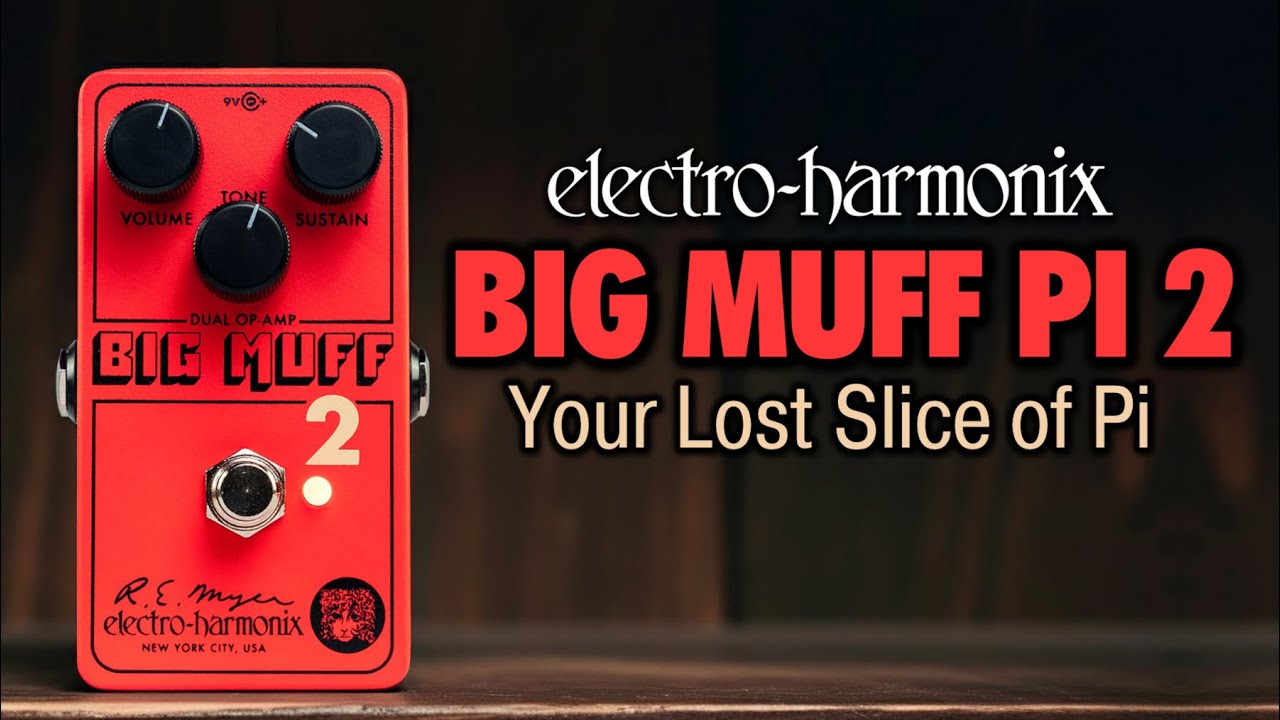
- CONTROLS: Volume, Tone, Sustain, bypass footswitch
- CONNECTIONS: Standard input, standard output
- POWER: 9V battery (supplied) or 9V DC adaptor 15mA
- DIMENSIONS: 65 (w) x 111 (d) x 47mm (h)
- CONTACT: Electro-Harmonix
Usability and sounds

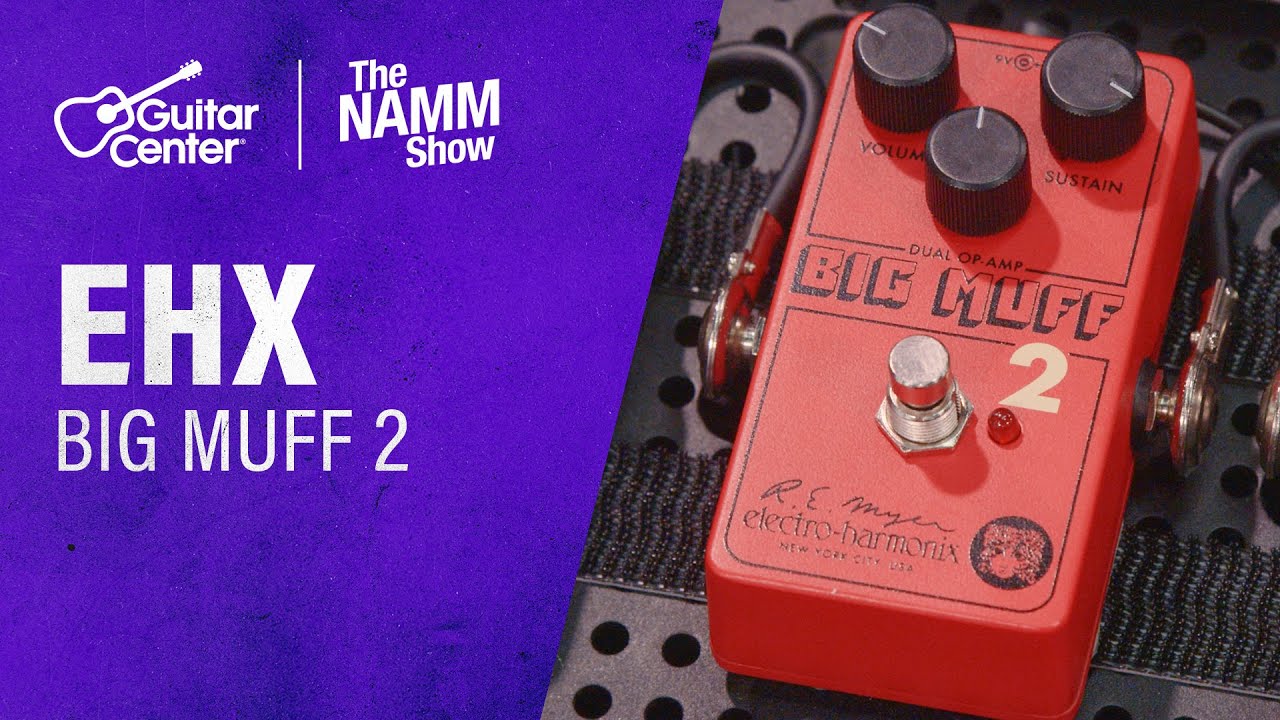
A Nano-sized pedal that will fit snugly on any pedalboard, the Big Muff Pi 2 features the familiar triumvirate of Volume, Tone and Sustain knobs, but, brilliantly, comes with a dual-action footswitch that – besides standard latching operation – can also be used momentarily for a burst of dirt for as long as you press and hold.
Plugging in, there’s no doubt that this is part of the Big Muff family, but the differences from the usual four-transistor models are immediately apparent.

There’s a fuller midrange in place of the regular scooped sound and that fullness extends to the low frequencies with a bigger bottom-end grunt.
There’s plenty of variation via the Tone knob, with the sludgier stuff to the left, but we found our sweet spot at around the two o’clock mark and beyond where the upper mid presence makes itself apparent.
There’s also a nice clarity to the top-end, which, incidentally, doesn’t get as fizzy as a standard Muff when the Tone knob is maxed.
Verdict
Verdict: ★★★★½

A valid choice, particularly for players who value something heavier and more aggressive
With a gritty textured edge to its fuzz/distortion, this is a pedal for big riffs and endless sustain.
MusicRadar verdict: This dual op-amp version was never released back in the day as EHX boss Mike Matthews felt that it strayed from the traditional Big Muff voicing. But these days we positively embrace fuzz varieties across the board and the Big Muff Pi 2 is a valid choice, particularly for players who value something heavier and more aggressive.
Hands-on videos
Electro-Harmonix
Guitar Guitar

Guitar Center
- “A feral supernova awaits if you dime those dials”: EarthQuaker Devices Barrows Fuzz Attacker review
- This article first appeared in Guitarist. Subscribe and save
