
MusicRadar Verdict
Like its best-selling predecessor, the MicroKorg 2 is an accessible, versatile digital synth. Version 2 makes some smart updates to the format, although it feels a little dated in other areas and face some stiff competition at this price point.
Pros
- +
One of the best and most useful screens you'll find on a synth at this price.
- +
Extra oscillators, voices and effects add a lot of versatility compared to the original.
- +
Plenty of instantly usable sounds.
- +
Loop Recorder is a great addition.
Cons
- -
Basic keyboard with no aftertouch.
- -
Vocal processor is a fun but inessential addition.
- -
Some may find the focus on genre-themed patches a little naff.
MusicRadar's got your back Our team of expert musicians and producers spends hours testing products to help you choose the best music-making gear for you. Find out more about how we test.
What is it?
The original MicroKorg is a tough act to follow. Released in 2002, the MicroKorg dominated its corner of the synth market in a way that few other instruments have this side of the Millenium, shifting units in the hundreds of thousands over the course of two decades.
It’s tough to say exactly why the MicroKorg was so much more successful than other synths of the era. It was neither the most powerful nor the most groundbreaking virtual analogue of its time, being largely based on the engine of Korg’s existing MS-2000. Its matrix-style programming interface could be fiddly too, and made designing patches something of a slog.
But there was also a lot that the MicroKorg obviously got right. It was affordable and accessible, with a genre-based approach to presets that made exploring its sounds feel fast and fun. Crucially, many of those presets sounded great too – it was capable of convincing retro pads, basses and lively arp patterns, as well as acting as a vocoder via its detachable gooseneck mic.
Having tried, with mixed success, to evolve the MicroKorg concept with the XL and XL+ in the late ‘00s, Korg finally launched a true successor in 2024.
The MicroKorg 2 is another virtual analogue synth, although its oscillators are now also capable of generating sounds through additive synthesis and PCM samples. Once again, at the core of its workflow is a chunky dial that lets users browse through eight banks of presets that are grouped by genres.
The biggest change from the original MicroKorg is an increase in polyphony, from four voices to eight. The MicroKorg 2 is also bi-timbral, allowing it to simultaneously play two patches of up-to four voices each.
As with the original, the instrument ships with a gooseneck mic for use with its internal vocoder. That section is further upgraded with harmonizer and hard-tuning vocal processors, all of which can be used alongside the synth engine thanks to the bi-timbral design.
More recently, significant firmware updates have refined the MicroKorg 2 – so how does it stack up to the legacy of the original in 2026?
Pricing
Launch price: £479 / $549 / €599


Performance
It would be doing the MicroKorg 2 a disservice to imply it’s merely a vessel for presets, but as with the original version the eight banks of genre-themed patches are the core of its design. Each of these is broken into four categories, the first three of which are labelled Classic, Modern and Future, while the fourth is saved for user sounds.
This method of selecting sounds feels like a throwback, particularly compared to something like the plugin-style library found on Arturia's AstroLab 37. I quite like the MicroKorg’s retro approach, although I’ll concede this may be down to nostalgia, seeing as the original was the first hardware synth I ever owned back in the mid-’00s. Other might understandably find it a little naff.
The sounds are generally good quality and many feel highly usable. Despite coming labelled with specific genres, a key part of the original MicroKorg’s appeal lay in how versatile many of its sounds were – even if a few verged into cheesy territory. Unlike some synths’ presets that come overloaded with modulation and effects, the MicroKorg was a great source of classic virtual analogue basses, pads and – a particular speciality – arp lines.
This successor does a good job of building on this legacy, although the increased complexity of the synth engine and the addition of effects does mean that some presets veer a little into ‘show off’ territory. For the most part the banks are full of sounds you could easily imagine using in the real world, either in a DAW project or for jamming with other musicians.

Take control
As with the original, parameter changes are handled by the five rotaries that sit to the top right of the interface. Here, however, the overall experience of editing sounds is a vast improvement on the original. This is largely thanks to the 2.8-inch colour LCD display, which is probably the MicroKorg 2’s smartest addition.
Although it’s not massive, it’s streets ahead of the basic numerical display of the original version and also a vast improvement compared to the simplistic displays found on other recent Korg synths like the Modwave or Opsix.
Thanks to the new display it’s easier to keep track of what the five parameter controls are doing and as a result they’re able to do more. Rather than controlling a set parameter across every patch, these function more like macro controls, changing what aspect of the synth sound each alters depending on the currently loaded patch.
The screen is most useful when editing deeper parameters or designing sounds from scratch. The original MicroKorg relied on the user navigating a convoluted matrix printed beneath the controls and then setting values numerically. The enhanced screen makes finding parameters much, much easier, and visualises things like envelopes and filters in a clearer and more engaging way. It’s a radical improvement.
The looper is great for instantaneous fun, and feels refreshingly different to the sequencers found on other synths at this price point.
The bi-timbral design works well too. As with the original, arpeggiated synth lines are a speciality of the virtual analogue engine and these work particularly well for dual layer patches, allowing users to pair a melodic arp with underlying chord progression, a wash of ambience or a deeper bass patch.
That arpeggiator has always been a core part of the MicroKorg’s personality, and little has changed in this regard for the MicroKorg 2. This is an easy-to-use and immediate arpeggiator, which makes use of a hold function and ten selectable patterns to quickly turn chords into melodic patterns.
Thankfully, the MicroKorg 2 keeps the step arpeggiator feature of the original, which lets users engage or disengage individual notes in an arpeggio using the preset selector buttons. It’s always been a nice feature for quickly creating and editing simple riffs and patterns.

Whereas the arp is a fairly like-for-like copy of the original, other aspects of the MicroKorg design have been more significantly overhauled.
The most notable of these is the vocoder. The MicroKorg 2 once again ships with a gooseneck mic that can slot into the rear panel of the synth and connect to its audio input. As on the original this can be used to input a modulator signal into the synth’s vocoder engine. Here, however, that engine has been upgraded and expanded into a full vocal processing module.
Alongside the existing vocoder the module now has hard tune – real time Auto-Tune-like pitch correction – and harmonizer modes. Both can create effective, if slightly dated-sounding effects, although neither offer the comprehensive functionality you'll find in dedicated software or hardware competitors on the market.
Synth section
The expansion of the synth engine itself is more successful. MicroKorg 2 layers a third oscillator into the virtual analogue engine, and all oscillators have been expanded with additive DWGS and OneShot PCM sample modes.
The oscillator section is also now capable of cross modulation, allowing for ring mod and phase modulation. As of the v2.0 firmware update, the third osc also has a ‘low’ mode, allowing it to function as a wide-range LFO that can act as an additional modulation source.
These new features make MicroKorg 2 a more versatile synth than its predecessor and, coupled with the improved editing workflow, make it a much more interesting environment to build sounds from scratch. That’s enhanced further by a simple but effective modulation matrix, which lets users route two mod sources for each destination, making use of the synth’s LFOs, envelopes, and a random voltage-style Analog source.
It’s arguably a shame that the filter section doesn’t offer the various emulations found on other recent digital synths from Korg, which can make use of virtual recreations of the distinctive circuits found on the MS-20, Polysix and more. The MicroKorg 2 offers a more straightforward resonant multimode filter with 2- and 4-pole low-pass and high-pass, and 2-pole band-pass modes.
The onboard looper and effects module are the MicroKorg 2’s strongest additions, and both were significantly enhanced with last year’s free 2.0 firmware update.
The Loop Recorder can capture and overdub audio from the synth itself as well as the mic and aux input. That in itself is a fun tool for basic recording and layering, but the functionality has been expanded further since launch, adding capabilities including step sequencing and loop slicing.
This latter feature is particularly fun, as it allows users to capture a loop of audio and then slice and retrigger segments across the keyboard. It all adds up to a module that is great for instantaneous fun, and feels refreshingly different to the sequencers found on other synths at this price point.
The effects section, meanwhile, is pretty run of the mill in its basic functionality, with modulation, delay and reverb effect slots, although each sounds great and there’s a good level of control over both sound parameters and routing options.
The effects modules became more noteworthy as of the v2.0 firmware though, which opened them up for use with Korg’s Logue SDK. This is an open source format, originally developed for the company’s Prologue and Minilogue XD synths, which allows third-party developers and users to code their own effects and oscillators that can be loaded into the synth via a librarian.
Although there are a variety of paid and free expansions that make use of the SDK, Sinevibes is the developer most closely associated with ‘Logue’ expansions. The company’s site offers a range of MicroKorg-compatible expansions that include granular reverb, multiple types of distortion, new modulation effects and much more.


Verdict
Overall, the MicroKorg 2 does an excellent job of updating the formula of the original in a way that modernises the design while still feeling familiar.
It’s a shame, however, that the keyboard itself does little to improve on the 25-year-old design of the original MicroKorg. Although the three-octave keyboard has a nicer action than the springy keys of the first generation MicroKorg, the mini keys themselves are the same fiddly size and, although the keyboard is velocity sensitive, there’s no aftertouch (as is found on the similarly priced Arturia MiniFreak, for example).
Given the expanded capabilities of the engine and improved modulation system, it feels like a real missed opportunity to not offer aftertouch within the synth itself. It's a shame too that the MicroKorg doesn't respond to poly-aftertouch or MPE, although it's more understandable that these options aren’t included for the keyboard itself.
Things like this might sound small, but could prove to be make-or-break for the MicroKorg 2 in the long run. Although this is still an excellent and approachable synth at this price point, it has entered a far busier and more competitive market than the original did in the early 2000s.
Microkorg 2 is a great workhorse virtual analogue, but it runs up against more characterful synths from the likes of Arturia and Korg themselves. It’s a worthy successor to one of the most recognisable synths of all time – but it feels unlikely to replicate its predecessor’s iconic status.
Hands-on demos
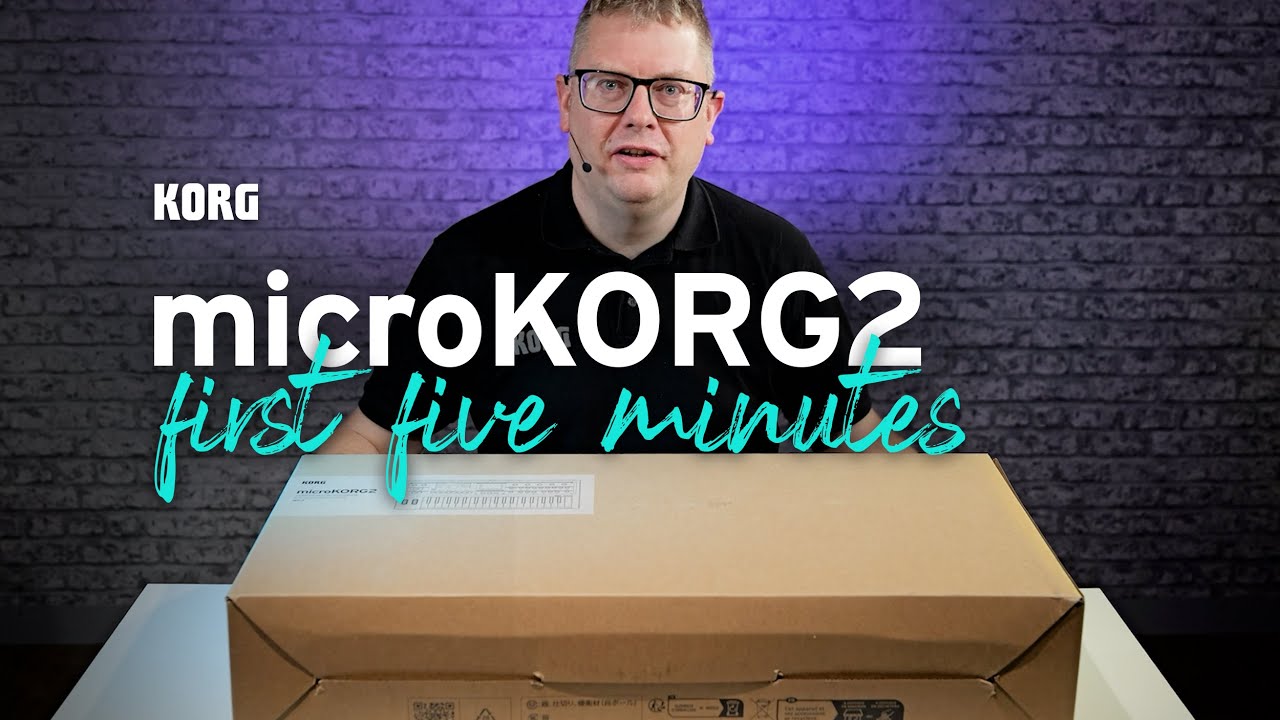
Korg MicroKorg 2
Alternatives
Specifications
Price |
£479/$599/€549 |
Key features |
Keyboard: |
Contact |
