MusicRadar Verdict
The Walrus Canvas Power HP is a leading option in what is currently a limited pool of options for power supplies that can cater for current-hungry modellers alongside other pedals. This compact solution is a worthy investment for anyone who wants to build a pedalboard around their Quad Cortex, Headrush or Fractal unit.
Pros
- +
Can power amp modellers from Neural, Line 6, Headrush and Fractal alongside additional pedals.
- +
Switchable 9v and 12v supply for its 3A output.
- +
Small and ideal for fitting to compact 'board builds.
Cons
- -
If you're planning on expanding your pedalboard, keep in mind there are only four outputs here.
- -
Power supply is a seperate unit, but it is compact.
- -
Although pretty expensive for a four-output power supply, it is fairly priced Vs similar competition right now.
MusicRadar's got your back Our team of expert musicians and producers spends hours testing products to help you choose the best music-making gear for you. Find out more about how we test.
What is it?
It doesn't seem so long ago that pedal power supplies with 9V outputs capable of powering effects with 500mA of power draw were an exception rather than a rule. And while many pedals like overdrives are still well under 100mA, the continued rise of amp modeller and multi-effects units has seen things change. While the idea of a do-it-all unit like the Neural Quad Cortex is often the reality for many players, there are those who want to run them alongside their favourite pedals. And not have to use multiple power supplies to do so.
The industry has answered this call, but not to the extent we might expect; power supplies with multiple isolated outputs and at least one with very high current draw headroom for a flagship modeller are still actually quite rare. And this puts the Walrus Audio Canvas Power HP in a rarified group.

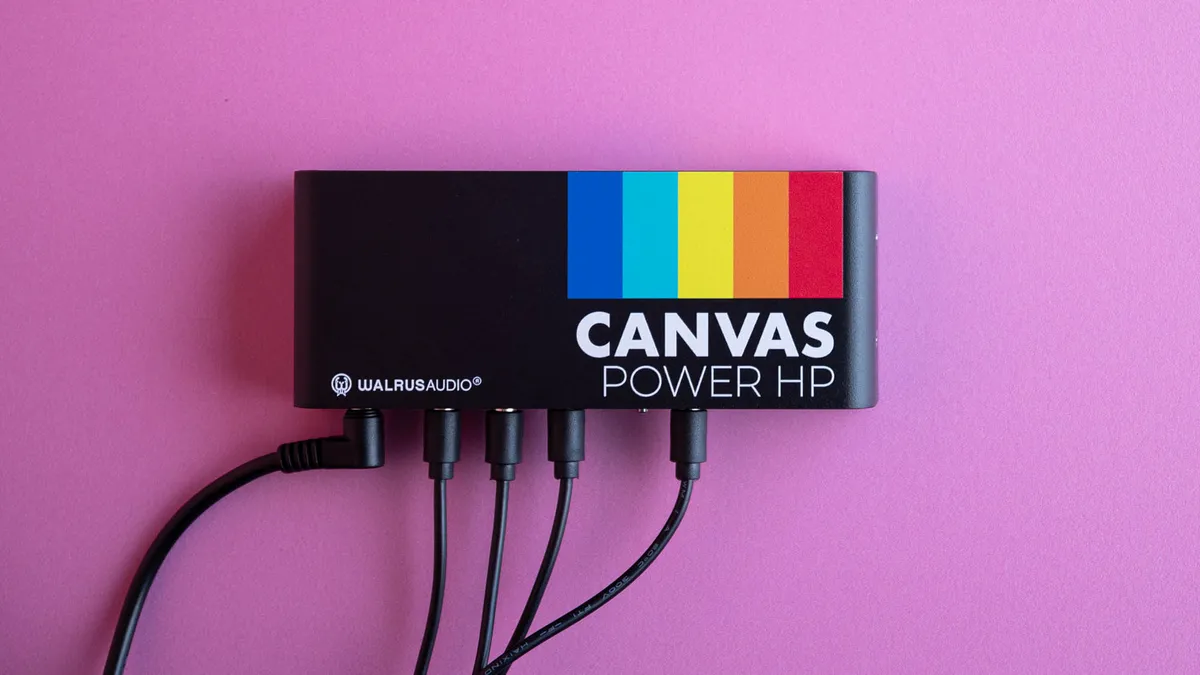
The HP part of the name makes the proposition clear: High Power. Part of Walrus Audio's big push in US-made utility pedals with its Canvas range in recent years, the HP is one of a number of power solutions from the company. With one of its four outputs offering up to a whopping 3,000 milliamps (3A) of draw from one, alongside three 500mA outputs, it's a compact solution for anyone looking to create a modeller-based 'board.
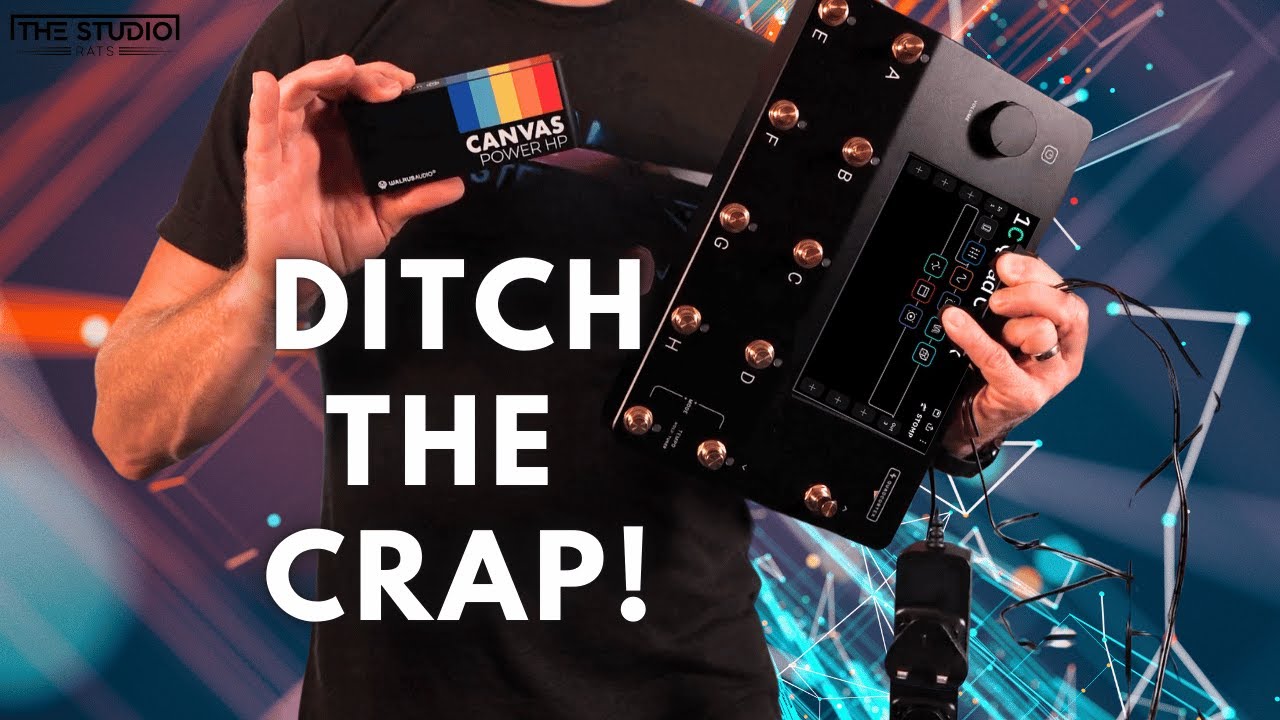
While the larger Quad Cortex (and the HeadRush Flex Prime) will use the whole 3A at 12V, the newer mini model is only 1.2A at 12V, while the Fractal AM4 is 1.3A but requires a 1.5A supply. Older units like the Helix Stomp are a minimum of 1A at 9V. The Power HP can comfortably handle these from its higher output without you needing to use a splitter cable to spread the current draw from multiple outputs. But I think the main potential appeal here is really for Quad Cortex users because of that huge 3A capability. This is the only one of the four putputs that is switchable between 9V and 12V to accommodate different modeller needs.
Specs
- Launch price: $229.99 | £225
- Type: Pedalboard power supply
- Connectivity: 3 x isolated 9V outputs with 500 mA, 1 x isolated 9V / 12 V switchable output with 3000 mA (3A), 24V thru, input for included
- Power: External IEC power supply (48W, 24V, DC2A)
- Dimensions: Power HP 13.3 x 5.4 x 2.54 cm for Power HP, Power supply 9.5cm x 4.3cm x 2cm
- Options: Walrus Audio Canvas Power 5, 8 and 15 Link with 500mA outputs for extending Canvas Power supplies. Canvas Power HP+ ($349.99) offers 12 outputs (7 x 9V 500mA and 2 x 9v/12V switchable 3A)
- Contact: Walrus Audio
Build, usability and performance


While a pedal may require 9-volts of electrical power, that isn't the whole story when it comes to power supply requirements. Current draw is measured in amps and measure the flow of electrons being pushed through a circuit. The higher the flow, the higher the current draw.
Digital Signal Processing (DSP) often requires these higher flows, around 500 Milliamps (MA) for some amp modeling pedals like Universal Audio's examples, all the way up to 3,000 Amps for the Neural Quad Cortex. That's in stark contrast to something like an analogue fuzz pedal that can be around 15mA. So if you're running digital pedals, it's important that your power supply's output can handle the current draw requirements of your pedals for reliable operation.
It's important to note that the Canvas Power HP isn't just one unit – you need the second external power supply 'brick' that's included in the box. This is under 2/3 the size of the Power HP itself and connected via a 2.1mm cable, powered by an IEC mains lead (also included). IEC connections are always preferable in my experience because of the ease of replacement and finding spares at live venues. The recent Lines 6 Helix Stadium models and Fender Tone Master Pro both use IEC connections natively, so can't benefit from the Canvas Power HP.
While it would be good to see this integrated into one unit like the HP Power's closest competitor, the Cioks DC7, that power supply requires a separate $89 device called the Crux on top of the circa $250 DC7 price. This allows the 12V switchable voltage selection the Quad Cortex requires to work from one output. The other option for the DC7 is to aggregate the 12V requirement by combining four ports to power the Quad instead. So it's a case of swings and roundabouts in that regard, with a lower outlay for this Walrus Audio option at the time of writing.
The upside of the separation here is that there's some added flexibility with two smaller components when it comes to placement under (or on) the pedalboard. For, example some pedalboards have an IEC connector built in or available as an additional module, and I think it would be easier to link this separate supply.
Whatever your scenario, Most of us will choose underneath the pedalboard to install this and to free up as much space as possible on top, which unfortunately means less time looking at the Power HP's pleasing combination of lightly textured matte black metal casing with Canvas colour stripes.
While the unit itself is slight, it's sturdy and it comes with a C-ctyle mounting bracket set with threads installed in the case for fixing. You'll still need to attach the power supply by other means, though. I usually opt for 3M Dual Lock for all my pedalboard builds as it's more secure than the ubiquitous adhesive-backed hook-and-loop. It would be great to have a small amount included here, but for this temporary testing I'm using my own cable ties for some pedalboard setups with my Rockboard Quad 4.2 and a cheap Amazon-sourced compact pedalboard I'm really liking of late by a brand called EchoPK. The larger Rockboard features a Quad Cortex, the EchoPK with the mini QC variant, swapping out with the Fractal Audio Systems AM4 too.
Inside the slide-out draw-style box there's a selection of DC cables, and that's something I'd expect with any power supply these days; but the ones here acknowledge the reversed polarity requirements of some modellers and pedals. There's one each of 2.1mm and 2.5mm reversed and normal polarity DC cables, colour-coded with white, red, blue and yellow jacks, as well as three standard black 18" cables. Everything you need to get started.

Some of the pedals I used alongside the modellers include my own 300mA UAFX Astra, Boss DM-101 Delay Machine and a Black edition DigiTech Drop I have in for a Guitar World review, as well as a borrowed 500mA Sheeran looper +. In addition to home use, the most current-hungry Rockboard / Quad setup was put through its paces during a four-hour band rehearsal to see how it faired in a less-than-professional practice space and all the variable power challenges that can bring.

Like all the best pedal power supplies, the Walrus Audio Canvas HP Power was not seen or heard during playing
For the setup with the Fractal AM4 I even tried a fourth extra pedal in the form of a TC Electronic PolyTune – using my own splitter cable to share a 500mA output with the Drop.
And… I have nothing negative to report at all. Installing was clean and simple, with the small sizes of the HP Power and its power supply easily slotting into the limited space of the Amazon-bought board. With all the setups I had no issues with unwanted noise or power failure. Like all the best pedal power supplies, the Walrus Audio Canvas HP Power was not seen or heard during playing.
Verdict
Verdict: ★★★★½

Pedal power supplies don't exactly set most players' pulses racing when it comes to buying propositions, but when they let you down, the show is over. So investing in quality after you've spent – sometimes – four figures on a pedalboard, modeller and pedals is worthwhile. While the Canvas Power HP might cost more than that overdrive pedal you've had your eye on, the long-term benefits if you do have a modeller as the heart of your 'board, are pretty significant here.
I like the compact size, and appreciate the fact that it's currently the only compact power supply you can count on to power a 3A, 12V amp and effects modeller alongside pedals without buying any extra kit. That alone will be a selling point for Quad Cortex and Headrush Prime owners building a rig. If your modeller is less current-hungry, your options are a bit wider in the market, but will often involve combining 500-600mA outputs to power the device. The Power HP certainly has compactability on its side as well as power scope, but with only three extra 9V 500mA ports you'll need to consider the limitations if you foresee having a growing pedalboard rig.

For me, with my ideal setup of a Quad Cortex, PolyTune (I just prefer it over the Neural's in-built tuner), UAFX Astra and a 120mA Boss XS-1 Poly Shifter, it would be enough for now. And in future I could split an output, providing I wasn't going for a very hungry fifth unit on the 'board.
For future-proofing, Walrus does provide a 24V thru output for additional units if you do ever want to add more pedals to the mix – but you'd need to purchase an additional Link model from the Canvas Power range to do so. It's a good option to have available, though I think the primary appeal here is for compact, modeller-based pedalboards. And for that, the Power HP is mission accomplished.
MusicRadar verdict: The Walrus Canvas Power HP is a leading option in what is currently a limited pool of options for power supplies that can cater for current-hungry modellers alongside pedals. This compact solution is worth a worthy investment for anyone who wants to build a pedalboard around their Quad Cortex, Headrush or Fractal unit.
Hands-on videos
Mark Johnston

The Studio Rats