


In early 1994, eight months before she started work on her third album Boys For Pele, Tori Amos told Spin magazine how much she respected a certain quality in the work of her friend Trent Reznor.
“I love the screaming male aggression of his music,” enthused Amos, “because I’m not in touch with that part of myself so much.”
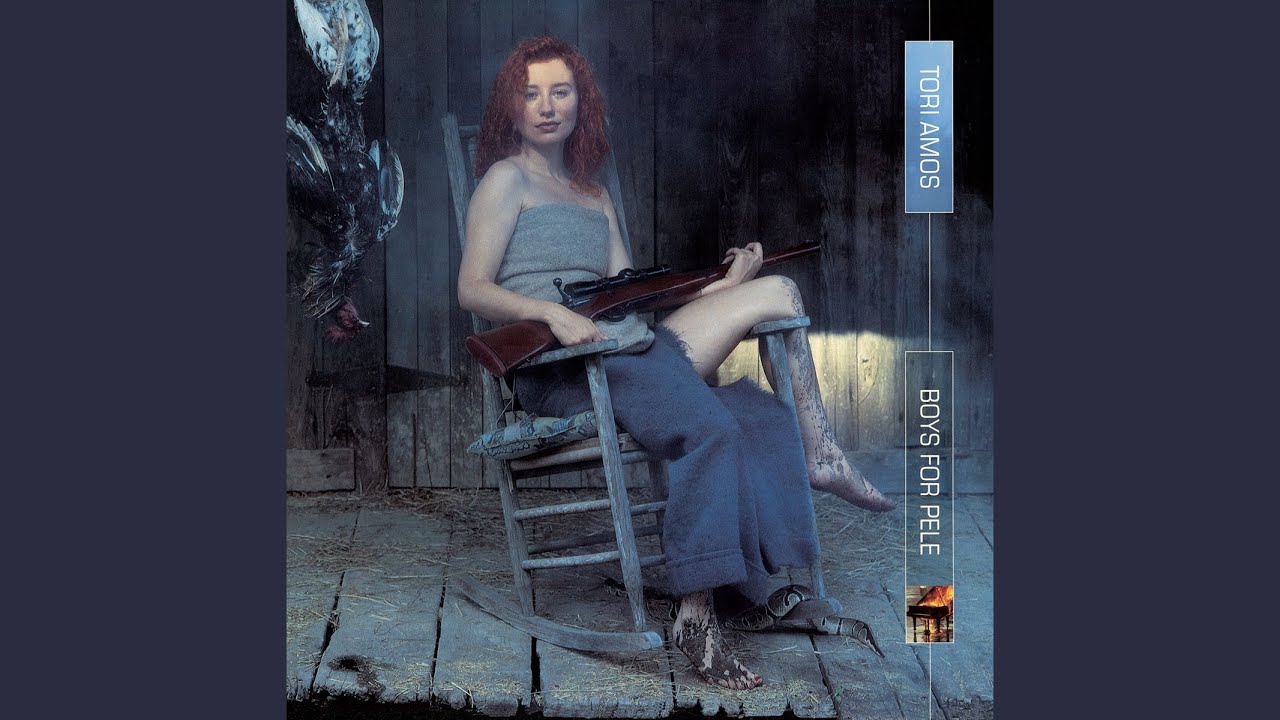
It’s a situation she would rectify head-on with Boys For Pele, a hugely divisive album named after the Hawaiian goddess of volcanoes.
It’s a dark, uncompromising 70-minute, 18-track opus on which Amos unleashes a heady range of twisted, cathartic and deeply emotive music.
The album was described by Emma Madden of Pitchfork magazine in 2025 as “strange, unsettling and outside the bounds of any prevailing canons of good taste or common sense that it at once summons and repulses you.” Madden went on to note that “It is also extraordinarily beautiful”.
Nowhere was the bridge between the sonically abrasive and the sublime more evident than on the song Professional Widow, the third single on the album, which was released on 2 July 1996.
Professional Widow epitomises the intense, percussive sound that Amos dubbed “thrash harpsichord”, a grinding sonic cauldron set against a driving 4/4 groove with heavily syncopated 5/4 sections that give the track a uniquely uneven feel.
In the summer of 1996, an Amos-endorsed remix by Boston-based DJ, producer and remixer Armand Van Helden would sear itself into the public consciousness after causing a stir in US clubs and on the terraces of Ibiza. This remix topped Billboard’s Hot Dance Club Play chart and after it was released as a single in the UK it reached No.1 in the UK Singles Chart in January 1997, knocking the Spice Girls’ 2 Become 1 clean off the top slot.
For Amos, who had been viciously criticised for the song by some critics and her own record label, such success must have felt like a vindication of sorts. It certainly reflected her fearless, unflinching, commitment to her art in creating a song that is so seething, powerful and compelling.
For many fans who had been drawn to Tori Amos’s whimsically catchy 1994 transatlantic radio hit Cornflake Girl, Professional Widow and the Boys For Pele album on which it appeared came as something of a shock. The new material was lyrically denser and far less accessible than the two albums that had preceded it – Little Earthquakes (1992) and Under The Pink (1994).

Boys For Pele was also greeted with fierce resistance from some critics, who variously described it as “exasperating”, “pretentious” and “self-indulgent”.
But that was nothing compared to the reaction of her label Atlantic Records when she first unveiled the album to them back in 1995.
Amos reportedly went out to dinner while executives at Atlantic held their first listening session. When she returned to the studio’s control room she was met with a decidedly frosty reception.
“I have had rough receptions, but I just was not expecting the look on people’s faces,” recalled Amos. “I can’t even tell you what it was like. It was really just vicious, the most shocking, awful things you could hear from people. Only the classical music department got it.”
It wasn’t just the sound – the war-cry howls, the driving, distorted harpsichord and piano or the relative absence of radio-friendly hooks – that raised eyebrows. Even before it had been scheduled for a single release, Professional Widow in particular was being singled out by journalists for the explicit nature of its lyrics.
“Starfucker, just like my daddy, yes” intones Amos on the chorus, before closing the song with a wry and resounding “Give me peace, love and a hard cock”.
There are also direct references to heroin and suicide in the song’d outro:“Mother Mary, China White/Brown may be sweeter/She will supply, she will supply.”
Professional Widow was rumoured to be about Courtney Love. According to AV Club, Love said she had never determined whether she was supposed to be the subject of the song’s title, and in 1996 Amos reportedly said that she had never met Love.
There were rumours of a feud between Amos and Love, although both artists have spoken respectfully about each other over the years.

The rumours persisted, but in an article by Dan F Stapleton in the Financial Times in 2018, Amos is quoted as suggesting that the song’s inspiration is derived from a wholly different source.
“It's based on that part of myself that’s Lady Macbeth,” she said, “and if you have any Lady Macbeth in yourself ... that song can be about you.
“That's my cornerstone song. It’s my desire to be king, to have what the big boys have, and giving up my femininity and vulnerability to taste it.”
The reality is that Tori Amos was doing what any gifted artist with integrity would do – moving forward creatively and remaining true to her vision.
Boys For Pele is a dark, uncompromising album, regarded by some as Amos’s baroque phase, the point at which her art veered between ugliness and beauty. It is also fuelled by a cathartic rage.
“Boys For Pele,” wrote Alex McPherson in a review in Crack magazine in 2021, “is nothing short of a full-scale purge of patriarchal repression aimed squarely at its sources of power – religion, history, politics, community – manifest in music which is both the sparsest and most confrontational of her career.”
Amos was also moving forward in her personal and professional life. She had parted company with her boyfriend Eric Rosse who co-produced her first two albums and helped Amos shape her sound. Boys For Pele marked her move into self-production and independence. But significantly, the album became a creative focus for the fallout from the breakup of this relationship.
By the time she began work on Professional Widow, Amos had bought a “wonderfully damp” Georgian house in County Cork, Ireland, which she used as the creative base for recording. Some of the recording took place in a church in the small village of Delganny, County Wicklow, which was known for its outstanding acoustics.
Professional Widow unfolds like a wonderfully rich stream of consciousness. Lyrically and sonically, it’s visceral, intoxicating and raw.
Harpsichord and piano are the dominant instruments used by Amos on the song while bass and drums respectively are provided by revered musicians George Porter Jr and Manu Katché. Together they created a raw, driving, stripped-down sound, with throbbing beats and an infectious groove.
Amos utilised field recordings of sounds she heard as they recorded, such as the sound of a farmer shovelling manure. Another sound that reportedly made it into the mix was a bull, which Amos heard bellowing from nearby stables. Amos reportedly felt an empathy for the bull’s emotional state and sensed it would make a fitting addition to the percussion tracks.
Vocally, Professional Widow is a tour de force. Amos utilises every texture, nuance and technique available within her rich and powerful timbre.
She twists, stretches and bends the vowels, fearlessly expanding and stretching the phrasing in cathartic fashion.
But within the sweeping squalls of sound, there are moments of great delicacy, such as at 1:29 when the whole track drops to soft mellifluous piano, with Amos delivering the lines in gentle and breathy high-pitched trills. “Rest your shoulders, peaches and cream/Everywhere a Judas as far as you can see.”
It all makes for a heady, intoxicating sound and was acclaimed by many critics.
Neil Z Yeung of AllMusic called it a "powerful dose of industrial-piano ferocity that holds nothing back in its demands for peace, love, and a little something extra”, while Paul Verna of Billboard called it “searing”, “groove-heavy” and a highlight of the album.
But for all its merits, Amos’s original version of the song is not the one that most people remember. That distinction goes to Armand Van Helden.
There were numerous remixes of Professional Widow, but Van Helden’s Star Trunk Funkin’ Mix eclipses them all for its sheer inventiveness.
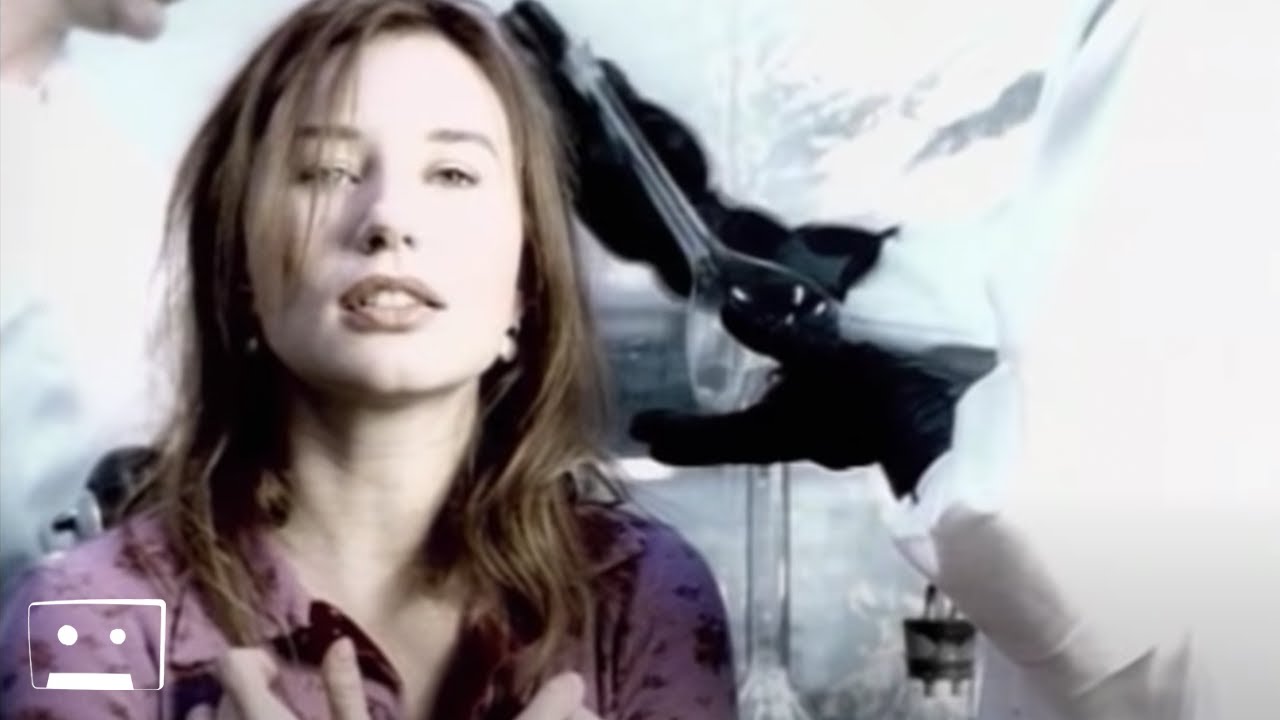
Van Helden used only a fraction of Amos’s lyrics, specifically the lines “Oh honey bring it closer to my lips” from verse one, “I said, it’s gotta be big, it’s gotta be big” – a slight variation on a line from the verses – and “Beautiful Angel, calling/We got every re-run of Muhammad Ali”, a line from the bridge.
Van Helden’s remix was a 128bpm club thumper, which honed in on the looped and speeded-up “Honey bring it close to my lips” vocal refrain over a hypnotic bassline and driving 4/4 beat.
There was an almost instant and insatiable desire for Van Helden’s mix, which became an all-pervading presence in the UK in the summer of 1996. It remains one of the best-remembered pieces of dance music of the 1990s.
In the book 1,000 UK #1 Hits, Tori Amos recounted how she first heard of Van Helden’s request to remix Professional Widow.
"I was called by a friend who was the head of dance at Atlantic America and he had the feeling that Armand van Helden could do something with the album,” she said. “Boys For Pele was a very extreme record and very acoustic and Armand said he understood the character of the girl in Professional Widow. He did a great job on it but it's not really a song anymore – it is a vibe with a groove."
Amos’s original song has been somewhat overshadowed by the remix. But as with all truly great music, Professional Widow and the album Boys For Pele have been increasingly revered with the passing years, a fact acknowledged by writer Kelly McClure of Vanity Fair in an interview with Amos in 2016, on the album’s 20th anniversary.
“The album was the perfect storm of raw emotion for the back end of the 90s,” wrote McClure in her introduction to the piece, “when ‘alternative’ really meant something.”
