


NAMM 2026: Polish instrument brand Polyend has a history of making unique and adventurous products, from its Perc robotic drummer to Tracker, which reimagined retro music software as a creative sampler.
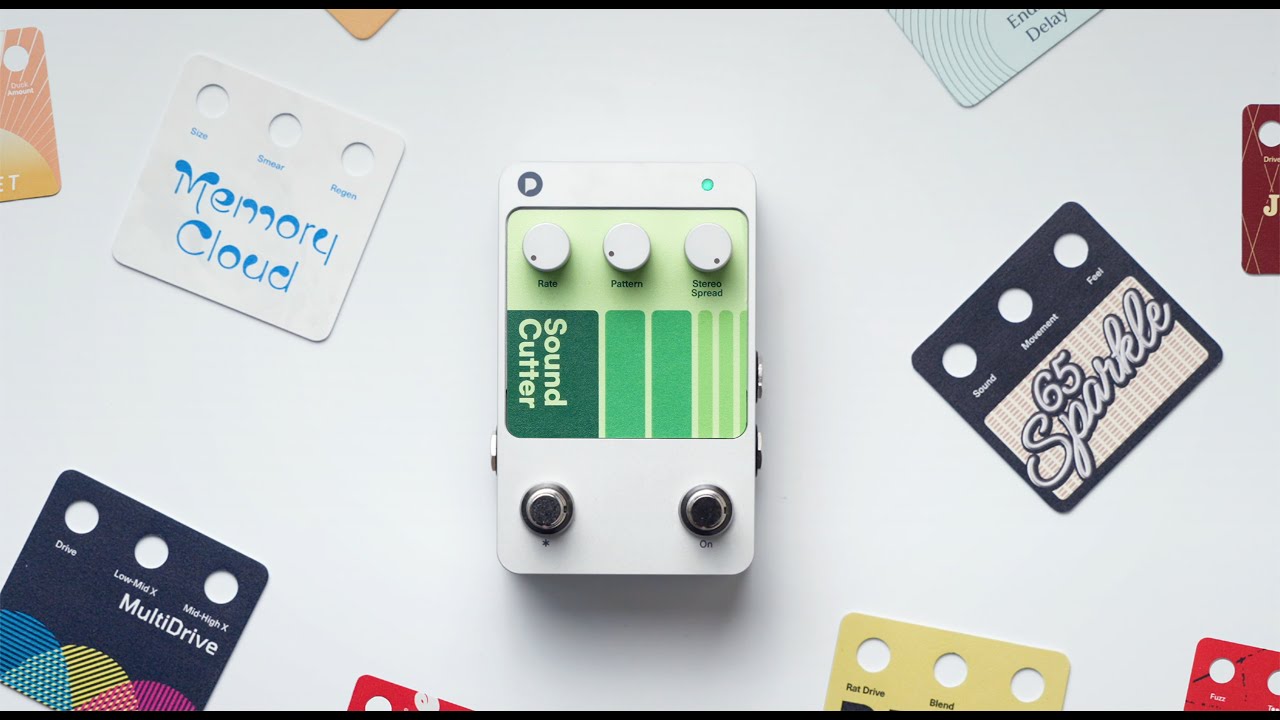
Its latest announcement, Endless, is another eye-catching innovation. Housed in a sleek modernist stompbox, Endless is a completely customisable and open-source effects pedal that allows users to swap its internal sounds using a variety of approaches.
The most straightforward of these is to simply choose an effect from Endless’s existing library. This is a community-created pool of sounds that Polyend says is growing daily, but already contains options including multi-mode distortions, a micro-looping arpeggiator, granular reverb/delay, glitchy looper and tape simulators.
Endless’s most interesting features, however, are the ways it allows users to create their own effects from scratch. This can be done using one of two approaches. Those with coding abilities can develop their own effects in C++. Polyend has released a GitHub SDK with examples, to help developers get started.

For those not au fait with coding, there is a system called Playground, which is currently in beta. Playground is a text-based generator that will turn user descriptions into playable effects. In Polyend’s words, users can “describe an idea, download the file, and drop it into the pedal. Play it, suggest tweaks, ask for improvements, and get results without coding.”
Interestingly, unlike seemingly every other music technology developer on the planet, Polyend appears to be avoiding the mention of ‘AI’ in its descriptions of Playground, despite the fact that its prompt-to-code capabilities certainly appear to sit in that realm.
Although the community library of effects is free, Playground will use a system of tokens in order for users to purchase custom effects. When buying Endless, users will get $20 of Playground tokens.
As for how many tokens are required to generate an effect, according to the Polyend site, “it depends on the complexity of the effect and the number of iterations. A simple delay could cost $1.00 or $2.00, whereas a complex granular looper might cost up to $5.00.”
Only registered Endless owners will have access to Playground, so there’s no way to test the system before buying.

In all cases, uploading new sounds to the Endless hardware is said to involve a simple transfer via USB-C.
The hardware itself has a custom-machined aluminium enclosure and a stereo 48kHz/24-bit audio path. Under-the-hood, Endless is powered by a 720 MHz ARM Cortex-M7 processor.
There are stereo line-in and stereo line-out/headphone connections, along with an expression input. The top control panel has two foot switches and three rotary controls. The right foot switch is used as a on/bypass control, while the left foot switch and rotaries are entirely customisable. By holding the ‘on’ switch, users can also use the rotaries to access dedicated preamp, master and mix controls.
Endless also has a swappable magnetic faceplate, allowing users to design and change the look of its top panel. Each pedal ships with a blank faceplate, and Polyend will make additional designs and DIY specs available, so that users can design, create or purchase additional options.
“At Polyend, we try to design devices from a new angle,” said Piotr Raczyński, Polyend CEO. “Before we started Polyend, I was fiddling around with DIY guitar boxes. I always wanted a customisable effect box. Endless is that idea taken to the extreme. If you can describe the effect, you can make your own. If you can code it, you can shape it without limits.”
Endless is available to preorder now, priced at $299/€299. The units are scheduled to start shipping February 22, 2026. Endless ships with a blank faceplate and $20 in Playground tokens.
