MusicRadar Verdict
Ibanez serves up another RG that is built for stunt guitar, priced for virtuosos-in-training, and with enough sounds to please the fusion kid and headbanger alike, and that has always been its USP. And that neck – the Autobahn for the fretting hand – is not going to put the brakes on you.
Reasons to buy
- +
The Wizard III neck never disappoints.
- +
5-way switching makes it versatile.
- +
Good price, good weight.
- +
Reverse headstock.
Reasons to avoid
- -
Tuners are a little unimpressive.
- -
Jatoba fingerboard is no substitute for a dark piece of rosewood (or a light piece of maple)
- -
Some might want one of the Edge-Zero II equipped models for the full RG Super-Strat experience.
MusicRadar's got your back Our team of expert musicians and producers spends hours testing products to help you choose the best music-making gear for you. Find out more about how we test.
What is it?
The Ibanez RG is one of the enduring miracles of electric guitar design. You can find it at all price points in the Ibanez catalogue and, as a general rule, the performance-to-price ratio remains reassuringly high.
It has been in production since 1987, initially as a more affordable alternative to Steve Vai’s JEM, with which it shares that offset double-cutaway silhouette but lacks the cut-out Monkey Grips and Tree of Life fretboard inlays (and Vai’s DiMarzio pickups).
This player-friendly unit-shifter has gone forth and multiplied over the years. There are super-premium Japanese-made J Custom and Prestige RGs that push the envelope of high-performance. There are über-metal RGs in the Iron Label series, electric guitars for beginners in the entry-level GIO series, and all in between.
You can find 7-string guitars bearing the RG designation, 8-strings, too. There is even a 9-string with a 28” scale. Beastly.
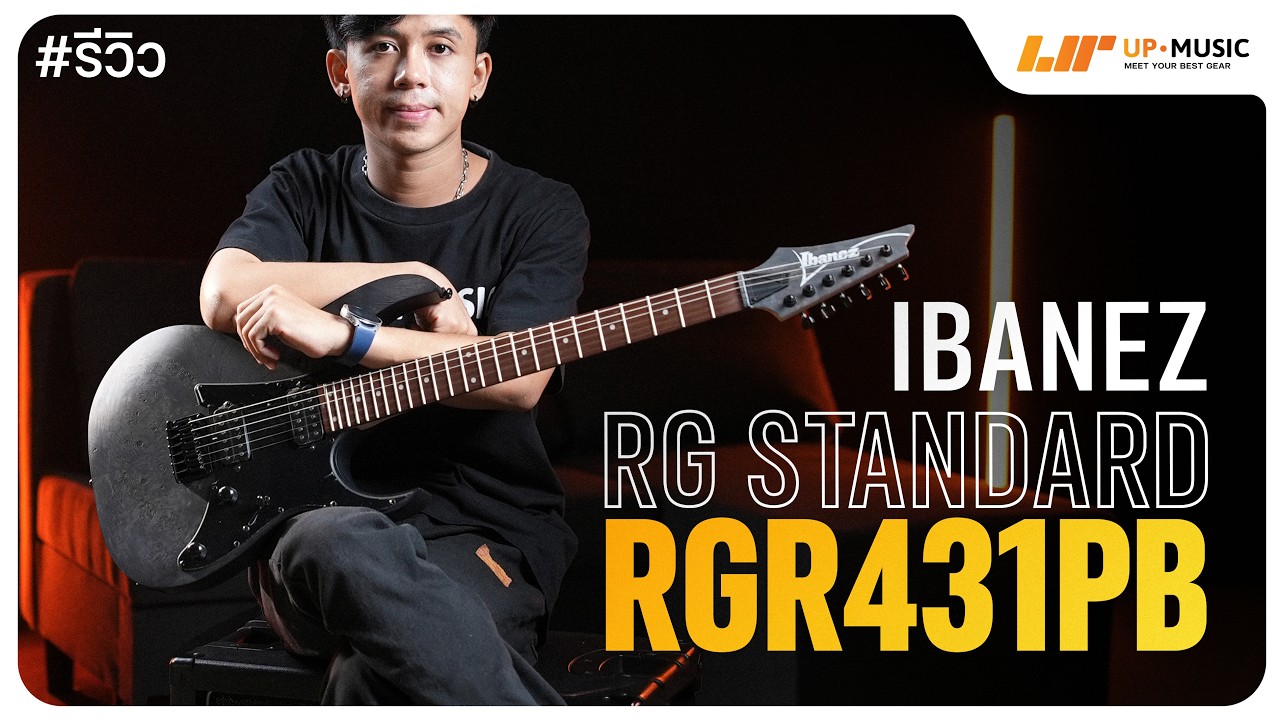
What we have today is a little more conventional – six-strings, the usual 25.5” Fender-esque scale length, the super-skinny Wizard neck – and yet the RGR431PB still speaks to the constant evolution of the RG concept.
The RG made its name on the back of that aggressive S-style body shape but also the Gotoh-designed Edge series double-locking tremolo units that drew inspiration from the Floyd Rose. Here we have a six-saddle hardtail instead.
We also have dual-humbuckers, as opposed to the traditional HSH configuration. Had anyone heard of meranti as a tone wood in the early ‘90s? Or jatoba for a fretboard? The very best guitar designs endure reinterpretation.
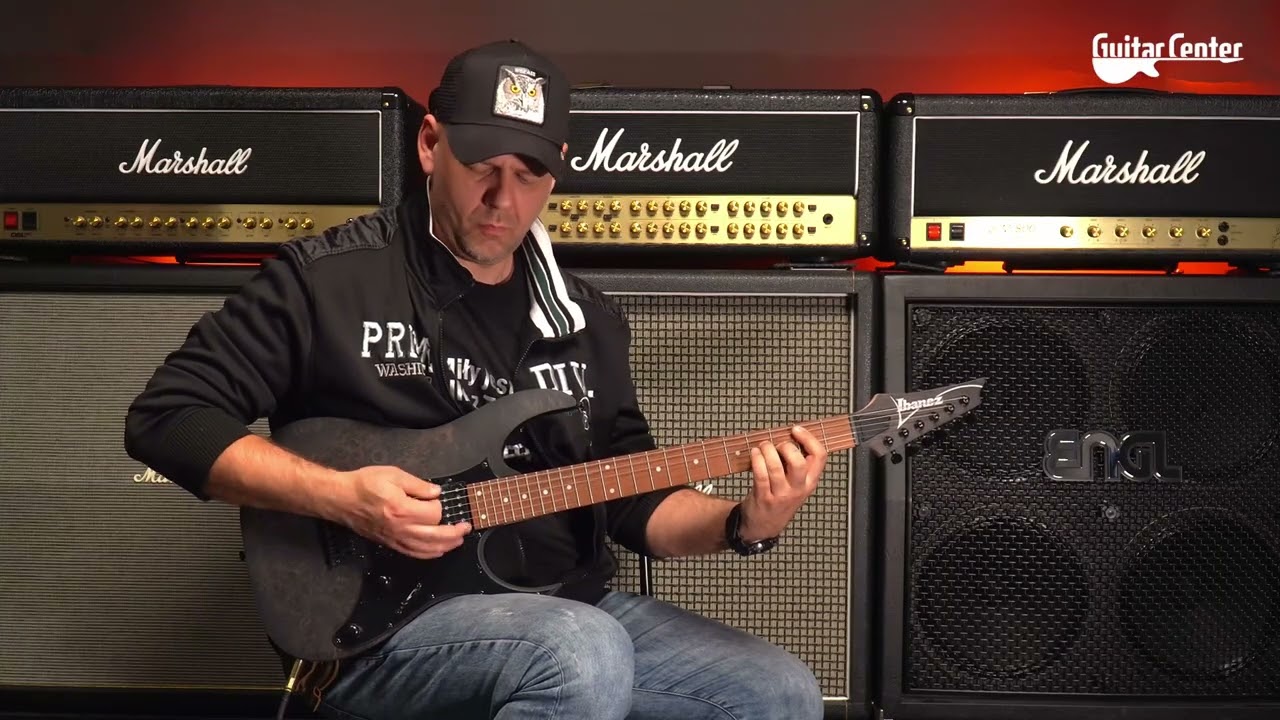
This Charcoal Gray Flat stain over a poplar burl top is far removed from the solid colour finishes of ’92, Laser Blue, Grape Ice, Purple Neon et al, and from a distance, with that reverse headstock, this looks of a piece with the Iron Label’s blackout aesthetic. Until the light hits it, revealing the details of that poplar burl top.

With a street price that offers change from 500 bucks, the Standard series RGR431PB is absolutely a budget-friendly purchase, and yet, it has the name Ibanez on the headstock, the design DNA of its forebears…
And at this point I should declare a certain bias here – an abiding affection for the RG. My first quote/unquote good guitar was a ‘92 RG770 in Laser Blue with one of the original Edge Floyd-style vibratos. The RGR431PB has a lot to live up to.
Specs

- Launch price: $499 | £429 | €459
- Made: Indonesia
- Type: Six-string electric guitar
- Body: Meranti with poplar burl top
- Neck: Maple / Wizard III profile
- Fingerboard: Jatoba with dot inlays
- Scale length: 25.5"/648mm
- Nut/width: Plastic / 42mm
- Frets: 24, jumbo
- Hardware: Sealed die-cast, F106 hard-tail bridge, black
- String spacing at bridge: 10.5mm
- Electrics: 2x Ibanez Quantum ceramic humbuckers, 5-way pickup selector, volume, tone
- Weight: 6.46lb/2.93kg
- Options: There are 20-plus RG models in the current Standard Series, including the RG470PB [$649/£549/€659] has a Red Eclipse Burst poplar burl top, HSH pickups, and Edge-Zero II vibrato, and the ash-bodied RG470AHM, which has a maple fingerboard and similar configuration and is priced $649/£499/€530
- Left-handed options: No
- Finishes: Charcoal Gray Flat,
- Cases: No
- Contact: Ibanez
Build quality

Build quality rating: ★★★★☆
Guitars at this price point tend to pull the eye one way then the other. There are details here that might fool you into thinking this is one of those high-end RGs, such as the top. Poplar burl is not AAAAA figured maple but it’s still a premium appointment on sub-$500 guitar like this – and it is not a veneer.
Ibanez gives us a generous 6mm cap, and it’s meticulously applied, left with an open-pore finish as on the back of the body. Matte finishes can attract fingerprints but not this.
Unlike early RGs, this has no neck plate, just four recessed screws securing the neck, and it makes for a more ergonomic heel (more on that shortly). It’s noticeable around these recessed bolts that the Charcoal Gray stain does not extend down to the entirety of the holes – but no one is going to see a little exposed wood.
Concessions to budget mean that we have an unbound neck and headstock, and that exposes a little untidiness with the headcap paint job. Again, no one will notice but still.
If the prospect of a jatoba fingerboard does not fill you with joy – it’s lighter in colour than rosewood, with a brickish redness to it – it is at least, uniformly coloured, dense and hard, and not quite as dry as some rosewood alternates feel.
The knurled metal knobs have a nice action. The five-way switch is solid. The bridge is a tidy little six-saddle job, strung through the ferrules on the underside of the body, and it has recessed grub screws so that you don’t scratch your palm when muting.
These are all good signs.

The sealed die-cast tuners aren’t great. There tends to be a little travel before the string changes pitch. But these can always be upgraded.
One thing about any electric at this price is we are looking for a solid foundation, perhaps your second guitar or first electric for a player who is going to stick with the instrument. We want a guitar that we can future-proof through mods.
Playability

Playability rating: ★★★★★
This where the RG excels. Those prudes who take offense at a neck measuring just 19mm at the 1st fret and swelling out to a less-than-tumescent 21mm at the 12th, look away now. The Wizard III is a neck of indecent proportions. There are some guitar-playing civilisations that would call for it to be banned on account of its skimpyness.
Not this one. We’re all in on it, and allied to the 15.7” fingerboard radius and fat frets, it really is an easy instrument to have fun on.

All joking aside, some players might find a little more timber on the neck to be a more comfortable proposition, particularly if playing chords for a long period of time, but that comes down to individual preference.
What we can all agree on is that this neck heel is an improvement on those early ‘90s RGs. The upper-fret access is top-tier.
Sounds

Sounds rating: ★★★★☆
Ibanez’s Quantum humbuckers have been kicking around in one form or another since ’94 but came back into production about 10 years ago and are one of these passive ceramic winds that are aimed at high-gain players, perhaps even the kind who might silently harbour fixations on having an active humbucker doing the Lord’s work at the bridge.
Personally, I lean towards the passive designs. The smoke alarm, TV remote, Blu-ray player remote, kitchen scales, bathroom scales… there are already too many batteries to change. But also my favourite pickups are passive. And while I am quite sure the Quantum ‘buckers won’t be dethroning the Seymour Duncan JB any time soon, they suit this RG well.

What is really impressive, however, is the tone pot’s ability to take some of that treble off without muddying everything up
They remind me of the Quest series humbuckers, in that their bright and punchy, abundantly clear, if a little strident at the bridge. However, with the gain jacked up on the trusty Blackstar tube combo there is that harmonic volatility that you need from a shred guitar. That almost goes without saying.
What is really impressive, however, is the tone pot’s ability to take some of that treble off without muddying everything up. There’s so much travel in it that the bridge pickup can do a decent impersonation of the neck pickup when you roll it all the way back.
The five-way switching presents you with options. You can run the neck pickup full-fat, or in parallel, run both humbuckers in series in the middle, run the inner coils of both humbuckers together, and have the bridge pickup on its own.
Positions 2 and 4 yield are a godsend for cleans, not quite single-coil snap but more elasticity, great for playing triads with a little chorus. Just note that there is a drop in output volume in the in-between settings.
Verdict

The question I find myself asking is whether I miss the vibrato unit. The RG has always wore it well.
You see the name on that reverse headstock, the sharpness of the cutaways, and there is a Pavlovian response, this great urge to play a harmonic and let it squeal as you pull on the bar. There is no whammy bar.
You see the name on that reverse headstock, the sharpness of the cutaways, and there is a Pavlovian response, this great urge to play a harmonic and let it squeal as you pull on the bar. But there is no whammy bar.
And yet, this bridge, easy to intonate, comfortable, tidy, is more than fit for purpose, and no one misses setting up the Edge tremolo when tuning down to D standard.
This presents players – especially those new to the instrument – with a fuss-free high-performance performance instrument with a touch of class with the poplar burl. Yes, we’d swap those tuners out over time. Most likely we’d upgrade the pickups, too.
But there is a lot to enjoy in the here and now. Divebombing might be off the menu but there’s nothing stopping you from bending the notes yourself, there’s nothing stopping you, period. For this is an RG and it’s all about the tearing it up on that fingerboard. Steve Vai wishes he started out on something like this.
MusicRadar verdict: Ibanez serves up another RG that is built for stunt guitar, priced for virtuosos-in-training, and with enough sounds to please the fusion kid and headbanger alike, and that has always been its USP. And that neck – the Autobahn for the fretting hand – is not going to put the brakes on you.
Test |
Results |
Score |
|---|---|---|
Build quality |
Those tuners were not that impressive, but a poplar burl cap is, as was the fretwork. |
★★★★☆ |
Playability |
Oh there is playability.... Lots of it |
★★★★★ |
Sounds |
Summary of why |
★★★★☆ |
Overall |
Summary of why |
★★★★½ |
Also try
Hands-on videos
UP MUSIC STORE
TV Guitar Center