MusicRadar Verdict
For those who find Strandberg’s space-age designs a little too alien, Ibanez’s Q series is the perfect middle ground. Harnessing some of the greatest tropes of modern headless guitar designs with more traditional guitar-like features, the QX527B is an accessible and ultra-playable, heavy metal beast that I can’t get enough of.
Reasons to buy
- +
Great high-gain and clean tones
- +
Very playable and super lightweight
- +
dyna-MIX10 switching system is its gig-friendly masterstroke
- +
Beautiful but subtle design
Reasons to avoid
- -
Flat neck profile might not be for everyone
- -
Mid-gain and crunch tones are a little disappointing
- -
25.5” scale makes it less viable for low tunings
- -
Dyna-mix switch is a bit sharp, approach with caution
MusicRadar's got your back Our team of expert musicians and producers spends hours testing products to help you choose the best music-making gear for you. Find out more about how we test.
What is it?
Considering headless guitars have enjoyed an exponential rise in popularity in recent years, it was no surprise to see Ibanez crash the party. Its Quest series, first launched in 2021 alongside a signature model for Ichika Nito, saw it decapitating its headstocks for the first time in its history.
The Japanese firm has since doubled down on its mission to conquer a headless market that frontrunner Strandberg once ruled with little to no challenge. Four more lookers came in 2024, with Nito again its poster boy. While he’s been used to help launch its all-new Alpha model – built as a modern progressive metal guitar to rival Abasi Concepts – Ibanez has reprised its 2026 headless line-up a little more quietly.
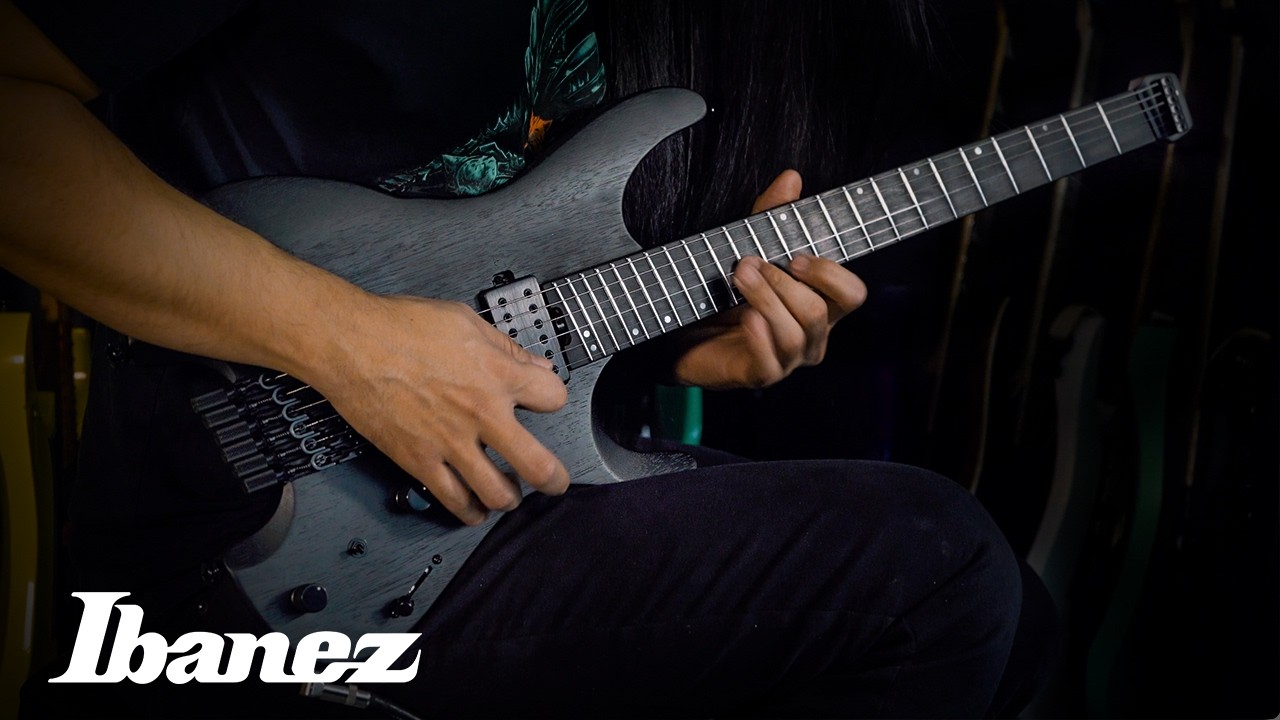
The none-more-black QX527B, which also has a six-string counterpart, is one of two extended-range models on the list, alongside the HSS-configured Q547PB. of the two, it is decidedly more metal.
Yet while its Quest series guitars are visually distinctive in the Ibanez lineup, their genetics are a little less so. An Okoume body and Parallel Wizard-7 five-piece neck made from roasted maple and bubinga, and ebony fretboards don’t deviate from its current go-to tonewoods.

Elsewhere, an Ibanez Mono-Tune bridge, which locks in Strandberg and Floyd Rose-style after-the-nut tuning, slanted frets, and luminescent side dots also feature.
With the wiring, Q58-7 passive ceramic humbuckers are augmented by Volume and Tone knobs and a dyna-MIX10 switching system, replacing a push/pull coil tap for a different approach to achieving single coil sounds.
On paper, at least, it’s very much everything the world has come to expect from Ibanez save for the obvious. Does this latest prog-metal-leaning axe increase the intensity of competition for the likes of Strandberg, or is this a coup that will fail to dethrone the king?
Specs

- Price: $1,299 | £1,069 |€1,223
- Made: Indonesia
- Type: Headless seven-string electric guitar
- Body: Okoume
- Neck: Five-piece Parallel Wizard-7, roasted maple/bubinga
- Fingerboard material/radius: Ebony, 20”
- Scale length: 25.5”
- Nut/width: Black plastic, 47mm
- Frets: Jumbo stainless steel frets
- Hardware: Ibanez Mono-Tune bridge, custom string lock machine heads
- String spacing at bridge: 68mm
- Electrics: Ibanez Q58-7 passive ceramic humbuckers, Volume knob, Tone knob, five-way pickup switch, dyna-MIX10 switching system w/Alter Switch
- Weight: 5.4lbs/2.3kg
- Left-handed options: No
- Finishes: Weathered Black
- Case: Black gig bag
- Contact: Ibanez
Build quality

Build quality rating: ★★★★½
Put simply, this guitar is another shining example of why the narrative that Indonesian-made 'affordable' guitars are low quality needs to stop. From the fretwork to the neck carve to its comfort-forward contours and robust, user-friendly bridge, the build quality is pretty immaculate.
There are no discernible flaws, and it’s really tightly put together with high-quality materials, with a special mention to the rather lovely neck joint.
The concept of headless guitars may be a little daunting for some, but what I think is the Q Series’ biggest trump card is that it really smartly bridges the gap between alien design and something most players are intimately familiar with.
Restringing is less fiddly than a Strandberg because the tuner caps stay on at all times – losing them and the washers is a nightmare, trust me. The neck profile, while fairly flat, is more traditional than trapezoidal, and making minor adjustments to the truss rod and individual saddles is really easy, with both the truss rod wheel and saddle screws easily accessible.
With it being a headless guitar, the “ergonomic” buzzword is naturally being bandied around with abandon. But Ibanez has the receipts to back it up here. The guitar sits comfortably and perfectly balanced on my leg with absolutely no neck dive, and has a really inviting contour for my right arm. It screams, “play me for days.”

The Mono-Tune bridge is a simple-yet-effective design, with the tuners being really responsive and holding tuning steadfast. Putting it through the wringer by dropping and changing the tuning in regular intervals over an hour or so, it rolls with the punches. Test passed.
My one small gripe here, however, is that the tuners are spaced very close together. With my Strandberg Boden, it feels easy to jump from one to the next when tuning. These are tightly packed together and are so surrounded by black that I can foresee minor issues on a darkened stage. But I also feel it’s something that I’d get plenty used to in time.
It’s like Ibanez has seen the Strandberg recipe, accepted that it’s selling like hot cakes, and decided to dial-down some of the weirder features to broaden its accessibility. And with a comparatively low price point, these factors feel like a big win in Ibanez’s mission not to scare off non-headless players.
Another shining example of why the narrative that Indonesian-made guitars are low quality needs to stop
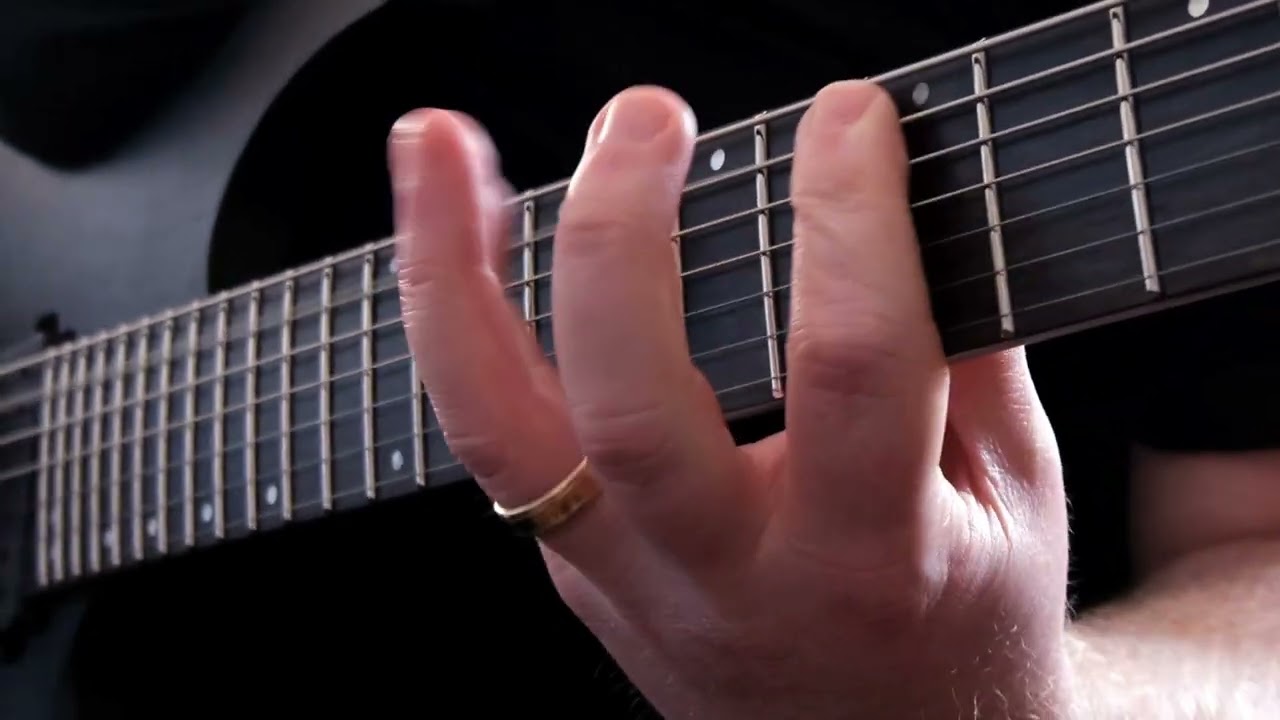
Elsewhere, I’m really impressed with the cutaway; my hand slides easily all the way up to the 24th fret, and from those frets on the lower strings, the neck is thin enough – without being gaunt – to make playing them just as easy.
Fans of super low tunings might be a little disappointed to see it retain a 25.5” scale, but it’s a smart move to make its subtly slanted frets, and extended-range feel familiar to those wading into such waters for the first time. I’d recommend a slightly thicker, 12–85 string set for tunings as low as drop F#.
It feels a little clichéd when a metal guitar is decked out in all-black, as Ibanez often does with its Iron Label line; this is another example. The Weathered Black finish showcases the beauty of the wood grain while maintaining a sleek, understated look. It’s a beautiful guitar, but you really have to look closely to admire it.
Playability

Playability rating: ★★★★½
Anyone vaguely familiar with Ibanez guitars will know its Wizard necks are designed for speed merchants, and are known for just how flat they are. Unlike Jackson and Charvel necks, which are thin and curvy, Ibanez takes a different approach, and the neck here is particularly flat. Still, it feels great in my hands.
It takes a short while for me to find the sweet spot for my picking hand that really let palm mutes either bloom or choke out at will, but since then, playing has become a real joy. The flatness of the neck does, personally, become more noticeable when playing the higher strings, but, honestly, it’s more about getting used to it than it is a drawback, because at no point do I find playing this guitar a chore.
Where Strandbergs are best seated on a right-handed player’s left leg with the neck angled upwards (although I freakishly buck that trend quite often), the QX527B is comfy on either leg without fuss.
Meanwhile, the dyna-Mix switch for “more realistic” coil-splitting is a dream. One of my biggest annoyances with push/pull pots is that they really aren’t geared for changes mid-riff. I have to stop playing to get my hand on the knob and activate the split coil. To that end, push/push knobs are frustratingly rare with off-the-shelf guitars. Here, it’s a quick flick of the wrist.

The dyna-Mix switch for split coiling is a wonderful quality-of-life addition
It is a little easier to activate humbucker mode by pushing it away from the strings than to flick it towards me for split coils. But with a small bit of practice, I’ve got the movement down to a fine art.
What I will say is that the metal switch itself has a little sharpness to it. I find myself flicking it with my middle finger near the cuticle, and it can start to hurt over time. Maybe I’ll grow a callous there in the long term, or I’d look to add a tip of sorts to it that both made it a slightly larger target, and also make hitting it a more gentle experience.
Compare it with the plastic, thumb-tack-like tip of the pickup switch, which is very user-friendly, offers a little resistance, and is controllable. The concept of a dedicated mini switch is genius, but its execution is just a little bit off.
On the whole, though, it’s really hard to fault its playability, with the dyna-MIX switch a wonderful quality-of-life addition.
Sounds
Sounds rating: ★★★★☆
Being an Iron Label, made-to-metal machine, it’s no surprise that the pickups pack some serious heat. The Q58-7 passive ceramic humbuckers hold their own more than I gave them credit for going into this review, ringing with lots of individual note clarity even at high-gain settings.
It can punch hard, as I found churning it through Odeholm Audio’s unrelenting Thall Amp, but the bridge pickup does have a fair amount of bass heft, especially on the seventh string, and that’s worth keeping in mind. Paired with Neural DSP’s Fortin Nameless amp, for instance, which prioritises a little more bite than sheer, caveman brutishness, stops it from getting too ground-shaking.
The neck pickup, on the other hand, smooths the edges of the tone, without getting too muddy, lending itself to really buttery, fast-flowing lead lines, and cleans with a sparkling quality without the fluff.
The bridge, in both humbucker and single-coil modes, is a little brittle for cleans, to my taste, but excels at icy, cab-free djent tones a la Tesseract and Spiritbox.

If I want the guitar to be a real firebreather, the Victory Amps Kraken on my Quad Cortex proves a real doozy
Again, though, the dyna-MIX switch is its secret weapon. Notably, it only affects the bridge, middle, and neck positions, meaning it simply doesn’t do anything in positions two and four. What’s clever about the system is that, while it turns humbuckers into snappy single coils, it prevents any volume discrepancies between the two. It ultimately makes the switch a great way to add a little more delicacy to my tones.
That feature does, as a small consequence, also amplify their noise, but it’s worth it for the extra versatility they imbue this headless warhorse with. Because the mileage I get out of it is mad. The split coil in the neck is spanky. Still, it provides plenty of body, especially with a modern clean amp like the Roses amp or Tim Henson’s signature Neural DSP plugin, with the bridge split coil shining with naturally warmer amps like Henson’s Pink amp, based on a Marshall JCM800.
If I want the guitar to be a real firebreather, the Victory Amps Kraken on my Quad Cortex proves a real doozy, but if I were to pick holes in this broad range of tones, it would be for two things. Its crunch tones need to be run fairly hot – with gain around seven – to satisfy me properly, as it’s a bit too meek otherwise, and the dyna-MIX switch does positions two and four, in positions one and five, better. I would be tempted to rewire it to a three-way switch and abuse the dyna-MIX a lot more. Still, there’s a lot of versatility to be had from this guitar’s stock pickups.
Verdict ★★★★☆

I often find myself double-checking the price when playing this guitar. I know that $1,299/£1,069 is still a fairly substantial outlay, but it certainly performs beyond its pay grade.
For players intrigued by the scary realm of headless guitars, especially those a little scared to dive in because of how weird they seem on paper, this is a wonderful entry point. But beyond its headstock-free guise, it’s a very well-built, slick-playing guitar that can handle all the metal tones I could need.
Would I say it could shine outside of metal? Not really. Mid-gain amps aren’t the best match, which is odd considering how nice its cleans are, but let this guitar do what it was born to do, and it’s a real standout for the price. The Ibanez QX527B is a modern metal djent stick that’s ready to take names.
MusicRadar verdict: For those who find Strandberg’s space-age designs a little too alien, Ibanez’s Q series is the perfect middle ground. Harnessing some of the greatest tropes of modern headless guitar designs with more traditional guitar-like features, the QX527B is an accessible and ultra-playable, modern metal beast that I can’t get enough of.
Test |
Results |
Score |
|---|---|---|
Build quality |
A high-quality assembly with premium-feeling materials and user-friendly features |
★★★★½ |
Playability |
Plays like a high-performance Ibanez with great access to all the frets, although the flat neck isn't for everyone |
★★★★½ |
Sounds |
High-gain and clean tones are expectional for stock pickups, with the dyna-MIX ramping up the verastility. Mid-gain and crunch tones are less impressive. |
★★★★☆ |
Overall |
A fast-playing, fairly priced and less weird take on the headless recipe, it's a solid modern metal guitar and an easy gateway into the headless gutiar realm |
★★★★½ |
Also try
Hands-on videos
Ibanez
Adam Ironside & IbanezGBI