
MusicRadar Verdict
A remarkable digital piano with a genuinely mechanical and organic soul, the CA901 comes closer to the acoustic experience than almost anything else in its class, making it a serious instrument for serious players.
Pros
- +
One of the finest wooden key actions on any digital piano
- +
The transducer soundboard delivers a genuinely physical, organic feel
- +
Rich, detailed SK-EX Rendering sound engine
- +
Intuitive anti-glare touchscreen
Cons
- -
Notably slow to boot up
- -
Satin black finish feels artificial
MusicRadar's got your back Our team of expert musicians and producers spends hours testing products to help you choose the best music-making gear for you. Find out more about how we test.
What is it?
The CA901 is Kawai's flagship Concert Artist digital piano and the top of their digital range. This is the most ambitious instrument Kawai makes before stepping into the world of hybrid pianos, which combine digital sound generation with real acoustic piano mechanisms. Aimed at serious home pianists, advanced students, returning players, and dedicated hobbyists, it offers the closest possible experience to an acoustic grand piano without the space, tuning bills, or price tag of the real thing.
Starting with the keyboard, all 88 keys are crafted entirely from wood, with finely textured ivory- and ebony-like surfaces, and each key pivots on a balance pin that replicates the seesaw motion of an acoustic piano action.
Now, Kawai’s Grand Feel III action has four key details: an extra-long key pivot length, which matches that of a Kawai grand piano; metal counterweights graded beneath each key, giving a balanced, substantial touch; a triple sensor detection system for improved responsiveness and note layering; and let-off simulation that recreates the subtle notch sensation felt on a grand piano when playing very softly.

When it comes to sound, the CA901 uses SK-EX Rendering. This exclusive sound engine combines multi-channel, 88-key sampling with resonance modelling. It captures the Shigeru Kawai SK-EX, one of the most celebrated concert grands, from multiple microphone positions. The result is a richer, more three-dimensional sound. Unlike most digital pianos, the CA901 also features a genuine wooden soundboard, like the resonating panel found in acoustic pianos. This soundboard vibrates to project sound. Driven by transducers rather than traditional speakers. Two top-mounted speakers with 360-degree diffuser panels, two front-facing speakers, and two tweeters complete the six-speaker, 135-watt configuration.
The CA901 comes with 96 voices in total, covering electric pianos, organs, strings, and more. At the core are two distinct SK-EX grand piano recreations: the Competition Grand, which is brilliant and clear with a weighty attack, and the Concert Grand, which is warmer and richer in character. Each comes with five rendering characters for further tonal shaping.
Rounding out the feature set, a 5-inch anti-glare LCD touchscreen lets you access sounds, settings, and the Virtual Piano Artisan voicing tools. Bluetooth MIDI and Audio v5, USB recording and playback, and Spatial Headphone Sound complete the connectivity picture. The CA901 is available in Premium Satin Black, Satin White, Premium Rosewood, Ebony Polish, and Natural Walnut, with a soft-fall fallboard included as standard.
Performance

First impressions of the CA901 are hard to argue with. The cabinet is compact and convincing enough to be mistaken for a small acoustic upright, and the build quality is immediately apparent, from the soft-fall fallboard to the sleek, anti-glare LCD touchscreen, which sits discreetly in the cheekblock without disrupting the piano's clean lines. To me, it feels like a well-thought-out instrument from every angle.
Although there are two small observations worth noting. I think the wood-grain texture on the satin black finish feels a little artificial. I’d say it’s worth considering one of the polished finishes if aesthetics matter to you. The CA901 is also notably slow to boot up, though with the complexity of the audio engine under the hood, this is perhaps to be expected, and a small price to pay for what follows.
Before getting to the sound, it is worth spending time on what most players will notice first, the keyboard. Kawai's expertise in piano making is on full display here, with the keys feeling deceptively real, and it takes a beat to register that you are playing a digital instrument rather than an acoustic one.
The let-off simulation and counterweights deliver a genuine sense of mechanical feedback with every keystroke, allowing for dynamic control and expressive nuance that is rarely found at this price point. The ivory- and ebony-like key surfaces are a pleasure to touch, too, with a smooth finish that absorbs moisture and maintains consistent control even during longer playing sessions. It is an impressive and genuinely pleasurable keyboard to play, and arguably one of the finest key actions available on any digital piano today.
Moving on, I’m happy to report that the three pedals feel solid underfoot, and I like that the sustain pedal supports half-pedalling, a must for many classical pieces and a nice touch from Kawai.


Playing in the lower register creates a physical vibration that I could feel through the cabinet and my fingertips.
The wooden soundboard takes the experience a step further. Playing in the lower register creates a physical vibration that I could feel through the cabinet and my fingertips. This brings an organic quality to the playing that no conventional speaker system can replicate. The six-speaker system is equally impressive, delivering a wide, detailed, and immersive sound that easily fills the room. I soon stopped thinking of the CA901 as a speaker, as it simply sounds and feels like a real piano.
The piano voices of the CA901 are excellent across the board. To me, they have genuine realism, rich harmonics, and detailed resonance, whether through speakers or headphones. With headphones, the dedicated amplifier and Spatial Headphone Sound technology create a genuinely three-dimensional listening experience and a great sense of space. This makes extended practice sessions a pleasure instead of a chore, in my opinion.
The new SK-EX Competition Grand voice is a particular highlight. It’s vivid, responsive, and instantly inspiring, while the upright voice is characterful and full of life. The broader selection of sounds maintains high sampling standards, offering plenty to keep even the most demanding player engaged.
The CA901 covers all the connectivity bases you would expect at this level, and everything works as well in practice as it looks on paper. The touchscreen is responsive and intuitive mid-session, the Bluetooth pairing is seamless, and the Spatial Headphone Sound makes late-night practice genuinely immersive. The Virtual Piano Artisan voicing tools are a particular standout, offering a level of tonal control that goes well beyond what most digital pianos offer at any price.
Verdict

As Kawai's most advanced digital piano, the CA901 brings together some of the most sophisticated technology found in any digital instrument today, from the multi-channel SK-EX Rendering sound engine and Grand Feel III wooden key action to the Virtual Piano Artisan voicing tools and six-speaker system. It is the key action and soundboard in particular that blur the boundary between digital and acoustic, giving the CA901 a physical, tactile quality that is genuinely unlike anything else in its class.
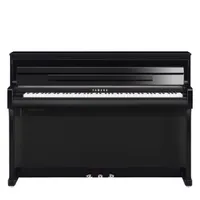
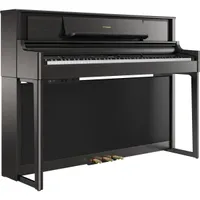
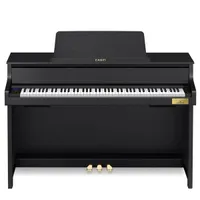
Okay, so at this price, it is a serious investment, and is certainly not a beginner digital piano, but one that is hard to question when you consider what it delivers. Yes, the Yamaha Clavinova CLP-885 and the Casio GP-510 are both strong alternatives, each with its own take on key action and sound delivery, but I’d go as far as to say the Kawai CA901 may just be the best in its class.
Of course, piano playing is personal, and what feels right under the fingers varies from player to player. I always recommend trying each option side by side before committing at this level.
Hands-on demos
MusicRadar
Kawai Pianos Global
Alternatives
Specifications
Number of Keys |
88 |
Keyboard Action |
Grand Feel III, fully wooden keys, Ivory & Ebony Touch, graded counterweights, triple sensor, let-off simulation |
Maximum Polyphony |
256 notes |
Number of Voices |
96 |
Sound Engine |
SK-EX Rendering (multi-channel sampling + resonance modelling) |
Output |
135W |
Speaker System |
TwinDrive soundboard, 2x 8x12cm top speakers with 360° diffuser, 2x 8cm front speakers, 2x 2cm tweeters |
Connectivity |
Bluetooth MIDI v5.0, Bluetooth Audio v5.1, USB to Host, USB to Device |
Available Finishes |
Premium Satin Black, Premium Satin White, Premium Rosewood, Ebony Polish, Natural Walnut |
Dimensions |
Width: 1,522mm (59⅞") Height: 1,015mm (40") Depth: 490mm (19¼") |
Weight |
95kg (209½ lbs) |
