MusicRadar Verdict
For me, the real strength of the Baum Guitars Verve lies in its playability. The neck profile is fantastic, and I never felt like any playing style was out of reach in my time with it. The pickups are nicely versatile, although I wanted a little more from the neck position; for the most part, it’s capable of a huge array of styles. That said, the QC on my review model wasn’t perfect, with a couple of issues that needed resolving to get it to where it should be.
Reasons to buy
- +
Incredibly playable neck profile.
- +
Pickups deliver modern T-style tones.
- +
Distinctive look that stands apart.
- +
Comes with a good-quality gig bag.
Reasons to avoid
- -
My review model had some QC issues.
- -
Toggle switch can get in the way of hard strumming.
MusicRadar's got your back Our team of expert musicians and producers spends hours testing products to help you choose the best music-making gear for you. Find out more about how we test.
What is it?
Seemingly emerging from nowhere, Baum Guitars feels like a relative newcomer to the main stage, yet the company has been going since 2015. Founded by Morten Bau, what began as high-end, custom builds out of Denmark has now evolved into mass-produced electric guitars from the Far East under the Vega Series moniker, delivering custom-inspired instruments without the lofty price tag.
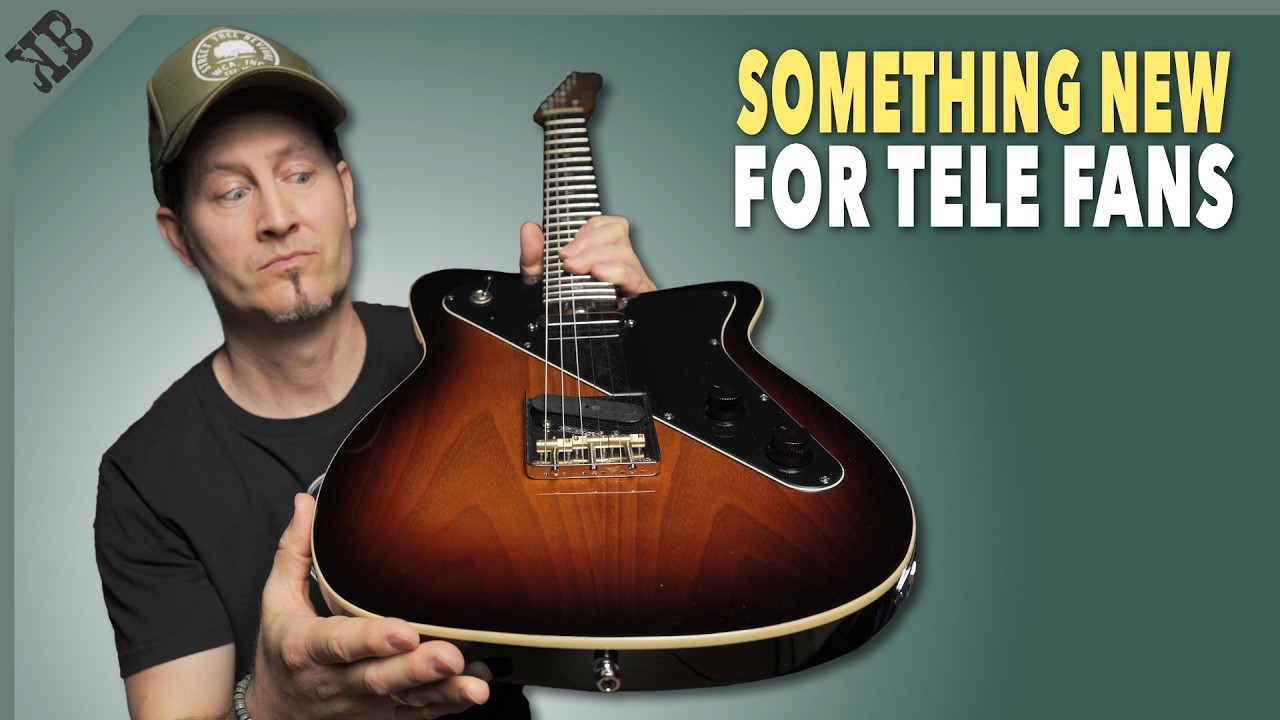
There’s no need to state where the Baum Guitars Verve gets its inspiration from, with that lineup of chrome-covered neck single-coil and angled bridge pickup mounted to a metal plate. The pickups are Baum’s own Goldsound Skylark Alnico V pickups, controlled by master volume and master tone controls with 250K potentiometers, and a 3-way toggle switch. Unusually for a guitar remeniscent of a Telecaster, Baum has opted for a mahogany body here instead of ash or alder.

The bridge is a Wilkinson WTB model with compensated brass saddles, which is also unusual as most Baum guitars feature proprietary hardware. This theme returns for the tuners, however, which are Baum Performer tuning machines with an 18:1 ratio. The scale is 25.5 inches, and the roasted maple neck is shaped to Baum’s modern ‘C’ profile. It’s got a rosewood fretboard with a flat, 12-inch radius, and 22 medium jumbo, nickel frets marked with mini ‘Crown’ inlays.
Specs

- Made: Indonesia
- Type: Six-string electric guitar
- Body: Mahogany
- Neck: Roasted maple / Modern ‘C’
- Fingerboard: Rosewood
- Scale length: 25.5”/647.7mm
- Nut/width: High-density composite / 42.9 mm
- Frets: 22, medium jumbo, nickel
- Hardware: Baum Performer, Wilkinson WTB bridge with compensated brass saddles
- String spacing at bridge: 52.6mm
- Electrics: 2x Goldsound Skylark, master volume & master tone, 3-way toggle switch
- Weight: 7.05lb/3.2 kg
- Options: N/A
- Left-handed options: N/A
- Finishes: Amber Gold (as reviewed), Dark Burst, Moon Silver, Pure Black
- Cases: Baum Deluxe Gig Bag
- Contact: Baum Guitars
Build quality

Build quality rating: ★★★★☆
The Baum Guitars Verve comes in a really nice Deluxe Gig Bag, and when I pull it out, my first impression is that it’s an eye-catching guitar with its metallic Amber Gold finish and retro modern body shape. It’s sort of Telecaster-shaped if you think of it as a shallow, single cutaway, but I do get Danelectro vibes from it as well. It manages to stand on its own without feeling too alien, which is a definite design achievement.
The single-ply, black pickguard cuts a diamond shape across a body that’s pretty much devoid of comfort carves, apart from a very slight flattening where my picking arm rests over the body. There’s no neck heel carve either, giving it a decidedly retro feel. Flipping it over, I spy there’s no plate on the back for the controls, so if you do want to dive in, you’ll need to take the strings off.

The paint is very well applied, and although I spot a couple of dark flecks on the back side of the guitar, these are only noticeable when the guitar is held up to the light and inspected closely. The neck pocket is neatly done, and all of the electronics and hardware are robustly applied. It feels worthy of gigging and ties in with other Indonesian-made guitars I’ve had in my hands recently in terms of the quality of the build.
Playability

Playability rating: ★★★★½
As soon as I sit down to play the Verve, I feel right at home. As a regular Telecaster player, it doesn’t feel much different at all from my number one guitar. It’s lighter in weight as the body is markedly slimmer, but the neck feel is pretty similar. It doesn’t take me long to get up and running with it, and my favourite licks and riffs come easily.
The medium jumbo frets feel lovely to bend against, no matter where I am on the fretboard, and the overall feel is slinky and smooth. There’s nothing that gets in my way, whether I’m playing legato, open chords, barre chords, or any other technique. It’s not a shred neck, but the profile feels buttery smooth, and alternate-picked scale runs fly around the fretboard.

It’s nicely balanced both in my lap and when I put it on a guitar strap at rehearsal, but I do notice when standing that it’s easy to accidentally hit the toggle switch. This only happens when I perform some aggressive strumming of chords, but it just means a small adjustment is required to my admittedly aggressive playing style, so I can’t rapidly strum near the higher frets of the guitar.
Sounds

Sounds rating: ★★★★☆
I start off my sound testing by plugging the Verve into an audio interface and loading up an instance of Neural DSP’s Tone King plugin. Using a totally clean tone with a touch of a spring reverb, I notice that the high E doesn’t quite ring out true here when played on its own, which I didn’t notice when I play-tested it unplugged. My first instinct is a nut issue, but pressing behind the nut while playing the string doesn’t resolve it.
Moving up and down the E string to see if I can find a culprit, I notice it buzzes at the 9th fret, and getting my bank card out, I determine that the 10th fret is sitting ever so slightly proud at the treble end. This can happen with guitars when they get shipped from place to place and subjected to drastic changes in temperature, and I’m easily able to remedy it by raising the bridge saddle slightly. The open-E issue proves trickier, however, and I’m unable to make it better without really getting into the weeds with the nut slot.
Undeterred, I continue to play in the bridge position, and there’s plenty of Tele twang on tap here, with an output I’d put somewhere between vintage and modern. There’s loads of spank and attack when I dig in with some country-inspired leads, and it bites when I strike open chords hard, giving a nice balance of low-end weight and treble cut.

It’s that tried-and-tested T-style sound
Moving to the neck pickup, there’s a noticeable volume drop, but it’s that tried-and-tested T-style sound, warm and a little woolly. It feels really smooth when I play leads with it, but there’s still plenty of articulation when playing full chords hard. The middle position is really nice when played clean, though, and due to the volume difference between the two pickups, it’s got a delicious balance to the overall tone.
Next, I load up an overdriven guitar amp tone with a Bluesbreaker-style overdrive pedal in front of it, and the bridge pickup really comes into its own. It’s really full-sounding and cuts through nicely without getting into icepick territory. The more modern voicing gives more midrange with a smooth high end. When strumming punky power chords, it really sings, and adding in a reverb pedal and delay pedal while I play lead licks delivers a very satisfying and modern-leaning guitar tone.
Moving back the bridge pickup, it’s straight into Tom Morello riffing tone. It’s warm and round, a little dark, but not so much that it sounds dull. It manages to stay pretty articulate when I strum full chords, although I do lose a little of the treble strings under the weight of the low end and mids here. In the middle position, again it’s nicely balanced as it was with the clean tone. There’s a little more of the bridge pickup than the neck, giving a very usable tone that blends the good parts of each pickup’s character.
Verdict

There are a lot of T-style guitars on the market right now, so the Baum Verve needs to do something very special to stand out from the rest, and it succeeds in most ways. The roasted maple and rosewood combo of the neck plays really nicely, with a profile that encourages faster playing and felt super comfortable no matter what I attempted on it.
I did find the neck position a little uninspired when played clean
The bridge pickup is really great too, offering that Tele twang with a little extra heat for the modern player. It’s probably not the best for those after 50s or 60s Tele tones, but it can deliver a wide range of tones that will cover funk, country, rock, blues, and more. I did find the neck position a little uninspired when played clean, but it held its own with overdriven tones and works great alongside the bridge pickup in the middle position.
The QC on this model wasn’t the best, however. An issue with one of the frets and the nut needed to be resolved to make the guitar play perfectly, which, while admittedly par for the course when it comes to import guitars and sometimes, even American-made instruments, to be totally fair, is nonetheless a little disappointing. Granted, these weren’t issues that made the guitar unplayable, but small hurdles that needed to be jumped over.
Guitar World verdict: For me, the real strength of the Baum Guitars Verve lies in its playability. The neck profile is fantastic, and I never felt like any playing style was out of reach in my time with it. The pickups are nicely versatile, although I wanted a little more from the neck position; for the most part, it’s capable of a huge array of styles. That said, the QC on my review model wasn’t perfect, with a couple of issues that needed resolving to get it to where it should be.
Test |
Results |
Score |
|---|---|---|
Build quality |
Well put together, but my model had some QC issues. |
★★★★☆ |
Playability |
Absolutely superb, capable of pretty much any playstyle. |
★★★★½ |
Sounds |
A good variety of sounds that lean towards modern players. |
★★★★☆ |
Overall |
A fantastic playing and sounding guitar that needed some setup tweaks. |
★★★★☆ |
Also try
Hands-on videos
Kris Barocsi
TheGuitarGeek