
MusicRadar Verdict
This guitar is a love letter to one of the most famous recording studios of all time. Every detail feels thoughtfully designed, and thankfully, it has the playability and sound to match. Okay, most people won't need the more extreme setting of the onboard Rumble circuit, but it will certainly come in handy for some.
Pros
- +
Stunning looks.
- +
Studio-ready tone straight from the guitar.
- +
Comes with a unique case.
Cons
- -
The second setting on the Rumble Filter may be too thin-sounding for many players.
- -
Bigsby takes a while to settle in.
MusicRadar's got your back Our team of expert musicians and producers spends hours testing products to help you choose the best music-making gear for you. Find out more about how we test.
What is it?
When it comes to music history, few places evoke as much reverence as Abbey Road Studios. From the Beatles’ genre-defining albums and the atmospheric masterpieces of Pink Floyd to chart-topping works from Oasis to countless movie scores, this hallowed ground in London is a living, breathing monument to decades of sonic innovation and continues to operate as one of the world’s best recording studios to this day. So when Gretsch announced it would be the provider of the studio’s first-ever instrument collaboration, you’re damn right we sat up and took notice.
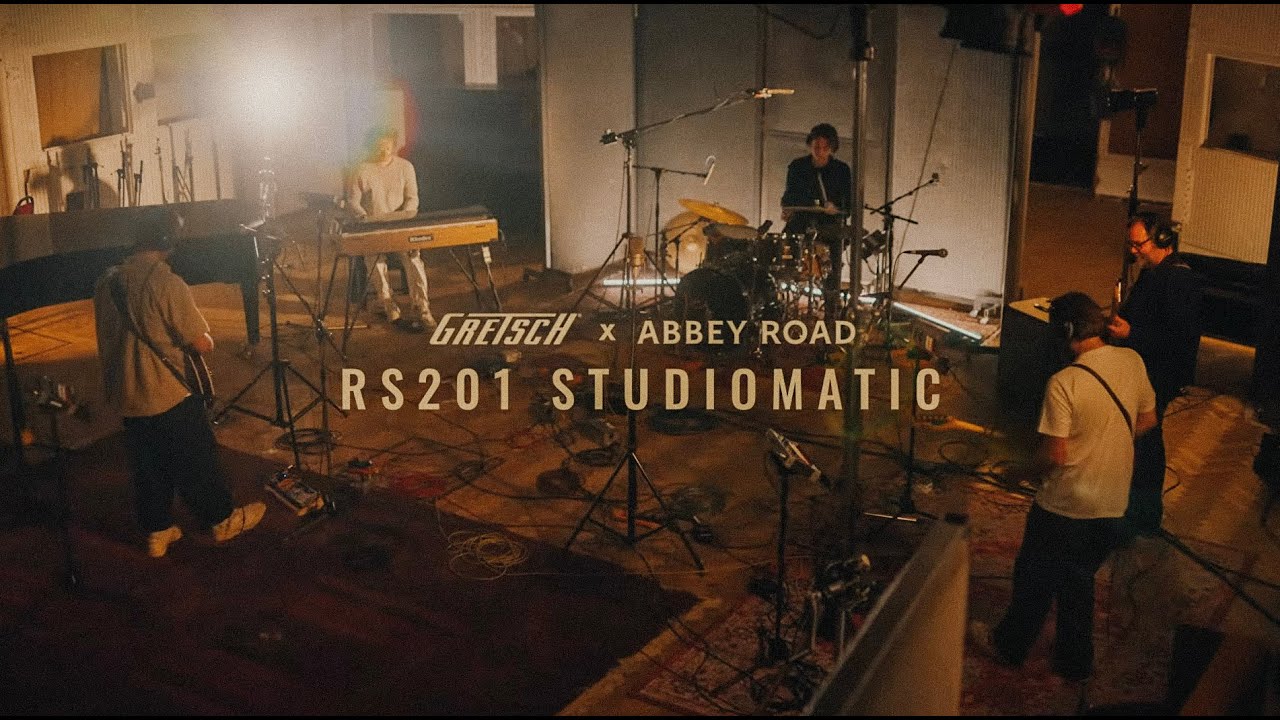
Introducing the Gretsch Limited Edition Abbey Road Studiomatic, officially, the RS201 Studiomatic. As expected, this is a semi-hollow that literally bakes Abbey Road’s technological magic right into its DNA. For the first time ever, Abbey Road has partnered with a guitar maker, and the result is an instrument that promises to deliver studio-grade sound before your signal even hits a single pedal, amp, or audio interface.

The centrepiece is an all-new electronic circuit inspired by EMI’s legendary Rumble filter, originally designed in the 1950s to eliminate unwanted low-end rumble from historic recordings. Now, that filtering power is at your fingertips, giving players unprecedented control to sculpt a polished, record-ready tone straight out of the guitar.
But the Studiomatic doesn’t stop at groundbreaking electronics. Its custom-wound Filter’Tron pickups are described by Abbey Road’s own engineers as having “a real, beautiful attack.” The 2.25” deep maple body features parallel bracing for stability and resonance, while a C-profile maple neck and a bound ebony fingerboard with Neo-Classic Thumbnail inlays make for a smooth, stylish ride up and down the fretboard.

Add in an Adjusto-Matic bridge on an ebony plate, die-cast locking tuners, a complementary set of strap locks, and a striking Abbey Road logo on the headstock, all dressed in a suitably decadent gold finish, and you get a very well-specified guitar indeed.
To seal the deal, the guitar is bundled with a lush burgundy case that is meant to evoke the iconic colour found on everything from the chairs to the doors throughout the studio. The light blue lining of the case is a nod to the underpaint of the doors seen through decades of wear and tear.
There is no question that Abbey Road knows a thing or two about producing timeless music, and Gretsch has the guitar-making down, but will it all come together to make an exceptional instrument that’s more than the sum of its parts? Well, let’s find out.
Specs

- Launch price: $1,579 | £1,249 | €1289
- Made: China
- Type: Hollowbody electric guitar
- Body: Laminated maple
- Neck: Maple, Classic "C"
- Fingerboard: Ebony
- Scale length: 24.6" (625 mm)
- Nut/width: Graph Tech TUSQ, 1.6875" (42.86 mm)
- Frets: 22 Medium Jumbo
- Hardware: Adjusto-Matic bridge, Bigsby B60 V-Cutout, Die-Cast Sealed Locking Tuners, G-Arrow control knobs
- Electrics: Custom Filter’Tron, 2-Position Rumble Filter
- Weight: 7.5lbs/ 3.4 kg
- Left-handed options: No
- Finishes: Classic Walnut Stain
- Cases: Custom hardshell case and exclusive case candy items included
- Contact: Gretsch Guitars
Build quality

Build quality rating: ★★★★½
A guitar dripping with vintage mojo
From the moment you lay eyes on the Gretsch Abbey Road Studiomatic, it’s clear this is a guitar with presence and prestige. The visually striking burgundy case not only offers robust protection, but also sets the tone for what’s inside, channelling the storied atmosphere of Abbey Road itself - think of it as your own ticket to ride into musical history. The attention to detail is immediately apparent, with the case’s light blue lining nodding to the underpaint of those legendary Abbey Road doors.
Once you open the case, the guitar itself makes a stunning first impression. The classic Walnut finish is deep, rich, and beautifully applied, highlighting the wood grain and shimmering under studio spotlights. Pair that with the guilded gold hardware, and you’ve got a guitar dripping with vintage mojo.

Every element feels intentional and expertly executed, from the bound ebony fingerboard with its sharp Neo-Classic Thumbnail inlays to the V-Cutout Bigsby B60.
More importantly, the build quality lives up to the impressive visuals. The guitar arrives impeccably set up, with low, buzz-free action and spot-on intonation. Hardware feels solid and reassuring, from the Bigsby vibrato to the strap locks, and the parallel-braced maple body is both resonant and sturdy.
It’s the kind of instrument that feels ready for the studio - or the stage - without a single tweak. A lot like Abbey Road itself, the Studiomatic feels built to stand the test of time, blending classic looks, premium craftsmanship, and a little studio magic in every detail.
Playability

Playability rating: ★★★★½
Thankfully, the Gretsch Abbey Road Studiomatic isn’t just a guitar that looks the part; it absolutely delivers when it comes to playability. One of the first things you notice when picking it up is the exceptionally comfortable neck. Gretsch opted for a classic C-profile that feels just right in the hand: not too chunky for fast lead lines, but substantial enough to anchor big chords and complex fingerings. The smooth-bound ebony fingerboard and well-dressed frets add to the premium feel, gliding under your fingers whether you’re playing up high or digging in for rhythm work.
The RS201 really reminds me of the ever-popular Electromatic G5422TG. Yes, they differ in many ways, from the Trestle Block bracing of the G5422TG to Parallel Tone Bars of the Abbey Road model, as well as the Studiomatic sporting an ebony 'board while the Electromatic gets the less desirable laurel, but both share the same “classic-C” neck profile, 12" fingerboard radius, 24.6" scale length, and medium jumbo frets. So purely from a feel point of view, these models feel incredibly similar - dare I say, identical.

A big playability plus on the Studiomatic is its factory setup with 10-gauge strings. Gretsch’s choice here makes a lot of sense, for many players, 10s hit that sweet spot between ease of bending and solid rhythmic foundation. To me, the tension feels familiar and welcoming, whether you’re a blues bender, a jazzy chorder, or a rock strummer. Unlike the new Synchromatic Falcon, which ships with heavier 11s and can feel a bit stiff for some players right out of the box, the Studiomatic’s 10s offer a more universal playing experience.
The Bigsby vibrato moves smoothly for subtle shimmers or expressive dives, but does take some breaking in
The action is set low and pretty even, measuring around 1.4mm on the high E string and 1.6mm on the low E string, at the first fret, with no fret buzz or dead spots. It makes for effortless playability up and down the neck. The parallel-braced maple body adds to the comfort, being lightweight and perfectly balanced whether you’re playing seated or standing. The cutaway gives easy access to the upper frets, inviting you to explore the entire range of the instrument.
As expected, the Bigsby vibrato moves smoothly for subtle shimmers or expressive dives, but does take some breaking in. For the first few sessions, it has a tendency to throw the guitar out of tune, but if you exercise some patience, you’ll be rewarded with a stable tuning eventually.
Sounds

Sounds rating: ★★★★½
When it comes to tone, the Gretsch Abbey Road Studiomatic is anything but ordinary. This guitar was created to deliver studio-grade sound at your fingertips, and much of that magic comes down to its unique electronics - a collaboration between Gretsch and the legendary engineers at Abbey Road Studios themselves.
The rumble circuit is more than a mere high-pass filter
At the heart of the Studiomatic’s sonic identity lies its groundbreaking rumble circuit, inspired by the EMI-designed low-frequency filter used at Abbey Road since the 1950s. Originally developed to eliminate unwanted subsonic noise from classic recordings- think rumble from London’s underground trains or the thump of heavy footsteps on studio floors - this circuit has been reimagined for guitar, giving players direct access to Abbey Road’s signature clarity and polish.
The rumble circuit is more than a mere high-pass filter. It’s a dual-mode system, selectable via an elegant rotary switch on the upper bout. Each mode subtly reshapes the instrument’s low-frequency response, allowing you to tailor your tone, whether you’re after vintage jangle, focused punch, or full-bodied warmth.
With the circuit bypassed, the sound is completely open and natural. Here, the Studiomatic’s custom Filter’Tron pickups shine, delivering classic Gretsch chime and bite with a vibrant midrange and crisp top end and an almost boomy low end. This setting is full of dynamic response, the kind of sound that lets your picking nuances and fingerstyle details ring out, perfect for everything from Beatles-style clean arpeggios to more modern, articulate lead work.

Switch to the second mode, and the rumble circuit engages Abbey Road’s famous 100Hz high-pass filter. This is where the magic really happens. The low end tightens up, eliminating any muddiness and pushing your sound forward in a mix. Chords become more defined, bass frequencies are controlled, and every note retains clarity. It is particularly evident when it was introduced to my favourite Big Muff fuzz pedal. It’s the secret weapon for recording guitar tracks that sit perfectly in a dense mix, just like the studio greats did. You’ll notice how this mode lets your playing cut through, with a sense of air and detail.
Beyond the electronics, the custom-wound Filter’Tron pickups are remarkable in their own right
The second mode shifts the filter to a more pronounced setting, rolling off even more low-end for a truly vintage tone. This is the setting for those classic 1960s pop and rock tones, where every strum feels crisp. It’s ideal for layering guitars in the studio, preventing low-frequency buildup, and giving each part its own space. It’s worth noting that on its own, this setting sounds a little weak and some may even say a little lacklustre, but add it to a full-band mix and it makes sense. While it’s fun to have a bold, bass-heavy tone at home when you’re practicing, in a recording scenario, that extra low end tends to muddy up the mix, masking the bass guitar and kick drum.
Beyond the electronics, the custom-wound Filter’Tron pickups are remarkable in their own right. Voiced in collaboration with Abbey Road’s engineers, they possess a lively attack and a sweet, singing sustain. Clean tones are glassy and three-dimensional, with just enough bite to stay present without ever sounding too harsh. Roll back the volume or tone controls, and the sound mellows beautifully, staying musical and expressive across the entire range.
Add some overdrive, and the Studiomatic roars to life. The pickups retain their character, never becoming muddy or thumpy, while the rumble circuit keeps your low end in check. I'd say this is a guitar that’s equally at home on jangly pop, bluesy riffing, or even harder rock.
Verdict

Abbey Road may have waited decades to put its legendary name to a physical instrument, but I’d argue that it was well worth the wait. To me, the Abbey Road Studiomatic RS201 isn’t just a collection of cool features; it’s a tool designed to make your recorded guitar sound better, right out of the box.
In the studio, it means less time fighting EQ and more time making music. On stage, it means a consistent, polished sound no matter what amp or pedalboard you’re using. And for home recording enthusiasts, it offers a taste of Abbey Road’s legendary studio wizardry in a package you can actually afford.
In short, the sound of the Abbey Road Studiomatic is a bridge between past and present, combining Gretsch’s classic character with Abbey Road’s relentless pursuit of sonic excellence – d’you know what I mean?
MusicRadar's verdict: This guitar is a love letter to one of the most famous recording studios of all time. Every detail feels thoughtfully designed, and thankfully, it has the playability and sound to match. Okay, most people won't need the more extreme setting of the onboard Rumble circuit, but it will certainly come in handy for some.
Test |
Results |
Score |
|---|---|---|
Build quality |
Solid build with plenty of cool extras make this is a very attractive package. |
★★★★½ |
Playability |
The playability of the RS201 is exactly as we expected from Gretsch, and that's not a bad thing. If you are at all familiar with the Electromatic series, you'll know what to expect. |
★★★★½ |
Sounds |
The sound of this Gretsch is truly unique. With just a flick of a switch you get instant access to studio quality tones. |
★★★★½ |
Overall |
Beautifully designed, thoughtfully constructed, this Gretsch and Abbey Road Studios team up has resulted in a fantastic instrument. |
★★★★½ |
Also try



Hands-on videos
Gretsch Guitars
Wildwood Guitars

Tarpley Music

- Best hollowbody guitars: Find the right hollow body for you and your budget
