MusicRadar Verdict
The EAD50 represents a sizable upgrade over the EAD10, but does also come with a much higher price tag. Considering how powerful and feature-rich this module is in practice, the investment quickly starts to make a lot of sense.
Reasons to buy
- +
Works straight out of the box with a large number of kit presets
- +
Extra mic inputs, trigger inputs and direct outputs
- +
Wireless app control
- +
Multi-track USB recording
Reasons to avoid
- -
Complex menu system takes some getting used to
- -
Small LCD screen
MusicRadar's got your back Our team of expert musicians and producers spends hours testing products to help you choose the best music-making gear for you. Find out more about how we test.
Yamaha EAD50 review: What is it?
In late 2017 Yamaha unleashed the EAD10 (Electronic Acoustic Drum Module) to an unsuspecting public. The surprise announcement was made at a Yamaha Drums Show held in Paris to commemorate 50 years of drum production for the Japanese company.
As many drummers reading this will likely already be aware, this magical box of tricks is essentially a microphone interface and trigger module rolled into one neat package. The compact sensor unit mounts to the rim of your bass drum and captures a stereo image of the whole kit from a central position using two small internal mics, arranged in an X/Y configuration. This unit also cleverly doubles as a bass drum trigger, allowing pre-recorded or electronic drum sounds to be mixed seamlessly with the acoustic kit sound.
Now, nearly a decade later we’ve welcomed the EAD50, which centres around the same functionality, whilst offering a massive number of additional features. Most importantly, the upgraded module is able to run up to five separate mic channels, acting as a mixer or mic interface in its own right.


The sensor unit has had a complete overhaul too, which despite fulfilling the same function as the original, now also boasts higher quality mic sensors optimised for drums, plus improved triggering capabilities.
This is achieved by picking up vibration from the bass drum’s hoop rather than the drum head, as is the case with the EAD10 sensor.
The new DSU50 unit uses a 5-pin stereo XLR output and a separate jack connection for the trigger output, rather than the dual A/B jack setup of the EAD10. It’s also available to buy as a standalone product (currently $399/£350) which Yamaha says can be used as an extremely compact pair of overheads for augmenting and further enhancing your overall kit sound. The XLR output also means the unit can be used universally with any mixer or interface as a portable, all-in-one drum mic.
Other key features of the EAD50 include multi-track USB recording, wireless app control, additional trigger inputs, independent audio outputs and Bluetooth audio input. There’s also an SD card slot which can be used for playback or recording.
For the record, the EAD10 is still available alongside its new bigger brother and retails for around $599/£500, nearly a third of the current EAD50 price tag, which is around $1,599/£1,399.
Yamaha EAD50 review: Performance & verdict
I found the initial setup to be straightforward and it took me very little time to get up and running, particularly when compared to individually mic’ing a full kit. After mounting the sensor unit to my bass drum, I connected it to inputs 1 & 2 of the module via the included XLR splitter cable (and jack cable for the in-built bass drum trigger), then plugged in and powered on the module.
Also included in the box are two standard XLR cables which can either be used to connect the master left and right outputs to a PA system or to connect microphones to the additional XLR inputs. This is ideal for dedicated snare, toms or overheads. The only thing you’ll need that isn’t included is a stand for mounting the module as you would with an e-drum module. There are plenty of options out there for integrating a module within a kit setup and thankfully at least the mounting bracket is included with the EAD.


There are 70 in-built presets or ‘scenes’ on the EAD50 module which showcases its capabilities across a vast range of styles. Ranging from more straight ahead studio sounds to reverb soaked stadium kits, dub reggae style delays to hefty EDM powerhouses. These make for great fun straight out of the box, but also serve as inspiration for filling the 200 user slots with custom creations.
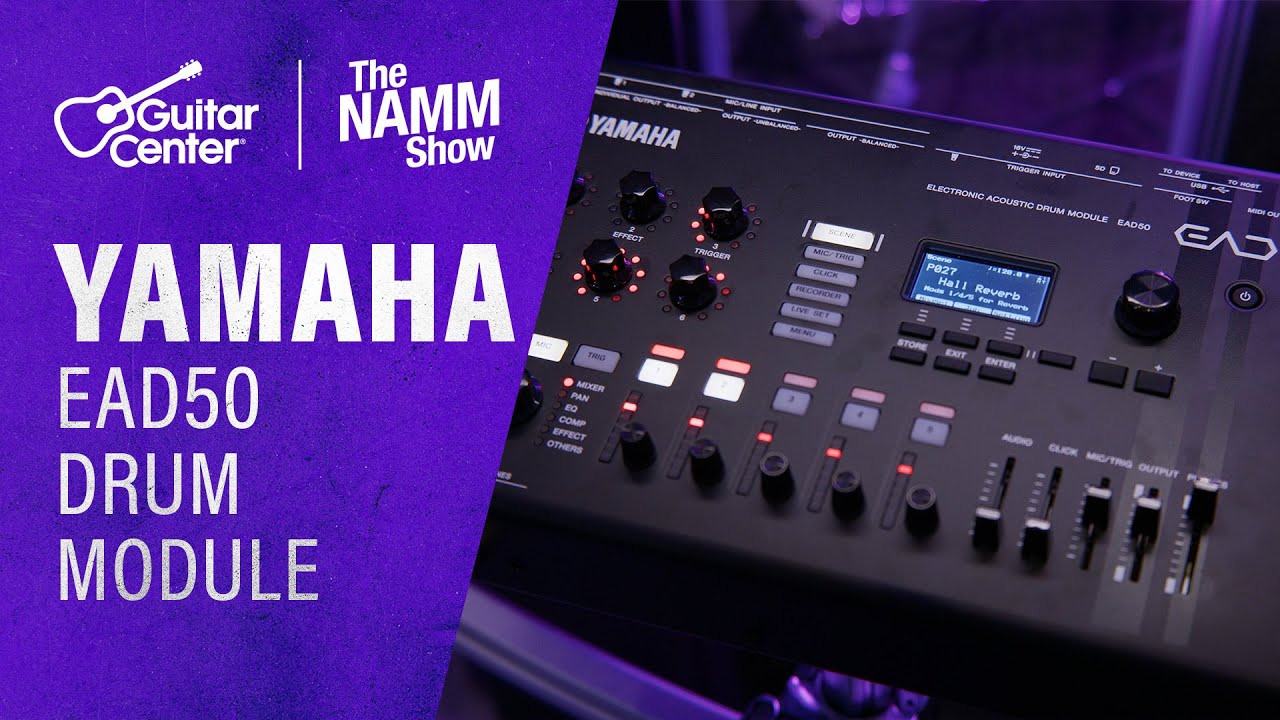
Six LED rotary dials called ‘modifiers’ allow convenient control of assignable parameters such as reverb, compression, delays, EQ, filters, pitch and much more (this is twice as many as the EAD10). There are quick access menu buttons for scene, mic/trigger, click, recorder, live set and main menu - these call up the relevant controls on the small LCD screen to the right of the module.
A decent amount of real estate has been given to the mixer controls which I found made life a lot easier than poking around complex menus when making quick adjustments. Each of the five mic inputs can also be edited in regard to volume, panning, EQ, compression and effects. Trigger inputs can also be controlled in the same way by simply pressing the trigger button to switch the focus of the LED faders. The module also features handy physical faders for aux-in, click, mic/trig, master output and headphones output.
The only real downside of using a stereo mic setup is that control is lost over mixing the individual elements of the kit, except of course by physically playing them louder or softer. This is because the kick, snare, hi-hats, toms and cymbals are picked up by the same inputs through the stereo microphones within the DSU50. Therefore, any adjustments in terms of effects and EQ will apply to the whole kit. Thankfully Yamaha has considered this and the use of XLR inputs for the DSU50 means it can be replaced by individual kick and snare mics should that be a concern.

Roland V71
“Sounds aren’t just ‘good for a module’, they’re genuinely useable, realistic and ultimately very enjoyable to play"
⭐⭐⭐⭐½ (Roland TD716 review)
Yamaha EAD10
"Effects, recording, triggering all at once? Meet the Swiss Army knife of hybrid drumming"
⭐⭐⭐⭐⭐ (full review)
I experimented with this while repurposing the DSU50 as an overhead and it gave me more control over a mix, although I did still encounter limitations with the toms. This is where running triggers on the kick, snare and toms brings that individual control.
There are so many options with ten trigger inputs (compared to six on the EAD10) that countless configurations are possible. There’s also plenty of room to run external pads which can be used not only for samples such as hand-claps and the like but even controlling playback. The EAD50 is capable of running 4-track audio directly from an SD card without needing to import to the module.
There’s no question that the EAD50 is an expensive bit of kit. However, when considering its sheer versatility in terms of application, it actually begins to represent incredible value for money. Indulge me if you will: it’s a mixer, trigger module, sample pad, multi-track playback unit, USB interface, looper and potential e-kit module (it even has hi-hat control through the foot switch inputs). This makes it an immensely powerful tool for recording, live use, rehearsing and practising, teaching, live streaming and more.
Yamaha EAD50 review: Hands-on demos
Yamaha
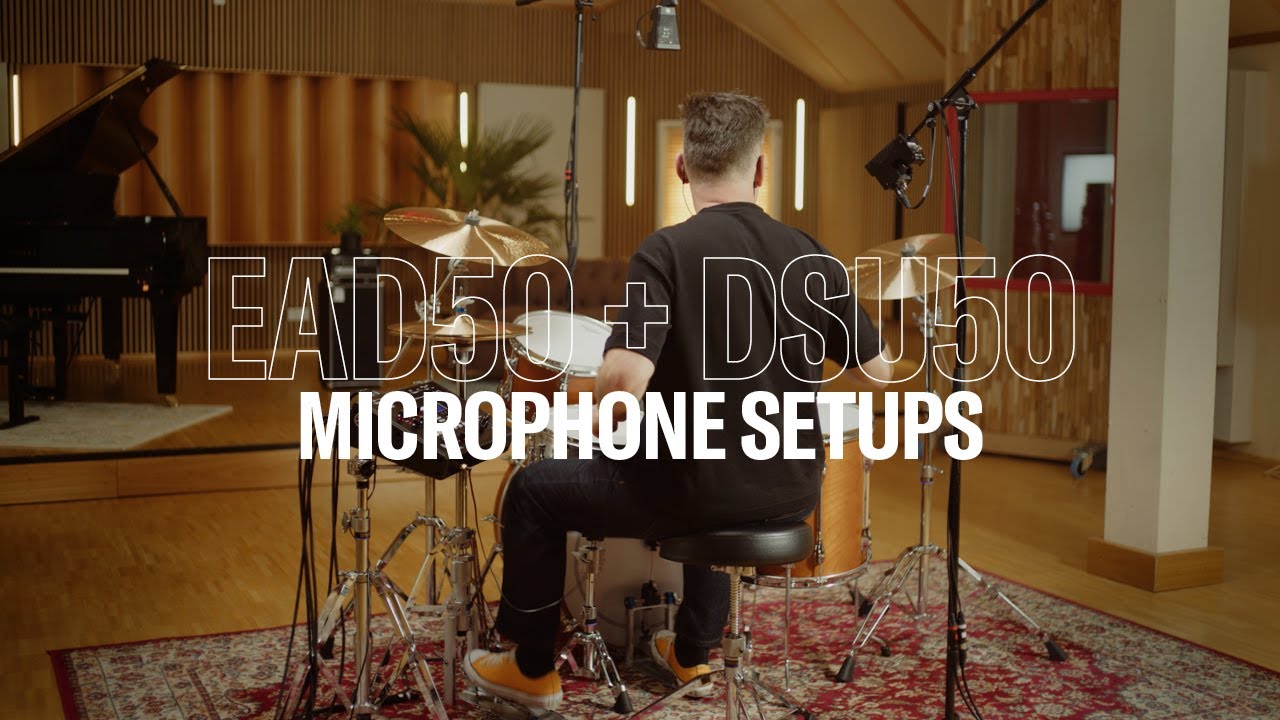
Cowboy Drummer
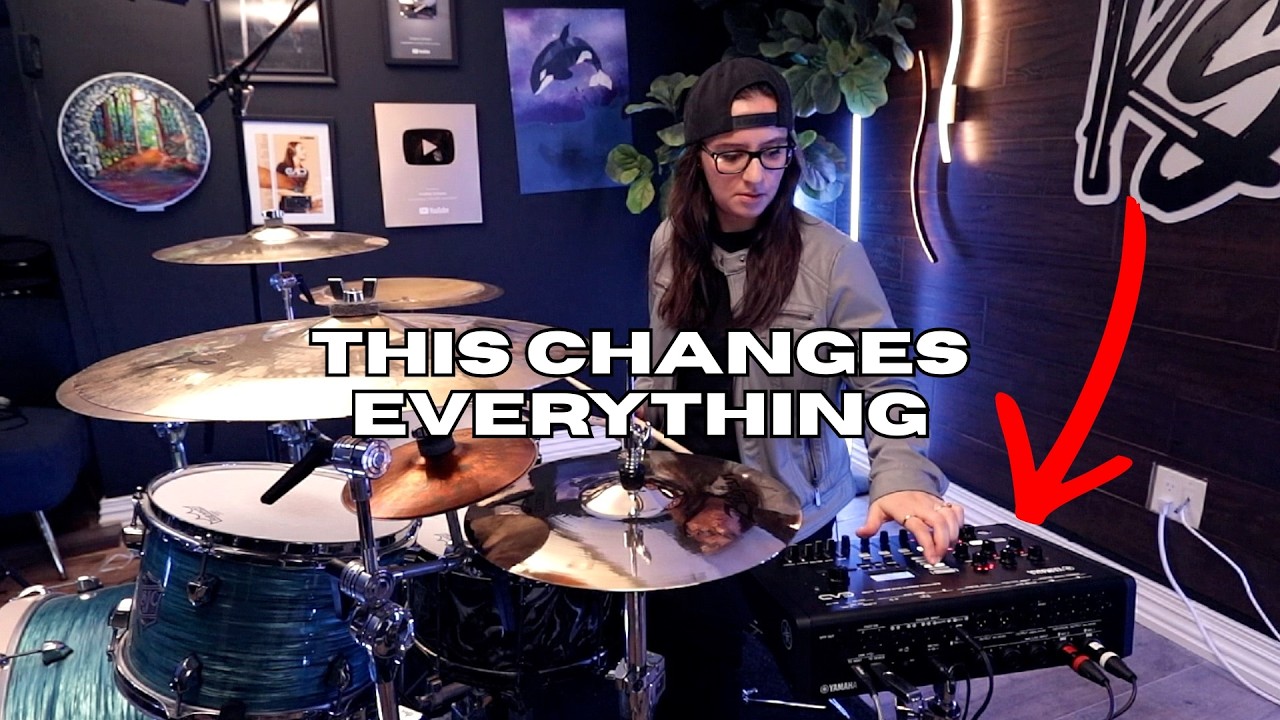
Guitar Center
Yamaha EAD50 review: Specification
- Sound engine: SWX100 with 512-note polyphony and 2GB of ROM
- Effects & modifiers: Studio-grade effects and 6 assignable modifier knobs for reverb, FX, triggers, and compression
- USB audio: High-speed interface supporting up to 8-in / 10-out, plus USB MIDI
- Wireless: Bluetooth audio (for streaming backing tracks) and Bluetooth MIDI (for wireless parameter control)
- App integration: Compatible with the Rec’n’Share and EAD Touch apps
- Outputs: 2 x XLR (balanced main outs), 2 x 1/4" (L/Mono, R), and 8 x 1/4" individual balanced outs
- Inputs: 5 x mono combo jacks, 5 x dual/triple zone trigger inputs, and 2 x 1/8" aux inputs.
- Other ports: 2 x footswitch jacks, MIDI Out, SD Card slot, and 1/4" & 1/8" headphone jacks
- Contact: Yamaha