You could come up with plenty of reasons why producer George Martin deserved to be known as ‘the fifth Beatle’, but one of the most tangible is the Bach-inspired piano solo from 1965’s In My Life.
The song featured on Rubber Soul, the Beatles’ sixth studio album, which is about to get the special edition treatment with new stereo and Dolby Atmos mixes from Martin’s son Giles and Sam Okell.
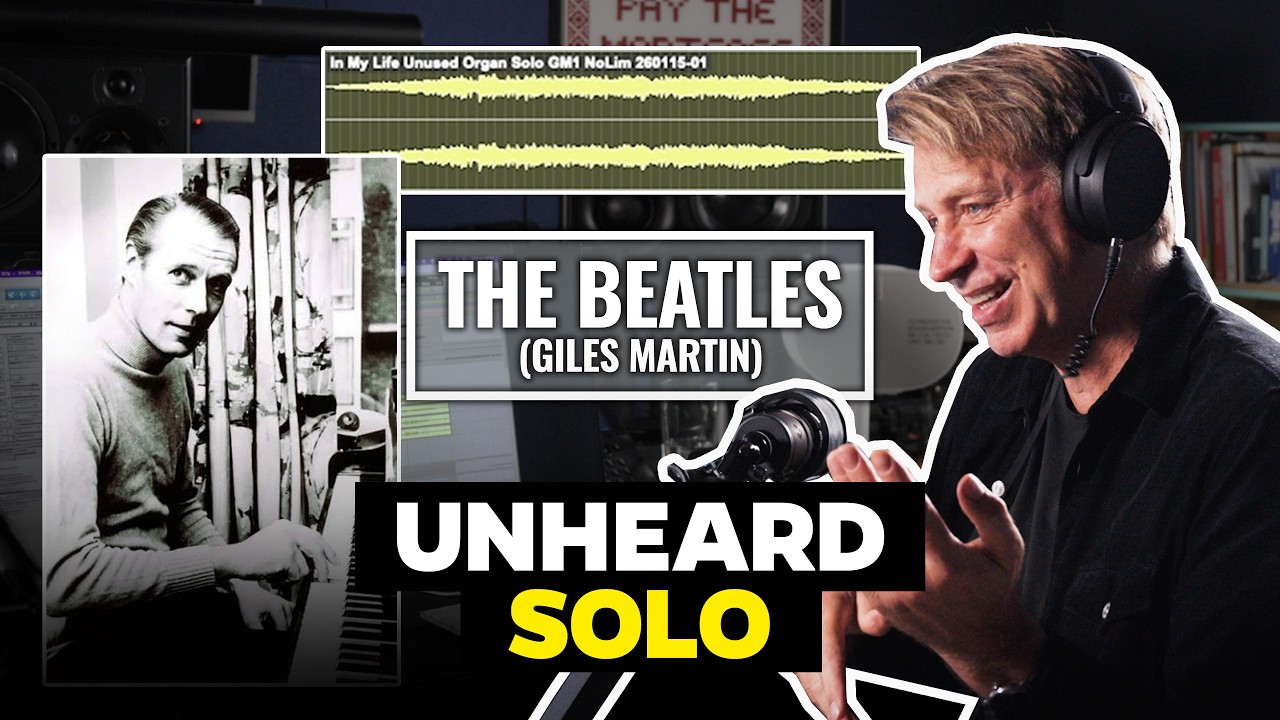
In a new interview with Tape Notes, Martin Jr has been discussing that In My Life piano break, revealing that, as he delved deep into Rubber Soul’s history, he discovered that his father originally played it on an organ.
At this point, the Beatles were restricted to recording on four tracks and creating mono mixes. All the main instruments were usually on one track, the next two had vocals, and the fourth was often kept free for guitar or other solos.
“I think what happened with In My Life is [the Beatles] recorded it and they left a hole for a solo,” Martin explains. “The band went off, and my dad sort of decided to have a go at filling in the hole. The first thing he did, which we discovered, was he actually played organ on it and did the sort of ‘baroque ‘n’ roll’, as it were.”
Martin is making a playful reference to his father’s decision to bring a Baroque period sound to a (sort of) rock ‘n’ roll record, and we get to hear that original organ part for ourselves.
The final performance was played not on a harpsichord, as many people first think, but a piano. This is an understandable mistake for a listener to make, though, when you consider how the solo was recorded.
“It's actually a piano that's been recorded at half speed, then sped up,” says Martin, explaining that, when his father played the part, he would have done so an octave down from where he wanted it to end up.
How did we get to this point, though? “I know how my dad was,” says Martin. “He would have [composed] it in his brain first and written it down and scored it, and then realised that, with the counterpoint left hand, he wouldn't have been able to play [it].”
Explaining the switch to piano, Martin adds: “He'd have known that a double speed piano sounds a bit like a harpsichord, which again is quite Baroque. He probably wanted it to sound sort of harpsichordy anyway, and so he recorded a piano at half the speed, and there you have it.”
Martin also notes that the giveaway that this piece of studio trickery was used comes right at the end of the solo, when we hear the too-fast-to-play run down.
As for why it was George Martin who recorded the part rather than one of the Fab Four themselves, Giles suggests that “At that stage, he was the best keyboard player because Paul and John not not developed their keyboard talents as well as he had.”
You can check out the full Tape Notes interview with Giles Martin wherever you get your podcasts.