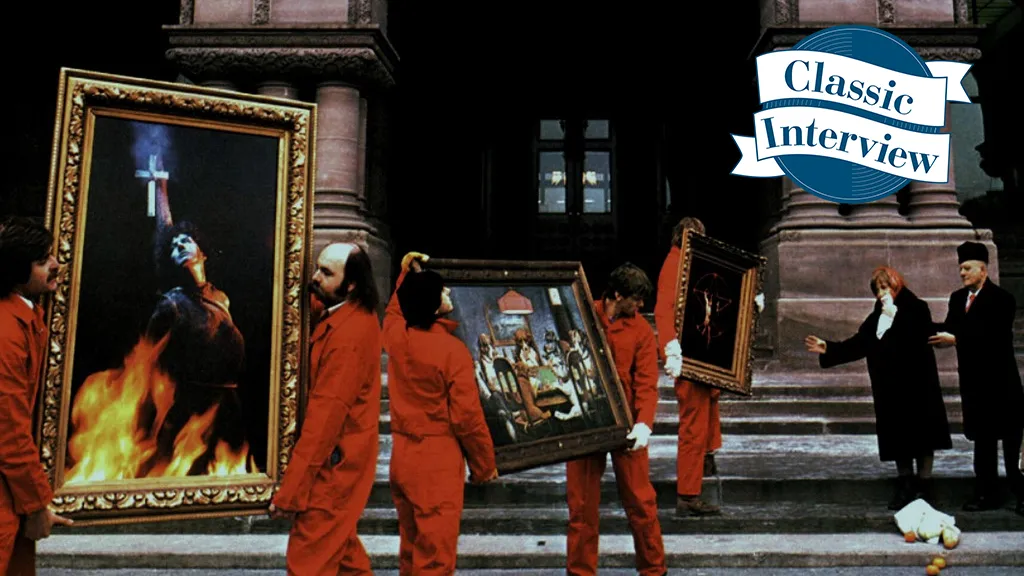
“It was a beautiful time,” says guitarist Alex Lifeson, recalling the summer of 1980, when he and his Rush mates (singer-bassist Geddy Lee and drummer-lyricist Neil Peart) rented a house in Stony Lake, Ontario and wrote their eighth album, Moving Pictures, together. “We’d spend the weeks working, and on weekends we’d drive back to Toronto. Rehearsing, figuring out arrangements – everything just flowed. Electricity was in the air.”
The past six years had been a tough slog, but by that golden summer, Rush were sailing. No longer an opening act, the group that had worn out cars and vans on a tangled path across North America, winning fans the hard way – knocking ‘em out with their stage show and a string of bold, radio-unfriendly albums that nonetheless found their way onto turntables - was now an arena headliner.
Not only that, they had an honest-to-God hit on their hands: Permanent Waves. DJs were all over the long-player, particularly its ironically titled single The Spirit Of Radio, a masterstroke that managed to cram Rush’s complex musicality into four minutes and 56 seconds while shoehorning in undeniable pop hooks with even a hint of reggae. That Rush succeeded in crashing the mainstream without losing one hardcore fan would play out big-time on Moving Pictures.

“After we felt confident of what we’d written, we started recording at Le Studio [the now-shuttered facility was located in Morin Heights, Quebec] with our co-producer, Terry Brown,” says Lifeson. “We ate well, drank well and we played really well. The whole vibe was fun. We’d gone from playing clubs and theaters and were now selling out big places. We were at that cusp of coming into our own.”
Released on 12 February 1981, Moving Pictures not only saw Permanent Waves’ radio win but raised it one better, packing the classic singles Tom Sawyer and Limelight. “We knew they were good songs,” says Lifeson talking to us in 2011. “Did we think that they’d ever be considered ‘standards’? Not at all. All we tried to do was please ourselves.”


Rush drum legend Neil Peart on the pursuit of excellence
In 2011, the whole of Moving Pictures was celebrated by Rush on stage and on a just-issued special edition 30th anniversary Blu-ray CD+DVD package, which renders its seven wondrous cuts with a level of sound clarity that Lifeson calls “mind-blowing. Richard Chycki, who remixed the album, knew he was working with a part of history, and he did an amazing job. He didn’t change the record, just expanded on it. When I heard what he did for first time, I couldn’t believe it. It was impeccable. It was Moving Pictures in a 3-D box!”
Heres, Alex Lifeson walks us through Moving Pictures track-by-track back in 2011. “It’s a very optimistic album,” he says. “There’s a brightness about it, which I think is why people respond to it so much. Playing it live every night is interesting – The Camera Eye, which we hadn’t performed in a long time because it’s pretty difficult, has now become one of our favorite songs. The bottom line is, we’re very proud of Moving Pictures. Thirty years later, it still feels magical.”
1. Tom Sawyer
“We don’t like to think about the album sequence until we’re done recording everything, but I think Tom was always going to be the opener. Just the way it starts – it had to open the record.
“It was a refreshing arrangement. It didn’t follow the traditional verse-chorus-verse-chorus-middle-outro chorus thing. This spread from a verse to a bridge to a chorus to a solo section and so on – it was a more lengthy setup.
“Neil had worked on the lyrics from an idea that had come from a friend of ours, Pye Dubois. He expanded on that whole theme of rebellion and instinct.
“The recording was pretty straightforward, very comfortable and group-like. The guitar solo is pretty quirky, but I don’t think it took long to do, maybe five or six takes. With solos, I don’t like to be too prepared going in – I like to surprise myself. This might have been a comp of a few takes.”
2. Red Barchetta
“I remember that we really loved this song, and so the writing of it was very quick. It was born from a jam, which is how a lot of the stuff on Moving Pictures came about. We’d go into the studio in the morning, jam on an idea, and then huddle around a little cassette player to see if we had something.
“The parts were quite satisfying to play, which is probably one reason why the song was written so fast. Everything felt very natural and easy.
“The guitar solo was me stepping on the wah-wah pedal and kind of easing back on it a little. It sort of acted like a filter, and that’s how I got that nasal-y kind of sound. When I was younger and tried to get that Jeff Beck tone, that’s what I would do.”
3. YYZ
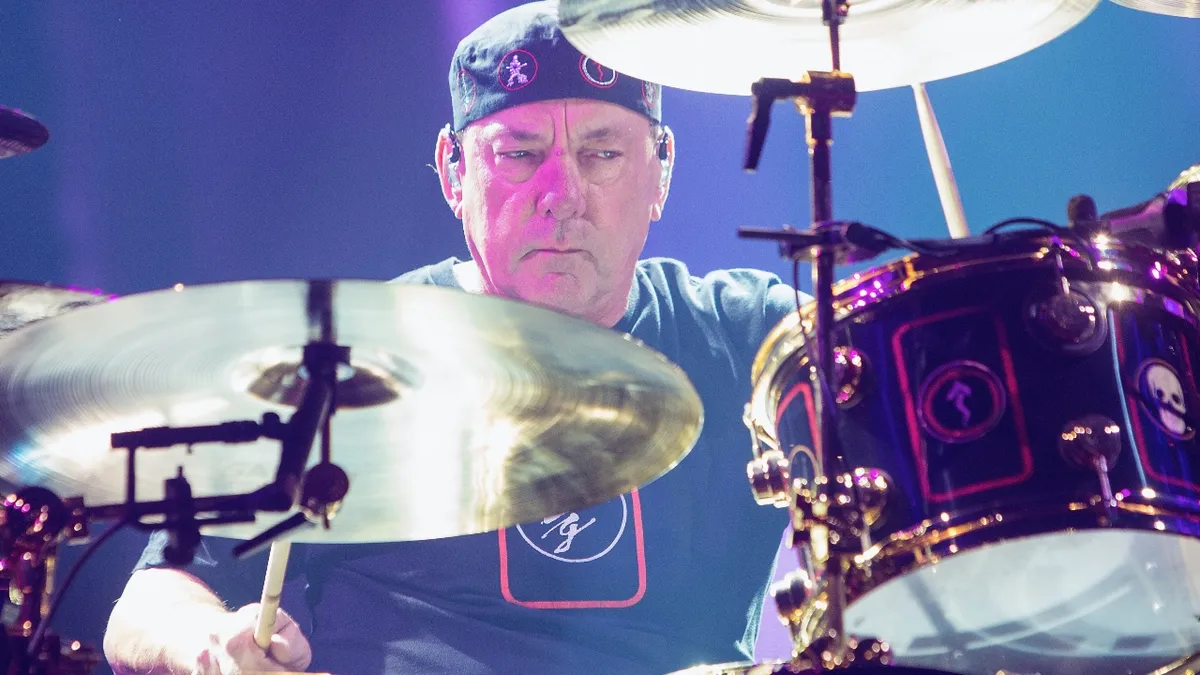
“Ged and Neil wrote YYZed. I was busy working on my airplane that day - I had a remote control airplane up there that I crashed to pieces, after spending weeks and weeks building it. [laughs]
“They went in early that day and got all worked up about coming up with an intro that was going to be quite unique, which stemmed from one of the times we were flying back to Toronto from Le Studio. We were landing at the Buttonville Airport. There wasn’t an ILS [instrument landing system] at the airport, but it had an NDB, which is a non-directional beacon. You had to tune it in, and you knew you had it by its identifier, which was a Morse code. This particular Morse code was ‘Y-Y-Zed.’
“I think it was Neil who said, ‘Hey, that could make a cool opener,’ and so that’s how the intro and the title came into being.”
4. Limelight
“The opening riff is so typical of something I would write, and the verses sound like something Geddy would write. That’s one of the things about knowing each other so well: we fill in the spaces for the other guy as we go along. I believe that Geddy wrote the chorus part, as well.
“It was another song that came together very smoothly, like most of the record, with the exception of The Camera Eye. Even though it’s a dynamic song with such a sense of optimism, there’s a fragility in the choruses that I’ve always liked. I love the contrast.
I’ve always maintained that the solo is probably my favourite of anything I’ve ever done
“I’ve always maintained that the solo is probably my favourite of anything I’ve ever done. If you can create a visual from a sonic standpoint, that’s really an art. The song has it, as does the solo.”
5. The Camera Eye
“A lot of this song came from separate parts that were written and then connected. I think that’s why we always had a bit of a problem embracing it fully in its early days.
“It was hard work. The opening was easy, and then we decided to build up to a crescendo. There's a lot going on. It was one of the last really long songs that we would write.
“There’s some very difficult playing here. Neil does an amazing job on it. He plays so dynamically, handling all of the changes and shifts in tempo and time. And Geddy, he’s playing bass, he’s singing, he’s playing bass pedals and keyboards – really something else.
“The guitar solo took me a while to get right. Funnily enough, The Camera Eye has now become one of our favourites, and the crowds really respond to it. Our feeling is, we haven’t just resurrected a song; we’ve improved it.”
6. Witch Hunt
“In Neil’s mind, I think it was always meant to be a part of either a trilogy or a series. He kind of laid out what he wanted to do, but this song, this part of it, ended up where it did.
“It’s kind of cool song for us. It’s got a really rhythmic opening and a strong guitar part, with no bass until the second verse, or the chorus.
“All that mob stuff in the opening, those sounds, that was a lot of fun. We went outside, quite a ways from the studio, down by the rode. It was a freezing cold night in January, and it was the three of us in the band and a couple of crew guys, and we recorded about 20 minutes of us mumbling and grumbling and making all kinds of mob noises. We had a bottle of Scotch with us to try to keep warm, and as you imagine, the more we drank the crazier we got!” [laughs]
7. Vital Signs
“We were into the idea of putting some of that reggae feel into this song, but with a little more ‘oomph’ to it. Dynamically, it was pretty different from the rest of the record, but I think that’s part of the allure of the album: None of the songs sound or feel the same. There’s a lot of diversity.
“Part of me thinks we were working on the song in the studio, as if we started recording the album and we didn’t have Vital Signs totally finished. I believe that was the case.
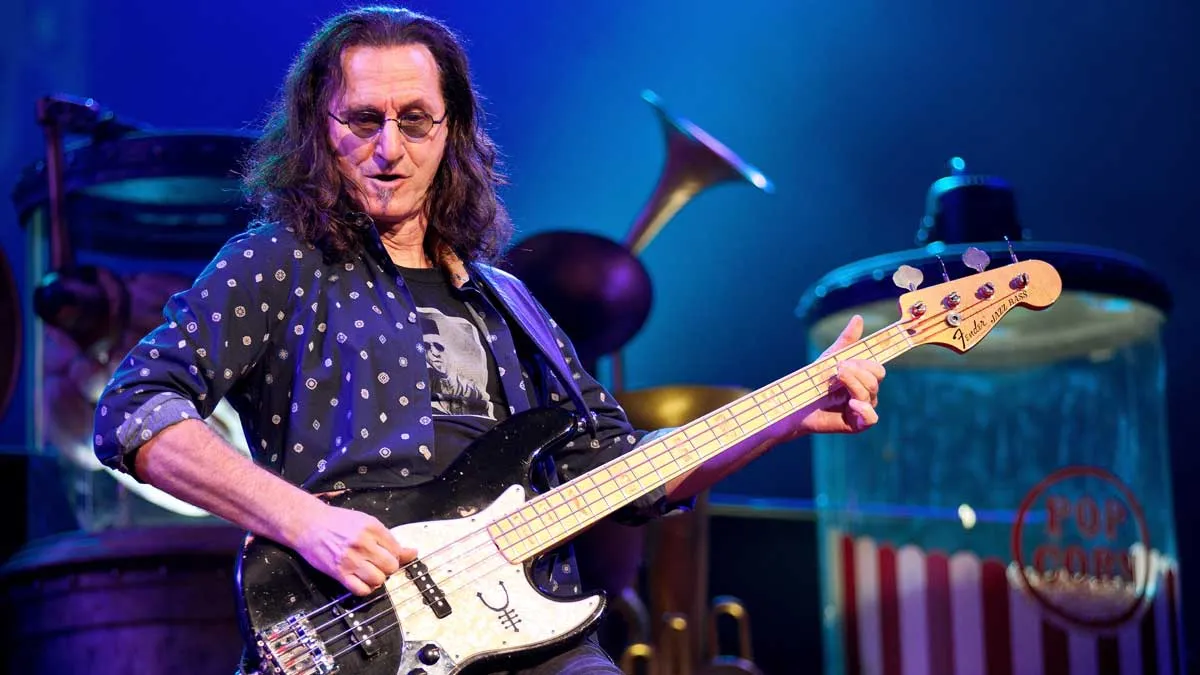
“Neil was a keener listener of reggae than perhaps Geddy was, and I was probably the least. I enjoyed it. I liked Peter Tosh and Bob Marley; I liked what The Police were doing. We were coming at reggae in a more Anglo way, which is how The Police approached it, too. It’s like the way English bands like The Yardbirds and Led Zeppelin worked the blues.
“As an album closer, lyrically it spoke well. It was a nice sentiment to end the record. The way it fades, it was quite dramatic. The Camera Eye almost ended Moving Pictures, but we finally decided on Vital Signs. It was all about being aware of your surroundings and rising to your highest level. That said something important to us.”
5 songs guitarists need to hear by… Rush
