
Picking out the best studio headphones for your music making is just as personal a choice as the instrument you play, or the music you love. There's a term in the industry that the best headphones for music makers are the ones you know intimately, and having been in the recording game for over 20 years now, I'm inclined to agree. If you're just getting started on your music-making journey, then let's leverage that experience to get you your ideal pair of studio cans.
To put together this guide, I tested 15 different pairs of headphones alongside many reviews from the wider MusicRadar team. This overview of studio headphones as a whole means I've got a much better handle on what's good and what isn't than your average forum dweller. I also work in a professional recording studio with various bands and artists, so I'm bringing the expertise of someone who's actively mixing and mastering music in the real world.
If you want my recommendation for the best overall studio headphone available right now, I’d go for the Sennheiser HD 490 Pro Plus. For me, they combine incredibly detailed sound with a comfortable fit, making them a brilliant all-rounder for making music. If those are on the pricey side, check out the Andrew Scheps-approved Sony MDR-7506, which are unbelievably good value around the $/£100 mark.
I did some proper in-depth testing for this guide, which you can read more about in the how I test section. We've also got a how to choose section for complete beginners with a video, an FAQs section that answers all the common questions around mixing headphones, and a glossary of key terms to get you up to speed on the technical lingo used throughout this guide.
Best overall

✅ Buy if you want a brilliant all-around pair of mixing headphones: Combining amazing comfort and excellent sound quality, the HD 490 Pro Plus are a great choice for any music-maker.
❌ Avoid if you need something easily transportable: These headphones don’t fold up particularly small, and the carry case is pretty hefty.
🎧With the Sennheiser HD 490 Pros, I was easily able to pick out all the individual sounds of complicated mixes, and I loved the smooth low end, which bodes well for making critical mixing decisions.
Overview: As open-back headphones specifically designed for mixing and mastering, it’s no surprise to find the Sennheiser HD 490 Pro Plus sitting at the top of this list. Lightweight and comfortable, these Sennheiser headphones tick all the boxes you could hope for in a studio headphone, and out of all the cans I tested for this guide, they stood out as the best overall option.
Build & comfort: The headband is a thin metal which makes it feel plenty durable, and the cushioning on the underside is nice and soft velour. The ear cups are a hard plastic with a metal grille covering the driver, and you get two sets of earpads, a nice velour for producing and a mesh type pad for mixing duties.
I really love the oval shape of the ear cups, which feel far more natural to your ears shape than circular cups you find on a lot of headphones. They’re generously spaced too, so most people’s ears should fit fine into them. The velour pads are obviously a bit more comfortable and nice feeling, but I wore the mixing pads without any problems either.
There’s no real clamping force to speak of with these, but I never felt as though they were loose on my head at any point, even when I started nodding along to particularly groovy bassline. Some headphones end up hurting the top of my head during long sessions, but I had no such problems with the HD 490 Pros.

Raw frequency response: The frequency response is incredibly flat from the bass registers around 50 Hz right through to around 1.5 kHz. It’s not far off the Harman Curve, the frequency response developed by Harman that replicates the sound of high-quality studio monitors in a room.
There’s a decent dip around 3k, which is your upper mids, and the typical dips around 7 and 8k, which are a feature in pretty much every headphone. Overall, it’s a very flat response which reinforces my subjective listening experience that these are a very balanced set of headphones, making them perfect for mixing and mastering music.
Subjective listening: Moving on to my headphone tester playlist, I start with the low end, playing tracks by Massive Attack, Lil Wayne, and my recently discovered new favorite sub bass tester, 'Limit To Your Love' by James Blake. The lows are really nicely balanced, not overhyped at all, and although for casual listening you’d probably want a little more, for making mix decisions I think they sit nicely.
Moving on to some more complex mixes, I start with Yosi Horikawa’s ‘Bubbles’, and with the HD 490 Pros on it almost feels as though the ping pong balls are bouncing around inside my head in the intro. It’s really incredible how detailed the sound is. It’s the same experience in ‘Paranoid Android’, the sound is articulate, and spread really nicely across the stereo field.

“On first listen there are no hyped lows (all-too common on consumer headphones), and the mid-range isn’t too pokey, which is very encouraging. Meanwhile the definition and localisation of sounds is also impressive. Overall I would say the sound is smooth and balanced and refreshingly unlike many headphones one hears.”
Read more: Sennheiser HD 490 Pro Plus review
Test |
Results |
Score |
|---|---|---|
Build & comfort |
Incredibly comfortable ear cups and dual pads, with durable feel |
★★★★★ |
Frequency response |
Very close to the Harman Curve, with some dips in the upper mids |
★★★★½ |
Subjective listening |
Responds brilliantly to a variety of genres, without hyping any particular frequency |
★★★★★ |
Overall |
An amazing quality headphone that will deliver for mixing and mastering |
★★★★★ |
Best budget

✅ Buy if you need to mix music on a budget: Priced at just above the $100 mark, these are a great option if you need a cheap set of cans for mixing and monitoring.
❌ Avoid if you want headphones for mastering: These lack some detail versus pricier headphones, which will be better for mastering duties.
🎧 For the money, I’m really impressed with how the Sony MDR-7506s sound, and although they’re not exactly flat across the board, the mid-range flatness and peaks in the high end are what make it a great budget headphone for mixing.
Overview: The Sony MDR-7506 are a legendary pair of studio headphones that have been around since 1991, and the fact they’re still making best of lists today shows you how revered they are. Considering the price point, they deliver a really balanced sound and will work great as mixing or monitoring headphones for those looking at studio headphones below $200/£200.
Build & comfort: Overall the 7506s are really lightweight and they feel very durably built. With the price you’re not going to feel bad about chucking them into a backpack sans case, and there’s a lot to be said for the comfort in that feeling. They’re quite plasticky feeling, and the leatherette-style pads don’t exactly scream luxury, but then these are cheap headphones.
They clamp down with quite a bit of force, so much so that the pads stay locked together when you take them off, which means they’re not going anywhere when you move around, but could cause a bit of pressure on your actual ears depending on the size of your head. It’s a similar story with the ear cups, which are oval-shaped but not generously sized, so if like me you have larger than average lobes, you might find they apply a bit of pressure in certain spots.

Raw frequency response: Taking a look at the raw frequency response, we can see that there’s not a huge amount of sub-bass in these cans, which is fine, but might cause pause for thought for those in bass-heavy genres. There’s a slight dip around the higher bass and lower mids, but overall it’s pretty flat in the mids.
There’s a huge spike at 10 kHz in my test, as well as some smaller ones at 3 and 7k, which means harshness and sibilance will be amplified, so these won’t get past you when you’re mixing your music. These are characteristics you’ll have to get used to if you want your mixes to translate elsewhere, but once you learn them the flat midrange and accentuated highs can end up being a really powerful tool.
Subjective listening: Listening through the MDR-7506s directly after the HD 490 Pros I can immediately tell a difference in the detail, although it’s not as pronounced as you might think considering the cost differential. The lows are there, but not as smooth as what you get in other headphones, feeling a little cloudy when I played Lil Wayne’s ‘A Milli’ through them.
They’re pretty detailed in the mid-range as we saw in the frequency response test, so the vocals and guitars come through really nicely in Turnstile’s ‘Never Enough’, but there’s a lack of crispness in the fine details of the ping pong ball intro of Yosi Horikawa’s ‘Bubbles’, so you don’t quite get that same feeling of them bouncing around inside your head.

“Listening to a selection of pre-recorded music confirmed the high-mid emphasis - previously unheard details were revealed in percussion, vocal and guitar tracks in our test material, while the levels of bass were tight, even and perfectly audible, yet noticeably unpronounced.”
Read more: Sony MDR-7506 review
Test |
Results |
Score |
|---|---|---|
Build & comfort |
Lightweight and rugged, but not the most comfortable |
★★★★☆ |
Frequency response |
Very flat in the midrange, underemphasised lows, and a peak at 10k |
★★★★☆ |
Subjective listening |
Not as flat as others overall, but excellent midrange |
★★★★☆ |
Overall |
A brilliant mixing headphone for not a lot of money |
★★★★☆ |
Best for beginners

✅ Buy if you want your first set of mixing headphones: The ATH-M50xs' balance of consumer listening friendliness and analytical qualities makes it great for beginner mixers.
❌ Avoid if you’re looking for something brutally honest: The sound of these headphones isn’t as flat as others, so if you’re looking for critical detail, you should look elsewhere.
🎧 Overall, I’d be happy mixing with the Audio-Technica ATH-M50x. With the low and top-end response in mind, and for beginners, they nicely straddle the balance between pleasing and analytical.
Overview: The Audio-Technica ATH-M50x is another set of headphones that have been around for a little while, and they’ve gotten to the stage where they’re so popular that people start hating on them. I personally think these Audio-Technica headphones are great for the money, and their mix of consumer listening friendliness with the precision of a more analytical, mixing style headphones makes them a great set to cut your teeth on if you’re just starting your mixing journey.
Build quality: One of the first things I noticed about the M50x is the amazing amount of flexibility you get with the swivel of the ear cups. They rotate 180 degrees forward and back, can fold up towards the headband for easy transportation, and they can flip 180 degrees to the outside, so you can share them with a collaborator or friend.
The build is really sturdy too, and they feel much more robust than the MDR-7506s despite being mostly comprised of hard plastic. The cushioning on the headband is so so, but there’s plenty on the ear cups which makes them feel nice on your ears. There’s more clamping force than the HD 490s but less than the 7506s, so they feel secure without overly pressuring any particular part of your ears or head.

Raw frequency response: Looking at the frequency response graph, they don’t look massively overhyped in the low end, despite feeling quite bass-heavy to my ear. There’s a significant dip around the low mids which gives them that consumer-friendly profile, but it’s overall pretty flat from there on out which gives you that decent analytical detail.
As we get to the high end you can see some peaks and troughs with 5 to 8k being quite reserved with a peak around the 10k mark, like the 7506s. That 5 to 8k range is where a lot of harshness and sibilance sits, which makes these really comfortable to listen to, but you will need to be extra cautious when mixing to make sure none of this is getting past you.
Subjective listening: The first thing I thought when I put these cans with Massive Attack’s ‘Paradise Circus’ on was that the low end was much more powerful than the other headphones I tested, which is interesting as it doesn’t look that way on the frequency response graph. I’ve also seen many other reviews say there’s not enough low end, which tells you something about the subjectivity in which we hear music, because personally I’d like a little less here.
The mid-range detail is great in those busier mixes, not quite as nice as the HD 490s, but these are significantly cheaper. The stereo separation is good too, when I listened to Yosi Horikawa’s ‘Bubbles’, it felt like I was in the room with his countless bouncing ping pong balls, but it didn’t have quite the same impact as the aforementioned Sennheiser’s.

“And comparing M50x to the old M50 the difference hits home as soon as you tax them with dense Electronic tracks. M50x goes deeper and feels clearer and more airy, with the M50 sounding more like the M40x. We'd happily mix with the M50x, which we would have shied away from on the old model.”
Read more: Audio-Technica ATH-M50x review
Test |
Results |
Score |
|---|---|---|
Build & comfort |
Rock solid build quality with nice thick ear pads |
★★★★☆ |
Frequency response |
Not super flat, with some dips in the low mids and top end |
★★★★☆ |
Subjective listening |
Really pleasing to listen to, but likely not flat enough for experienced mixers |
★★★★☆ |
Overall |
An excellent set of headphones for beginner mixers |
★★★★☆ |
Best for mastering

✅ Buy if you’re making money from making music: If you want a professional-grade set of headphones for mixing and mastering, then the level of detail here is spectacular.
❌ Avoid if you’re on a tight budget: These headphones are not cheap, so look away if you’re looking to get a new set of cans on a budget.
🎧 For mixing and particularly mastering purposes, the level of detail available from the Hedd Heddphone Two is simply spectacular, and if you’ve got the cash for them, you won’t regret buying a pair.
Overview: The Hedd Heddphone Two is a little different from the rest of the headphones in this guide as it uses an AMT driver versus the more common dynamic driver. It’s a more expensive technology that has some benefits like incredible transient response and amazing clarity, but some people find it a little lackluster in the low end. I’ve picked them as a great choice for mastering work thanks to their incredible level of detail.
Build & comfort: The Heddphone Two is absolutely gigantic compared to some of the other headphones in this guide, but despite the size they’re not that much heavier than others here. They’ve got some very premium features like a carbon fibre headband and some really nice-feeling faux leather earpads, giving it an expensive feel overall.
They certainly feel robust, although with the price point most won’t want to find out just how durable they are, and will almost certainly pop them back in the hard case when travelling. The headband adjustment process is a little convoluted, but with the ability to adjust for curvature and clamping pressure, once you’ve set it you’re not likely to change them.
I did find that they weighed on my head a bit when wearing them for long periods of time. It’s a natural result of their heavier design, and I also found them to feel a little loose on my head, but only if I started headnodding with serious gusto. At the end of the day, you’re not likely to be tracking in a pair of these so I can forgive them that.

Raw frequency response: The frequency response I got in my tests is interesting, because they sound very flat to my ear, but there’s something weird happening in the upper mids and top end in the graph. This might be due to the AMT driver design, which makes the ear cups very open in their design, so they don’t respond in a similar way to others in the same test.
Apart from a slight dip around 900k, everything up to the upper mids is nicely matched to the Harman Curve, and you can really hear that amazing detail when you listen. The real low end is more present than a lot of the other headphones I tested, although in actual listening, it feels pretty balanced to me. As I’ve stated before, it’s interesting how the more scientific tests differ from what each individual person will actually hear.
Subjective listening: Honestly, the Heddphone Two spoiled me in the subjective listening tests. Everything sounds amazing through these, and I noticed little elements in songs I know intimately listening with these. From the ad libs in the intro of Lil Wayne’s ‘A Milli’ to all those delicate touches of percussion in Massive Attack’s ‘Paradise Circus’ that I hadn’t noticed before.
Yosi Horikawa’s ‘Bubbles’ feels like being in the room it was recorded in, and the transient response when I play Dr Dre’s hard-hitting ‘What’s The Difference’ is absolutely stunning. When I cranked the volume on this for other tracks that snare hit starts to get quite harsh, but here it sound smooth no matter how much I turn it up. Everything feels so well balanced that I seldom found myself feeling fatigued when listening through them, even when cranking the volume.
Test |
Results |
Score |
|---|---|---|
Build & comfort |
Comfortable, but heavy and bulky on your head |
★★★★☆ |
Frequency response |
Some interesting results that don’t quite tally up with the actual listening experience, but matches the ideal curve well in places |
★★★★☆ |
Subjective listening |
The best sounding pair out of everything I tested here |
★★★★★ |
Overall |
An excellent set of headphones for mastering music |
★★★★½ |
Best for monitoring

✅ Buy if you want headphones with excellent isolation: Perfect for tracking vocals or other instruments, the DT 770 Pro X offers excellent external noise rejection, making them great for focusing and minimising external bleed.
❌ Avoid if you want something flexible: The earcups don’t swivel, and there’s no folding either so they aren’t the most flexible or portable.
🎧 Due to the excellent passive isolation and balanced frequency response, the Beyerdynamic DT 770 Pro X is my top choice for tracking instruments and vocals in the studio, but they’ll serve you well as a pair of mixing headphones once you learn their frequency response.
Overview: The Beyerdynamic DT 770 Pro X is a step up from the studio staple DT 770 Pro, seeing the addition of a detachable cable, updated headband, and new driver. It’s also had some slight changes to the frequency response, in theory making it a better headphone for mixing than the previous versions.
Build & comfort: As you might expect from an evolution of one of the most durable headphones of all time, the DT 770 Pro X is very well put together, and certainly feels as tough as many of the DT 770 Pros I’ve used in studios over the years. Removing the faux leather headband there’s a thin metal beneath, with metal attachments on the sides for the ear cups.
The drivers themselves are covered with hard plastic, and the ear cups have a lovely soft, plush cushioning in the trademark 770 grey. They’re circular-shaped but generously sized, fitting nicely over my ears without clamping down on any part of it. There’s quite a solid clamping force too, so the cups stay closed together when you take them off, although it’s not quite as strong as the MDR-7506s.

Raw frequency response: Out of all the headphones I tested, the DT 770 Pro X follows the ideal of the Harman Curve the most. It’s got a much improved sub-bass response from the previous version, and another peak in the bass-range around 100Hz. From there on it’s mostly flat until we get to the upper mids.
As we get to the upper mids things start to deviate from the standard and here, there’s some dips at 3 and 4k. There’s another dip at 7-8k, which is typical of most of the headphones I tested in this guide, and another larger peak at 10k, not too dissimilar from what I saw with the MDR-7506s.
Subjective listening: Listening to the DT 770 Pro X, they really are well balanced, feeling quite similar to my top pick in the HD 490 Pro Plus. The word that comes to mind is balanced, where it feels really nicely spaced across the full spectrum, with a nice smooth low end, and plenty of detail. They don’t feel quite as smooth in the mid-range as some of the more expensive cans here, but there’s still plenty of detail.
The closed-back design makes it feel really intimate with Yosi Horikawa’s ‘Bubbles’, getting close to that same feeling I got with the HD 490s in terms of feeling like the ping pong balls are inside my head. The high-end of the transients end up feeling a touch sharp on ‘What’s The Difference’ by Dr. Dre, and it’s a similar feel with a lot of the high-end information on Radiohead’s ‘Paranoid Android’.
“It's easy to see why these are such popular tracking cans, since the passive noise reduction is excellent for maintaining performance focus while simultaneously preventing problematic backing track bleed onto the mics. The generous 3m cable is also a welcome bonus in a studio setting, allowing ample freedom of movement for guitarists, drummers and vocalists alike, as long as you don’t allow it to get tangled up in the wheels of your swivel chair.”
Read more: Beyerdynamic DT 770 Pro review
Test |
Results |
Score |
|---|---|---|
Build & comfort |
Rock solid build with excellent comfort |
★★★★½ |
Frequency response |
Matches the Harman Curve well, with some dips in the higher frequencies |
★★★★½ |
Subjective listening |
Excellent isolation but a little harsh in the high end |
★★★★½ |
Overall |
Perfect for tracking and can handle mixing duties too |
★★★★½ |
Best for comfort

✅ Buy if you value comfort over all: With the self-adjusting headband and lightweight, you’ll forget you’ve even got these on.
❌ Avoid if you prefer a subtle aesthetic: The orange accent on these headphones means they stand out, so avoid if you prefer a more traditional-looking headphone.
🎧 The AKG K712 Pros are the most comfortable of all the studio headphones I tested, and deliver a flat enough response that you’ll be able to craft some fine mixes with them.
Overview: If you’re the sort that wears a pair of headphones all day, the AKG K712 Pro would be my top pick thanks to their comfortable and lightweight design. As one of AKGs top tier of headphones, they’re handcrafted in Austria, so you can rely on excellent quality throughout their construction.
Build & comfort: They’re lightweight compared to a lot of the other headphones I tested, but they still feel really well put together. The headband consists of two circular metal poles that bend around and connect the ear cups, with the headband attached to this via some clips and an elasticated cable that controls the self-adjusting component.
The ear cups are circular but absolutely huge, so they completely covered my ears and have a nice velour-feeling cushioned pad. They don’t swivel as such, but rotate slightly on the ear cup connection to further adjust to your head shape, which no doubt contributes to their overall excellent comfort.

Raw frequency response: The frequency response graph for the K712 Pros shows one of the flattest responses from the bass frequencies all the way to the mids and upper mids, where we start to see some movement against the preference curve. The slightly understated sub bass is definitely present when you listen.
As with all the other headphones, we start to see a lot more deviation as we get to the higher frequencies, with a particularly large dip here around 3k. It’s a similar dive around 7k, and like the DT 770s and MDR-7506s, there’s a bump around the 10k mark. Interestingly, these headphones showed a lot more in the brilliance part of the spectrum, with information only dropping off around the 18k mark.
Subjective listening: I really liked the sound of the K712 Pros overall, and they shone on a variety of sources to my ears. With bass heavier tunes like Lil Wayne’s ‘A Milli’ and James Blake’s ‘Limit To Your Love’, they’re very understated, so some users might want a bit more here. For me, it adds to the overall balance of sound in the lower and mid range frequencies though due to it’s balanced nature.
It might be due to the open back design, but it doesn’t feel quite as intimate with Yosi Horikawa’s ‘Bubbles’. It’s more like being in the room that it was record than the ping pong balls bouncing around inside your head which I got from the HD 490 Pros in particular. On busier mixes like ‘Paranoid Android’ by Radiohead and ‘The Chain’ by Fleetwood Mac, there’s plenty of detail on the instrumentation, and the high end feels nice and smooth.

“Light and extremely comfortable the K712 Pro are headphones that will lend themselves to extended listening sessions and can be relied upon to give you an accurate representation of your mix.”
Read more: AKG K712 Pro review
Test |
Results |
Score |
|---|---|---|
Build & comfort |
Incredibly lightweight and comfortable |
★★★★½ |
Frequency response |
Super flat in the lows and mids, and goes really high |
★★★★½ |
Subjective listening |
Lovely, balanced sound, although a little lacking in the sub bass |
★★★★½ |
Overall |
A super comfortable headphone with great sound |
★★★★½ |
Specs comparison
If you want to see all of my top picks side-by-side, this table of key specifications puts everything in one place for you to compare each model.
Model |
Type |
Freq. response |
Impedance |
Driver |
Weight |
|---|---|---|---|---|---|
Sennheiser HD 490 Pro |
Open-back |
5Hz-36kHz |
130Ω |
38mm |
260g |
Sony MDR-7506 |
Closed-back |
10Hz-20kHz |
63Ω |
40mm |
229g |
Audio-Technica ATH-M50x |
Closed-back |
15Hz-28kHz |
38Ω |
45mm |
285g |
Hedd Heddphone Two |
Open-back |
10Hz - 40kHz |
41Ω |
N/A |
495g |
Beyerdynamic DT 770 Pro X |
Closed-back |
5Hz - 40kHz |
48Ω |
45mm |
350g |
AKG K712 Pro |
Open-back |
10 Hz - 39.8 kHz |
62Ω |
40mm |
235g |
Also consider
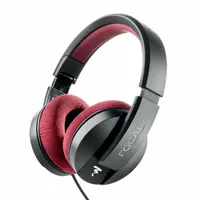
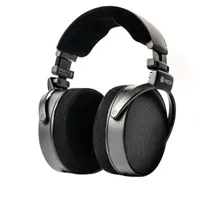
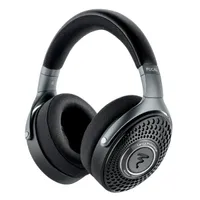
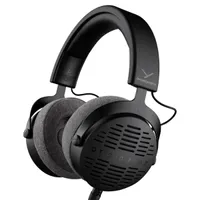
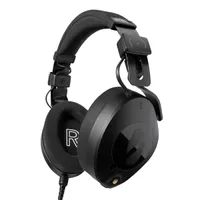
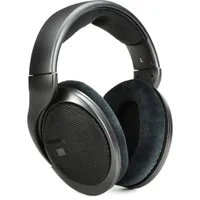
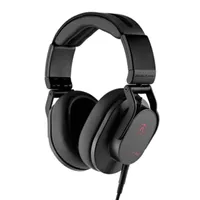
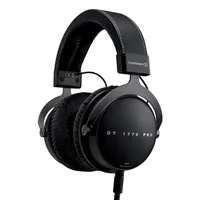
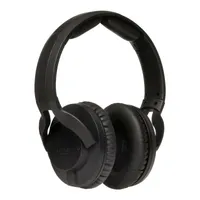
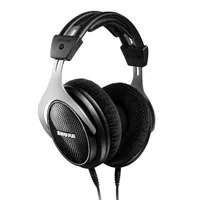
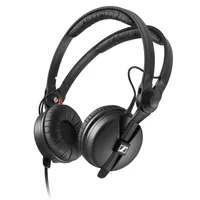
The above studio headphones are for us, the ones you should be spending your money on. They aren't the only ones we've reviewed however, so if you didn't quite see what you were looking for above, here is a selection of other music production headphones we've reviewed.
How to choose

If you’re brand new to buying a pair of studio headphones, it can be very overwhelming deciding which set to go for. I’ve been using studio headphones for well over twenty years now, so here I’ve laid out the key info you’ll need to assess in order to make sure you get the best set of studio headphones for your particular use case.
1. Set your budget
MusicRadar's got your back Our team of expert musicians and producers spends hours testing products to help you choose the best music-making gear for you. Find out more about how we test.
How much you’ve got to spend is going to be the defining factor of what you can get. Don’t worry if you’ve only got a small budget though, because nowadays there are plenty of great budget studio headphones available. Here’s what you should be looking at for the following budgets:
💸 $/£100 - The beginner range of headphones, like the Sony MDR-7506. Still great for mixing and mastering, but likely lacking some of the bells and whistles of more expensive models. The perfect amount to spend on your first set of cans or a budget second pair for tracking/referencing.
💰 $/£100-300 - This is where the vast majority of producers sit, and you can get a lot for your money here. Sets like the Beyerdynamic DT 770 Pro and Audio-Technica ATH-M50x sit in the price point and will give you a good, neutral balance for mixing, mastering, and tracking.
🤑 $/£300+ - Here you’ll be getting into reference-grade cans like the ever-popular Sennheiser HD650 and Audeze MM-500s. These are for mixers who’ve already got some experience with their usual headphones and want to take a step up. They’ll be super detailed, but you’ll really need to know your stuff to get the best out of them.
2. Open back or closed back?
This is one of the key decisions you’ll have to make. Typically, open-back headphones are better for mixing, whereas closed-back headphones are better for monitoring while you’re recording. Open-backs will let sound out, which could make them sub-optimal if you need to be very quiet, but closed-backs don’t sound as open, which can affect mixing decisions.
📕 Buy closed-back headphones if: You’re recording vocals most of the time, or you tend to mix in a noisy environment.
📖 Buy open-back headphones if: You’ve got a quiet space to work in and want the most natural sound for mixing and mastering.
3. Check impedance
Next, you’ll want to consider the impedance of the cans you’re choosing. Some headphones, like those from Beyerdynamic, give you a choice of impedance levels, but the general rule is that those below 100Ω are considered low impedance, while those above are considered high impedance.
🔽 Buy low impedance if: You tend to listen on the built-in outputs of phones, laptops, or lower-grade audio interfaces.
🔼 Buy high impedance if: You have a headphone amplifier or high-level audio interface that will provide enough power for them to perform their best.
4. Comfort
Comfort is a really important factor of buying a set of headphones, but it’s hard to judge from reviews alone. What works for one person might feel completely different for another, but the general consensus is that a lighter pair of headphones will be more comfortable than a heavier set for long listening sessions. Ideally, you’ll be taking regular breaks anyway, but we all get sucked into the vortex of song creation and end up wondering where the hours of gone.
I’ve included a set that I think is the most comfortable in this guide, but realistically, until you’ve worn them for a few weeks, it’ll be hard to know if a set of headphones is right for you beforehand. Lots of headphones can be upgraded with thicker headband cushioning or different ear pads, so not all is lost if you find the set you got is more uncomfortable than expected.
5. Forget style
A lot of musicians get hung up on a particular style for their headphones, for example, if they work in particularly bass-heavy styles of music. The problem with this is that ideally, you don’t want your mixing headphones to emphasise the bass, because when you play them on a massive system with a sub, you’ll probably have undercooked it. Equally, you don’t want something with a smooth high end either, because you might miss those harsh frequencies there, which can be exposed on a good set of speakers in a treated room.
More than anything else, you will want to prioritise neutrality in your mixing headphones, which will ensure they translate better to other systems. Any good mixing engineer will use a variety of sources to check their mixes too, so it’s always worth remembering that good mixes aren’t created in the void of a single set of headphones.
How I test

I’ve been making music for over 20 years now, so I’m judging these headphones from the perspective of someone who’s done countless mixes over the years. I regularly record in an analogue studio as well as working entirely in the box, making music from heavy metal through to afrobeat. Throughout all of my testing, I kept in mind that these were headphones to be used for making music, rather than for casual listening.
There’s an ongoing debate about how to judge audio quality in the audiophile world. On one side the objectivists believe that quality can be quantified through measurement and data, whilst subjectivists believe that, due to the fact each human hears differently, you can’t measure audio quality in a truly objective fashion.
The purpose of our tests is to provide data and further insight for our readers. We’re not aiming to rival objectivist sites like Soundguys or Rtings with their huge swathes of data points. Nor are we going to say that you can’t judge the quality of a product on a base level. Instead the aim is to straddle the line by providing relevant data, whilst adding weight to our knowledge and experience using headphones specifically for music production, mixing, and mastering.
The Neumann KU 100

To perform objective testing of the headphones in this guide, I opted to use a Neumann KU 100 binaural head, playing a loudness-matched sine wave sweep through each pair of headphones from 20Hz to 20kHz. The head was kindly provided by Neumann themselves for testing, and the idea here was to generate a raw frequency response that could be used to compare the different headphones in the guide.
For testing I ensured the following:
- The binaural head was decoupled from any surfaces that may resonate sympathetically
- Each sound source I played was loudness-matched to ensure an even playing field
- All objective testing was performed done in the same room to ensure parity across each result
REW Testing Software

To perform the actual testing, I used REW, a free software used for acoustic room and audio device measurement. I saw it’s tool for measuring frequency response as the best easily available method, and it provided an easy to way to export my test results as images in order for them to be dissected by others.
Each pair of headphones was tested five times each, with the results being aggregated into an average via the software. I also reseated the headphones after each test, to ensure there were no issues with the placement.
Harman Curve
I overlaid my own test results with the Harman Curve, which provides an average sound profile that most humans should find pleasing, based on testing of hundreds of pairs of headphones with hundreds of listeners to find an ‘ideal’ frequency response. Now, as I mentioned before I don’t think that if a headphone hits the Harman Curve, it means you’ll like it, but it’s just an objective way to compare headphones to one another.
Once you find a particular balance you like, you could potentially use this knowledge to know which headphones are best for you should you need another pair, or only have access to a certain number of headphones and not your preferred pair.
Subjective listening
For a subjective test, I listened to 20 industry-standard mixes across a variety of genres on the headphones to see how they respond. Using my own expertise in mixing, mastering, and general music listening I judged the subjective sound of each pair of headphones which when paired with the objective data should help you make a better buying decision
The idea with all my testing was to straddle the divide between the data-hungry and those who feel data plays too important of a role in modern headphone testing, in order to give a more balanced idea of what the headphones will sound like when you take them out of the box and plug them in.
Read more about how we test music making gear and services at MusicRadar.
Key terms

- Burn-in: The idea that you need to use headphones before they sound their best. This has never been scientifically proven.
- Cans: A colloquial term for studio headphones.
- Closed-back: Headphones that prevent sound from leaking out.
- Coloured: Refers to headphones that boost certain frequencies to sound more pleasing.
- Fatigue: This builds up after listening for a long period of time, causing you to make poor mixing decisions.
- Flat response: A headphone that doesn’t accentuate any part of the frequency spectrum so you can make good mixing decisions.
- Frequency response: The range of frequencies a studio headphone can reproduce.
- Imaging: How studio headphones place sounds in the stereo field.
- Impedance: A measure of resistance in ohms (Ω), with lower being easier to drive and higher requiring a headphone amp.
- Isolation: The ability of headphones to block any outside noise.
- Leakage: The amount of sound that escapes the headphones.
- Open-back: Headphones with ear cups that let sound pass through for a more natural sound.
- Reference: Super accurate headphones used for mixing and mastering.
- Semi-open: A headphone that blends the design of closed-back and open-back.
- Sensitivity: The measure of how loud headphones can get at a particular level.
- Soundstage: The width, depth, and space of a pair of studio headphones.
- Transient response: How quickly headphones reproduce sharp sounds like drums.
- Translation: How well a mix on headphones translates to other mediums such as speakers, AirPods, car stereos, etc.
- V-shaped: A type of headphone that dips the mids but increases bass and treble for a more pleasing sound.
FAQs

What’s the difference between open-back and closed-back headphones?
Open-back and closed-back refers to the design of the ear cups on the headphones. In open back headphones there is ventilation which allows some of the sound to escape. This means you get a more natural sound and a wider soundstage, however the sound will bleed out, which could be a negative if you need to work quietly or are tracking vocals with a sensitive microphone.
Closed-back headphones meanwhile do not feature any ventilation, which means they don’t have as much sound bleeding out, but this affects how ‘open’ they sound. Closed-back headphones are ideal for tracking instruments as they isolate you from the space around, and prevent any bleed from going into the microphones.
How are studio headphones different from consumer headphones?
Studio headphones are designed to sound neutral across the frequency range. This is because you want to hear the song you are mixing without any colouration from the headphones in order to make better mixing decisions. Consumer headphones tend to have boosts and cuts on the frequencies in order to make them sound more pleasing, often with boosted bass or smoothed off high-end for less harshness.
Can I mix only using headphones?
Yes you can mix only using headphones, provided you know your set of headphones well. A lot of consumers listen to music exclusively on headphones so it’s possible, but in order to determine how good your mix sounds elsewhere, it’s recommended to try and listen to them on as many different sources as you can, particularly if you’re only getting started mixing music.
Are studio headphones good for beginners?
Yes, studio headphones are great for beginners. Often, it’s better to mix with headphones than with studio monitors in a badly treated room, as is typically the case with beginners and bedroom musicians. Studio headphones take your room frequencies out of the equation, which can often lead to better mixing decisions.
Can you use wireless headphones for music production?
You can, but it’s not advised. Wireless headphones are often on the consumer end of the scale in terms of frequency response, plus you will get compressed audio from the signals being converted to wireless, which results in lower quality audio. While wireless headphones can be good to test a mix on, I’d advise against using them for the bulk of your mixing.
What does headphone impedance mean?
Headphone impedance is the electrical resistance in headphones. Generally, higher impedance headphones (100Ω or more) will sound better, but require more amplification in order to do so. Using a pair of high impedance headphones on something like a mobile phone will often result in quieter audio, whereas on higher-end audio interfaces or systems with headphone amplifiers will provide plenty of juice in order to get them to perform their best.
Do I need a headphone amp?
This all depends on the impedance of your headphones and which audio interface you’re using. If your headphones are below 100Ω, then chances are you won’t need an amp. If they’re above that figure, then you may need one, but in my experience, most modern audio interfaces provide plenty of juice to push high impedance headphones.
Why do mixes sound great in my headphones but terrible in the car or on speakers?
This is what we call mix translation. No pair of headphones is truly 'flat' when it comes to the response, so your mixes will sound different when you play them back over other mediums. For example, the low end boost in certain headphones might mean you lower this section in your mix, which results in a weak sounding low-end when you play it through big speakers.
There's no real way to get around this other than learning the particular idiosyncrasies of your headphones. This will happen naturally over time, for example I know that my vocals need to be a bit quieter in my headphones in order for them to sit right on a set of studio headphones. Just keep taking your mixes and playing them back on various systems, and eventually you'll learn how to get great sounding mixes everywhere.
How do I avoid ear fatigue during longer sessions?
The answer to this is simple, take regular breaks. When mixing our ears get fatigued very quickly, sometimes it takes just 10-15 minutes for you to stop noticing changes as well as you would with fresh ears. I also like to 'reset' my ears regularly by listening to a reference track for the material I'm working on. This gives your ears a new benchmark for what the music should sound like, and gives you something to aim towards.
Latest updates
10/06/26: A new introduction has been added, expanding on the original and adding more context to the testing methodology, and linking out to other sections of the guide. Two recently reviewed models have been added to the 'also consider' section, and two new questions have been added to the FAQ.
05/01/26: The intro has been given a refresh in order to make it more concise and easier to understand, and a fresh header image has been added. A new boxout titled 'The Bottom Line' has been added to each product entry to give a concise verdict on each pair of headphones.
11/11/25: The guide has been completely overhauled from top to bottom. All of the top products have been tested for raw frequency response and subjective listening by the guide editor. New sections have been added including a how to choose section, glossary of key terms, in-depth testing information, and a totally revamped FAQs section.
