
SYNTH WEEK 2026: Synthesizers are weird. They’re musical instruments but they’re also consumer electronics, and as such they aren’t allowed to sit still. You don’t see classical instrument companies falling over themselves to constantly reinvent the violin or piano, but that’s what happens every year at trade shows like NAMM and Superbooth: new synths with new synthesis architectures.
Perhaps someday we’ll all decide that the Minimoog is the ultimate expression of the instrument, the Stradivarius of synths, and leave it at that, but until then we’ll have to keep coming up with new ways to wrangle sound.
Sometimes novel synthesis models do make the jump into synth-consciousness at large, like Wolfgang Palm’s wavetable synthesis, which exploded in the 2000s thanks to soft synths like Massive.
But for every East Coast subtractive analogue and FM type, there are those that never break out of their original instruments - that is, until they’re rediscovered by a boutique Eurorack developer looking for an oddball architecture to fill out their release list.
To mark MusicRadar’s Synth Week 2026, then, let’s celebrate those synthesizer dead ends; the synthesis types that never made it past their original machines.
And we should stress that these are in no way bad; for whatever reason, they just weren’t cool enough to get past the bouncer that is the synth-buying public and into the big time.
1. Vector Synthesis
The 1980s were a wild time in synthesizer history. Yamaha blew everyone’s mind with the DX7 in 1983, a digital synth that upended all of the analogue work that companies like Moog, Korg, and Roland had been doing.
Thus started a mad scramble to find the next new thing. No one knew what it was going to be, but everyone knew it had to involve ‘digital’. As Yamaha had FM protected by stringent copyrights, other manufacturers went back to the drawing board to see what they could come up with.
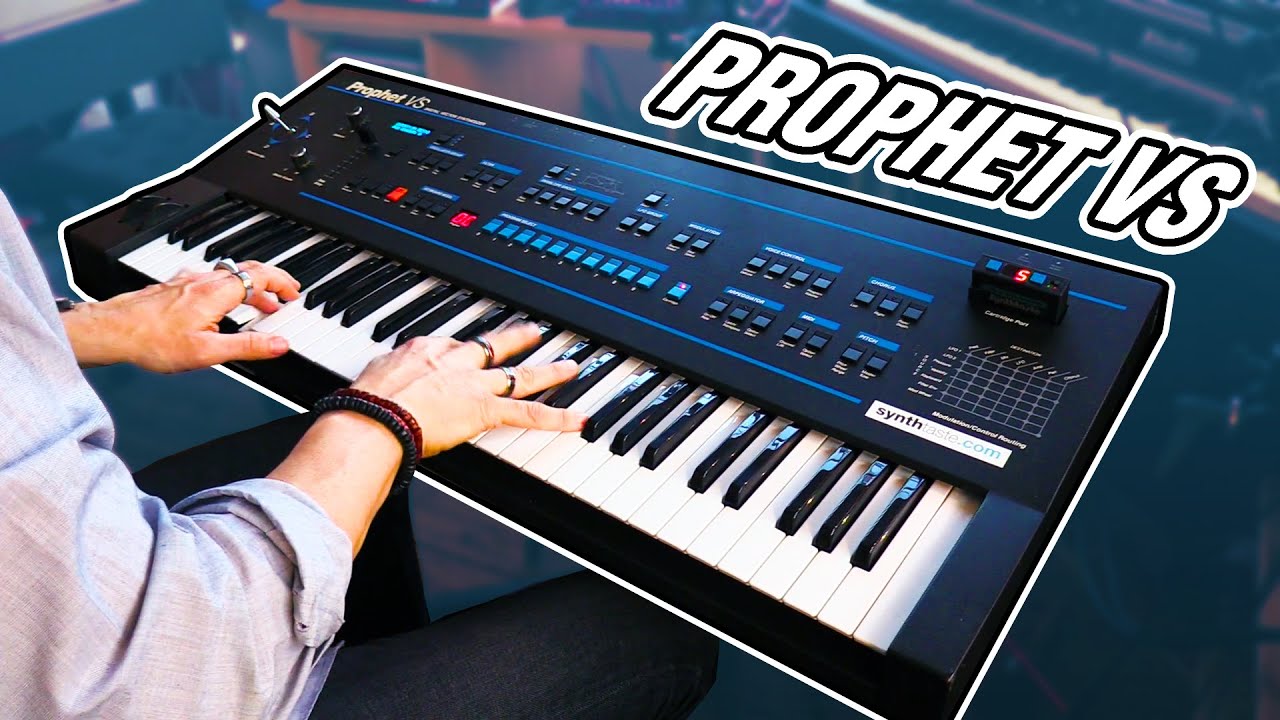
Rather than completely reinvent the (mod)wheel, American outfit Sequential Circuits took a hybrid approach. The result was the Prophet VS, a synth with digital oscillators and analog filters. Those digital oscillators - four of them, in fact - were capable of playing back 12-bit single-cycle waveforms.
Rather than just layering the quartet of oscillators like a traditional analogue synth, Dave Smith and the Sequential team came up with the idea of using a vector to crossfade between them. This was accomplished via a joystick that you could waggle around the oscillator ‘vectors’ or park it dead center for full foursome playback. Position could also be modulated via the internal Mixer Envelope.
Although a gorgeous instrument, the Prophet VS wasn’t a big enough hit to keep the bankers at bay and Sequential soon found itself in dire financial straits.
Yamaha swooped in and bought the assets, bringing much of the team over to its new R&D facilities in the San Francisco Bay Area. Smith’s Vector Synthesis ended up on the Yamaha SY22, where it mixed between two sample-based oscillators and two FM sources. Korg then took over the R&D department, with the same team’s joystick next gracing the Wavestation, perhaps the biggest hit to feature Vector Synthesis (although Kawai’s unrelated K1 also offered Vector and moved quite a few units of its own).
2. Wave Sequencing
The Korg Wavestation didn’t only offer Vector Synthesis. It had another unique trick up its digital sleeve: Wave Sequencing. This feature was brain-melting enough to make it one of the hottest synthesizers of the early 1990s - and esoteric and (dare we say?) gimmicky enough to be mostly forgotten a few years later.
Instead of just playing a single waveform, Wave Sequencing let you do what it says on the tin: sequence them. Press down on a key and a parade of waveforms, laid out one after the other, would burst forth. Sort of like a step sequencer except for PCM samples, you could assign different waveforms to each step in the sequence.

Additionally, each sample could have its own length, pitch, fine tuning, level and crossfade amount. Much like any other sequencer, you could sync it, this one to the Wavestation’s internal clock or to MIDI.
While technically interesting, most players didn’t find it all that musically useful. When are you going to want to unleash a torrent of samples? That first ‘SkiJam’ preset sure did sell a lot of units though.
Korg eventually revived Wave Sequencing with 2020’s Wavestate but the synthesis feature remains a curiosity.

3. Neuronal Synthesis
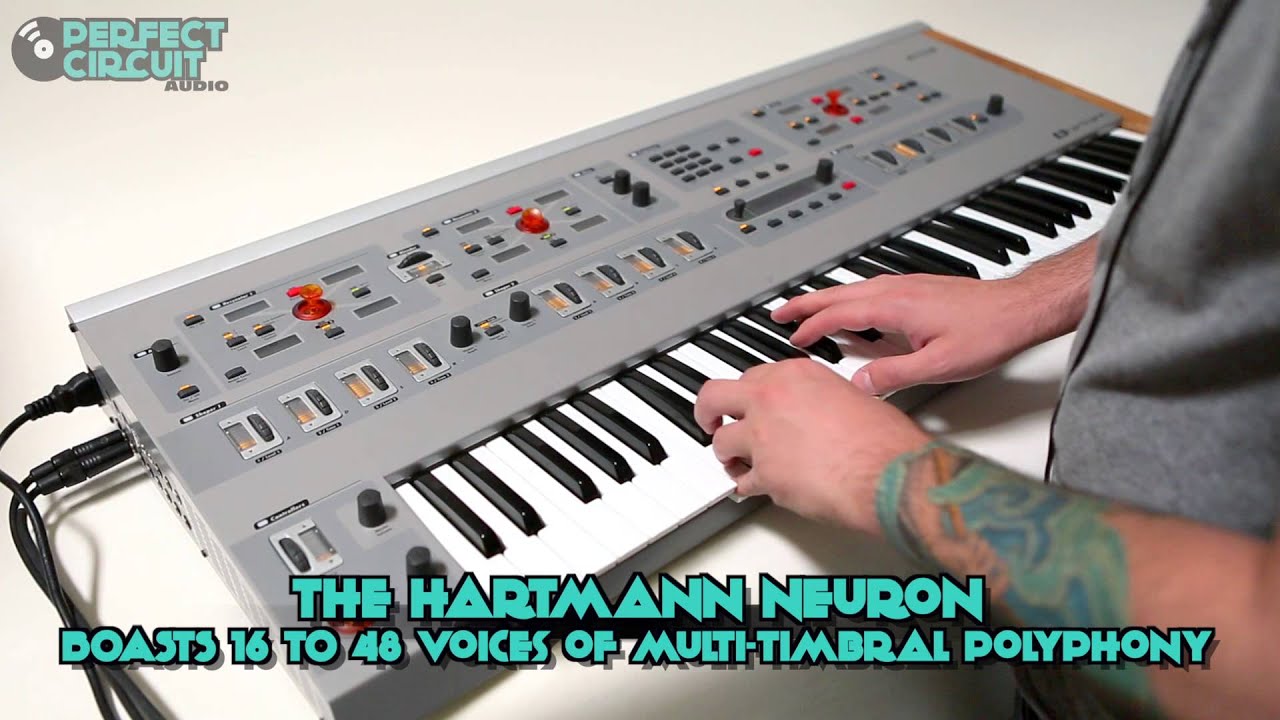
In 2003, musical instrument industrial designer Axel Hartmann debuted the Hartmann Neuron, an extremely forward-thinking hardware synthesizer that relied on artificial neural networks for its sound generation.
Even in 2026, neural networks are cutting edge stuff and tend to get used within software to recreate amp and effects pedals rather than for full-on re-synthesis, but that’s exactly what the Neuron and its Neuronal synthesis did.

Start with a sample. Load it into the synth and let Neuron analyze it and create a wireframe model of it. You can then manipulate this re-synthesized version of the original sound according to Scape and Sphere properties (something like the excitation and resonant sections of physical modelling) via the two Resynators, or oscillators. It was heady and futuristic, and found favour with sound designers for film, with Hans Zimmer being an avid user. With a $5000 price tag, however, few outside the upper echelons of music and film composition could afford one.
With the world coming around to neural networks and artificial intelligence, perhaps the time is right for a return to Neuronal Synthesis. Certainly the VST version is ripe for an upgrade.
4. Additive Synthesis
Additive synthesis is admittedly not all that unusual. It forms the basis for the sound generation of electro-mechanical organs and modern software like Native Instruments’ Razor. And yet, when it comes to hardware synthesizers, while you may find some additive elements tucked away inside, pure additive synths tend to be few and far between.

In the late 1980s, piano manufacturer Kawai released a series of synths appended with model numbers that all started with the letter K.
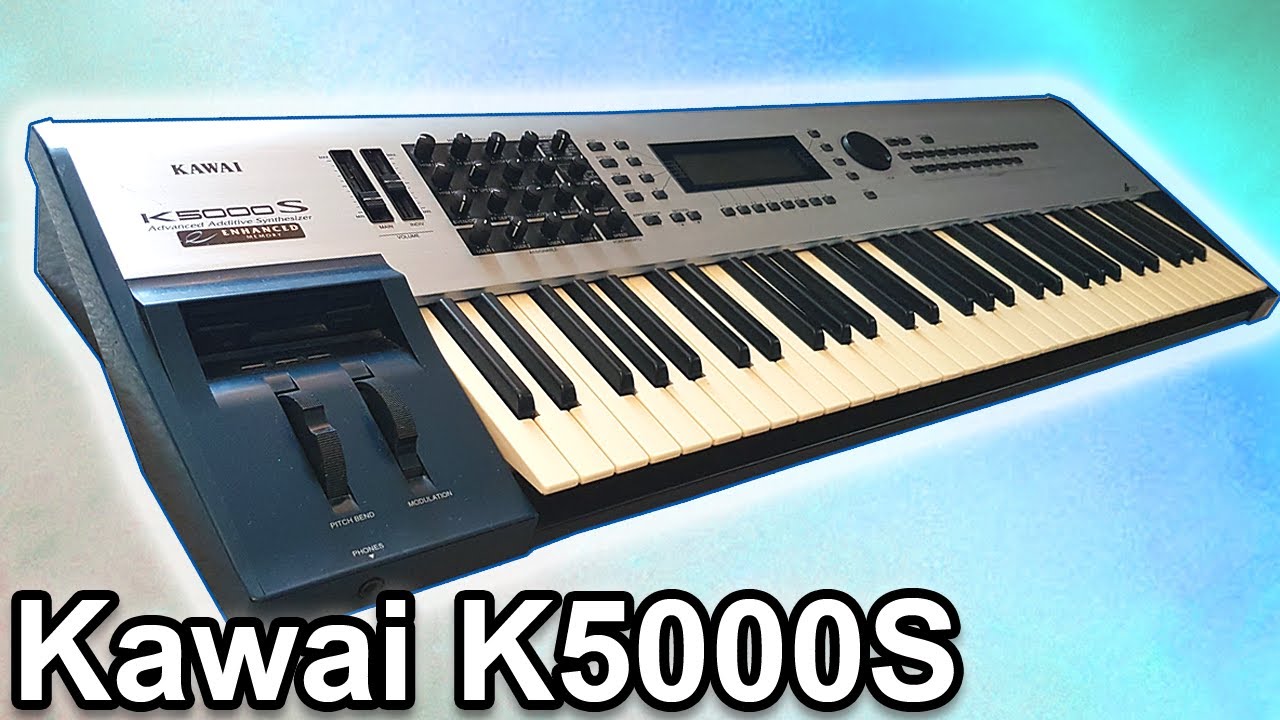
The K3 explored Prophet VS-style hybrid synthesis, while the K1 and K4 took forays into the sample synthesis territory already staked out by Korg and its M1. (K1, M1 - that must have been a coincidence.) But it was the additive-based K5 and later K5000 that pushed digital synthesis to the limits of what people were willing to work with.
Digital synthesis has a reputation for being cold. While this doesn’t have to be true, when it comes to additive - and particularly the type featured in the K5 - it very much is. We’re talking icicles and snow drifts. If you thought the DX7 could get glassy, you haven’t heard anything yet. That’s because additive synthesis is based on combining sine wave partials.
According to Fourier theory, with enough partials you can create any sound possible. Provide the requisite processing power and this approaches something like the truth (have a play with Razor to experience additive in full flight), but the processing capabilities of hardware in the 1980s meant a limit of 126 harmonic levels for the K5. Icy, to say the least.
Kawai tried again in 1997 with the K5000 models, adding PCM waveforms to fill out the sound, and while it received positive reviews at the time (as did the K5), it didn’t translate into robust enough sales to keep the synthesizer department going, and Kawai soon went back to doing what it did best: pianos.
5. Formant Shaping Synthesis
By the late 1980s, the world had moved on from FM synthesis. That didn’t stop Yamaha, FM’s chief caretaker, to give it one more go.
That ill-advised (from a business point of view, anyway) instrument was the FS1R, a rack unit synth that really extended what FM could do, with a lot of the advancements developed for it eventually finding their way into modern Montage and MODX units. But that’s not what we’re here to talk about.
One element of the FS1R that has stayed forever locked in its 1U case is Formant Shaping Synthesis, an eerily realistic speech synthesis model within the larger frequency modulation architecture.

Using both voiced and unvoiced formant waveforms for vowels and consonants, plus formant sequencing to create full words and not just choirs and random syllables, it’s a real marvel. These formants can also be used to mimic resonances and add realism to acoustic instrument patches.
The FS1R remains a high-water mark for Yamaha synthesizers, and a real unicorn for fans of speech synthesis.
6. Vocal Synthesis
Casio may be best known for its home keyboards, but it also has a history of periodically surprising with unusual synthesis models - that were then abandoned.
FM-like phase distortion helped make the CZ-101 a runaway success in the early 1980s, followed by Spectrum Dynamic synthesis in the latter half of the decade (decidedly less successful, unfortunately). But the Japanese company’s most head-scratchingly unusual has to be Vocal Synthesis. This was, ostensibly, a non-AI method of making your keyboard sing like a human.
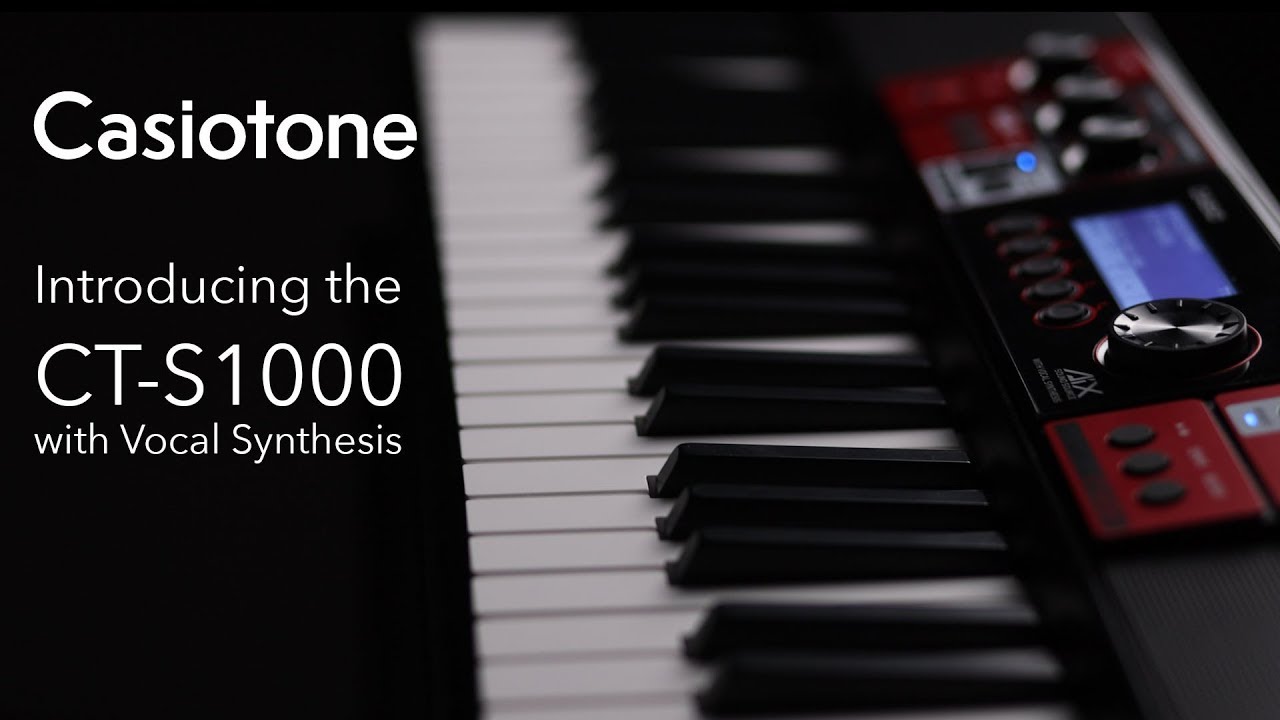
Debuting in 2022’s CT-S1000V, Vocal Synthesis lets you type out lyrics on an iPad app and play them back via the keyboard, either as phrases as per note.

It’s the kind of thing that AI does exceedingly well now, but Casio was in there a few years early. Of course, it doesn’t sound nearly as convincing as AI, but therein lies the charm. It’s part of a long lineage of delightfully uncanny speech synthesis that starts with the Vocoder and runs through Kraftwerk, old-school video games and other vintage technology.
With AI now available to anyone and everyone, and the CT-S1000V probably not a hit, Casio likely doesn’t have reason to issue another instrument with Vocal Synthesis. Don’t worry, though, wait a few more years and Casio will likely surprise with another bizarre instrument.
7. Air Synthesis
The turn of the millennium was a wild time for music instrument technology, full of experimentation and questionable industrial design choices - often in the same device! Case in point: Alesis’ Air Synth, a flat orange box with a dome on top that employed infrared sensors to generate sounds. Imagine Tom Cruise in Minority Report waving his hands around but instead of crime prevention, you’re engaged in entertainment prevention.

Following on the heels of Roland’s D-Beam controller, Alesis released its first Air-branded device, the Air FX, in 2001. Aimed at DJs and home hobbyists, it offered RCA jacks rather than quarter-inch ones and answered the question, “What would happen if you put a Korg Kaoss Pad in the air?” After going out of business and then coming back, the company duly released the sequel, Air Synth, to a non-plussed public in 2003 before moving squarely into less novel (and decidedly non-synthesizer) music gear territory.
Both Air models worked by broadcasting a beam of invisible infrared light out of the top of the dome, and then reading the reflections bounced back by your ever-increasingly tired hand. Sensors are positioned in three axis, left to right, front to back, and up and down, hence the name, AXYZ Controller.
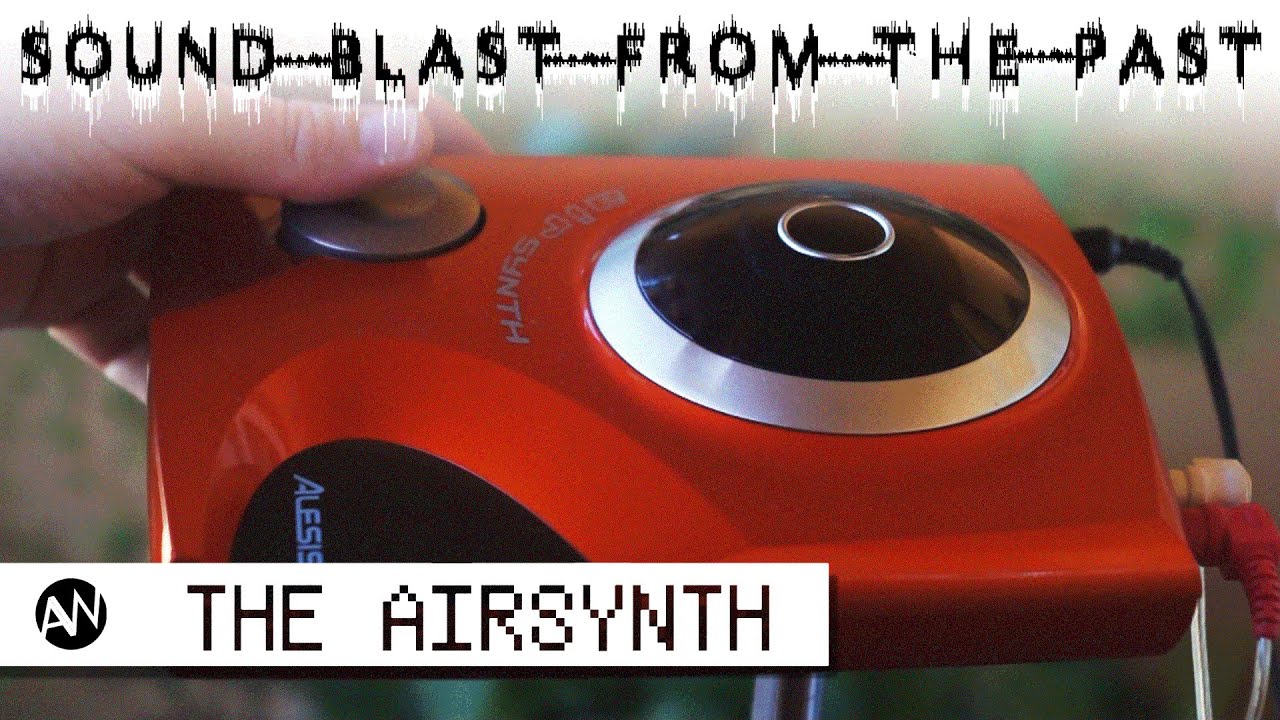
There was also a Hold button to freeze effects. More than just a way to let your aching arm rest, the Hold was meant to be used while programming sequencer presets - yes, you could even sequence patterns of notes and rhythms. Most of the factory presets, however, were of the special effect variety. Think risers, downers and other transitions. Yes, kids, in the days before laptops and DAWs, we had to make our own transitions by hand.
Of course, nowadays you’d have to put down your phone for the Air Synth to work. And let’s face it, that’s not going to happen.
