


When the US Army was forced to withdraw from Vietnam in 1975 — also departing northern Thailand, a key strategic area packed with US military bases — they left a complex and troubling legacy behind.
They also left behind an array of equipment, from vehicles and communications infrastructure to Cobreflex horn loudspeakers that later found new life as village public-address systems.
First introduced in 1963, then adopted by Psychological Operations Soldiers (PSYOP) across Vietnam and Thailand over the following decade, aerial loudspeakers were crucial to the war effort, disseminating messages to local populations, urging enemy forces to surrender, pumping in sound effects and spreading eerie propaganda sequences in an attempt to weaken pro-Viet Cong sentiment.
Decades later, musicians from the remote Phetchabun Mountains in north-central Thailand reclaimed these US army loudspeakers and developed a local sound known as phin prayukt, which centred around the traditional Thai stringed instrument, the phin.
Electrifying this lute-like instrument, hooking it up to an ad-hoc, transportable sound system and adding bass drums, cymbals, and keys, the band that emerged — now known as Khun Narin Electric Phin Band and building an international following after high-profile radio plays, an electric US tour and collaborations with artists like ex-Amy Winehouse producer Tommy Breneck and Khruangbin guitarist Mark Speer — created a uniquely hypnotic and psychedelic sound.
"We use the three-stringed lute that is traditional to our region, but we run it through effects pedals: distortion, delay, things like that," says Khun Narin, the father of the band, who today plays the cymbal alongside a rotating cast of younger recruits from his village, Lom Sak, many of whom he trained.

"It's unlike the Western rock band — we are a community band," he explains, joining me on a call with a cold can of Leo Lager in hand, and the dark blue Thai night sky behind him. "We gather in the village, we come together to perform at weddings, at temple fairs, at ordination ceremonies [where adolescent Buddhist boys celebrate reaching manhood]. In the band, the older musicians carry the tradition and the younger ones can bring the energy; everybody has a role."
Currently, the other members of Khun Narin Electrified Phin Band are bassist Boss, percussionist Wallop Sangaroon (or Pao), drummer Oat, and phin player Bas. "The phin player usually plays two kinds of melody, the fast (called sut sanaen) and the slow (called lam phu thai)," Boss explains. "This is traditional music that spans the northern central part of Thailand."
People at temples in Thailand usually own lots of sound equipment, so there was a DIY network to help build the sound system
The band's interpretation of this genre is incredibly pioneering. Years ago, fuelled by a simple desire to amplify their sound during performances, Khun Narin and his cohorts gathered a range of loudspeakers typically used to announce news in the village. They purchased amps from friends and acquaintances and constructed a DIY sound system fixed to the back of a cart.
The band members were never massive gearheads; they simply wanted to see where they could take this traditional musical form. "It was not very professional, we just wanted to make it loud and fun," says Khun Narin. "People at temples in Thailand usually own lots of sound equipment, so there was a DIY network to help build the sound system. We found whatever we could in our village… it was really organic."
The reclamation and repurposing of ex-US Army loudspeakers — USC Cobreflex horn projectors that were previously strung up along the village's electrical cables and used to announce local news — has given a fascinating edge to this DIY story, and the sound they've created has resonated with fans all over the globe.
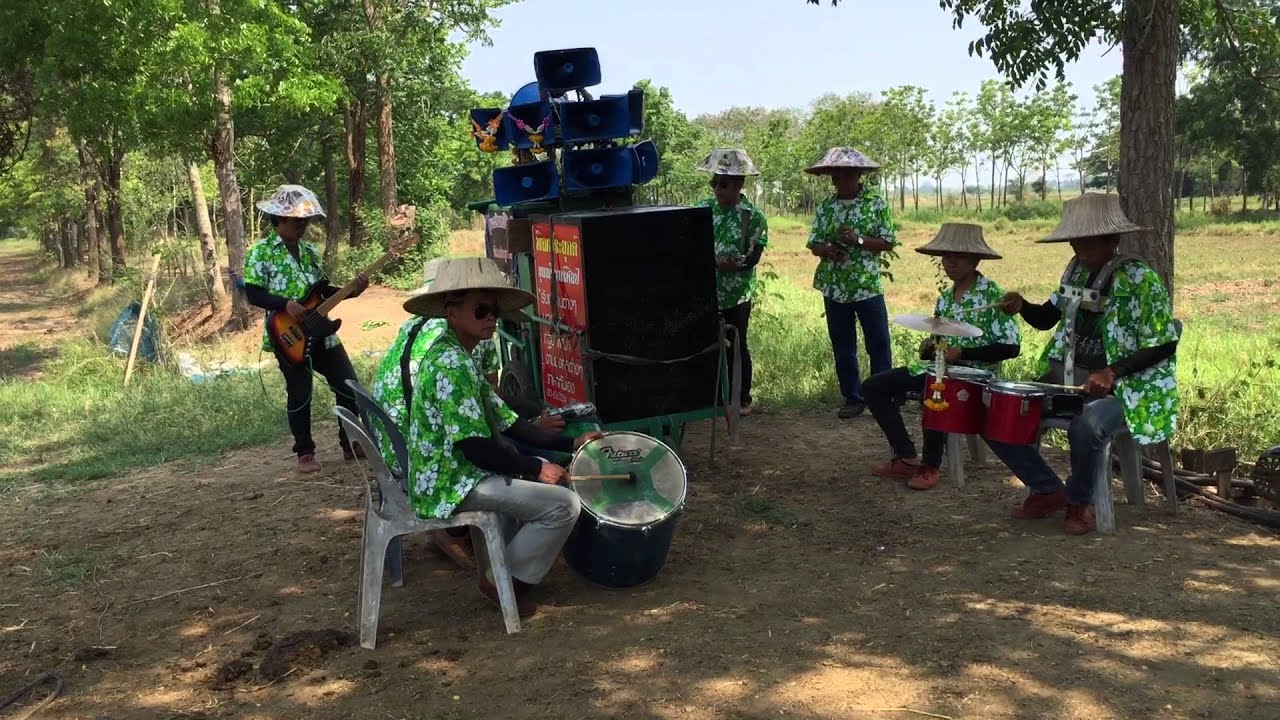
After footage emerged online of their performances in the fields of north-central Thailand in 2014, momentum started to gather. US-based producer Josh Marcy headed to Lom Sak to meet the group and record their first two albums in a local field, an ambient setting that lent a naturalistic sense of place to the project.
At a US tour in late 2024, crowds flocked to see the band breeze through Austin, LA, Oakland, Portland, Seattle, and more. This period Stateside also allowed the band to head into a professional studio for the first time, the result being III, their first new record in a decade.
The album is a continuation of the sprawling psychedelic sound they've created, full of jagged strings and groovy percussion sequences. It's a heady and evocative concoction, a transcendental collision between American prog rock and Thai folk charm lifted from the baking tropical jungles of Phetchabun.
The remarkable trajectory this humble village band has been on in recent years has its grounding in the local community that Khun Narin remains firmly attached to. They're committed to playing "at almost every village ceremony", which ensures that the chemistry between instrumentalists is second to none; this fact played a decisive role in catapulting them to global fame.

The recording of Khun Narin's new album III took place in a more professional studio setting — the Pasadena-based Diamond West studio of renowned producer Tommy Brenneck, who has previously worked with the likes of Amy Winehouse, Nile Rodgers, and CeeLo Green — marking an interesting new chapter for the collective.
"We'd never done a professional recording before, so when we first got into a proper studio, it took us a bit of time to get to know the equipment," says Bas. It helped that Brenneck had a clear understanding of the group's sonic intentions.
"Making the music together, he did not try to control us, but there were times when he recommended new ideas to add into the music," Bas reflects. "It's always a discussion, and he tried to keep the energy of our music, not making it too clean in the studio setting. The equipment at the studio is kind of old-school, and it limited the time, so we could only play for three or four minutes," explains Bas. "When we recorded in Thailand, they used modern digital equipment that allowed us to do a long take."

According to producer Josh Marcy, "the recording was done direct to tape, so that did limit the amount of time they could play… and the guys were playing a lot! We were throwing on new tape to keep up, and you can hear the new tape winding up to speed at the beginning of [album opener] Sut Sanaen."
"In the previous album, [Thai and Laos folk genre] molam and rock come together, you can still feel the traditional part of our music," says Bas. "But in this new album, the music is more like molam with an international melody vibe, so it's more pop and it's more global."
Despite this shift, there's absolutely no intention for Khun Narin to veer away from their roots and cash in on their rising popularity. Performances at local ceremonies and parties remain their mainstay, and there are no current plans for a new Europe or North America tour.
In fact, with the rainy season now underway in Thailand and local temple policy restricting festivities during this time, the band has a solid period of relaxation on the horizon. Still, the prospect of interacting with their burgeoning global audience remains an exciting one.
"The feedback comes when we are on stage, and it's always the same: people having fun," says Khun Narin. "From 10 years ago until now, they still have the same fun at the shows. I just hope Khun Narin can continue to make people happy."
