
Last week, news broke that British musician and producer William Orbit had died aged 69.
Orbit enjoyed a long, varied and successful career working with a broad array of top-tier pop acts – Madonna, Blur and All Saints, to name a few – perhaps most notably on Madonna’s Ray of Light, widely viewed as one of the best albums in her discography.
Orbit also carved out a name for himself as a prolific remixer and solo artist, launching his solo career in 1987 with debut album Orbit. Though he would go on to release twelve albums under his own name, the song that most listeners will associate with Orbit’s output isn’t one of his own compositions, and it isn’t even one of his own productions – it’s a remix by trance producer Ferry Corsten of Orbit’s rework of an orchestral piece written decades prior: Samuel Barber’s Adagio for Strings.
Adagio for Strings was the lead single from Orbit’s Pieces in a Modern Style, an eleven-track project that reinterpreted a set of classical pieces in a modern electronic context, from historic compositions like Beethoven’s Opus 132 and Vivaldi’s L’Inverno through to 20th-century works from Barber, Henryk Górecki, John Cage.
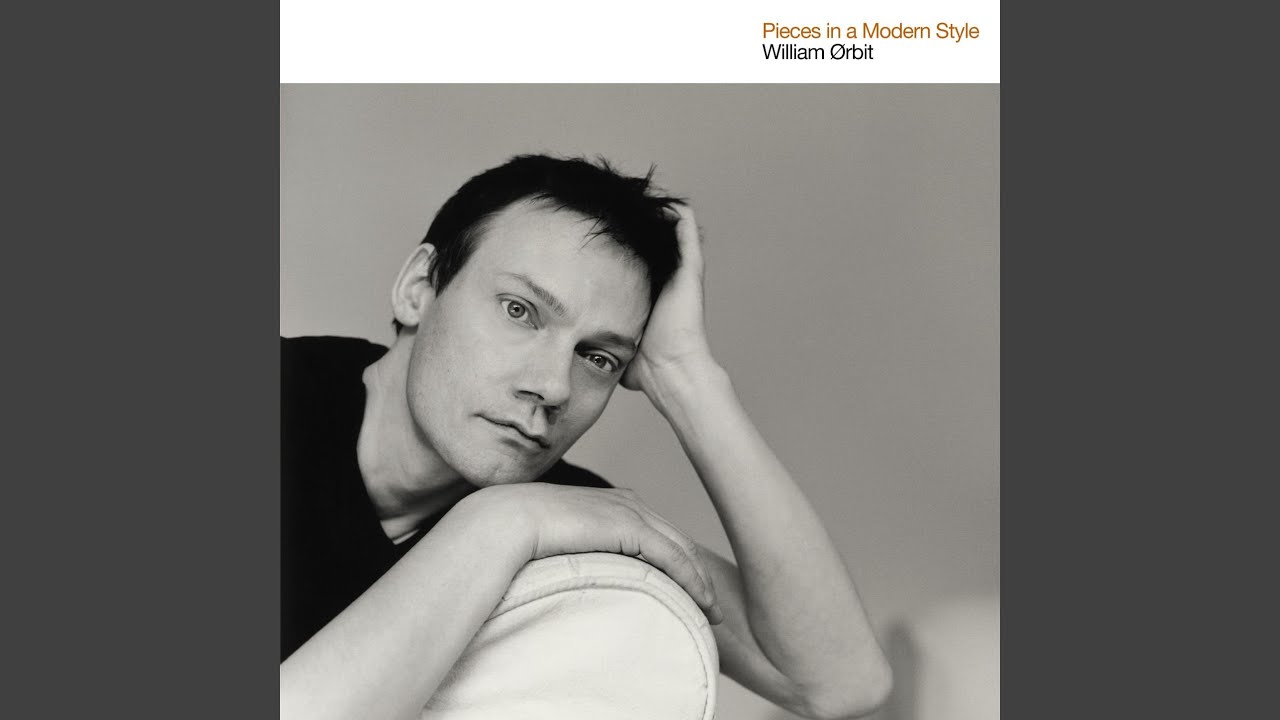
Orbit’s spin on the well-loved pieces that make up the album’s tracklist saw the producer rearranging the compositions and recording them through his collection of synthesizers, reimagining their timeless melodies with a synthetic ambient sheen. The idea arrived after Warner Brothers chairman Rob Dickens mailed him a tape of music from Górecki and Estonian composer Arvo Pärt. “It blew me away,” he told Sound on Sound in 1996.
"It's not so opposite,” Orbit continued, when asked why someone so closely associated with electronic music would turn their hand to a classical crossover project. “If you think about not being constrained by a vocal or the need to have a song or a lyric, it makes sense. I can only go so far with MIDI soundscapes, and the thing about music designed for instant impact is that it isn't necessarily sustained after several listenings. I believe the only way to sustain depth is to use profound melodies."

The album was initially released in 1995 on Orbit’s N-Gram Recordings label – a subsidiary of Warner Brothers – under an alias, but was withdrawn almost directly after its release due to a complaint from Pärt. Orbit had failed to seek Pärt’s permission to rework two of his pieces. “In pop music, you don’t have to ask permission,” he told El Pais in 2000. “If you make a cover version, you pay the appropriate royalties and that’s the end of it. Apparently classical music doesn’t work that way.”
Orbit went back to the drawing board and replaced Pärt’s pieces with works by Beethoven, Handel, Vivaldi and Mascagni, eventually releasing a revised version of the project in 2000.
The album opened with Barber’s Adagio for Strings, an inclusion that Orbit told SoS was prompted by reactions he received from listeners to his LA-based radio show. Amidst an hour packed with avant-garde electronica and dance music, Orbit would regularly mix in Adagio for Strings, a choice that he originally thought might upset listeners, but had the opposite effect.

"Every time I played it, I got phone call after phone call,” he recalled. “I thought I'd get howls of protest for re‑contextualising a national institution, but that simply wasn't the case. Listeners were actually moved by it."
Speaking to NPR about the piece’s generation-spanning appeal, Orbit said: “It's got that rare thing – it sounds simple, but it isn't. I see it as layers of mist that shift, and that's the beauty – it's amorphous layers,” he continued. “The thing is, because they don't have this obvious structure, they just wrap themselves around whatever thoughts you've got without being cloying. I think that's partly its potency."
Translating this potency to an electronic context while maintaining respect for the original work was no mean feat, and Orbit was well aware of the dangers inherent in reinterpreting such an iconic piece of music. For Adagio for Strings, he chose to take a particularly light touch with the piece’s adaptation, working with composer and arranger Damian le Gassick on the arrangement.
"There's a terrible precedent for this kind of music. I was warned I was treading on heavily polluted ground"
"A guy called Damian le Gassick helped me with all the notation. He can read music but I cannot,” Orbit told Sound on Sound. “Some things are more tinkered with than others. The Barber piece is very untinkered with, apart from a little bit of textural change – an octave down with the low cellos, stuff like that.
“There's a terrible precedent for this kind of music,” he admitted. “I was warned I was treading on heavily polluted ground. People mentioned Deep Purple's 'Concerto For Group & Orchestra', so I had to be careful."
Written in 1936, Adagio for Strings was a widely known piece well before Orbit released his spin on it, a rousing and emotional work that formed the second movement of Barber’s String Quartet in B minor. Voted by listeners of BBC Radio’s Today programme as the saddest piece of classical music ever written, it’s a deeply moving composition that’s soundtracked many climactic moments across film and television – but it may not seem like a natural candidate for a fist-pumping club remix.
As it turned out, though, it was. Corsten’s fast-paced trance remix helped to drive the track’s commercial success and rocketed Adagio for Strings to No 4 on the UK charts, becoming a mainstay on radio around the turn of the millennium. But how did a Dutch trance producer end up taking on Orbit’s synth-led remake of a sorrowful orchestral piece?
Orbit’s label had previously released Corsten’s collaborative project with Tiësto, Gouryella, and – presumably suspecting that the Adagio’s single release needed something a little more radio-friendly to broaden its appeal – they showed Pieces in a Modern Style to Corsten to find out if he would be open to a remix.
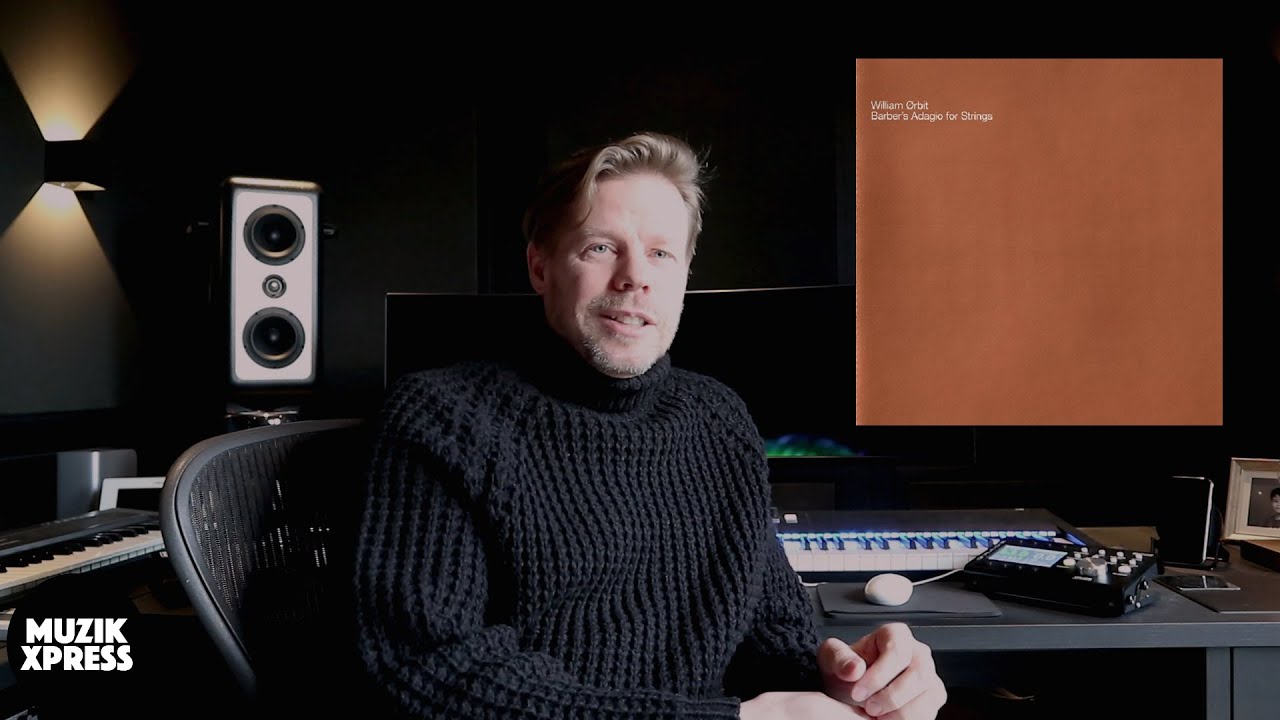
“I listened to all the stuff and they were all beautiful pieces, but one that really hit me was Adagio for Strings,” Corsten told Muzikxpress. “I recognized it from Platoon, the movie… I was like ‘wow, yeah, that’s the one’”.
Corsten’s remix takes classic elements of late-’90s trance – thumping 4/4 kick drums, euphoric synth lines and atmospheric effects – ratchets up the tempo and and moulds these around Orbit’s rework of Adagio, which makes a recognizable appearance in the song’s dramatic breakdown.
In the track’s production, Corsten leant heavily on the Roland JP-8000, a virtual analogue synth that played a decisive role in defining the sound of trance music. “The JP-8000 was my best friend at the time,” Corsten said.
"One minute, you're completely sad, and about to cry, and then the next, you're throwing your arms up in the air"
"You change the tempo, you change the character, you know?" Corsten told NPR. "It has this big breakdown with the string orchestra part, where you definitely go back to your original dramatic sort of thing. But once that synthesizer starts taking over the main melody, and starts rolling into a sixteenths sort of measure, and this beat at 135bpm starts picking up, all of a sudden this almost becomes happy. It serves as a complete mood shift.”
"This is the time when trance music was really peaking," Corsten continued. “One minute, you're completely sad, and about to cry, and then the next, you're throwing your arms up in the air. Apart from telling the Adagio melody story, it also tells you what was happening on the dance floor almost 20 years ago."
Corsten’s remix didn’t only smash the Top 10 and reach an unexpected level of commercial success, it introduced Barber’s Adagio for Strings to a new generation of clubbers by reimagining Orbit’s tastefully adapted electronic interpretation for the dancefloor. The track’s reception also compelled hordes of copycat producers to release their own takes on the original work, with major names such as Tiësto and Paul Oakenfold getting in on the action.
Sharing an emotional tribute on Instagram following Orbit’s passing, Corsten described him as “one of music’s true visionaries” and said that their collaboration on Adagio for Strings “will always mean the world” to him.
“That record became a defining moment in my career in 1999 and helped open the door for a whole new generation of electronic interpretations of this timeless masterpiece,” Corsten said. “I’ll always be grateful that William trusted me with his work and gave me that opportunity.
“He had a truly unique way of looking at music. He never followed the obvious path. He constantly challenged convention, embraced the unexpected, and created sounds that felt years ahead of their time. Every time we worked together, I walked away inspired. Not just by his incredible talent, but by his curiosity, his openness, and the fearless way he approached creativity.”
