


An album that shaped many a depressed 2000s teen’s life, the still heart-stopping The Black Parade by My Chemical Romance turns a staggering 20 years old today. Recently, we spoke to the very man who sat in the producer’s chair for this centrepiece of the emo bible, Rob Cavallo.
Prior to working on the conceptually-dense Black Parade - which sported MCR bangers Teenagers, Famous Last Words and Welcome to the Black Parade - Rob was perhaps best known as the producer behind the bulk of the studio oeuvre of Green Day.
Of particular relevance to My Chemical Romance, he was also behind Green Day's sprawling - and politically-charged - 2004 concept album American Idiot.
And, although My Chemical Romance’s record undoubtedly drew influence from Green Day’s furious epic, according to Rob the motivation to make them came from quite different places…
“With Green Day, we didn’t like how iTunes, one of the biggest retailers at the time, would take your record and chop it up into 14 $0.99 songs,” Rob told us. “So we wanted to combat this and make an album that had to be heard as a whole.”
However, the conception of MCR’s The Black Parade a few years later was borne more out of its lead vocalist Gerard Way’s more grandiose vision for a narrative thread that ran through the record’s 13 tracks. The premise surrounded a character referred to as ‘The Patient’ - a protagonist suffering from terminal cancer.

“With My Chemical Romance, Gerard is such a prolific writer, he has backstories for all his records, he just doesn’t show you - there are other things going on in his head that he’ll let you know when he’s ready,” Rob told us.
My Chem guitarist Ray Toro later directly name-checked American Idiot highlight, Jesus of Suburbia when explaining how the iconic, and multi-sectioned, Welcome to the Black Parade was birthed.
“That song had about five or six different movements,” Toro explained in an interview with Seymour Duncan. “The closest thing I could relate it to is Green Day’s Jesus Of Suburbia where you have all these different parts of a song which all work together.”
Enlisting Cavallo also pointed to the band’s desire to tap into the same epic-scale spirit of American Idiot.
When speaking to Rob recently, he remembered the making of the record, much of which was written at LA’s Paramour Mansion in Silver Lake. Here, Gerard Way experienced frequent night terrors.
But were these fears all in his head? Not according to Rob…
“I think environment is important in the writing and production, and the mansion was a cool, spooky place to go,” Rob says of the sessions. “It was absolutely haunted and freezing in there as there was no heat in the giant basketball sized living room. We put a PA in, hung a couple of fancy mics in there to record them stereo live.”
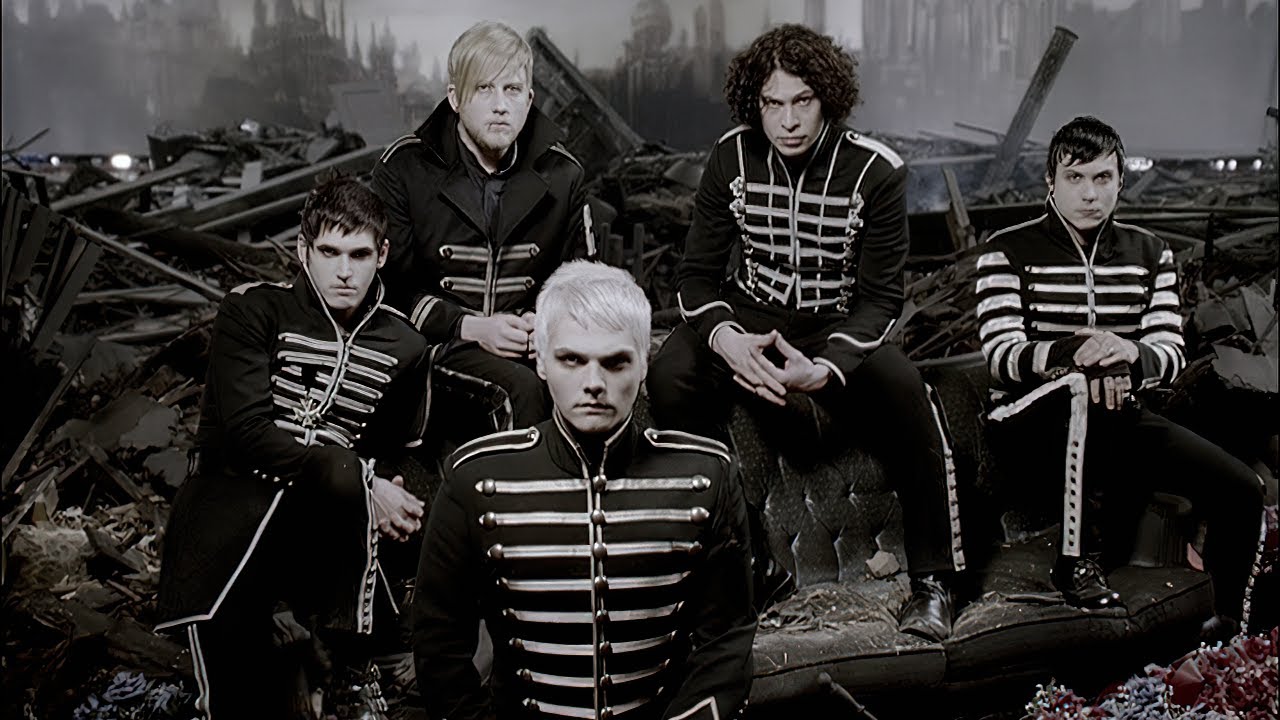
It was Rob’s own self-written, introductory piano piece that became perhaps the most memorable part of Welcome to the Black Parade. Opening with a G note that soon become regarded as ‘that note’ (as many a TikTok reel will tell you), and still has the power to call millions of now middle-aged demos to attention, Cavallo helped create a pinnacle of cinematic pop punk.
