
If you want to ensure your podcast sounds just as good, or better, than your competition, then you need a set of the best podcast headphones. Separating your voice and any audio played back is crucial to avoiding the dreaded feedback spiral, and allows you to monitor your own voice and that of your guests in real time, avoiding background noise, plosives, and other unwanted artifacts.
As someone who's worked in music recording for many years, and tested more than 15 sets of studio headphones in the last year or so, I highly recommend your get yourself a pair of wired, closed-back headphones for monitoring your podcasts. You don't have to spend loads to do this either, as there are plenty of good quality headphones out there that will do the job for you.
For me, the Beyerdynamic DT 770s are the best all-rounder when it comes to podcast headphones. They're closed back with great isolation, comfortable enough to wear for long amounts of time, and are just a great studio headphone with an excellent frequency response. If those are too expensive for you, have a look at the AKG K72, which does a great job considering its low cost.
If you're new to headphones in general, go check out my how to choose section which will take you through everything you need to know. I've also included a comprehensive FAQs section, which answers loads of the most common questions around using headphones for podcasting.
Best overall

Beyerdynamic is one of the best and most respected names in the broadcast world, so it figures they’d feature highly on our list of the best headphones for podcasting. There are a few variations within the DT range, but we’ve gone for the Beyerdynamic DT770 Pro on account of them being closed-back, which removes virtually all audio spill and ensures what you’re hearing isn’t picked up by your podcasting microphone.
As with the other models in the range, the DT770 Pros feature a plush, velveteen cushion for your ears, making them by far the comfiest we’ve tried, while the overall standards of design and build mean you can rely on them lasting the course. They are the choice of headphone in many pro recording studios, and I've seen plenty of beat-up pairs still working fine after ten years of service.
I really love the DT 770s for monitoring in a studio, both because they offer excellent isolation, a really comfortable wearing experience, and still sound great. I've used them for mixing many times, too, because they offer a really nice, balanced frequency response, with a nice low-end thanks to the closed-back design. It makes them great for editing in noisy coffee shops and ensuring you can tell the difference between your recording and any ambient background noise.

"Volume level notwithstanding, the sound of the DT 770 is very Beyer. It's a relatively neutral profile overall, which is as you'd expect for a professional studio reference monitor headphone, but not entirely flat. There is a subtle bass bump due to the closed-back architecture, coupled with an emphasis in the highs that can be a little on the harsh side when dealing with overly-sibilant recordings."
Read more: Beyerdynamic DT 770 Pro review
Best budget

If you’re new to podcasting, or looking for a way to upgrade from your existing in-ear ‘phones without breaking the bank, the AKG K72 could be a good option. These closed-back, over-ear headphones do a decent job of cutting out the ambient noise while you’re recording, while the self-adjusting headband meant they were comfortable for use on long sessions.
As an entry-level set of headphones, it’s hard to throw too much criticism their way. Sound reproduction in a musical setting wasn’t breathtaking, but for the price we wouldn’t expect them to be and nor should you. But for podcasting and speech applications, they did a fine job.
Read our full AKG K72 review
"For such a bargain-basement headset, the K72 is actually pretty versatile. The low-impedance design - only 32Ω - means that they can be successfully used with multiple devices like laptops, mobile phones, tablets and home studio audio interfaces, serving up bucketloads of volume whatever you plug into without needing to be driven by a dedicated headphone amp. They fulfil a wide range of home and studio listening tasks with aplomb and are cheap enough for you to be able to have multiple pairs knocking around."
Read more: AKG K72 review
Best for beginners
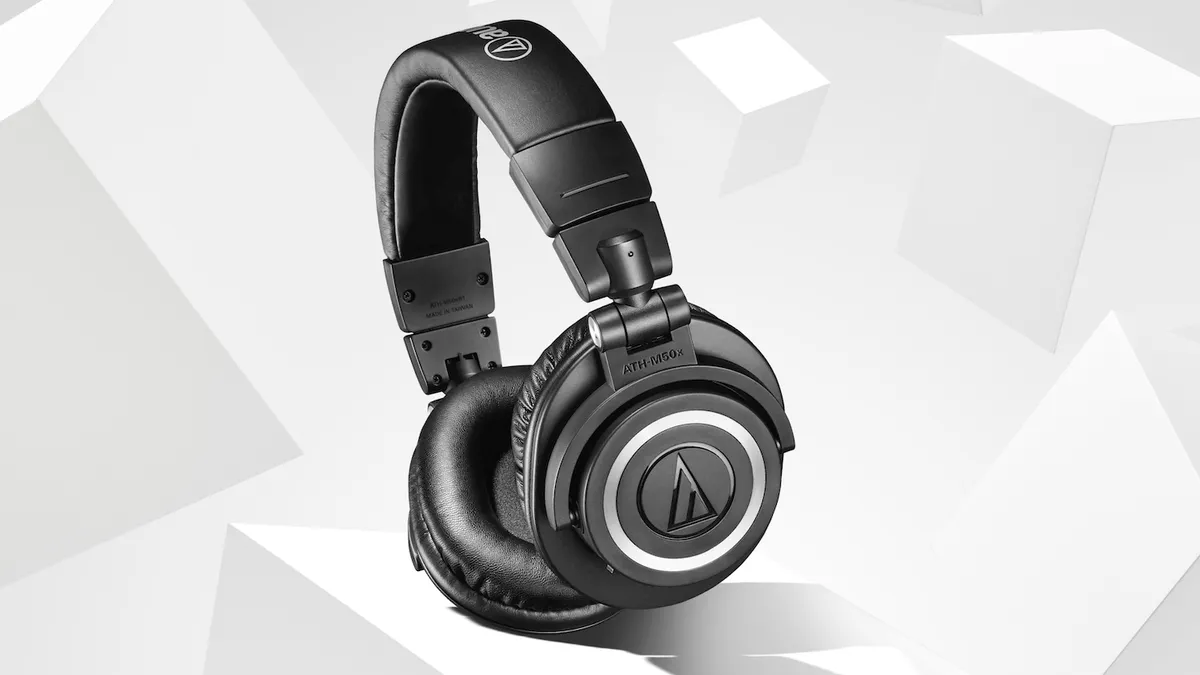
Recording outside a studio environment brings its own challenges and considerations, but the Audio Technica ATH-M50x was pretty much built for these challenges. We particularly liked the over-ear cushioning, which did a tremendous job of isolating external noise from the user, while the collapsible design means they’re ideal for throwing in a bag and taking to the next session.
In terms of tone, there's a definite bump here in the highs and lows, so it's not the flattest headphone out there in terms of frequency response. It means they sound great straight off the bat, but if you're mixing your own podcast audio, you should be careful not to undercook the lows or highs.
They’re chunky enough to warrant confidence in their rigidity, without ever feeling too heavy to wear for extended periods. As an entry-level set of podcast headphones, they’re pretty hard to beat.

"Comparing M50x to M40x it's clear that the larger driver (45mm over 40mm) delivers better bass but it's the increased clarity and mid definition that surprised us. M50x goes deeper and feels clearer and more airy, with the M50 sounding more like the M40x. We'd happily mix with the M50x, which we would have shied away from on the old model."
Read more: Audio-Technica ATH-M50x review
Best for comfort

Shure is a name the audio community has trusted for decades, and with the Shure SRH840A, it’s easy to see why. Essentially billed as studio headphones, rather than everyday carry types, the 840s are solidly built and ideal for studio work and recording.
They’re also popular in the broadcast world, with the first-generation models fairly common in radio and podcast stations, and these newer versions keep up the same levels of audio finesse while boasting improved design and aesthetics to bring them into 2022.
The decision to use straight cables, as opposed to coiled, will please some but not others, although the fact that it’s detachable does mean there’s less risk of issues further down the line.
Read our full Shure SRH840A review

"These are comfortable cans, too - light enough for you to wear for long periods at a time, but not so featherweight that you’ll forget you’ve got them on. The leather-style earpads sit nicely on your ears without too much pressure - they swivel, giving you a bit of extra flexibility - and the band has plenty of cushioning when you’re in it for the long haul."
Read more: Shure SRH840A review
Best for travel

Podcasters are spoiled for choice when it comes to high-quality headphones, yet it is to the DJ world we look with our next suggestion. Bear with us. The Sennheiser HD25 is the de facto industry standard in that world, thanks to its legendary build quality and reliability. For podcasters, these are worthy traits, but what attracted us to these is their lightweight nature.
This is because not all podcasts take place in a warm, comfy studio. Some may take place out in the field, or even out in an actual field, and lugging a large pair of cans around can get quickly tiresome. So, look past the DJ headphones tag, and take our word for it; the Sennheiser HD25s are arguably the best portable field recording cans on the market.
Their durable build and small size make them great for chucking in a backpack and taking to a remote recording session, and once you get there, the sound quality is genuinely very good. The on-ear design means the isolation is excellent, so you'll have no trouble separating your recorded audio from the environment around you,
"With the HD 25’s strapped to your ears, you’ll be rewarded with spectacular sound and separation, a reasonable stereo image and clear and present audio reproduction across all frequencies from 16Hz - 22kHz. They aren’t flat by any means, however, with a pronounced bump between 100 and 200Hz and a bit of a dip and a wobble around 6-8kHz. This results in a clear, tight bass that packs a surprising amount of punch considering the size of the ear cups, together with a smooth top end absent of any harshness, but not lacking in detail thanks to another slight lift around the 10kHz mark."
Read more: Sennheiser HD 25 review
Best for durability
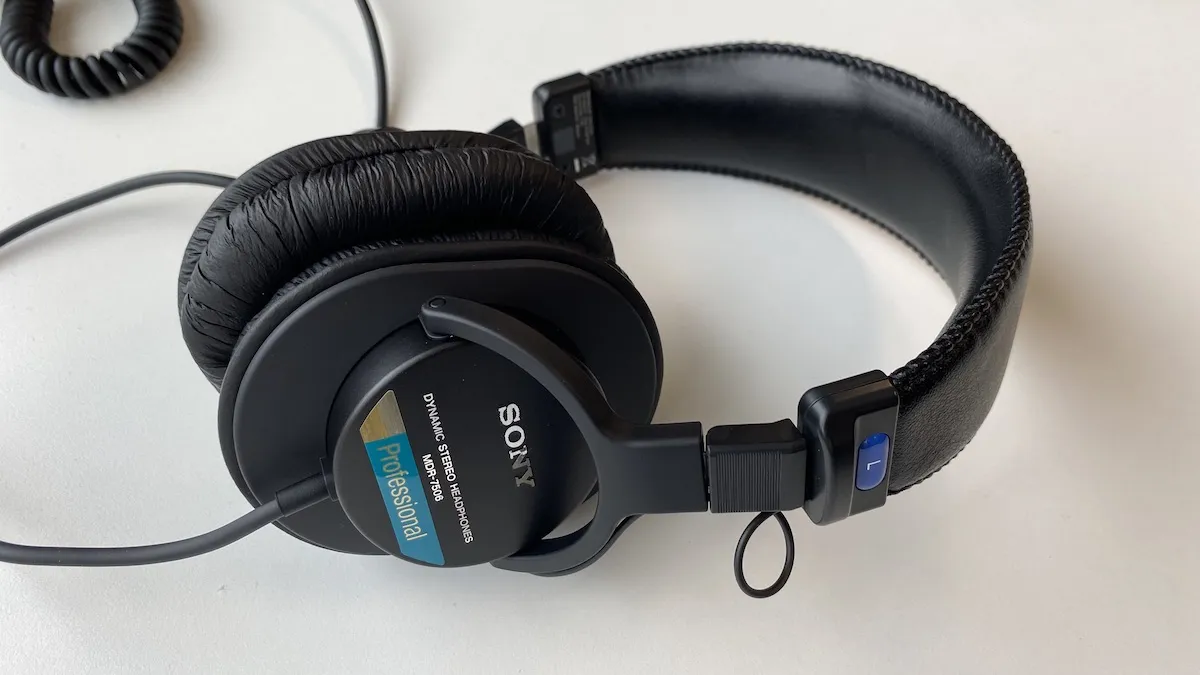
Sporting the same design as they did when originally launched in 1991, the Sony MDR-7506 is a studio legend. The 7506s combine superb sound reproduction with a simple build to make for a near-perfect mix of price and performance.
The 3m coiled cable is chunky, which inspires confidence, while the sound isolation makes them ideal for podcasting, separating both the outside world from the wearer and the wearer from the outside world. The clamping force is pretty strong, so once on your head these are unlikely to go anywhere.
In terms of sound, the 7506s have a very specific profile that's flat in the midrange, with a bit of dip in the lows, and a spiky high end that's great for picking out sibilance and harshness in vocals. There’s good reason why Sony hasn’t tampered with a winning formula. For the price, you’ll struggle to find better.
"They might not be the best choice for enjoying music, but they’re exceptional for hearing what's wrong while you're producing it. For travelling, working out or everyday listening enjoyment, we’d be tempted to look elsewhere for something a little more flattering and forgiving, but if you’re a content producer looking for a great quality, inexpensive solution for tracking, programming and mixing, their neutral sound and accurate response could be exactly what you’re looking for. After all these years, it looks like the MDR-7506’s have still got it."
Read more: Sony MDR-7506 review
Also consider
How to choose
If you're hear looking for your first pair of podcast headphones, you're in the right place. I've been working in the audio sphere for over 20 years now, from recording bands in professional studios to live sound work. I've tested loads of headphones for MusicRadar, so here's what you need to know before you buy.
1. Forget wireless
MusicRadar's got your back Our team of expert musicians and producers spends hours testing products to help you choose the best music-making gear for you. Find out more about how we test.
We all love the ease of use of a pair of wireless headphones, but ultimately for recording podcasts these aren't a great option. The main reason for this is something called latency. If you were recording your voice through a microphone, and monitoring through wireless headphones, there will be a delay between you speaking and the sound coming out of your headphones.
As well as just being generally jarring, this makes it almost impossible to pick out any potential issues you might have with your audio, which is basically the entire point of wearing headphones in the first place. Trust me on this, stick with a wired pair if you want the best sound for your podcast.
2. Bleed
Bleed is an audio engineer's arch nemesis, and we take a lot of time to avoid it as much as possible. In terms of podcasting, what you want to avoid is any audio from your headphones bleeding into your microphone when you're not actively speaking. Podcast mics can be quite sensitive, so they'll pick up the sound if you don't have the right type of headphones.
For podcasting I'd recommend a closed-back pair of headphones, as these will keep the bleed to a minimum. Closed-backs refers to the back of the ear cups, which on these sorts of headphones are quite literally closed to prevent the audio escaping. This means they don't sound quite as nice as a pair of open-back headphones, but in this use case it's much better to have as little bleed as possible.
3. Clamping & comfort
If you're recording podcasts chances are you'll be wearing your headphones for a long time. This means you need to properly road test them before committing. Everyone has different shaped heads and ears, so finding your perfect match is a case of experimenting until you find the right set. Retailers can be funny about returning headphones, too, so make sure to double check the returns policy when you buy.
I've put some on-ear type headphones in this guide, but in all honesty I would highly recommend you go for a pair of over ear cans if possible. These will be much more comfortable in the long run, as they go around your ear instead of directly onto it, resulting in a much more comfortable experience for longer listening sessions.
4. Impedance
Impedance is a measure of electrical resistance, and in the case of podcast headphones, it's how much power is required to drive your headphones. Many pairs of studio headphones have a very high impedance, because they're designed to be used with headphone amps or audio interfaces. It's not as huge of a consideration as it once was, as consumer tech has caught up a bit, but it's something you should take note of if you're planning on putting your headphones straight into an older laptop.
Most manufacturers have the impedance of their headphones somewhere on the specs list, and for consumer use you should look for something below the 100-Ohm range for compatibility with the most devices. If you're using an audio interface in your setup, that should have plenty of power until you start getting into audiophile headphones with 300-Ohm impedances.
FAQs

Do I really need to wear headphones for my podcast?
Unless you've got someone who can monitor your audio for you like Rick Beato or Stephen Bartlett, yes you need to wear headphones when recording your podcast. Using headphones allows you to hear your own voice, catching any potential issues like background hum, allowing you to maintain proper mic distances, and ensure your delivery is articulate. If you don't monitor your audio while recording, by the time you get to the edit stage it will be too late to fix it.
Can I use my AirPods for podcasting?
If you're appearing on someone else's podcast, feel free to use AirPods. If you're creating your own, I would advise against it. Bluetooth headphones induce latency, which means a delay between you speaking and hearing the audio back. Many laptops account for this, but if you're actively recording to a DAW, the delay will be immediately obvious and off putting.
Should my podcast guests use headphones?
I would advise that you get all your guests to wear headphones, otherwise you'll potentially face problems with feedback. They don't need to hear high quality audio, so even a pair of cheap earbuds will be fine here. The main thing is that their audio doesn't cause any issues for the overall quality of the podcast.
Is Active Noise Cancelling (ANC) useful for podcasting?
No it's not. Make sure you turn this off if you have a pair of headphones with ANC. ANC is a form of processing which will change the tonal balance of your own voice, which can result in a poorer quality end product. Stick with a good pair of closed-back studio headphones for podcasting.
Can I use a gaming headset with a built-in microphone?
You can at a push, but it won't deliver good quality recorded audio. Gaming headset mics sound pretty nasally and thin, even on expensive sets. They're designed for quick communication, not high quality audio delivery. A separate podcast microphone and studio headphones is a much better combination for recording good quality podcasts.
Do I need a headphone amp?
Not if your headphones impedance rating is below the 100 Ohm mark. Headphone amps are only used for boosting the signal on high impedance headphones, which are typically those you find that are many hundreds of dollars in the audiophile category. If you're listening with an audio interface, or even just the headphone output on a MacBook, so long as the impedance is below 100 Ohms you'll be fine.
How we test
Although podcast headphones are decidedly similar to studio headphones, they require a slightly different approach when it comes to testing. This is because they're more typically used for monitoring spoken word rather than mixing or listening to music.
When testing podcast headphones we'll first look at the durability of the cans in question. You'll need a pair that can stand up to being knocked around, particularly if you've got frequent guests on your pod. The other important factor is isolation. Ideally, you don't want to hear what's going on around you as you'll be concentrating on your own voice as well as those of others, so a good podcast headphone needs to reject outside noise well.
Next, we'll look at the comfort factor, because some headphones are incredibly heavy which can weigh you down over time. We'll test the comfort levels of every pair of headphones by wearing them for extended periods of time. It could just be listening to music throughout the day, mixing our own podcasts, or taking them with us on the road.
Finally, we'll look into the actual sound quality. You need to be able to hear your own voice well, as well as pick out other audio cues or sounds going on in the podcast. It's not the biggest factor admittedly, but a good sound is the basis for any pair of podcast headphones that goes into one of our guides.
Find out more about how we test music gear and services at MusicRadar.
