
Kraftwerk are undoubtedly one of the most influential bands of all time. Heck, some of us have even compared and contrasted them with The Beatles. So important was their impact in the creation of dance music, hip hop and other genres thanks to the seminal records that they produced in the 1970s and early '80s.
However, the band's greatest works are pretty much these albums alone, and there's been very little new music since.
But there has been a revolution in music production technology over those four decades. And, it begs the question, could this over-abundance of options be responsible for quelling the musical ambitions of the most technology-led band ever?
By being some of the first adopters of the synthesizer (and, more importantly, wrestling some damn fine tunes and sounds out of it) Kraftwerk have become synonymous with the cutting edge.

Even today, while the tech has most certainly moved on, Kraftwerk still present themselves as four static figures on stage, performing those 40 or 50-year-old hits, using laptops and other impressive audio-visual collisions to produce mesmerising and multi-dimensional experiences.
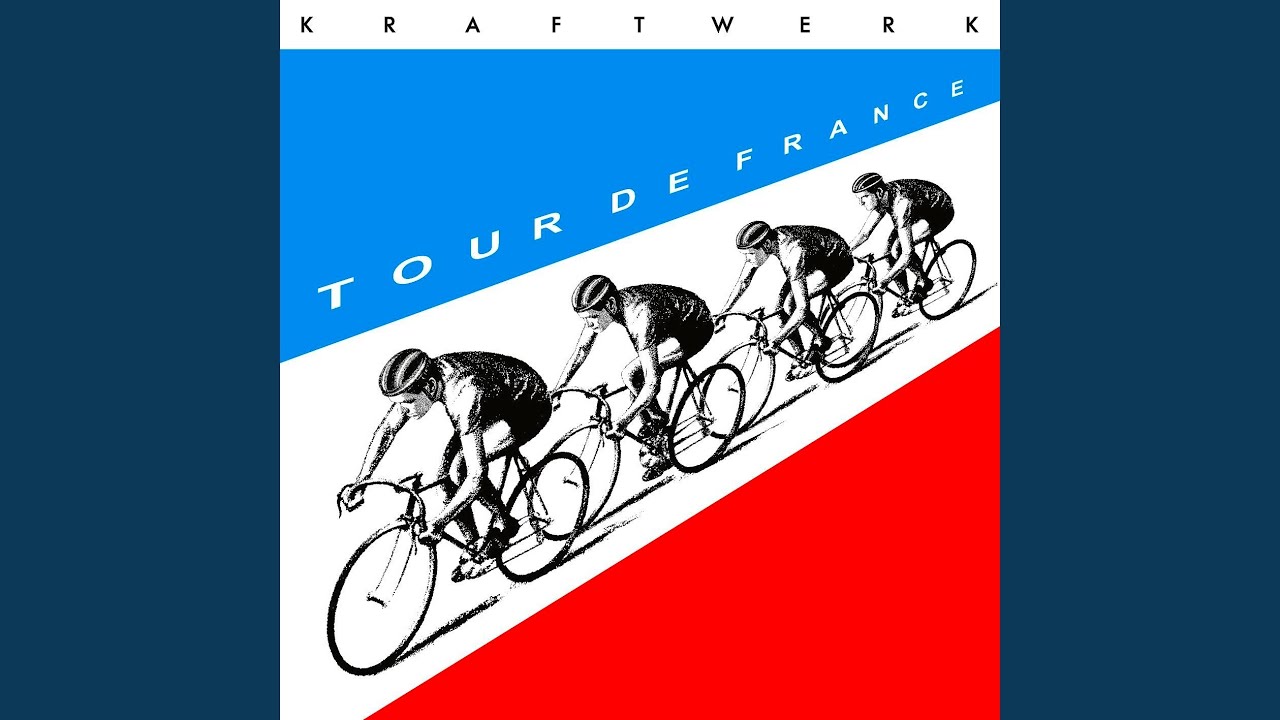
However, as far as fresh music goes, there hasn’t really been a squeak since 2003 and the Tour de France Soundtracks, album - and the highlight of this was a reworking of the 1983 title track.
And really, if you were to ask about the band's influential stage, well that probably ended with 1981's Computer World album, as the releases after that were the remix album The Mix, and techno-prefiguring Electric Cafe - not widely held as the band at their best.
Naturally, then, Kraftwerk have been constantly asked about new material ever since - well, when you could get them off their bikes for an actual interview - but rarely give constructive or informative answers: 'it'll be ready when it's ready' has always been the brutally short summary of where they are at with new sounds and songs.
A lack of new releases over this period wasn't down to the band's work ethic; they would famously work tirelessly in their equally secretive and elusive Kling Klang studios.
Nor was their productivity down to a lack of inspiring gear. Kraftwerk kickstarted and surfed through perhaps the most incredible revolution of music technology, from the 1970s to the present day, from when the first hardware synths became affordable to being able to record a complete studio full of them on a smartphone.
However, perhaps it was this relentless march forward of music production technology that was the biggest reason as to why nothing was produced.
According to some sources, the inrush of gear took its toll on the band. It could well be that a band that made its name with technology, was eventually creatively hamstrung by it.
It must be said, at this point, that we're of course aware that Kraftwerk, as a brand, is still going strong. In terms of impact, influence and even performing, Kraftwerk have arguablly never been bigger, with incredibly well-received live shows spanning the globe seemingly on constant rotation.
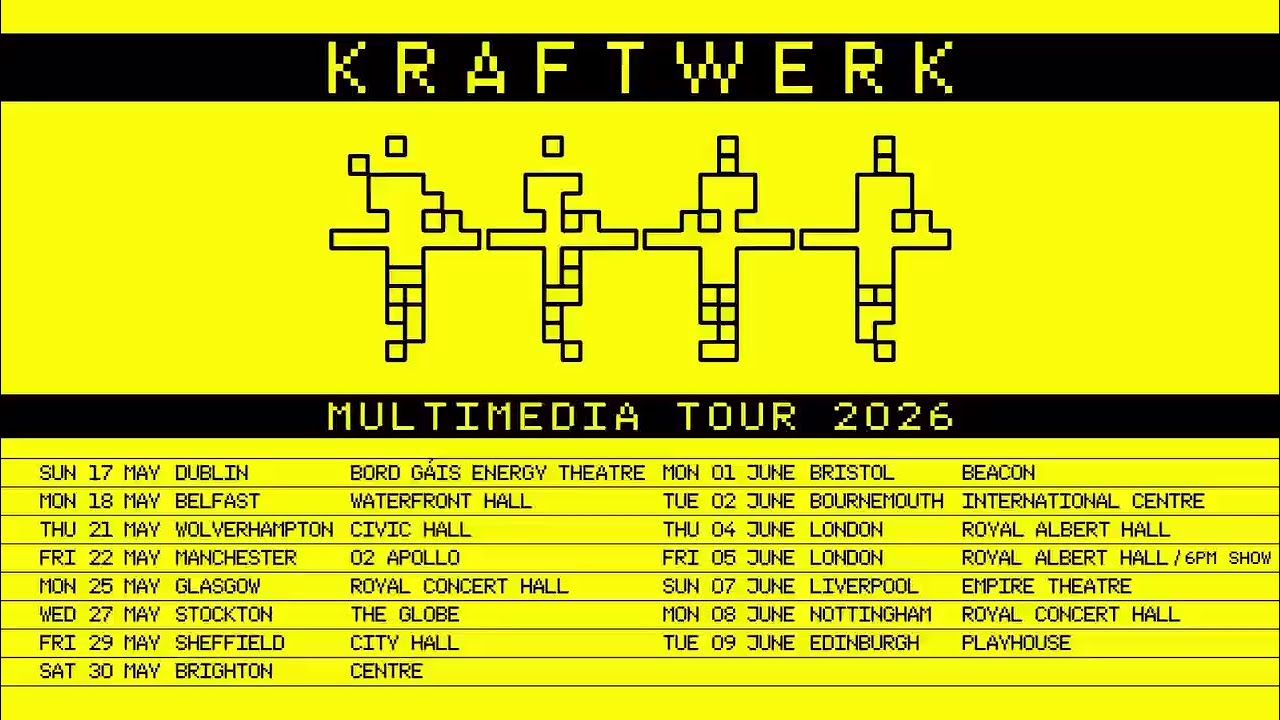
Indeed, they have shifted from an almost permanent studio band to the opposite, so much so that we're not even sure if the band's studio in Meerbusch-Osterath, that replaced the legendary Kling Klang in 2009, is anything more than a live rehearsal space.
Kraftwerk began life in 1970, releasing three albums of folky, flute-laden prog, but gradually introducing more electronic elements each time. Fourth album Autobahn shifted the electronics to the front of the mix and became a hit on both sides of the Atlantic, thanks largely to its synth (and flute)-drenched title track.
Karl Bartos joined Kraftwerk founders Ralf Hütter and Florian Schneider in 1975, shortly after this first success, initially playing keyboards and percussion on the band's US tour in support of the Autobahn album.
"They [needed] a classically trained percussionist," Bartos recalled of his first meeting with the band in the Kraftwerk and the Electronic Revolution documentary. He went along to what can loosely be described as an audition at Kling Klang studios - in an industrial unit in an unremarkable street in Düsseldorf - and ended up playing some parts for what would be the track Kometenmelodie. "We were laughing, had some fun, and that was it, I was in the band!"
Bartos stayed with Kraftwerk through their most productive period, so is in the perfect position to see how the band progressed (and even regressed) in the studio during this most historic time.
Back to the mid-'70s when Bartos joined, and after that US tour, Kraftwerk started gearing up for their next LP, Radioactivity.
Where Autobahn had been a mix of electronic and acoustic instruments, this next record would be more electronic in sound, triggering a sonic route that the band would continue to pursue to for the next few decades.
The album also featured a Vako Orchestron, a Mellotron-style keyboard that Florian had picked up at the 1975 Frankfurt Musik Messe. It used optical disc loops instead of tapes for early sampled sounds, two of which, the strings and choir, were used heavily on the album.

"From Radioactivity on, Ralf and Florian became the producers of Kraftwerk," Bartos said. "At that time I was a part-time 'Kraftwerker' but it opened up possibilities for the future."
That was certainly the case. The longer Bartos stayed with Kraftwerk, the more creative his input became; in fact the amount he contributed is often overlooked.
Bartos not only helped write tracks including Computer Love and The Model, but rustled up the massively influential beat on the track Numbers, which was adopted by the late Afrika Bambaataa for the seminal Planet Rock. His beat, therefore, went on to influence a generation of hip-hop and rap producers.
Bartos became more involved in writing towards the end of the 80s after the band's sixth album Trans-Europe Express. The technology of the time was just getting up to speed for what would be one of Kraftwerk's best recordings, The Man-Machine, which saw Kraftwerk's sound become purely electronic.
Bartos was involved in both the tech set-up and melodies, with credits on every track on the album.
"Man Machine was the first record on which we could link the drums with a sequencer," he said. "It was recorded in just six weeks with this fantastic new equipment and it worked like clockwork."
The machines worked so well that Kraftwerk quite self-consciously became them. Their image became heavily associated with mannequins and robots - servants of the machines they played.
The Man-Machine really was peak Kraftwerk: lush analogue sounds, melodies seemingly created with ease, hooks a-plenty and, eventually anyway, a crowd-pleasing number one, in the form of The Model, which would almost guarantee eternal royalties, just from wedding venues alone.
Follow-up album, Computer World would seal the deal for the band and, along with a 1981 world tour, put them on the musical map.
Synth-pop was massive, the world was there to be taken, but then music technology exploded, and somehow the wheels fell off of the Kling Klang wagon. The very thing that helped create Kraftwerk was about to unhinge them with the tyranny of choice.
"It was a drawback of complete independence, no deadlines and creative freedom," Bartos recalled in the Kraftwerk and the Electronic Revolution doc.
"Creativity sometimes starts with a deadline, and with a lack of money and not too many options. And this applies to today's music production. With access to the internet you have access to all the productions ever done with one tiny phone. It's too many options. With the early Kraftwerk productions there weren't so many options and that made creativity much easier."

In 1982 those creative options were just starting to multiply. Synths were becoming cheaper, polyphony (the ability to play more than one note at one time) was exploding, MIDI was just about to revolutionise communication between instruments, and 'digital' was just around the corner.
"The next record should have been called Technopop which should have been a cool concept," Bartos reveals, "but somehow we got confused over the production and spent years on it between '81 and '84. Tour de France was supposed to be one track from it."
The name Technopop was scrapped and multiple recordings were made in both Düsseldorf and New York, and it wouldn't be until 1986 that any new material from Kraftwerk actually arrived in the form of the interesting but ultimately forgettable Electric Café.
Bartos became so concerned by the lack or progress in the studio and his input (or lack of it) that he left the band in 1990, a year before the release of remix album The Mix.
After that, Kraftwerk didn't really make any new music; Ok, there was Tour de France Soundtracks but that album's best bit was… Tour de France.
We're at 2026 as I write this and that is about it on the new music front.
But put yourselves in Kraftwerk's shoes after The Mix was released. Bartos admitted that they were hamstrung by choice, that the production side was becoming a tortuous process, and that the six week Man-Machine experience was a distant memory.
If Electric Cafe was a difficult birth thanks to too many choices in the mid to late '80s, imagine what Kraftwerk were faced with during the 1990s, with major milestones in music technology happening almost on an annual basis.
Digital synths had replaced the analogue models that Kraftwerk made their names with; sampling was becoming affordable and way easier to deal with than an Orchestron; virtual analogue was now popular, so even the analogue sound that Kraftwerk became famous for could be recreated with ease; sequencing was everywhere, and soft synths were on the horizon. This was a boom time for the tech, but a bust time for Kraftwerk.
“We were overwhelmed by this technology," Bartos admitted in a more recent interview for the Financial Times. “Copy and paste became the manifesto. But it was not the same as if we were composing in a room. The concept of progress as a shining promise? Kraftwerk fell for it.”
Think about it: you've made your names with shimmering, gloriously melodic analogue synth tunes, and you've influenced a generation or two who are taking that sound into new territories with dance music; you are famous for breaking sonic barriers too, but where do you go when the very people you have influenced are now taking it up a few notches?
You could become your own tribute act, release The Man-Machine II and keep your hardcore fans happy. Or, you could use the latest technology to try and break new sonic ground - in other words, do what you've already done… again.
Neither of those options sound particularly good, or easy. So what do you do? You do what Kraftwerk did: use the tech in other ways, build a live legacy that tells the world exactly what you did, and leave the next page in the story of musical innovation for the new producers.
You've told your story, now make sure everyone reads it.

It's certainly an ending Kraftwerk deserves, and demonstrably good enough for the last remaining original ‘Werker' Ralf Hütter, but Bartos still sees the story differently, and more clearly driven by that technology.
“The secret why Kraftwerk’s music is so sustainable is that we created music in the analogue universe, on a tape recorder," he told NME in 2022. "When the computer came along, the magic was over because we didn’t play together anymore. We didn’t look into each other’s eyes. And now we have a digital substitute reproducing; Kraftwerk now is like the ABBA [Voyage] tour - but they forgot to make the avatars!”
"I’m not into nostalgia. You can’t just stand there singing Computer Love - Kraftwerk should be asking: ‘What happens to the Computer World?’ We had the idea that it would become a utopia, but now we’re arrived in that ‘utopia’, we have Mark Zuckerberg sitting in Silicon Valley who is, in my opinion, dangerous for democracy. We live in urgent times, and Kraftwerk should reflect that.”
We can't really see that happening any time soon, although with the world currently blighted by desperate politics, and some would argue way too invasive technology, there's certainly enough material to inspire any politically-motivated bands out there. And really this highlights how much we need musicians and bands to do just that.

