
It's coming up to fifteen years since Amy Winehouse's tragic death back in July 2011. As a fan, it was a crushing shock on a human level, and for the wider music world, the gut-wrenching loss of an enormous talent.
Within a short time-frame, Amy had already achieved a great deal. In the years since the release of her debut Frank in 2003, Winehouse had all-but single handedly revitalised classic soul and jazz in the hearts and minds of a new generation.
By placing her own turbulent personal life at the forefront of her songwriting, and honestly reflecting on her own anxieties (as her first album's title stressed) Amy’s openness had made these more traditional-feeling styles accessible - and exciting - to a young audience, bored of off-the-peg pop.
Among them, a clutch of future superstars were listening closely…
“I love Amy Winehouse especially because you feel like [you were] getting a piece of her life,” said Olivia Dean on her biggest influence in an interview with The Line of Best Fit. “Even though it’s specific things that you might not have done, it’s still relatable.”
“What she did is irreplaceable and inimitable and that is what it is. Amy done it so well that no one can ever do what she did,” said Raye, an artist who has often been compared to Winehouse over the years, in an interview with Elle. “God rest her soul she gave her whole life for us to enjoy the music that she left behind.”

Just recently, we attended a panel discussion at The Great Escape festival which talked about the staggeringly high levels of mortality in the music industry. As part of that conversation, artist Nadine Shah raised Amy’s fate, and a still ongoing elephant in the room; the normalisation of addiction within the music industry.
“So many of our greatest artists we’ve lost to addiction,” Nadine Shah said. “I would have loved to hear what Amy Winehouse was going to make at 70.” It’s a heartbreaking thought.
Of all Amy’s work that has seared itself into the cultural memory (Rehab, Back to Black, Stronger Than Me, You Know I’m No Good and her iconic cover of The Zutons’ Valerie to name just five) it’s perhaps Tears Dry on Their Own that still affects us the most.
A curious contrast of downbeat lyrics playing off a joyful, summery arrangement, in the wake of Amy’s untimely departure, its life-seizing radiance sharply stings.
Although the song was a single from Amy’s famously Mark Ronson-dominated second, and sadly final, album Back to Black, the song was actually part of a batch of material Amy brought to Frank producer Salaam Remi at his Instrumental Zoo Studios in Miami prior to working with Mark.
As with the overwhelming majority of Back to Black’s songs, the lyrical subject was Winehouse’s infamously passionate but fractious relationship with Blake Fielder-Civil, during a phase when their stormy relationship was on the rocks (they’d subsequently get back together and marry in 2007).
“Tears Dry [on Their Own]" is about being in a relationship that you know can't work out whatever happens,” Amy related to CNN in 2007. “So even though you're upset, you know you'll get over it very quickly.”

Amy’s song, first written with a simple acoustic guitar backing perfectly bottled those seemingly contradictory emotions. There was the sadness at the departure of somebody who once meant everything, but it was contrasted with the knowledge that this choice was for the best.
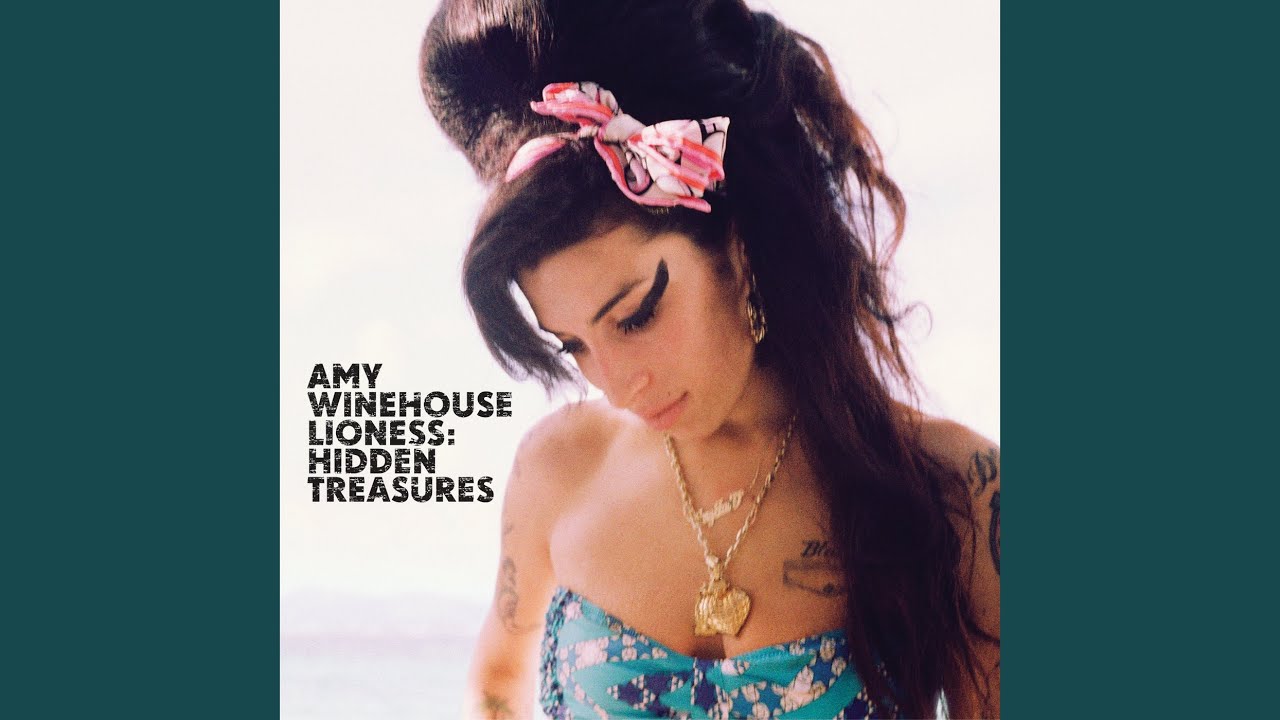
This original version (with an arrangement later spruced up by Remi) was later released on posthumous compilation Lioness: Hidden Treasures. It's a beautiful insight into the song's devastating emotional core.
Wise beyond her years, Amy knew that her heartache was temporary…
He walks away, the sun goes down
He takes the day, but I'm grown (I'm grown)
And in your way, in this blue shade
My tears dry on their own
Although undoubtedly sad, Amy’s lyrics were self-reflective. They suggested that, living through this rocky relationship and coming out the other end, had matured her.
That central lyrical image, of tears drying on their own is a particularly arresting one. It's a touching signifier that, although there is nobody to console her in the here and now, her sorrow will inevitably fade in the future.
This is no ‘I Will Survive’ though, its words indicated a realisation that the pain of heartbreak isn’t so easily overcome by self-pride alone - but the resilient lyrical protagonist knows she can stomach the blow.
She has ‘grown’ - or at least strives towards growth. Although it partly feels triumphant, as indicated by the second verse, Winehouse still doesn’t quite trust herself to learn from her mistakes…
Even if I stop wanting you, a perspective pushes through
I’ll be some next man’s other woman soon
I cannot play myself again, I should just be my own best friend
Not fuck myself in the head with stupid men

Upon hearing Amy's guitar-based demo of the song, Remi was enamoured. However, listening to it in context, the seasoned R&B producer knew it needed something else to make it stand out from the crowd.
Salaam, whose production of five of Back to Black's 11 songs is all too often under-appreciated, feared was its then-tortured, lonely vibe was too similar to Amy’s other album track contenders.
“I listened to the song and loved it, but at the same time we had so many down-tempo songs - such as Love is a Losing Game, Wake Up Alone, there were so many things in that mood,” Remi told Complex.
Suddenly, he was hit with a brainwave. Rather than build the arrangement around the downcast acoustic guitar, why not go all out and completely pivot the song into something a bit more uptempo.
Thankfully, he had just the thing to try out…
“I just happened to stumble across the original files of [Marvin Gaye and Tammi Terrell’s] Ain’t No Mountain High Enough.” Remi said in the documentary Back to Black. “I heard similarities in the movement of the song [with Tears Dry…] It was different tempo, different space. But I just thought, ‘Wait a minute, this is playing this way, that can play that way’”.

Remi laid out a new arrangement which interpolated Ain’t No Mountain High Enough's descending bass line and gear-shift chorus, however, Amy just couldn’t quite figure out what Salaam was reaching for.
After a few fumbled takes, Winehouse grew impatient…
“She said ‘You sing it yourself!'. There was frustration, for the first time and only time in our creative process,” Remi said in Back to Black. "[She said,] ‘You know what? I’m going to try it because it’s you, but for real this is not going to happen. This is way too fast. How can I sing it that fast?'”
After, in Remi’s words ‘dancing’ with the reworked song for a few days, Winehouse landed on a vocal performance that fit the sliding, stop/start tempo of the new backing.
With a looser, and almost stream of consciousness delivery of many of the verse lyrics, Amy connected back to the shape of the vocal melody at various points before heightening her emotional urgency during the chorus. It was absolutely breathtaking.
Salaam’s decision to crib from this classic was an inspired choice, highlighting the (already present) dichotomy of the song's sad-but-happy lyric. The familiar warmth of the Gaye/Terrell-leaning backing gave Tears Dry on Their Own a celebratory air.
Now part lament and part party, Tears Dry on Their Own was a breakup song that reflected the nuance of real human emotion.
Despite the tension during the making of Tears Dry on Their Own, it seems that the rest of Winehouse’s ten-day session with Salaam was relatively breezy.
“She was in Miami only for ten days for Back to Black.” Engineer Frank Socorro told the Miami New Times. “Her vocals were quick. She’d give a couple takes that were effortless and honest, and we’d have it. People think of studio sessions as all-nighters, but we’d get there at 10 a.m. to set up; she’d come at noon. By 8 or 9 at night, we were done and we’d be back up in the morning getting it done in the daylight.
“Every time she opened her mouth to sing, it was amazing,” continued Socorro.”The weight she gave her emotions. To this day when I hear Tears Dry, I get a lump in my throat."

When Back to Black - which was later of course completed with the addition of six Mark Ronson-produced tracks - was finally released on October 27th 2006, Tears Dry on Their Own was among the record’s many standouts.
Indeed, when it was released as the record’s fourth single on August 13th 2007 the song began to take root in the public consciousness almost instantly, where it’s remained ever since.
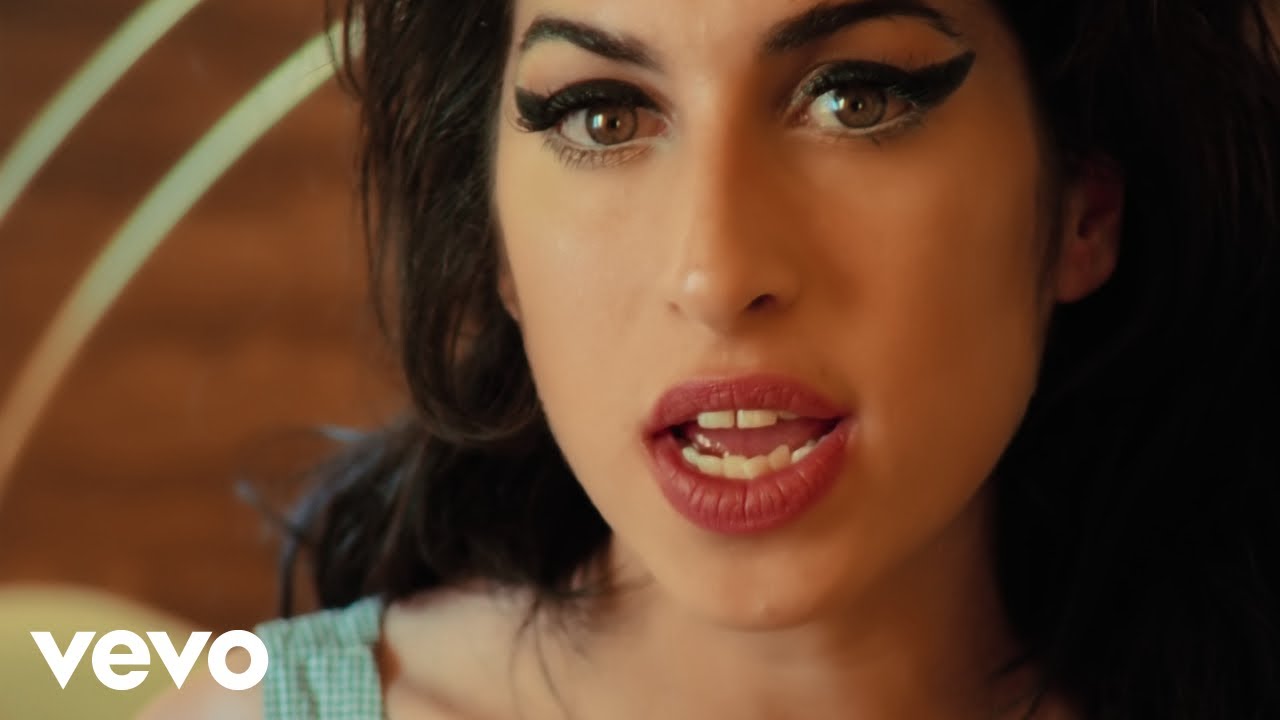
The single was backed by an LA-shot video directed by David LaChapelle. In it, Winehouse is seen sitting alone in a hotel room, intercut with her walking down Hollywood Boulevard - numbly absorbing the life and colour around her. People push past Amy as she completely inhabits the song’s twin emotions.
An iconic part of Amy’s canon, the video conveyed the light and shade of the song perfectly.
But it’s since her death at age 27 that the underlying sadness of Tears Dry on Their Own has become almost overwhelming.
Perhaps in part, it’s due to the fact that it was a song that Amy had written to herself, to help her navigate a dark period in her personal life.
But, in processing her pain, she left the rest of us an absolute gem of a song. A highpoint of a far too-brief creative outpouring that continues to inspire.
“She will inspire another generation and another set of people,” Remi told NME a year after her death. “She was inspired by Ms Dynamite, by Ella Fitzgerald, by Donna Washington, by Lauryn Hill, all these other things and people that she’d never met, and mashed it to make who she was. So now she will continue in that same idea of inspiring other people.”
