


RECORDING WEEK 2026: Touring rock musician turned film-score composer, Tyler Bates found his music-to-picture footing in the dark with 2004's Dawn of the Dead, then carried on with Rob Zombie's The Devil's Rejects and the Halloween films, where John Carpenter's iconic theme was refashioned into something grittier.
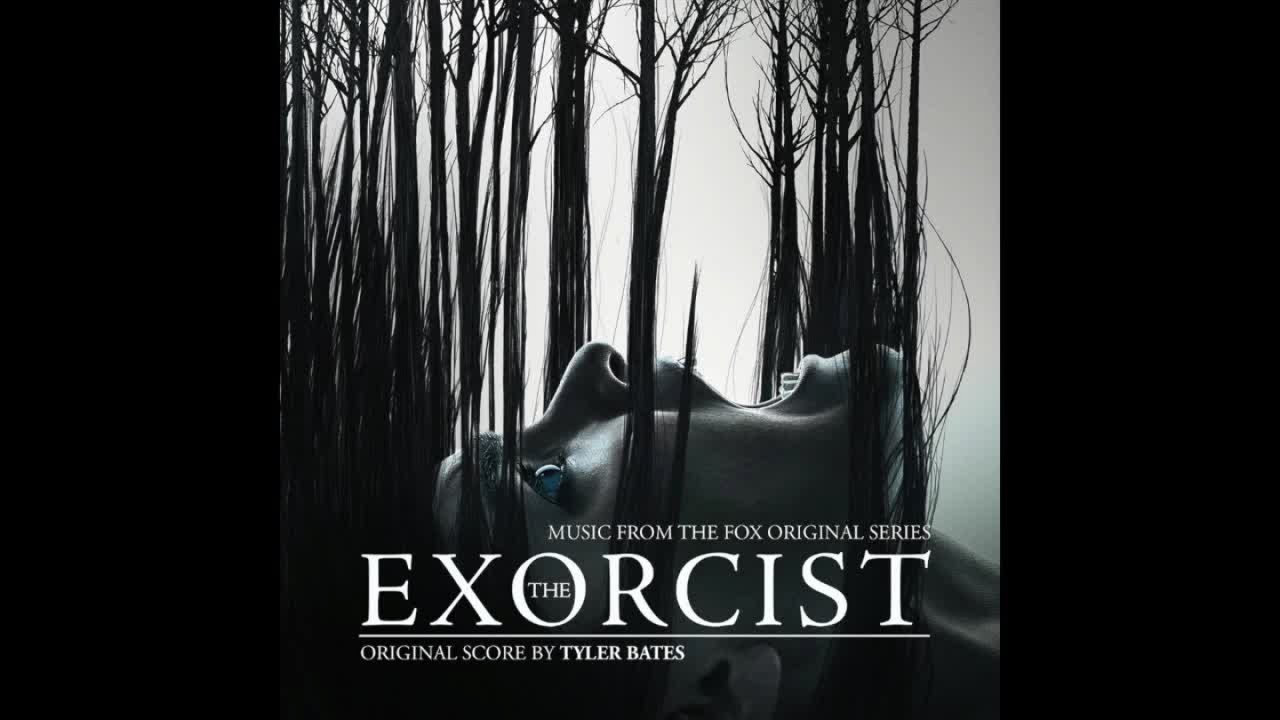
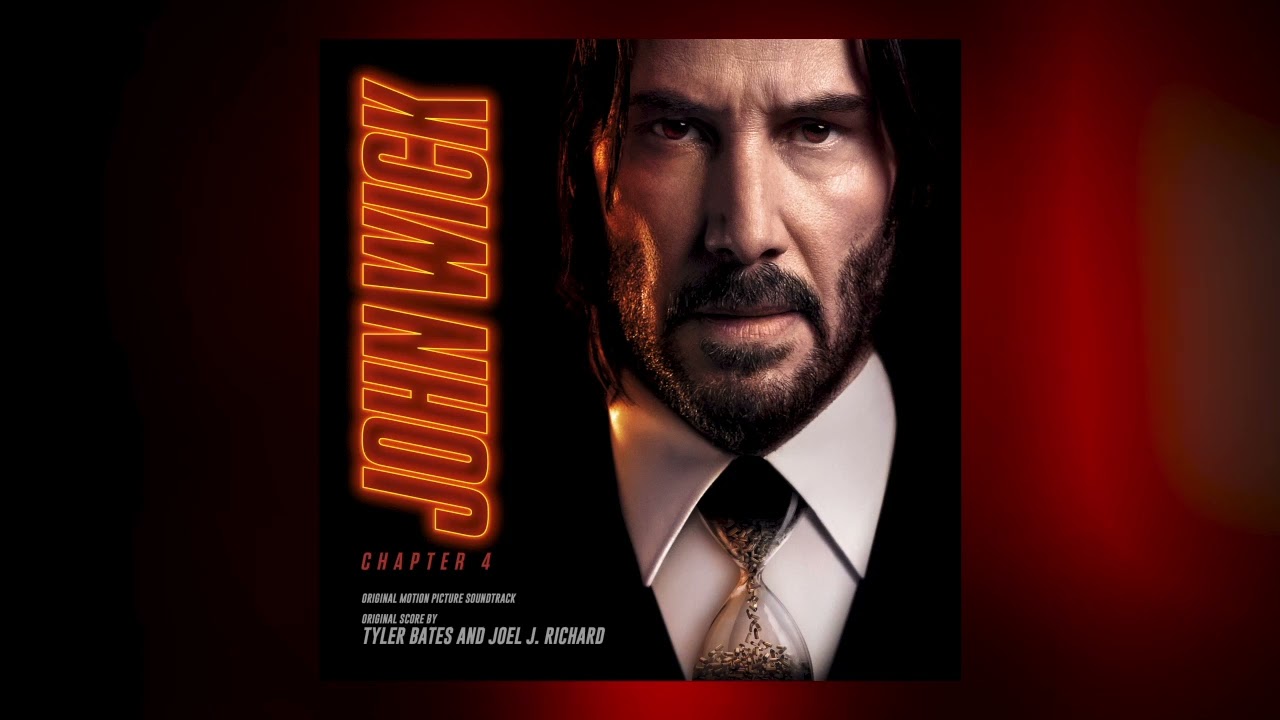
Notable credits include television’s The Exorcist, its notorious demonic dread stretched across ten episodes; a mountainous hybrid score for John Wick: Chapter 4; and a longstanding association with director Ti West on the slasher trilogy: X, Pearl and MaXXXine.
Beneath his experimental studio craft, however, sits a conviction to build sound around an emotional gesture or single vocal timbre. Always serving the scene, Bates believes learning starts with listening, a habit that never stops for a composer who first became enraptured by sound when layering up recordings on cassette tape as a boy.
For Recording Week 2026, we caught up with Bates to learn more about his route into film, his approach to recording technology and fascinating tales about working with William Friedkin, the legendary director of the original Exorcist movie…

MusicRadar: You began layering sound on cassette recorders as a kid. What were you trying to achieve with that setup before you had any sort of formal recording gear?
Tyler Bates: “It was clearly ignorance and experimentation. As I was composing my first music, I wanted to hear multiple parts and realised that I could play live into a cassette recorder while dumping tracks from another one simultaneously. Of course, the recordings were pretty muddy, but it was an opportunity to hear a multitrack of an idea, which was very inspiring and really set me on course to becoming a songwriter.
“I delved deeply into electric guitar after starting my musical journey on alto sax and was intrigued by sonority, song arrangements and developing song ideas that were more than me just strumming or hitting a guitar riff and yelling over the top of it. I began this period of experimentation out of pure curiosity and passion for sound and music.”
MR: Was there a specific moment when you had to make a decision between pursuing rock stardom or a soundtrack composer?
TB: “When I moved back to Los Angeles in the early ‘90s, I'd already been asked to do some cues for a movie because they had no money. I told them I didn't know anything about it, but I’d give it a shot if they really wanted me to, so the people working on the film shared their perspective with me, which is how I began learning about the craft and the purpose of music for film.
“At the same time, I was developing my band Pet, which signed to Atlantic Records, but I had to pay rent, right? People kept asking me to do scores, which kept me housed and gave me the opportunity to continue to make music for both, but before I knew it, I'd done 15 movies, and my 15th film was a jazz/bebop score that Blue Note ended up releasing.”

MR: What movie was your first big break?
TB: “Get Carter with Stallone and Michael Caine. It flopped terribly, but was such an incredible experience because it was among my first working with orchestras and hybrid scores, which set me on course for a lot of what happened afterwards.
“I had my lows - I was still painting houses between some of these projects until Tom Kapinos asked me to do Californication, which brought a true rock element back into my work scoring for film. At the same time, I was just starting on 300 and those experiences completely opened my mind to having a cinematic rock vision for music.”
MR: One of your transformative soundtracks was Dawn of the Dead. Was it a dream to soundtrack a film that was indirectly part of the George A. Romero canon?
TB: “To this day, I have to tell you I had such a good experience on that movie. I was up against a number of composers who had repertoires that were probably more appropriate because I hadn't had a tremendous amount of orchestral experience or any creepy music in my repertoire, but Zack Snyder believed I was the right person for the job.
“Once I was hired on Dawn of the Dead, I didn't have much time to do the movie and it was a massive challenge for me. It was right before Christmas 2003 and I was able to score a couple reels over the holiday break. They put the music into a test screening of the same cut they’d previously tested and the movie scored 25 points higher. They didn’t change one note about the score, and although I recognise my mistakes, I think the concept and tone were really distinct.”
MR: Does working on a score like Dawn of the Dead, or The Exorcist TV show, require a very different suite of tools to your ordinary movie?
TB: “If you look at most horror films, the horror exists inside of a drama, so if there's a really good dramatic story, there's a chance that the movie will be considered seriously and last the test of time. The Exorcist is really a drama - it just happened to scare the hell out of people. I've certainly learned a lot about that because I scored William Friedkin's final film, which was an extraordinary experience on so many levels.”
MR: Presumably, that was Killer Joe?
TB: “Yes, and I was hired under auspicious circumstances to work on Killer Joe. Billy had already hired someone who did a score for the movie in defiance of the producers, who then approached me at a party and asked if I’d be open to it. I asked them if Friedkin was amenable to it, so Billy came over to my studio and - I don't know if you've read his book or watched any interviews with him, but he was a very intense and highly intelligent but salty character.
“He came into the studio, sat on my sofa and said, ‘Tyler, I don't know why the f**k you're spending your time with me on my little f****g movie when you do all these big blockbusters’. I said, ‘Look Billy, the producers approached me and if you're open to seeing if we can do something that might suit the movie better, then I'm good, man.’”
MR: Having already done the score for The Exorcist TV show, you must have discussed the making of the original The Exorcist with William
TB: “In our conversation that day, I asked him about The Exorcist, and he told me the story about how he threw out Bernard Herrmann's score. He didn't want an organ score, but Herrmann didn't listen and sent the movie back with an organ score in it. That wasn’t going to work, so Billy fired him. I'm like, ‘Okay, so perhaps the greatest film composer of all time just got fired!’
“So then he hires his good friend Lalo Schifrin and tells him he wants a chamber orchestra, but when Billy showed up to the Warner Bros. sessions, there were 80 players and 5 percussionists. He said, ‘I don't want this crap in my movie’, so after a day and a half of recording Billy stopped the sessions and fired his good friend Lalo. At that point, Warner called Billy back into the studio and said, ‘Look, we'd really like you to use the music that we just paid Lalo to score and we're out of money, so either use that or look in the Warner Bros. library.’
“So Billy picked up the music reels, unspooled them in the parking lot right outside the studio and said, ‘Nobody's going to use that music.’ He was basically down to whatever he could find in the library and then happened upon Mike Oldfield's instructional album on the sonority of bells, which had the composition Tubular Bells.
“When Billy heard that, he said ‘That’s it!’ It’s crazy that a record that no one should have ever known about became a massive seller because Billy put it in the most successful horror movie in history. The Exorcist made $400 million in 1973 based on a $3 ticket price.”
MR: I understand Pro Tools is your hub for scoring, but you also lean on Logic and Ableton. How do you decide which platform a given musical idea belongs in?
TB: “I started on a PC because they were cheaper at the time, and Macs weren't fully developed until the end of the ‘90s. I went from Cubase to Digital Performer to Logic, but eventually realised that after they'd been playing back from Tascam DA-88s, all the dub stages had moved to Pro Tools and to deliver a score that was compatible, I needed to be on the same platform.
“For people just coming into movie scoring it’s way more cost-effective to work in Cubase or Logic. Ableton is fantastic for developing a passage or loop, and you can do things with effects that you can’t do elsewhere, especially when affecting a stereo sound. I basically use Logic as a sample playback platform for all of the bespoke sounds that I've made in the last 20 years.”


MR: We understand that you work quite closely with Wolfgang Mathis on creating sound design libraries?
TB: “He's still my dear friend and collaborator, but now lives in Canada. We used to set up multiple modular rigs in my studio, have our nerd jams, record stuff live, take the good moments of them and develop pads and pulses.
“I was always on a quest to have sounds to work with that nobody else had and would implement these conceptual ideas, but sometimes the clock would run out on me before I was able to manifest them as I’d envisioned. Sometimes it worked, like on the score for The Devil's Rejects, but that's a noise score really and it took a lot of tweaking to get that to land appropriately for the film.
“I do like to keep things interesting, because every time I experiment I learn more about the potential of sound synthesis and Wolfie really introduced me to thinking about the potential of a sound. It may start off as a bongo or some kind of bell or voice, then through experimenting with various synthesisers or modular synths, I learned the various permutations of sound and what the possibilities are. Now it’s part of my calculus when I'm thinking about what's appropriate for a TV show, movie or game.
“Sometimes that’s going to leave people scratching their heads, so as much as I love to experiment I have to make sure that the people I’m creating a score for can identify with it. They have to understand what it is, what it does to the picture and how to relate to it psychologically and emotionally. If they don't feel it right away, it's not a successful idea.”
MR: What will you focus on to nail those core psychological and emotional elements?
TB: “When I collaborate with different artists, especially singers, I'm thinking about the story they have to tell. Sometimes that’s intimated in the way they express themselves as much as it might be lyrically - or it might be encrypted, but it's important to understand how to help a person tell their story.
“With rock music, the riffs come when we need them and I never have had a shortage of riffs because I don't place all the weight on them. I place it on the storytelling, the song structure and how to best serve and frame a singer's voice.
“That could mean finding the right key for them to sing in to discover where their voice resonates best, but when I'm scoring on film, the actors are my singers. The timbre of their voice impacts my selections for various instruments and sounds because I don't want to compete with them; I want to make sure that the music complements the important aspects or frequencies of their voice.
“If the actor’s a baritone, I want to make sure that I clear the way for their voice to really resonate because that's going to empower their character and their dialogue the most. The whole thing is very much like a dance.”

MR: Looking at your studio - out of everything available, what do you like about using the Moog Muse?
TB: “It's very warm and sounds really good, but I've actually started working on this new TV show and have gotten back into using my Access Virus. It's kind of like a rekindled romance because I got away from this thing for 15 or 20 years, but even though it's an old synth, you can’t tell because of how I EQ and process it. If I run it through an overdrive pedal or delay, it takes on another life.
“But the Moog Muse has been great for really low tones. They're so rich and deep, and so many beautiful harmonics can emerge, even from a drone. The Dave Smith Evolver is another great one. If you want to do something weird or create some really crunchy pulses, that's an amazing instrument – and it’s favourably priced too.”
MR: You’ve mentioned that John Wick: Chapter 4 was the Mount Kilimanjaro of hybrid scores. What made that project a bigger technical challenge than anything else you previously worked on?
TB: “For anyone attuned to the properties of sound, the John Wick films have quiet dialogue, yelling and gunshots – and there’s a lot of Foley in John Wick 4, including car crashes and all that stuff. We also applied some orchestra, which didn't feel natural to the preceding three films, but the scope of it was so broad that we needed to engage an orchestra for some of it.
“At the same time, we still had all of these non-orchestral idioms that have been applied through the entire franchise that needed to be present – like all the crunchy synth pulses and atmospheres, and the hybrid rock/electronic orchestral score had to dance around all these frequencies. Believe me, gunshots always win, dialogue always wins, and in the case of John Wick 4, the cars win, so you have to factor in all that production sound.
“Mark Stoeckinger is a brilliant sound designer and a great collaborator - his sound design is so dense and compressed that there's no way I can beat it, so I had to be more like water in a stream. By being aware of what's going on in the sound package, you can negotiate a little bit by saying, I don't think you need all of those low synths in your sound package, but I’ll stay out of the way of your tyre screeches, crashes and engine revving.
“Mark and I would work on that and make sure that when they get to the final dub, all the required sound is represented by the two of us. It used to be, you're the composer, here's the picture, now write the music. Now the picture is moving even after we deliver the final score, so the whole time you're working on a movie like John Wick 4, it's literally like the tailor fitting the pants on the running man.”
MR: How do you mix a project when the compositions are continually changing?
TB: “When you’re working with pure orchestra, all those instruments are naturally harmonically balanced, but when you're using a ton of hardware synths, soft synths and playing guitars, mandolins, electric bass and drums, you've got so much going on. It's fun, but it's a nightmare to mix because you don't have much time.
“When we're delivering a score to a dub stage, it's all in stems and there’s some additional frequency management that takes place. They place the music into its appropriate context, depending on whether the sound is an enclosed space, a wide open space or a cavern.
“We have to factor all that in so that it's not only appropriate, but gives the mixers some latitude. If I slather a big reverb on everything, they’ll have way less latitude to get creative with how they place the music in the overall mix, so I want to give them options and make it a joy to work with as much as possible so people can actually hear the music in the movie.
“It's not like mixing a record. You have 25 minutes, and there might be 160 tracks of audio in a queue, so you've just got to do your best and rush through it, but sometimes we'll circle back around to the music when we do the soundtrack so it sounds a little bit more refined.”

MR: Once a film is released, can you totally relate to the score you made?
TB: “What you hear in the film is not necessarily the entirety of a composition. When I went to the premiere of John Wick 4, the music had definitely been thrown around to the point where cues that Joel J. Richard and I had done separately were intermingled and we didn't recognise a lot of our own work.
“We hear ourselves in it, but we're like, ‘I didn't do that’. That can be frustrating if you're emotional about the work, so I pour that into my songwriting where I know that what we're writing and recording in my studio is going to be on the final product. It's incumbent upon me to do that type of work so that I don't develop a bad attitude or become jaded about the fact that film is an entirely different process to what it was 20 years ago.”
MR: Do you have a bucket list of movies you want to work on?
TB: “I don't look at it that way. It’s an extreme privilege to work in this industry, because there are very few of us who have viable careers. I'm working a lot, so I prefer to just work on whatever I agree to do and not fantasise about the next thing.
“It would be fun to do a really interesting horror film because, creatively, you get away with murder and introduce concepts that would be inappropriate for any other style of movie, except for maybe an action movie. Having said that, doing a character drama would be cool!”
For more information on Tyler Bates, visit his official site.
