


Billy Joel is the personification of a superb musician and songwriter, who nailed his performance style to the mast very early in his career with the 1973 signature hit Piano Man.
His dominance during the early 70s was built on a deep gift for music, both lyrically and technically, with the acoustic piano taking a central role in the vast majority of his recorded and live work.
But after seven studio albums, Joel confessed that by the early '80s, he was having real problems with writers block. That’s no disgrace in the wake of his considerable output of the 70s, and far from unusual for prolific composers.
Bizarrely, it was a relatively flippant and throw-away comment from his assistant that ended the curse…
“The pressure I was writing about in this song wasn't necessarily music business pressure, it was writing pressure,” Billy Joel told MTV’S Night School.
“At the time, I was saying, ‘Well, I gotta write some more stuff for the album’; I was about halfway through, and I said, ‘Well, what am I gonna do? I don't have any ideas, it's gone, it's dead, I have nothing, nothing, nothing. There's nothing.’ And then the woman who is my secretary came into the house at that point and said, ‘Wow, you look like you're under a lot of pressure. I bet you that'd be a good idea for a song.’ And I went, ‘Thank you!’”

The song Pressure is taken from Joel’s 1982 eighth studio album The Nylon Curtain. Apart from adopting a slightly harder narrative - evidenced on songs such as Allentown - the album also made extensive use of some of the new and emerging production technologies.
While the piano still had a central role, it was often accompanied or replaced by electric keyboards. Joel had been known to use a Minimoog and Rhodes electric piano, but the timing of the album was ripe for the use of the first Emulator, which allowed Joel to begin incorporating samples into his tracks, alongside the use of other synths and sequencers.
The track Allentown is a case in point, with its percussive accompaniment created using industrial sounds. Similarly, album producer Phil Ramone encouraged more experimentation, leading to Joel sampling his voice for the slightly unnerving electronic vocal interlude that we hear towards the end of Pressure.
We can also hear the heavy layering of synth brass textures alongside the piano, which forges the iconic hook of the song.
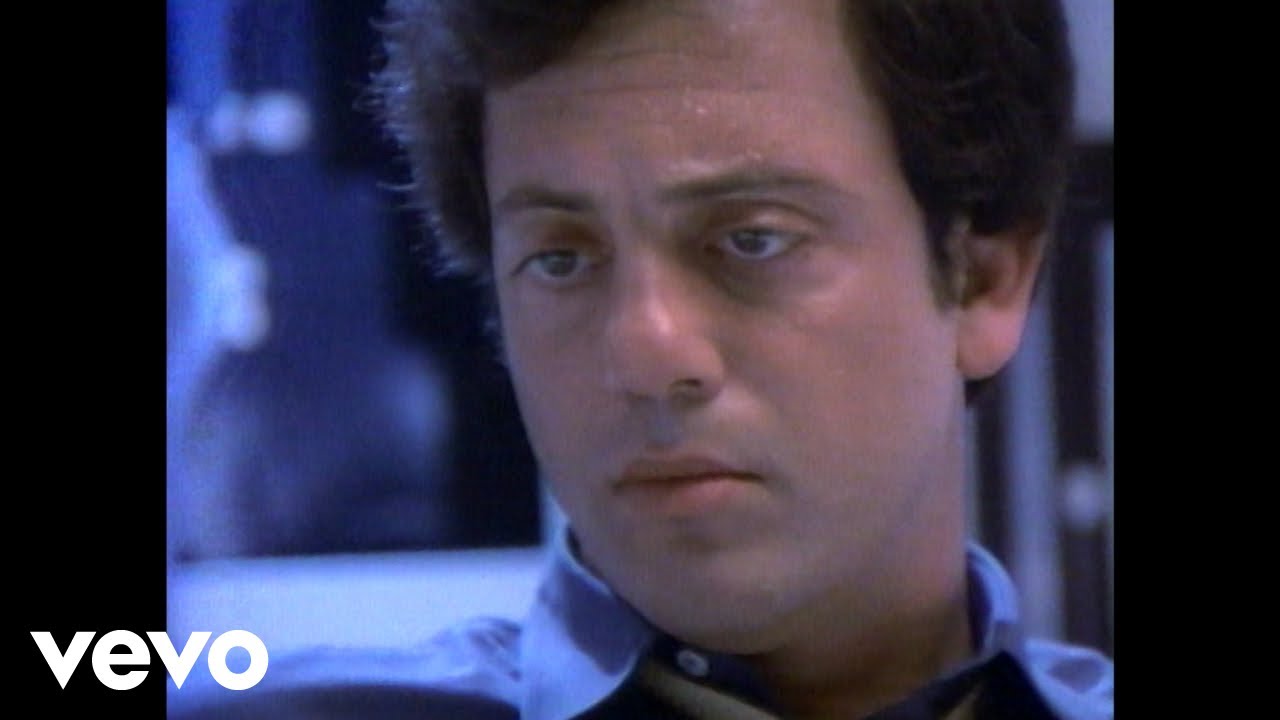
Billy Joel makes no secret of his love of piano music and his respect for the classical masters. When he was forced to do piano practice by his mother, he would often improvise in the style of Beethoven to make it sound like he was practising a specific work, when really he was just mucking about at a genius level.
This longstanding ability to channel the greats has served him well, and it’s in evidence on Pressure through the symphonic nature of the main riff. We hear it after the more subdued introduction (which uses chords from the verse - we’ll come back to that!).
So, let’s lift the lid on the underlying theory of this oddly constructed Joel beauty…
Pressure switches between major and minor tonality, with an introduction and verse structure which is in D major, but a chorus which is in D minor.
It's the chorus section where we hear the signature synth brass and piano riff, which is also used as a precursor to verse one.
In typically pianistic style, the chords of this riff play out over a device known as a tonic pedal; this is where the bass note remains stationary, which in this case is the note D.
Meanwhile, over the top, the synth brass and piano do a complicated dance in 3rds, which would sound just at home within Vivaldi’s Four Seasons.

The chords themselves change relatively quickly - we hear - Dm for 2 beats, C#dim/D for 4 beats, and Dm for 2 beats.
Rather than repeat the sequence exactly, Joel pivots things slightly on the next time around, with - Bmb5/D, Gm/D, A7/D and Dm, each for 2 beats at a time.
We also need to add that these are the simplified versions of the chords. As the riff is highly melodic, played in 3rds, with moments when the notes act as passing notes or resolving chords, which don't conform entirely to the 2-beat-per-chord narrative.
Digging in to that detail would require notating the sequence directly which could be a lengthy challenge, should you feel so inclined.
With a perfect sense of yin and yang, the verse structure is altogether centred around D major.
The verse (and very opening of the song) begin by using a chord of Gsus2 for 2 bars, before switching to D major. The prominent interrupting stabs on chords C/D and D, repeat while Joel sings ‘Presh-arr’ with a degree of phonetic forcefulness!
The sequence then repeats, before switching to a sequence which takes us on a journey toward the chorus. The section gathers pace, by switching chords more quickly.
Here we start with Gm for a bar, C and A for 2-beats, and Dm for 2 bars. Finishing the romp toward the chorus, we hear Bb, F, and G7, all for a bar each, before Asus(4) and A for 2 beats each.
It's also really interesting to note that this song almost exclusively makes use of a halftime feel. This is directed by the drummer, who places the snare on beat 3, rather than the more usual 2 and 4.
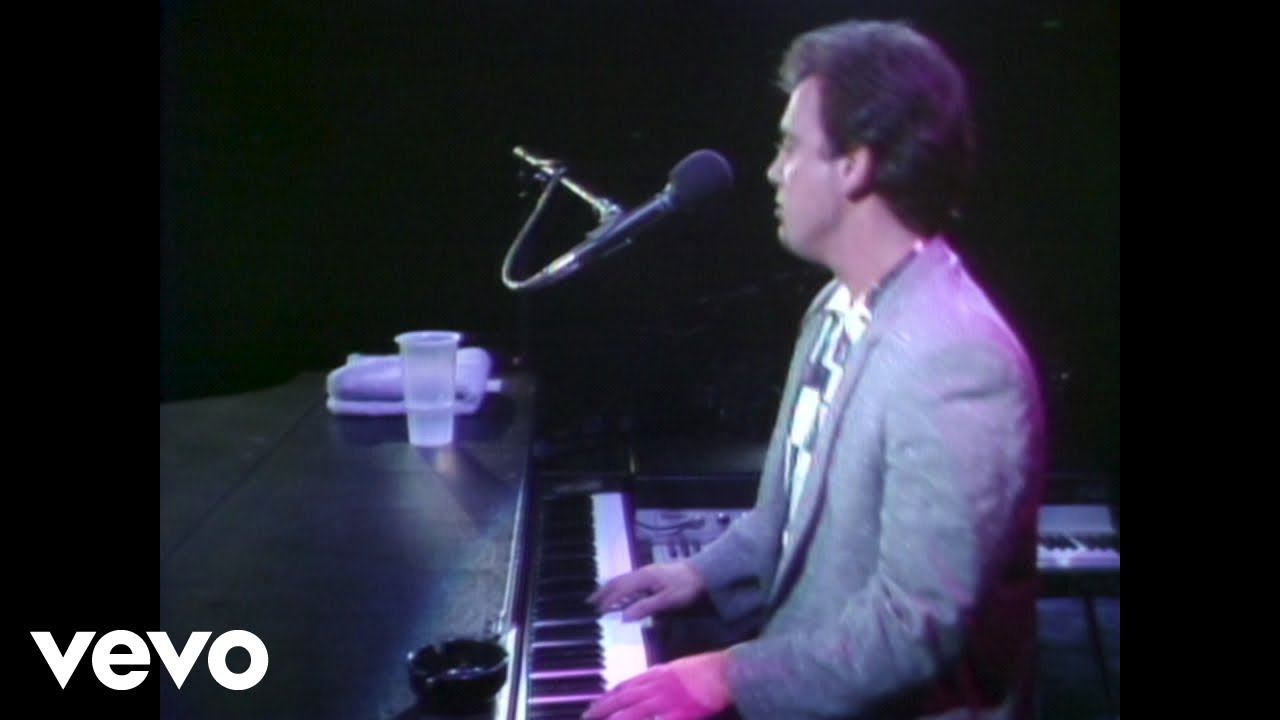
With the gathering of pace in the bars leading up to the chorus section, the drummer switches to conventional time, with the snare’s placement on 2 and 4 acting as a form of tempo-based crescendo in line with the ethos of the song.
Adding to the experimental flavour of Pressure, Joel’s sampled vocals now put in an appearance, adopting a similar voicing structure to the synth brass riff, but this time over the verse chords.
“On Pressure, the noise that sounds like the horn of a French taxicab - that strange, breathless staccato beep - is actually a tape of me singing every note in my repertoire,” Joel revealed in Phil Ramone’s book, Making Records: The Scenes Behind The Music.
“We recorded me singing the notes, and then loaded the tape into an effects gadget called an Emulator. Then, we overdubbed me hollering, 'PRESH-AR!' with the same inflection that a Royal Air Force captain might use to bark out a command like 'TEN-HUT!'”
This sampled vocal has got a slightly unnerving quality, and to our ears sounds ever so slightly out of tune with the rest of the track. This of course could also be down to the nature of analogue recording - and a possible edit that was placed in one of the final versions - but it all adds together to create a slightly unsettled feel, perfect for the intense subject matter.
During the recording process, Joel was experimenting with various exclamations of the word ‘pressure’, and in one such moment, toward the end of the song, frantically pressed random buttons on the tape machine during playback of the master tape in a surge of inspiration.
“While the master tape was running, I impulsively hit all the buttons on the tape machine to punch out everything but the section with the yelling,” Joel recalled in Ramone’s book. “Phil was dumbstruck. 'God! What did you do? You erased part of the song!' Phil was right: for that one segment everything stops dead but my voice, but it was just what the track needed.”
The resulting erasure of all of the tracks did indeed become a significant moment in the song, where the backing stops, in order to make way for ‘Presh-aaarrrrr’, which both Joel and Ramone (eventually) agreed brought something extra to the song.
Just as well really - if only all studio mistakes were this beneficial!
In 2020, Pressure’s appearance in the second season premiere of superhero drama The Boys would introduce a new generation to this often overlooked Billy Joel gem. A product of circumstance, happy accidents and of course, its composer's mountainous talent.

