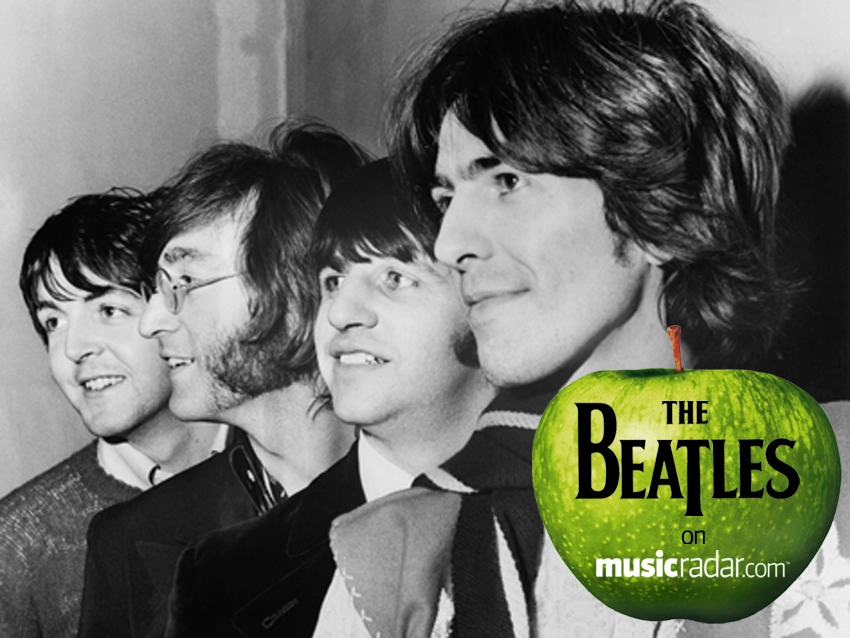
Tomorrow is the day (9/9/09) millions of music fans have been waiting 22 years for: The Beatles' studio back catalogue, remastered and available in two lavish CD box sets, The Beatles In Mono and The Beatles Box Set: Remastered In Stereo, goes on sale.
These collections - the mono set is available for a limited time only and the stereo discs can be purchased individually or in the big black box - replace what many consider to be inferior CD transfers that were issued in 1987.
Yesterday, in part one of our review, we put The Beatles' early years - those albums released from 1963-'66 - to the test, rating both stereo and mono versions in exhaustive detail.

In part two, we examine The Beatles' studio years, a period that saw them hit creative highs before their sad, messy end that resulted in yet one final masterpiece.
Do the new CDs deliver The Beatles as you've longed to hear them? Should you part with your hard-earned cash to purchase albums you might already own? And this whole stereo vs. mono thing - is there really a clear-cut difference?
Let's give these babies a spin and find out…
Getting better all the time
"We're fed up with making soft music for soft people," an agitated John Lennon told George Martin late in 1966. "We want to raise the bar a notch."

The Beatle was explaining the band's reasons for getting off the road in order to spend more time in the studio - they were sick of the travel, the hysteria (some of it ugly in the wake of Lennon's 'bigger than Jesus' comment) and the jet engine-loud screams that drowned out whatever they played and however they played it. And in many ways, they were just sick of being The Beatles.
Lennon was making his case for creating a new paradigm for being a band. More importantly, he was arguing for total artistic freedom, which would take shape on an album he would later practically disown but one that would, upon its release on 1 June 1967, alter the course of pop music forever.
All told, Sgt Pepper's Lonely Hearts Club Band took a then-unprecedented 129 days to record. Predominantly the brainchild of Paul McCartney, it challenged Martin and the EMI staff (most notably, chief engineer Geoff Emerick) to exhaust the limitations of reduction mixes while they made use of relatively new effects such as automatic double tracking (two decks recording simultaneously), Leslied vocals and varispeeding.
The myriad innovations ushered in during the six months The Beatles recorded Pepper are offered up in exhilarating and, in some cases, confounding ways on the stereo and mono remasters.
While the stereo disc delivers a more spacious sound, it's also a surprisingly flatter one; it lacks attitude. What's more, some of the segues (Sgt Pepper into With A Little Help From My Friends, Good Morning Good Morning into the Sgt Pepper reprise) are jarring - the tape edits are plainly audible.
Significantly, two key mixes on the stereo version go awry in markedly contrasting ways: She's Leaving Home is slower than its mono counterpart, and everything from the shimmering harp opening to McCartney's singing is rendered at a lower pitch. You don't notice the difference until you hear the slightly faster mono mix, which positively glides with ballet-like grace.
"Stereo wins out handily on the Lennon/McCartney masterwork that closes Pepper, A Day In The Life."
Ironically, the stereo mix of Lucy In The Sky With Diamonds is faster, but that doesn't make it swing more. The mono version, with its relaxed pace and a more pronounced use of flanging, transports one into true psychedelic bliss.
Sgt Pepper is often cited for its ornate orchestration, but The Beatles still liked to pick up their guitars, and the absence of panning on the mono disc works wonders on the title track (razor-sharp distorted guitars) and Fixing A Hole, the latter of which features a particularly gnarly George Harrison solo.
But stereo wins out handily on the Lennon/McCartney masterwork that closes Pepper, A Day In The Life, now presented in an aural 3-D. Starting out panned hard right and then balanced between both channels, Lennon's singing, detailing the rituals of daily life, is the focus here, and rightly so.
Very few vocalists can mix pain with detachment, and Lennon pulls it off to a shattering degree. McCartney's 24-bar bridge, another essay on mundane tasks, drifts in and out like a daydream. And Ringo Starr's imaginative tom fills are sheer poetry.
The whacked-out crescendo is an utter joy in both versions, but I still can't detect the supposed 15 kilocycle tone that precedes the 'never can be any other way' run-out loop. Allegedly, only dogs can hear this frequency. I don't own a pooch, so I played it for my daughter's hamster, Jacob. He slept through the entire cut, so there you go.
The Beatles roll up...and stumble
With Sgt Pepper informing the Summer Of Love, one would think 1967 would be a non-stop party for The Beatles. Quite the contrary: Brian Epstein died just two months after Pepper's release, and The Beatles became rudderless.
Shaken to the core (though still under the spell of the Maharishi and various chemicals), they coped with their grief the only way they knew how: work.
Once again, McCartney took the helm and convinced the rest of the band to indulge him in an cinema verite project called Magical Mystery Tour. The plotless, hour-long spooler was first aired on the BBC on Boxing Day of that year and was met with a cavalcade of editorial brickbats. For the first time in their spectacular run of success, The Beatles had stumbled - big time.
Strange as the film was for people to wrap their heads around, there was the unorthodox soundtrack, in this case two EPs released in the UK on 8 December 1967 and a full vinyl edition in the States a few weeks prior.

Generally perceived as one of The Beatles' weaker offerings, Magical Mystery Tour is essentially a collection of stellar singles with a few numbers cut specially for the film.
The double A-sided Strawberry Fields Forever/Penny Lane, released almost a year prior, is a Pop Art standout, and in a stereo vs mono slug-out, each wins for its respective track.
In stereo, Lennon's voice is placed in the center of the left-right pileup of mellotrons, churning guitars, sitars, strings, horns and a kitchen sink of other sonic goodies. While the drums lose some of their explosive punch, Lennon's vocal is the star here, and he sounds as if he's singing directly to you, in a variety of moods and guises.
Conversely, McCartney's jaunty little wave to all the people he meets on the street is delightfully whimsical in mono. His voice is rich and well-rounded, and the collage of instrumentation, especially the heralded piccolo trumpet solo played by David Mason, leaps out of the speakers. The mono mix seems to cheat a little on the feedback/ride cymbal ending, but it's a small price to pay.
Lennon's provocative I Am The Walrus is a toss-up on both sets, with the stereo mix panning the various keyboards every which way to the point of distraction. Yet, the cellos have greater clarity - you can actually hear the bows being dragged across the strings.
The mono version of Walrus is more sympathetic to the music as a whole - way more hard-hitting - and the radio transmission that ends the song is less diffused and doesn't drop out as quickly.
Lennon's anthem for the time - and the ages - All You Need Is Love appears to vary in volume in mono, while the stereo mix delivers a full-bloom array of sound.
The backing track was cut at Olympic Studios just days before the band participated in a global satellite transmission of the song from EMI's Studio One, during which Lennon's lead vocal and Harrison's guitar solo were recorded. Lennon, despite his gum chewing, turns in an appropriately earnest performance. Engineer Emerick has pointed out Harrison's nervous, reticent guitar turn, and it's most evident - and intriguing - in stereo.
"The mono version of Walrus is more sympathetic to the music as a whole - way more hard-hitting."
Panned left and right, the title cut sounds almost like a bass-and-horns number, although there is some tinkering on keyboards previously unheard. In mono, however, the song rocks, driven by slamming drums. And hey! - check out that cowbell. Nice.
Cracks in the armor…and another classic
1968 would prove to be a fractious year for The Beatles (mirroring the times, perhaps?), but it started out on a high with the release of the single Lady Madonna backed by George Harrison's meditative The Inner Light (both would later be featured on Past Masters).
A group trip to India yielded an avalanche of new songs, as The Beatles, armed with acoustic guitars, spent much of their time strumming and writing (John even learned fingerstyle guitar from folk-popper Donovan, who joined the band on their transcendental retreat).
When The Beatles returned to London, however, change came fast: Lennon had plunged into his all-consuming affair with Yoko Ono, had started using heroin, and lost interest in the group, an ennui which quickly spread to the others with the exception of McCartney.
The double album called The Beatles was recorded from 30 May through 16 October at EMI (with a brief stop at Trident Studios in July during which the band recorded the single Hey Jude on eight-track, their first experience using such a board).
Upon its release on 22 November 1968, it was immediately referred to by fans and the group themselves as 'The White Album,' in reference to its stark, all white packaging which resembled classical collections of the time.
Often called the work of individuals (John with The Beatles, Paul with The Beatles and so on), what's remarkable is how much they sound like a living, breathing group in mono.

Lennon butted heads with George Martin, insisting that this recording be the anti-Pepper, devoid of the producer's suggestions and Geoff Emerick's sound wizardry (the engineer would quit the sessions halfway into the project, disgusted by the band's in-fighting - this time, the group weren't just bickering; their insults were drawing blood and leaving scars).
For the most part, Lennon got what he wanted, and The White Album - er, The Beatles - given the oppressive conditions with which it was made, is chock full of mostly unadorned gems.
To no great surprise, the mono package evokes the palpable sensation of hearing the album on vinyl for the first time. It's visceral and warm, whereas the stereo set is another assortment of Grand Canyon-wide hard left-and-right pans - fascinating at times but mostly frustrating.
Check out McCartney's big bad drumming on the Beach Boys' parody Back In The USSR and Lennon's "come out to play" note to Mia Farrow's sister, Dear Prudence (Ringo had briefly walked out of the sessions, leaving Paul to assume the throne). The man could play - and his performances come through loud and clear in mono.
But if you want to hear The Beatles rock the sure-shot, you can do no better than Lennon's vanity-discarding cry for help, Yer Blues. The group crammed into Studio Two's 'annex' (a broom closet, practically) to track this monster, and the mono edition makes it sound as if you've just cracked open the door to eavesdrop on a one-time-only event.
Helter Skelter is McCartney's raging rock slab, and in mono it's stunning to hear how unhinged he becomes trying to obliterate his image as the 'soft Beatle.' He matches but doesn't best Lennon's Twist And Shout in the vocal cord-shredding department.
Musically, the guitars and drums could knock down trees. My only beef - and the stereo mix corrects this - is the famous false ending. In mono, it's gone; the song fades out normally. Ringo doesn't even have blisters on his fingers. That's a bummer.
George Harrison often felt overshadowed by the hit machine that was Lennon/McCartney, but he was the only Beatle to record in eight-track on 'The White Album' with his first true masterpiece, While My Guitar Gently Weeps.
Even with little bits of sweetening - added percussion, keyboards that don't overwhelm - the mono version carries a decidedly live, less 'studio processed' sound. Harrison's Fender Bass VI is an earth-shaker - it's that heavy. And what of guest star Eric Clapton's lead guitar breaks? They shriek with emotion.
I Will and Julia, individual triumphs by McCartney and Lennon, respectively, spotlight their creators as writers and singers of matchless depth and reach, and the mono mixes do them equal justice.
"George Harrison often felt overshadowed by Lennon and McCartney, but he was the only Beatle to record in eight-track on 'The White Album'."
In Paul's delicate acoustic serenade, he sounds as if he's demoing his song just for you - that's the level of intimacy he achieves. Hooky guitar arpeggios fill the air.
Meanwhile, Lennon's double-tracked voice is as beguiling as the Mono Lisa. Confessional, vulnerable, aching with very different kinds of love for two women (his deceased mother and Yoko One), it's a courageous outpouring.
Revolution 9 is still a nightmare in both good and bad senses of the word, but in the mono version it assaults head on, whereas the stereo version ambushes you from every which way. Pick your poison.
The biggest surprise is saved for last, and it's in the stereo treatment of Lennon's Goodnight. As crooned by Starr, the separation given to the orchestra is sublime. You're bathed in wondrous, dulcet tones as you drift off to this lullaby made for children of all ages.
Beware the Blue Meanies
Originally intended to be an EP running at half-speed, Yellow Submarine, released 13 January 1969 in the UK and 17 January in the US, contains only six Beatles songs, two of them new but not all that new, as they were recorded during the preceding three years.
The American release was stereo while the UK album was available in stereo and mono, although the mono version wasn't true mono - it was a 'collapse' of the stereo version. Conversely, George Harrison's Only A Northern Song was a mono mix that appeared as mock-stereo.
It's a bit confusing for a record that just might qualify as the least essential Beatles disc of all, mirroring the band's involvement in the animated feature film of the same title - which was all but nil.

Hey Bulldog is the most recent cut here, recorded in February 1968, and it's a gruff, infectious rocker that sounds as if the band had a hoot putting it together. McCartney's bass (panned left) gradually rolls up to match the volume of the lead guitar (panned right).
Harrison's It's All Too Much swarms and swoons, with Ringo's flanged drums and assorted percussion, handclaps and whatnot jabbing and poking from all angles. A delicious smorgasbord of experimentation that constantly surprises.
Half of the album is comprised of George Martin's film score music - benign stuff, but I doubt many people have felt the urge to spin Sea Of Holes or Pepperland Laid Waste more than once.
The End...or is it?
As 1969 began, The Beatles were at their lowest ebb, struggling not to kill one another while finishing Let It Be (which would be released to little fanfare a year later) and convincing even George Martin that they were finished.
Although Glyn Johns (elevated from engineer to producer) had begun tracking basics for I Want You (She's So Heavy) at Trident Studios in February, the record known as Abbey Road, didn't get officially underway until May at EMI Studios - with Martin back on board (in July, he would be reunited with engineer Geoff Emerick).
By this time, EMI was finally a fully functioning eight-track facility - an advancement the band had longed for. With hi-fi stereos now becoming commonplace in people's homes, the decision was made to mix in stereo and forgo mono altogether.
The new stereo remaster is, for the most part, a marked improvement on what easily ranks amongst the band's finest works. Abbey Road had a much smoother sound than its predecessors - the mixing desk at EMI was transistorized, which produced softer tones overall. This is not necessarily a bad thing - it suited the songs - and the wide separation of the tracks here literally opens up and caresses your senses.
Harrison's Something is spellbinding - and now its every luscious nuance is exposed. It's no wonder a notorious rock hater such as Frank Sinatra quickly installed this composition in his repertoire and referred to it as one of the greatest songs ever written. It is.

The Moog synthesizer touches that the band judiciously added to songs such as Maxwell's Silver Hammer, Here Comes The Sun and Because are almost 3-D in their aural impact.
Likewise, the guitars - harsh jolts on Oh! Darling; smooth, melodic leads on Octopus's Garden; and the famous three-guitar shootout that graces The End - pack bite, clarity, and most importantly, the personality of each player.
"I Want You (She's So Heavy) sounds like you're sitting in a smoke-filled club watching the band groove bossa nova-style."
As for Ringo's drum solo in The End, it's thunderous, and the "chick" sound he gets from his hi-hats once the band kicks back is way, way cool.
I Want You (She's So Heavy) sounds like you're sitting in a smoke-filled club watching the band groove bossa nova-style. The reverb that existed on the original CD from 1987 has been removed and we now have The Beatles, uncompressed and au natural.
Lennon's Because is one of the most gorgeous of all Beatles tracks. Geoff Emerick has stated that he recorded the vocals with no compressor or limiters - and it shows. At times, you'll be looking behind you, certain that you can feel the breath from each singer's mouth on your neck. This virtual Beatles choir - three singers performing nine harmony parts - is a religious experience.
A stupendous way to close their career (and the '60s), Abbey Road is not without irony, for the album that was supposed to represent The Beatles as a unit, making a record 'like they used to,' sounds more like the work of solo artists than anything in their illustrious canon.
But this might be quibbling bordering on nerdism ad nauseam. It's a corker, without a minute wasted. Separately or as part of the boxed set, buy it already.
Get Back to the future?
Let It Be began as a film project spearheaded by McCartney as yet another way of rallying the troops and 'getting back' to being a proper band again.
Disgruntled and resentful of Paul's increased leadership role (which bordered on bullying), The Beatles sulked into Twickenham Studios to write and rehearse songs that McCartney hoped to perform live in concert. It was to be a "warts and all" recording. The Beatles live with no overdubs. To some extent, that was the case, but it was hell getting there.

Making music on the spot in a cold film studio at 8am in front of director Michael-Lindsay Hogg's crew didn't sit well with the other Beatles - tempers flared, and so the project was quickly moved to the new Apple Studio the group was having built. Using two four-track boards borrowed from EMI, George Martin, assisted by engineer Glyn Johns and Alan Parsons, attempted to make sense of what was a chaotic, combative situation.
A new face appeared on the scene, Billy Preston, a keyboardist with Ray Charles. Harrison all but dragged the gregarious Preston to the Apple sessions, hoping his presence would ease tensions within The Beatles.
Preston's spunky and soulful playing helped to make The Beatles' last-ever public performance (on the Apple rooftop, 30 January 1969) a lively affair, but once the band returned downstairs to finish out the recording, the mood turned sour once again.
At times, it became unclear who, if anybody, was guiding the ship. George Martin took a humiliating backseat role in the process, with engineers Johns and Parsons carrying out The Beatles' wishes.
The project sat on a shelf for a year until the tapes were eventually turned over to Phil Spector to compile. McCartney hated the choir and harp the 'Wall Of Sound'-smith added to The Long And Winding Road, but his demands to halt the album's release were unsuccessful - both Let It Be the film and the accompanying LP were issued on 9 May 1970. None of The Beatles attended the premiere - McCartney announced their breakup a month earlier.
The spruced-up stereo remaster improves an album that has always been a troubling listen but one that does have its charms: the endearing Everly Brothers tribute Two Of Us, the irresistible shuffle Get Back and the joint-jumpin' One After 909. All sound dynamic, clear as a bell and most definitely 'live.'
Harrison's massively cranked solo on the title cut (differing from the single release) betters the church organ of Billy Preston, so that's a plus. Still, the album as a whole is bittersweet - and at times, funereal. The band is trying to make a go of it - McCartney especially - but you know the outcome.
In truth, I've always been surprised that McCartney, who always championed ornate arrangements, would be so averse to Phil Spector's treatment of The Long And Winding Road. Choir, harp, strings - they fit. The de-Spectorized version heard on 2003's reissue, Let It Be…Naked, struck me as unfinished - and Billy Preston's keyboards were downright corny
But not all of Spector's hunches were spot-on: the producer dropped Don't Let Me Down, one of John Lennon's most powerful love pleas, from the finished album. How many ways can you say, 'Fail'?
"Lennon's vocals on his otherwise gorgeous Across The Universe sound more flanged than usual. And despite the song's Fantasia-esque title, it doesn't work."
Nitpicks? Only one major one: Lennon's vocals on his otherwise gorgeous Across The Universe, a remix from the 1968 four-track original, sound more flanged than usual. It's as if he's singing from another planet. And despite the song's Fantasia-esque title, it doesn't work.
Past Masters - by real masters!
Originally released on 7 March 1988, Past Masters Vol I and 2, essentially a greatest hits collection that most groups would kill for, is made all the more impressive when you consider that the majority of these tracks were non-album singles, some of them dashed off hastily to meet contractual agreements. Even during lunch breaks, The Beatles got busy.
Now we have Mono Masters and Past Masters (the stereo set), and by a wide margin, these songs are all but re-animated in stereo.
As only mono mixes were ever made of Love Me Do, She Loves You, I'll Get You and the amusing oddity known as You Know My Name (Look Up The Number), that's what we have on both sets, and they're nothing but fine, fine, fine - you'd have to drape a wet washcloth over the speakers to mute the breakneck exuberance of She Loves You.
Although a later version of Love Me Do was pressed on the album Please Please Me featuring session drummer Andy White with poor Ringo hitting a tambourine and questioning whether the band were 'pulling a Pete Best' on him, the Masters sets feature the original with Starr behind his kit.
I'll Get You might be considered lightweight by some, but it's one of the first real examples of the high (Paul) and low (John) harmony that would inform much of The Beatles' output.
Lennon, however, takes the high lead vocal break in the breathtaking This Boy - if anybody needs a crash course in heartstring-tugging songwriting, singing or understated drumming, they need look no further. Ditto for the tearjerker Yes It Is (check out Harrison's fine use of the volume pedal on his guitar swells). Both stereo and mono versions are treasures.
The one-time only German-language versions of I Want To Hold Your Hand (Komm, Gib Mir Deine Hand) and She Loves You (Sie Liebt Dich) are curios that reveal how difficult it is to sing your own song in a tongue not native to you. He might have picked up some of the lingo during his time in Hamburg, but Paul strains to nail some of the harmonies.

I Feel Fine, with its much-celebrated 'first feedback on record,' carries much more impact in stereo. The opening note, plucked on guitar and bass in unison, roars like a buzz saw (there's the faint sound of Ringo putting his foot on his hi-hat pedal), and Lennon's double-tracked, dead-center vocal brims with authority. He's king of the world here in late '64, and he's still cool with that.
I Call Your Name is prime Lennon - he manages to be by turns heartbroken and full of swagger. The stereo mix displays both traits in glorious Technicolor. And man, you can't beat that cowbell.

Next to his larynx-shredding vocal performance on Twist And Shout, there's Bad Boy (written by Larry Williams, who also penned Slow Down), in which Lennon brings down the house. George Harrison's double-tracked guitar solo is rollicking good fun.
Hey Jude - the first time the group recorded in true eight-track - maintains its anthem status in stereo. The vocals sit better, they sound fuller, particularly when Paul and John harmonize on the last verse. And if you pay close attention, you really can hear Paul say "fucking hell" when he hits a bum piano note (it's around the 2:59 mark). The mono mix fades out ten seconds later than then its stereo counterpart, but nothing crucial is lost in the latter.
Mono-wise, Day Tripper runs a smidgen slower, but that doesn't make it any less swinging. In fact, the whole song has more muscle and pulse. The guitars are bolder, the drums burst with life and the vocals carry considerably more zip.
Revolution, too, pulverizes in mono. John's distorted-to-hell guitar is a much-imitated, never-duplicated thing of knotted-up beauty, and the stereo version spreads it too thin. Also, in mono you can hear some nifty little drum fills by Ringo that complete the transitions with verve and panache.
The final verdict
So there you have it, the complete rundown of both The Beatles In Mono and The Beatles Box Set: Remastered In Stereo. Both have strong, if not essential, selling points, but the question remains: should you buy?
In a word, yes. In three words - yeah, yeah yeah! The mono set is, for true Beatles obsessives and collectors, the real deal. Unfortunately, for the time being at least, you can't purchase each CD individually, so you have to part with some serious moola and nab the entire collection. A pricey investment, but hey, Christmas is coming - convince a loved one that an early present is in order. Or just treat yourself.
The stereo remasters you can buy individually or as one giant box, and while most of these CDs don't deliver the all-out kicks of the mono mixes, they're tremendous improvements on the discs issued in 1987. As an addition to any home, they too are a must. The packaging, by the way, is primo.
The toppermost of the poppermost, sounding better than ever. A splendid time is guaranteed for all.
Read part one of our review here: The Beatles remastered 1963-66
