


Starting early on the guitar is one of the best ways to give your child a lifelong, rewarding hobby. But the best guitars for kids have to tick a lot of boxes if they're going to keep your young one coming back for more. If you're not sure what to go for, you've landed on the right page, as we've used decades of experience to pick the best guitars for children.
Some of us guitarists remember our first instruments fondly, but for others, the memory of a poor-quality instrument still haunts us. Learning to play the guitar is already difficult, so the last thing you want standing in your way is a poorly made instrument. While some terrible instruments still exist, we are living in a golden age for guitar, with many more quality options for younger players these days.
This guide focuses on children aged 5-10, so if yours is older, consider our best electric guitars for beginners or best acoustic guitars for beginners guides. If you'd like to learn more before you buy, check out our FAQ section, where our expert authors answer lots of common questions.
Best acoustic overall

The deep booming tone of the dreadnought acoustic guitar is undeniable. It's been the go-to for many great players and will continue to be forevermore. Unfortunately, this larger-than-life tone hasn't always been accessible to younger players. The sheer size of a dreadnought has meant most kids simply can't get their arm around the large body.
Luckily, Yamaha is here to help with the Yamaha JR1 Dreadnought Jr. As the name suggests, this is a shrunken down version of a classic dreadnought and offers a pretty accurate approximation of the tone - considering its ¾ of the size.
The spruce top and meranti back and sides deliver a rich and warm tone - precisely what you'd expect from Yamaha. The JR1 also comes with a handy gig bag for taking the guitar to lessons or school.
Best premium acoustic

Yet another travel guitar on this list, but this time it's arguably the most popular travel acoustic of all time, and the guitar all other small acoustics are compared to. The Baby Taylor boasts an impressive list of specifications, not only for its size but also its minuscule price tag - compared to other Taylor guitars.
This Mexican made Taylor features an impressive solid top, not something you usually see on a beginner guitar, let alone on a budget traveller. This addition results in a bright and articulate sound, with plenty of projection. It really does sound bigger than the tiny body would suggest. The walnut back and sides look fantastic and mean the guitar looks the part as well as sounds great.
We know this guitar may be a little more expensive than other entries on this list, but if you can stretch to it, you'll get a guitar that will last forever. Once they move on to a bigger guitar for everyday use, the Taylor BT will take on a new life as their go-to travel guitar.
Best electro-acoustic

So the Yamaha APXT2 is technically the travel version of the ever-popular APX model, but that doesn't stop it from being one of the best guitars for kids. This scaled-down electro-acoustic is the perfect size for young hands. In addition, the smooth, easy-to-play neck is ideal for figuring out those tricky beginner chord shapes.
This compact guitar even features a built-in pickup, so you don't have to worry about being heard at the next school talent show or recital. Even if you don't need the pickup right now, you'll get plenty of use out of the integrated tuner.
Just like its big brother, there is a range of colour options available from Dark Red Burst, Natural, Black and our favourite Old Violin Sunburst.
Best for style

The Gretsch G9500 Jim Dandy harkens back to the vintage parlour guitars of the 30s and 40s, blending the retro vibe of a historical instrument with the playability - and affordability - of a modern acoustic guitar.
The 24-inch scale length is the perfect size for small hands. At the same time, the compact parlour body provides a deep resonance and mid-range that instantly transports you to the blues clubs of Mississippi.
So if you're looking for a guitar that is sure to inspire anyone who picks it up, then the Gretsch has to be the way to go. It's also worth noting that this guitar would make a great gift for the bigger kid in your life, as it’s a perfect sofa guitar for the experienced player.
Best classical

The Yamaha CS40 II Classical ¾ acoustic is one of the most popular beginner acoustic guitars on the planet. Often found in music departments across the world, its sturdy construction and great sound make it perfect for budding guitar players.
A short scale length combined with a very flat fretboard makes this guitar great for honing the essential skills required for a beginner. Nylon strings are much easier to play than steel strings, making it more likely that they’ll keep coming back to the instrument.
Despite the smaller body, there’s a surprising amount of volume to this guitar and the tonal balance is nice enough that even veteran players will appreciate it. A spruce top gives a nice, snappy tone that suits chords as well as fingerstyle.
Best electric overall

Until very recently, if you wanted a mini electric guitar, you had to settle for a mini Stratocaster or Strat-shaped object. Well, not anymore. Storming on to the scene last year, these mini Jazzmasters have left quite the impression on new and old players alike.
This miniature alt-rock icon features the stylishly wonky offset body of the Jazzmaster and a very comfortable 20 fret narrow maple neck. The dual humbuckers are more than up to the task of recreating several classic rock tones, while the Fender-designed hardware will ensure you are always in tune.
You'll also find a fantastic range of vintage Fender colours on offer from Black, Olympic White, Surf Green, and our personal favourite Daphne Blue.
Best for larger kids

For as long as the Yamaha Pacifica has been around, it's been referred to as the ultimate first guitar. Players of all ages gravitate towards its impeccable build quality, impressive tones, and variety of finish options.
This entry-level guitar feels and plays like a more premium option, featuring an alder body, comfortable maple neck and rosewood fingerboard. The HSS - one humbucker and two single-coils - setup offers a wide range of sounds. The humbucker in the bridge position delivers the perfect hard rock or even metal tone. At the same time, the two single-coils offer a bright treble, ideal for clean playing.
It's worth bearing in mind that this is a full-sized guitar, and therefore it's not for the youngest players, as they may have issues reaching the machine heads.
Best for little metalheads

The Jackson Dinky Minion is a kids guitar with attitude. Taking the popular Dinky model, and making it accessible to the younger shredder. This 80s throwback features a 2/3 scale length, so is very comfortable, and doesn’t feel too small.
The poplar body and fast bolt-on maple neck feel solid, and well built, while the sharkfin inlays and rear-angled Jackson pointed 6-in-line headstock seals the deal, adding a level of authenticity to this awesome little axe.
The Jackson humbuckers feature ceramic magnets for a thick, full sound perfect for hard rock and metal, while the string-through-body design and hardtail bridge with block saddles provides perfect intonation and singing sustain.
Best for rock

Ibanez is known for making some of the coolest guitars, for the worlds top players such as Paul Gilbert, Joe Satriani, and Steve Vai. Whether Ibanez are making high-end instruments for the guitar playing elite, or a miniature electric guitar for kids they do so to the highest quality, and it shows in the Mikro GRGM21M.
Not only does this guitar look impressive, but it may actually be the most versatile on this list. The Ibanez Mikro GRGM21M features a dual set of humbuckers and a Strat-style switch, delivering five unique tones, from bone-crushing metal, crisp clean sounds and everything in between.
So if you are looking for a well built, gorgeous to look at guitar, that delivers on tone then this might be the best option for you.
How to choose

Selecting the perfect guitar for a child can feel overwhelming, but a few key considerations will help you make the best choice - whether you’re shopping for an acoustic or electric guitar.
1. Size matters
Children need a guitar that fits their body size. Look for 1/2 or 3/4 size guitars, which are designed specifically for younger players. A guitar that’s too large will be uncomfortable and discourage practice.
2. Acoustic or electric
Acoustic Guitars are often recommended for beginners. They produce sound naturally, require no extra equipment, and are portable.
Electric Guitars are easier to play for some kids due to lighter string tension and smaller necks. However, they require an amplifier and cables.
Consider your child’s musical interests: if they’re drawn to rock or pop, an electric might be more motivating.
3. Playability and comfort
Test the guitar’s neck width, weight, and string action (how high the strings are from the fretboard). Kids should be able to press the strings down comfortably and move their hands easily.
4. Quality and durability
Look for reputable brands and solid construction. Entry-level guitars made for kids should be sturdy enough to withstand some bumps and drops.
5. Budget
Set a reasonable budget, but avoid the cheapest options, very low-priced guitars can be difficult to play and may not stay in tune, which can be discouraging.
6. Appearance
Sometimes, colour and design can be the deciding factor for a child. Let them have a say in choosing a look that excites them!
Whenever possible, visit a music store and let your child try a few guitars. The one that feels comfortable and inspires excitement is likely the best choice.
Glossary of terms
- 3/4: A scaled-down body and neck proportional to smaller players, making the instrument far easier to hold and reach.
- Bridge: The piece mounted on the body that anchors the strings and transfers their vibration into sound.
- Electro-acoustic: An acoustic guitar fitted with an internal pickup, allowing it to be plugged directly into an amplifier or sound system.
- Fingerboard (fretboard): The wooden surface on the front of the neck where the player presses strings down to produce notes and chords.
- Frets: Metal strips along the fingerboard that mark exact pitches; pressing just behind them creates clear notes.
- Gig bag: A padded soft case with backpack straps used to safely transport small instruments to lessons and school.
- Hardtail bridge: A fixed electric guitar bridge with no whammy bar, offering maximum tuning stability for beginners.
- Humbucker: An electric pickup using two coils side-by-side to eliminate background hum, producing a warm, thick tone ideal for rock.
- Neck profile: The shape of the back of the neck (such as a slim "C" shape) that dictates how comfortable it feels in small hands.
- Nylon strings: Soft synthetic strings used on classical guitars that are significantly gentler on beginner fingertips than steel strings.
- Offset body: An asymmetrical body shape (like a Jazzmaster) contoured to sit naturally on a child's lap when seated.
- Pickup: An electronic magnet under the strings that converts string vibrations into a signal sent to an amp.
- Scale length: The vibrating length of the string from nut to bridge; shorter scales (21"–24") lower string tension and make chords much easier to fret.
- Solid top: An acoustic top made from a single piece of wood (like spruce) rather than laminate, offering superior tone and projection.
- Tonewood: Woods selected for their distinct musical properties - such as Spruce for bright clarity or Mahogany for warmth.
FAQs

What's a good age for my child to start playing guitar?
There really aren't any hard and fast rules when it comes to introducing your child to the joys of the guitar. With that said, we'd usually suggest starting them around the age of six. You don't want to start them too early and scare them off the instrument forever. However, it's worth remembering that you know your child better than anyone else, so it is worth encouraging them when you feel they are ready. If you want to develop their musical appreciation early then, we recommend the ukulele, as it's the perfect gateway instrument.
What size guitar is right for a child?
This is a difficult question to answer definitively. Again, it all depends on your child's requirements.
The size of the guitar is crucial to ensuring a great playing experience so you’ll need to look at some specifications to ensure you match the correct guitar with your child. Guitar size is typically measured by something called scale length, which is the measurement from the nut to the bridge. It’s the playable length of the guitar so the shorter it is the smaller the guitar will be overall, and this will make it easier for young players to manipulate.
The second measurement you’ll need to take into account is body size. Body size is usually referred to in fractions, for example, ¾, which is a popular body size for younger players. Getting a slimmed-down body makes it easier to get the instrument closer to your young one’s picking hand, and this is particularly true for acoustic guitars which tend to have larger bodies.

Is an electric or acoustic guitar better for kids?
Deciding between an electric guitar or acoustic guitar can be difficult, but it doesn't have to be. If your child aspires to be this generation's Jimi Hendrix, then it's best to go down the electric guitar route. Similarly, if they have aspirations of being the next Ed Sheeran, then maybe an acoustic guitar is more appropriate. Again, it's all about keeping your child inspired, and choosing the right guitar can make all the difference. So ask your little one which they would prefer because they are the one playing the guitar at the end of the day.
Of course, there’s a practical consideration too in the electric vs acoustic debate. With an acoustic guitar, you simply need a plectrum and you’re ready to go. An electric guitar on the other hand needs to be plugged into something, so you’ll need a practice amp and cable. There are a lot of beginner packs aimed at younger guitarists that contain everything they’ll need, which is an easy way to ensure you’ve got all the bases covered.
How much should you pay for a kid's guitar?
The prices for beginner guitars are incredibly competitive and there are many cheap, sub $/£60 options out there that will do absolutely nothing to encourage them to keep playing. We recommend spending somewhere around the $/£200 mark to get a quality instrument that will last them into the intermediate stages of their playing career.
If you are particularly convinced of your kid's will to keep playing, spending a little more will allow you to purchase a guitar that will take them further, but there’s not much point getting into the thousands as they themselves won’t even be sure what kind of guitar they like. Somewhere around the $/£350 mark, you’ll find guitars that are great for beginners, yet are quality enough to take them from the basics to their first shows and recording sessions.
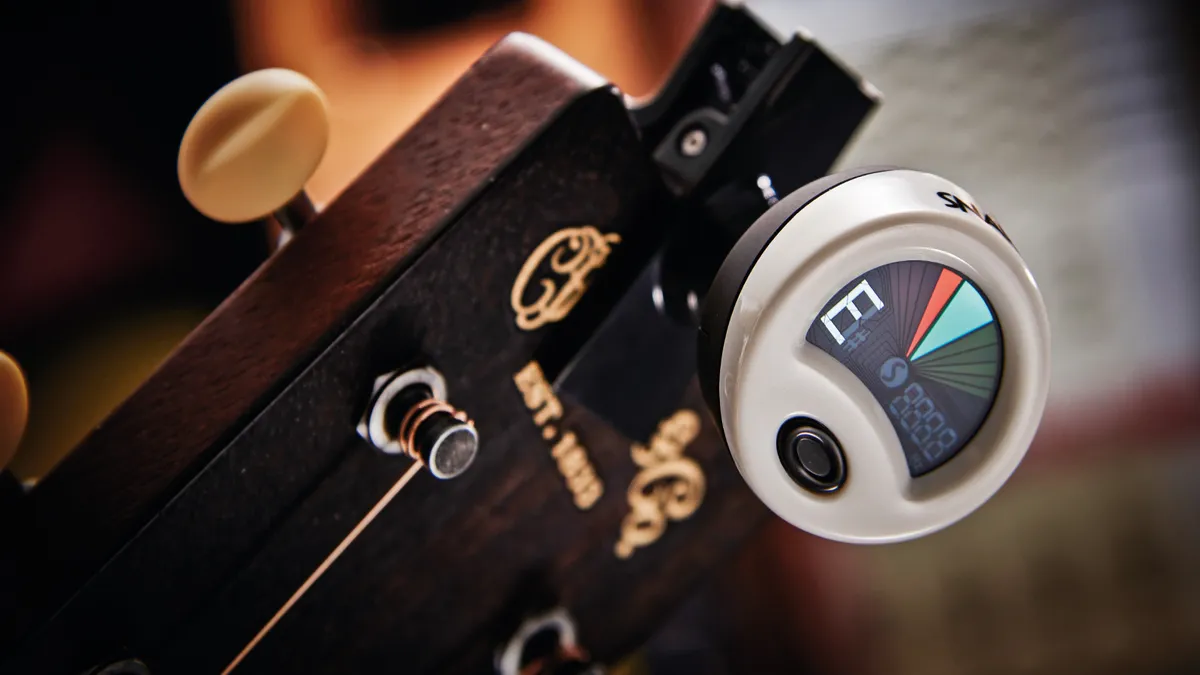
What do you need to start playing guitar?
No matter if you choose to go down the electric or acoustic route, there are a few basic accessories that are absolutely essential. The first of which is a clip-on tuner. This handy little gadget is used to help you tune your guitar effortlessly. It is perfect for beginners who haven't trained their ears yet - or indeed professionals who need a quick and convenient way to tune.
Next is a sturdy guitar stand. This will ensure your new guitar is safe and won't get knocked over and damaged. It's worth noting that leaving the guitar leaning against the wall isn't good for the neck and will cause problems later down the line. It's also worth picking up a nice comfortable guitar strap, so they can get used to playing the guitar standing up.
Plectrums are a vital part of learning the guitar, so it's worth picking up an abundance of them. They will get lost in all sorts of places, but the spontaneous disappearance of plectrums seems to be an inevitable occurrence for most guitarists - no one actually knows where they go once they are dropped.
Lastly, you'll need to get a gig bag for your new guitar. This will help protect the instrument from the elements when going to and from guitar lessons or school. We recommend going for a soft gig bag over a hard case, as children can have issues carrying a heavy, cumbersome case, and as a result, they tend to knock it off every door frame they walk through or even drop it, causing more damage to the guitar inside. A gig bag has rucksack straps, so they can wear the guitar like a backpack, making things a little easier.

Does my child need guitar lessons?
Honestly, there’s no substitute for one to one lessons with a trained professional. It's hard to deny the sheer amount of resources available online these days, but there is something so helpful about seeing something played in front of you at your own pace. That being said, online guitar lessons aren’t all that bad.
From the chords to every song ever written, in-depth tablature, online lessons, and even an abundance of YouTube guitar teachers, we really are living in the golden age of information. The main downside of YouTube lessons is that nobody can tell your child when they’re doing something wrong and need to right a bad habit. Once you’re more self-aware of your playing and of your mistakes though, YouTube lessons are great.
At the very beginning, it's worth seeking advice from a qualified professional and learning the basics of how to hold your guitar, how to strum, and how to fret a note. Then once they have the basics down, they can look at the likes of YouTube and other online learning services to expand their knowledge.
In terms of the best online guitar lessons, our favourite has to be Fender Play. It's easy to use, caters for all age groups, and most importantly, it's fun! There are a few exclusive MusicRadar offers on lessons running at the moment. Take a look at our picks below.



How we test guitars for kids
When compiling a list of the best guitars for kids, it's important that we put ourselves in the shoes of a beginner guitarist, testing the instrument from their perspective.
We'll first look at the obvious areas of playability and build quality, making sure that not only is the guitar easy and enjoyable to play, but that it also offers parents good value for money. We are looking for a guitar that feels robust, sturdy and well put together, with reliable hardware and no sharp frets!
Now, as these guitars are designed for children, it's important that they don't feel bulky or cumbersome. So, with that in mind, we'll pay careful attention to the width of the body, the profile of the neck and the overall scale length of the guitar, to see if they are appropriate for the target audience.
Find out more about how we test music gear and services at MusicRadar.
Why trust us?

✔️More than 9,500 reviews on-site
✔️Over 17 years of product testing
✔️ 2.9 million monthly users globally
With more than 17 years of experience, MusicRadar is the premier music-making website in the world. Run by musicians for musicians, we offer expertly written gear round-ups and high-quality, authoritative reviews by an extensive team of highly experienced industry professionals.
We also interview world-renowned musicians and stars about their creative processes and the nuts and bolts of their gear and technique. This gives fans an insight into the actual craft of music-making that no other music website can.
But that's not all. We also provide excellent tuition, from bite-sized tips to advanced techniques and guidance from recognised musicians.
As well as delivering high quality written reviews and features, we also produce a wealth of video content on YouTube. MusicRadarTV is where you'll find all of our access-all-areas interviews, hot gear demos and exclusive video lessons.
Related buyer's guides
MusicRadar's got your back Our team of expert musicians and producers spends hours testing products to help you choose the best music-making gear for you. Find out more about how we test.
- Kick off your playing career with the best beginner guitar amps
- Get some spares with the best acoustic guitar strings...
- ... or the best electric guitar strings if you're plugging in
- Check out some more top choices with the best cheap acoustic guitars
- Enhance your new electric with the best cheap guitar pedals
