
PLUGIN WEEK 2026: Back in the early 80s, many of the mainstream companies that had ploughed their energies into analog drum machines were starting to feel the pinch of digital technology.
As we look back on that period, we can now appreciate the charm and character of those analog beat boxes - and the fact that they just don't sound like real drums has actually become a key part of their enduring appeal.
Emulating real drums with hardware doesn't seem to matter much anymore, because we now have solutions that can present the realism of live kits via software.
But back in the 80s, technology companies were still looking for ways to try and compact real kit sounds into one affordable box. Perhaps the newfangled world of digital technology held the answer…
This wave of digital drum machines incorporated (quite lo-fi) sampled sounds, and intended to bring a new dimension of similarity with real kits. It didn’t quite work out as they planned, but it did usher in what many now regard as a golden new era of quirky and distinctive electronic drum machines.
Here's a few key examples of these digital drum machine legends, and where you can find top-tier emulations in plugin form today…
1. Linn LM-1

Roger Linn released the iconic LM-1 Drum Computer in 1980, and the resulting effect that this machine had on popular music culture was like a tsunami that swept across all forms of production.
It was the first in a line of machines that became generically known as the LinnDrum (a name that was popularised by a successive model), and caused a seismic upheaval, in both the production of music and with how drum machines themselves were used.
Based around 12 drum voices, the crunchy 8-bit samples became legendary across all genres.
The solid kick drum, the phat snare, and hi-hats and cymbals that, actually, did sort of sound like the real McCoy, made the LM-1 a sought-after bit of kit.
There were stories of artists removing analog drum sounds from their records, to be immediately replaced by these new digital sounds.
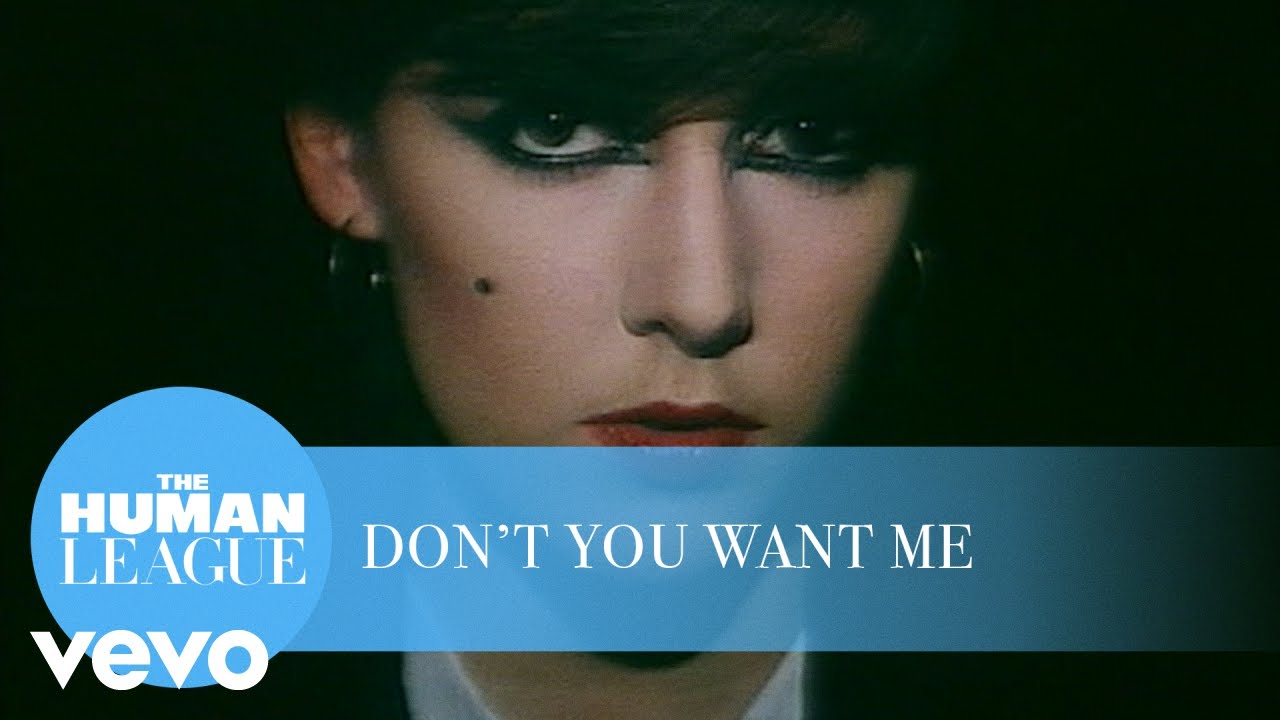
That’s what happened while The Human League were recording their breakthrough album Dare. They even secured the accolade of the first UK No.1 chart single to use a drum machine, with their hit Don't You Want Me
But the Human League weren't alone, with notable adopters spanning the likes of Gary Numan and ABC, through to Prince and Michael Jackson.
Thanks to artists like Daft Punk and The Weeknd popularising its distinctive signature across the last few decades, the 80s Linn sound is still very much in demand.
In trying to secure samples or Linn-shaped plugins, it's important to gravitate towards sounds which adopt the low sampling rate used on the original machine.
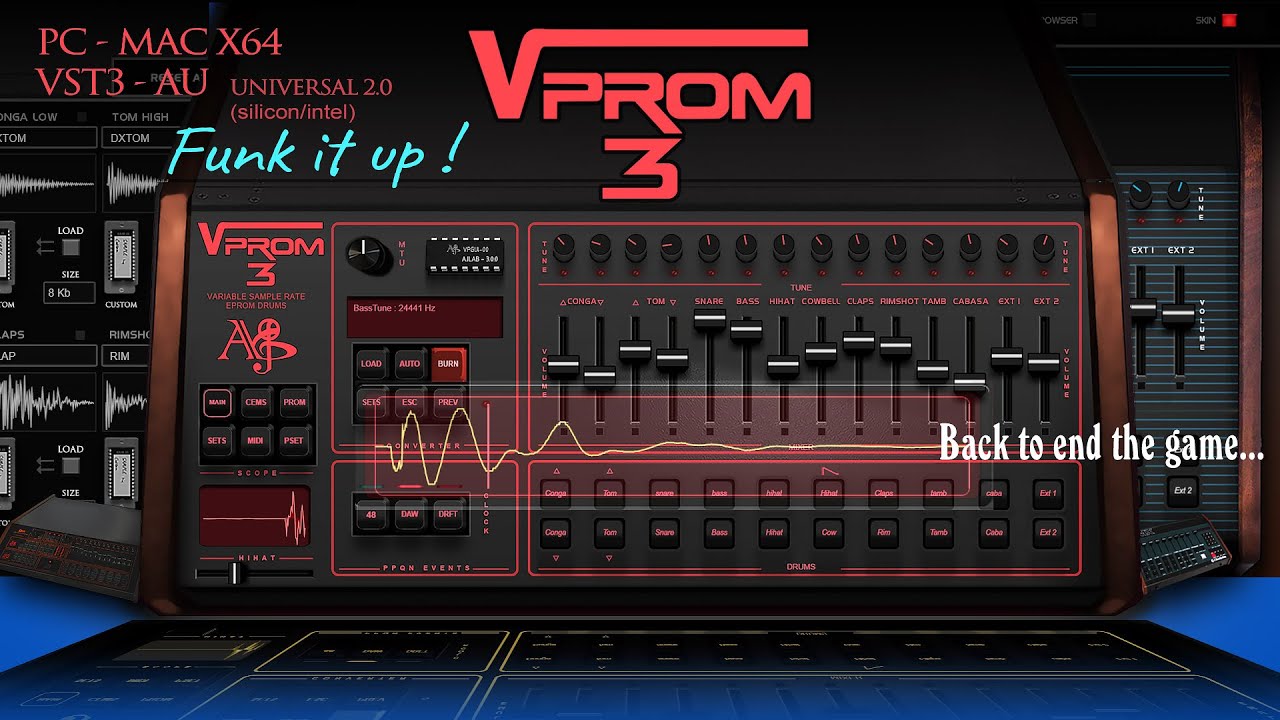
One of the longest standing options for a Linn plugin, comes from Aly James Lab. An authentically-designed recreation, VPROM is now at version 3 (€56). It also brings some very useful additions, such as the ability to compile your own sample sets.
Another option is GForce’s applauded IconDrum (£69), which offers an exceptionally authentic Linn look and feel, although it will only operate from within a DAW, as it does not employ an onboard sequencer.
What it lacks in sequential duties, it more than makes up for in sonic detail, including sounds from further Linn Drum revisions.

2. Roland TR-909 Rhythm Composer

Our next contender for the digital crown is a digital drum machine in sheep's clothing, because it's not entirely digital!
When Roland started to develop the replacement for the TR-808, the engineers realised that they needed to do something to improve the realism of many of the sounds. The answer was to digitally capture (i.e sample) the cymbal and hi-hat sounds, while keeping the rest of the drum machine in the analog domain.
The problem was, by the time it was released in 1983, the bewilderingly authentic Linn was everywhere, and the humble 909 was just not cutting the mustard for people in production circles. It was regrettably another commercial flop, heading straight to the bargain bins and secondhand ads.
Enter the jilted (house) generation, who hoovered up these second-hand units, and by the early 90s, the sound of the 909 was everywhere!
You could not move for acid house tunes that relentlessly employed the iconic hi-hat sound in the classic closed/open pattern.
Used prices for hardware 909 units have calmed these days, with the 808 occupying the priciest used-unit top-spot position.
The first and most obvious place to look for a 909 plugin is Roland. The company reproduced the 909 in hardware form, as part of its Boutique range with the software following not far behind in plugin form.

By its own admission, tinkering has been done with the original make-up of the machine to make it more usable, yet sonically as people remember.
Even so, for a mere £133 ($153), you can have modelled sounds from the originators, complete with a host of additional production elements.
You can also locate samples from many suppliers, including the ubiquitous Samples from Mars and Splice.
We've also got a few free processed samples as part of this exquisite collection we compiled not so long ago. Click the button below to find out more
3. Oberheim DMX

The extraordinary success of the Linn LM-1 set an incredible benchmark, which many other companies were keen to capitalise upon.
Where Roland shifted to sampling its cymbals, Oberheim took a similar approach to Linn, producing the DMX later in 1980, making it the second fully programmable drum machine to employ samples.
The Oberheim DMX differed in a number of ways; firstly, it featured 24 individual drum sounds which were derived from 11 different samples.
These could be deployed up to a maximum of 8-voices at one time, polyphonically speaking. It also offered tuning for each drum voice and provided humanising features such as rolls and flams, along with variation of timing, which was designed to make it sound more like a real player.
Much like the LM-1, the DMX had its fans, particularly hip hop artists such as Run DMC, but perhaps its most famous usage is represented by its soloistic placement in New Order's Blue Monday.
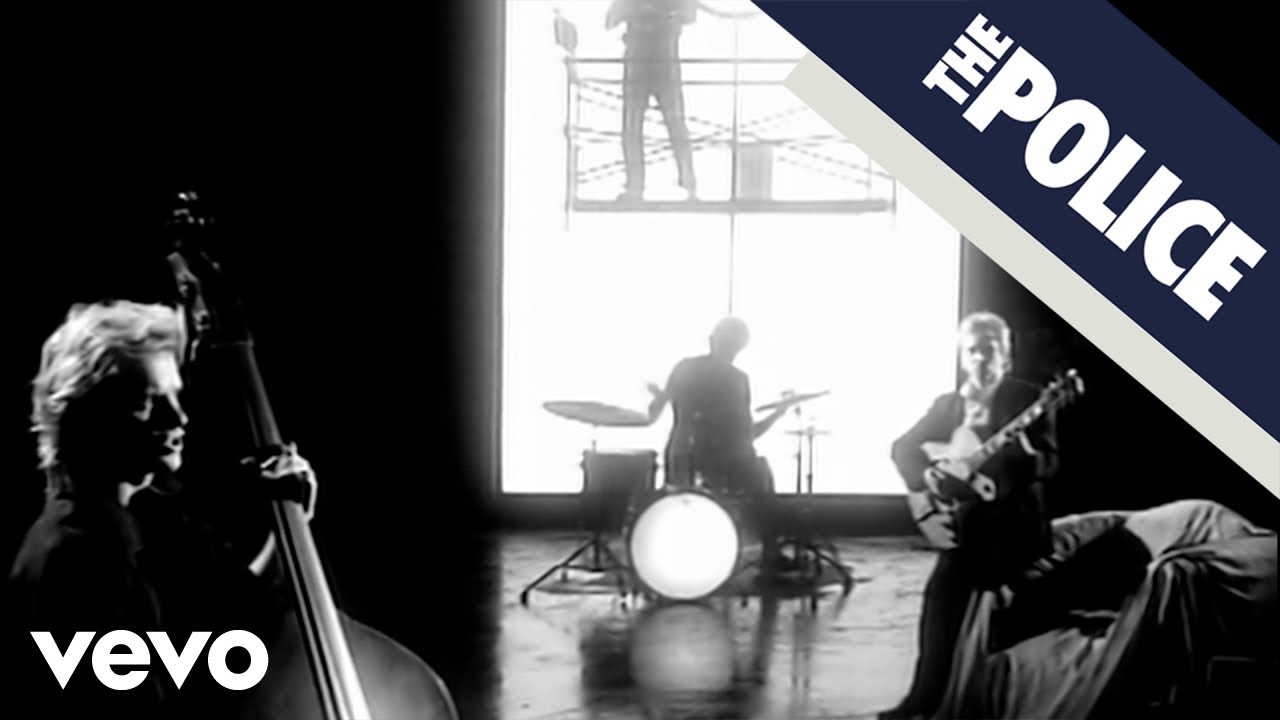
The thundering kick was particularly popular, so much so, the kick drum alone was used as part of the drum track for Every Breath You Take by the Police. Nothing else - just the kick!
The most notable software reproduction in our view comes from GForce Software, which has painstakingly reproduced the DMX in plugin form, with the full endorsement of Oberheim Electronics.
Not only does it include all the classic sounds, but it embraces the updated sounds, which were introduced in 1983. As the original hardware adopted a system of swappable EPROMS, for altering sound sets on the original machine, GForce has also included many of these iconic variations, such as the Sequential Drumtraks.
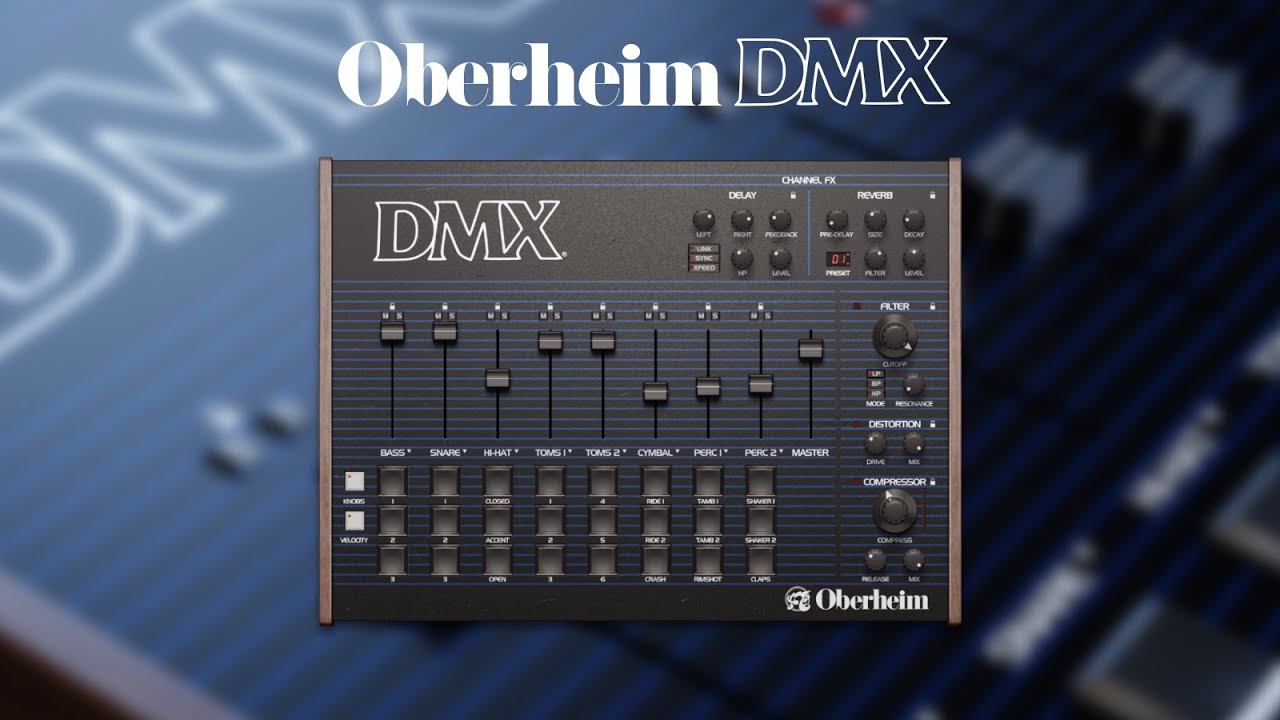
It's a very complete solution, but one that requires a DAW due to the lack of internal sequencer.
4. Honorary mentions
We cannot delve into the world of digital drum machines emanating from vintage culture, and not mention one of the most groundbreaking and indispensable machines from the era.
In 1988, the Akai MPC60 offered the iconic sound of 12-bit sampling for both individual drum hits and loops, making it an entirely flexible device for any user to record their own samples.

Developed in collaboration with Roger Linn, the MPC was way ahead of its time, but was embraced wholeheartedly by many producers, particularly those working in styles of music that were dependent upon breakbeats.
It set the precedent for many of the similar technologies which we take for granted today that operate in a very similar way, by controlling software on computer via hardware.
Even though the current music tech market is brimming with drum and sample software, it's extraordinary how popular these original sounds remain.
Whether it be the heavy transient clicks of the kick, or the fatness of the snare, coupled with the bright and cutting hi-hat, these retro drum sounds are firmly still in vogue and sound just as fantastic as they did 40 years ago - but with all the advantages and cost-effectiveness of software.
