Anna Lapwood’s life could easily have turned out differently. After studying piano, harp, viola, and violin at the Junior Royal Academy of Music, in 2012 she became the first woman in the 500-year history of Magdalen College, Oxford, to be awarded an organ scholarship.
Aged just 21, she then made more history by becoming the youngest ever Director of Music at either Oxford or Cambridge, taking up the post at Pembroke College, Cambridge.
Her path appeared to be set, but after becoming a breakout social media star and making headlines for her organ cameos during Royal Albert Hall shows by Bonobo and Raye, she stepped down from her Cambridge role in 2025, and is now pursuing a career as a concert organist.
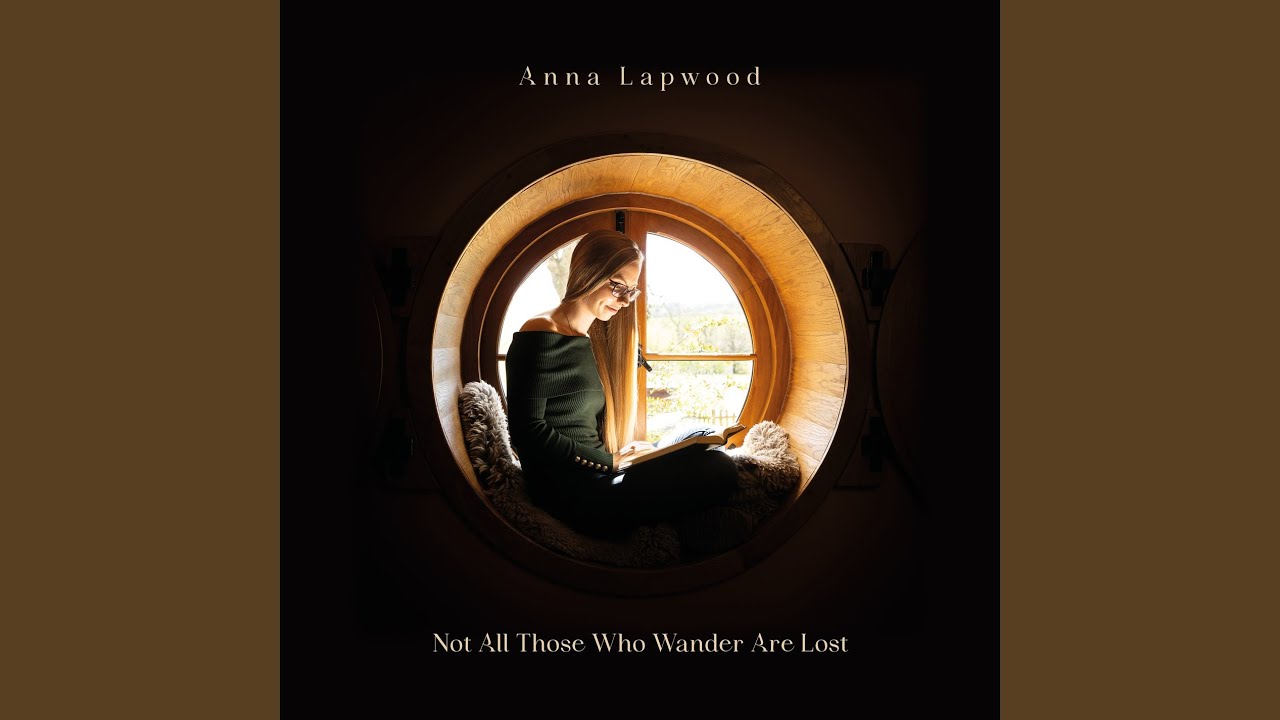
Lapwood is also on a seemingly never-ending quest to expand her musical horizons: her latest journey is to Middle Earth, as she releases a new album – Not All Those Who Wander Are Lost – that reimagines Howard Shore’s iconic Lord of the Rings film soundtracks for the organ.
Next year, she’ll embark on a UK arena tour, playing the organ in the kinds of venues that are more commonly filled by established rock and pop stars.
To paraphrase JRR Tolkien, it’s clear that Lapwood has decided to do rather a lot with the time that’s been given to her – we caught up with her over Zoom to discuss the new album, organ playing, and those high-profile collaborations…
Congratulations on the album – could you tell us why you chose to tackle film soundtracks, the Lord of the Rings pieces in particular? Do you think there's something about them that lend themselves to being played on the organ?
“Those are my deepest loves. I grew up with those stories, with those films, with that music. I grew up playing it in school orchestras. My favourite thing when I was growing up was figuring out how to play my favourite soundtracks on the piano.
“With the Lord of the Rings, I loved those stories for such a long time. And a couple of years back, I was in New York, and this little girl came up to me in a coffee shop. She was coming to my concert the next day, and I said, ‘Do you have a favourite piece that I could play for you?’ because it was her birthday, and she said Concerning Hobbits from Lord of the Rings. And that was the catalyst. That made me go, ‘Oh, hang on a minute! I haven't done Lord of the Rings yet,’ and I will say I did not realise at that moment how huge this project was going to get and how colossal it was going to become. But it has been so cool. There are three films, and there's a lot of music there to choose from.”
And you spoke to Lord of the Rings composer Howard Shore as well, didn’t you?
“Yeah – firstly he didn't say I couldn't do it, which is always nice. Because you never want to assume that a composer is going to be happy with you taking a new approach. And he was amazing. We had a lovely chat about the soundtracks more generally, but then his team and him, they checked through everything I did. They sent me their notes.
“Then on the last day of recording, the night before the last day, I decided to write an extra movement [based on the soundtrack]. And with the rest of it, I did it all by ear – I listened over and over again and wrote it – but with that, I didn't have time to do that. So I said, ‘Is there any chance you could send me the full score of this movement so I can work out how to transcribe it overnight?’ And they did, and they were so fantastic all the way through.
“I think for me, it's been such a moving experience delving into those scores in depth and seeing how much time and effort and brain went into them. And development – that's the big thing for me. This, like, Wagnerian leitmotific development.
“I think there are different levels of that: there's the kind of basic level – when you see a certain character, you hear a musical theme – but what Howard does, and this is the full Wagnerian idea, is give places, people, and emotions their musical themes, and then those themes develop in direct parallel with the plot. So the Fellowship theme, whenever a member of the Fellowship is missing, you hear it differently, with a different voicing, with parts missing. And so when Gandalf falls, and then when Boromir dies, we never hear the Fellowship theme in the same way again because one member of the Fellowship is always missing.
“It's things like that which I think you absorb on a subconscious level, even if you don't realise it's happening. But when you start to look at it consciously, it is mind blowing. And no one should ever watch Lord of the Rings with me now because I literally sit there going, ‘And here, the leitmotific development is doing this.’”
How did you go about pulling apart the orchestral scores and working out which bits you were going to play on the organ?
“Well, this is why I decided to do it by ear instead of with the scores, because I wanted to fixate on what you actually experience as a listener. So I would listen over and over and over and over again, and write down different layers. I would write down what my ear was drawn to initially, and then think, ‘OK, now what do I miss if I just played that?’ Which bit of the texture is missing? Which bit of the harmony is missing?’
“One of my favourite examples from the process was when there was this one bit where there was a gong roll and there was a harmonic of the gong, I think it was an E, but there was no E in the chord. And so when I sent my version to Howard and his team to check, they came back and said, ‘Oh, there's actually no E in this chord,’ and I listened over and over again to that one chord, and I was like, ‘There is an E, so where is it coming from?’ And it was the gong. And so I said to them, ‘Do you mind if I keep the E? Because otherwise, this chord has a completely different character because we don't have the gong?’ And they said yes.
“And so little things like that I would have never noticed had I gone from the full score, because I would not have notated a gong roll because I can't. I'm not a gong, but it’s that cool thing of, we experience things differently with our ears.”

The Lord of the Rings inspired quite a lot of prog rock back in the ‘70s, and a lot of those prog keyboard players, like Rick Wakeman and Keith Emerson, used the Hammond organ. So it feels like there's a bit of symmetry to actually rearranging the film scores specifically for the pipe organ…
“Yeah, but also, I constantly come back to this idea that musical boundaries and genre boundaries are so much less fixed than we think they are. I think the current young generation don't really see genre boundaries because I think they listen in the same way that they scroll on TikTok – they listen to the music that sparks their fancy, whatever the genre.
“And actually, I had a really lovely thing today. I'm in Canterbury rehearsing for a concert, and I was rehearsing in the cathedral this morning, and there were these quite big muscly policeman guys doing bodyguard training, all the tattoos and everything. And one of them was like, ‘Oh my gosh, I love your music! I love Barber’s Adagio for Strings.’ And it kind of blew my mind because, based on appearances, and I shouldn't judge at all, but my brain went, ‘I'm really surprised that he likes Barber’s Adagio.’ But these boundaries do not exist. We create them in our own heads.”
Do you think the pipe organ has been held back from being used in more popular music because of its association with the church?
“I think maybe part of the barrier is that, because a lot of organs are in churches, it's not something that people in the rock world and pop world are necessarily going to stumble across when they're doing their creative thing. If they're mostly doing concerts in arenas, concert halls and whatever that don't necessarily have organs – they don't stumble across it and think, ‘Hmm, I'll include that.’ And I think unless they happen to have had organ in their life growing up, they might not even think of it as something that you can integrate.
“I guess that's a lot of what I've been trying to do with the Royal Albert Hall – take the opportunity where you do have these iconic people coming in and playing in this space that does have an incredible organ, and trying to make it something that they stumble across through that or through social media, so that they realise how cool it is musically to have that different texture.
“The way I think about it is, if there's a massive amplified gig at the Albert Hall, the music is in 3D. And then when the organ comes in, it's like it's in 4D, because suddenly the whole room is resonating with the music as opposed to just the speaker system, and people lose their minds. And it's so cool, and it makes me so happy every time.”
How do you go from playing the piano to playing the organ?
“Patience. I found it so hard. Because I was a harpist before, I was used to using my feet in an active way. With the harp, you've got the pedals, and so you've got to have your brain in your feet at the same time as in your hands, so I should have had an advantage. But even with that, I found it so difficult because what you have to do, which is the challenge, is you have to sever the link between your left hand being the bottom; your left hand becomes the middle, and your feet become the bottom, and that's the hard rewiring that needs to happen, because the left hand has such a fixed identity as the bass, and that has to shift.
“So for me, it was a lot of patience, and eventually one day it just clicks, and it's a bit like riding a bike. I think you just have to keep working at it until it works.”
And if you sit down at a new organ, is it like getting into a different car, or do you feel immediately at home?
“It takes time. If you’re playing lots of organs by the same builder, they have similarities, but I do a lot of playing in Germany, and the pedal board layout in Germany is completely different to the English one. In England, the pedals, instead of just being straight on, they’re [in a layout] called radiating concave [the pedals are curved vertically like a ‘dish’]. So it means the pedals at the outer end are closer in, basically, so that you can reach them, whereas in Germany a lot of the pedal boards are completely flat and completely straight.
“So if I have just done a run of concerts in England and then I go to Germany, my muscle memory for the low notes and the high notes is a third out, basically. It's that extreme. I will go and try and play a C and I play an E, so you can't trust your muscle memory.
“And whereas, if you're going between different pianos, middle C is kind of going to be in the same place, middle C can move on organs. The sounds that they make are totally different. Some have different numbers of keys at the top, different numbers of keyboards, so many different variables.
“And so, for any concert, I need about 18 hours minimum to set my programme into the organ and then to retrain my muscle memory for that specific instrument.”

You've said in the past that playing with Bonobo at the Royal Albert Hall in 2022 was a big moment for you because it changed the way you thought about music. What did you mean by that?
“I grew up in a classical bubble, basically. I grew up only really listening to classical music and film music, and I didn't really ever explore much outside of that. And I think what was amazing about that Bonobo gig is I'd never really thought I liked electronic music. I thought it wasn't my thing, and then I remember vividly sitting there waiting to play, and the track before was the one with the disco ball and all the strings, and I just burst into tears while I was listening to it, and was like, ‘Oh my gosh, this music is so beautiful and so powerful and so moving, and I don't know it, but I love it,’ and I just felt my musical world kind of… it was like the goggles came off in that moment, and I went, ‘Oh my gosh! I feel like my whole musical world has been a lie!’ Or not a lie, but I feel I've been stuck in one room, and actually I've got a whole house to explore.
“I have talked a lot about kind of seeing my musical life as before that gig and after that gig because of the way it took those blinkers off, and has led me to explore so many different genres, and that's something I'm still still exploring and still learning the whole time.”
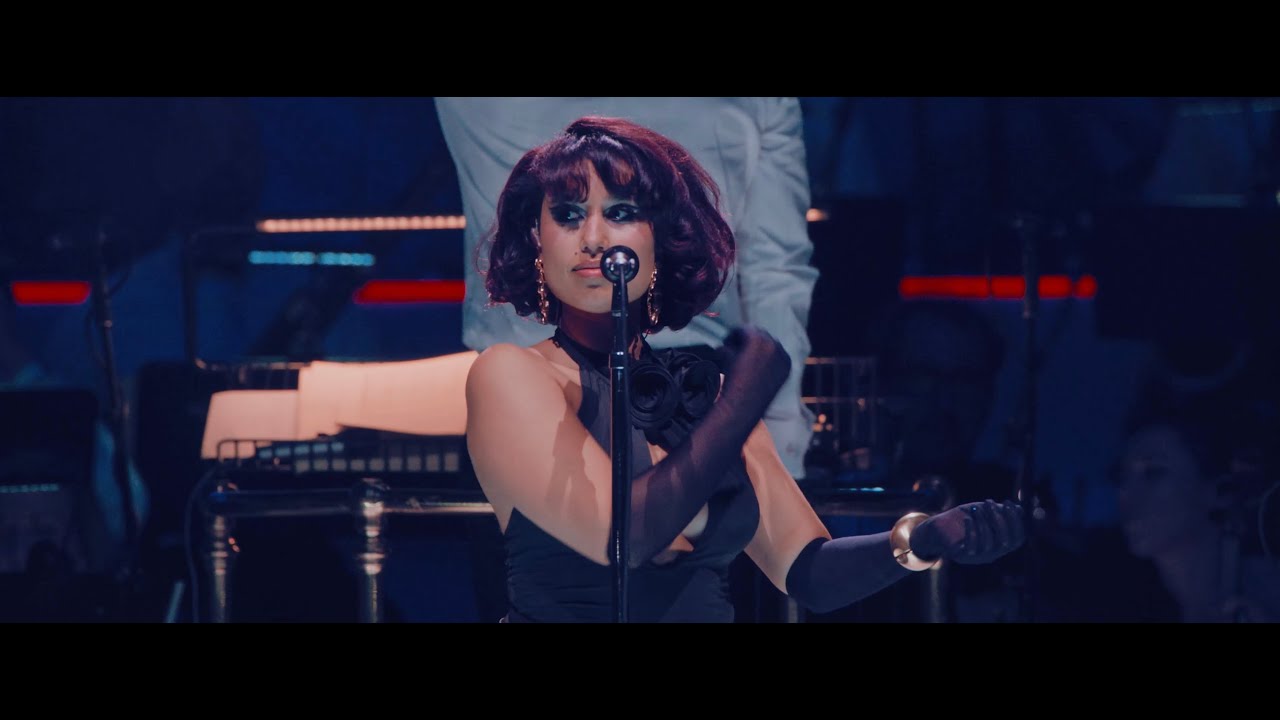
Is that how the 2023 collaboration with Raye came about? [Lapwood recently performed with Raye again at the Royal Albert Hall]
“Bonobo was the catalyst for a number of other collaborations with different artists, and I'm trying to remember where Raye fell in that. But that was such an amazing gig – I'd never heard of her at that time. I didn't know her music at all, and now I'm utterly obsessed with her. And her new album is my favourite thing in the entire world.
“And yeah, I just remember thinking, ‘God, everyone knows the words. This is mad. Everyone’s rapping along and singing along with these really wordy choruses and things.’ That was a very cool gig. She's an amazing artist.
“Her new album is extraordinary, and I think, like, what an inspiration in terms of following the music that she feels is most authentic to her. She's not let herself be restricted by genre, and I find that really really inspirational. But also musically, it is just so clever and so advanced and so mad and also it has such a deep emotional heart. And when it first came out, I listened to it something like 16 times in the first week, cover to cover. And I've never done that with an album, ever.”
Obviously you're big on social media as well, and you've used the organ in different contexts. So have you encountered any pushback from the traditional musical world you've come from?
“I've got quite used to the fact that not everyone is going to like what I do, and that I have to be OK with that. A lot of people have seen the choices I've made as being the wrong choices, or going down the wrong path, or selling out, or whatever. All of this stuff, whether that's the music I play, or the social media, or even leaving my job in Cambridge, I got pushback for that as well. And I think, ultimately, the thing I've learned is that I'm the one who's doing it. I'm the one who is living this life. So it has to be the thing that makes me feel the most fulfilled and the most happy and the most myself while I'm on stage. And certainly with the music that I play, if I'm the one practising for eight hours every day, I'm going to make sure it's music I really want to be playing.”
We were going to quickly ask you about the arena tour. Are you going to have a full pipe organ in there!?
“No – moving a pipe organ around is, basically, I would say an impossible task. So I have a digital touring organ, and the thing that I find really cool about this is that it doesn't just play one organ. I can choose organs from all over the world. I can be like, ‘Right, these pieces I'm going to play on the organ of Salisbury Cathedral. These pieces I'm going to play on the organ of Rotterdam,’ and it means that I can show people in real time in one concert how varied organs can be and how they have totally different characters. Every organ has a different character, and you can illustrate that in real time in a very exciting way.
“The touring organ, she's very small and sweet and she's called Georgie, but her sound is huge. And when you pump her through an arena sound system it’s quite something.”

And can you change the sound as you go or does everything have to be decided and set before you play?
“You have to decide it completely in advance because, for my main solo touring programme, it's something like 420 presets. And to cycle between them, you basically have to shoot your foot out and hit a button in a microsecond. In order for that to work, and in order for it to sound right, you've got to have everything in the right place.
“There are so many variables for every single sound of a concert, and there are 400 and something of them, and so it has to be pre-set. You don't really have flexibility – you can't change it as you go. If you're on a piano and you decide you want to play louder, you just play louder; on the organ, it doesn't quite work like that.
“It means you can't be quite as spontaneous, but often with encores, I will set a whole load of different pieces and then let the audience choose which one I play and stuff like that. So I try and find ways to bring spontaneity in different ways.”
Are you planning big staging and lighting as well?
“I love working with lighting designers, and with Lord of the Rings in particular, I've done a whole lighting design which is based on the leitmotifs – so it brings a whole new meaning to the leitmotifs. Each motif has its own colour state, and then that develops as the plot develops and as the motifs develop.”
Finally, is there anyone else you'd like to work with, particularly from the pop world?
“Taylor Swift. I have said it so many times, and I'm just going to keep saying it until it happens. I would love to play for Taylor Swift. I think it needs organ, live. Doing recordings is fun, but I love the energy of when people aren't expecting to hear the organ, and when they hear it, they lose their minds. It's one of my favourite things.”
Anna’s new album Not All Those Who Wander Are Lost is released on 13 November on Sony Classical. Anna tours the UK in October next year.