
Birdland is the closest thing that fusion trailblazers Weather Report ever had to a hit single – and a landmark recording in modern jazz.
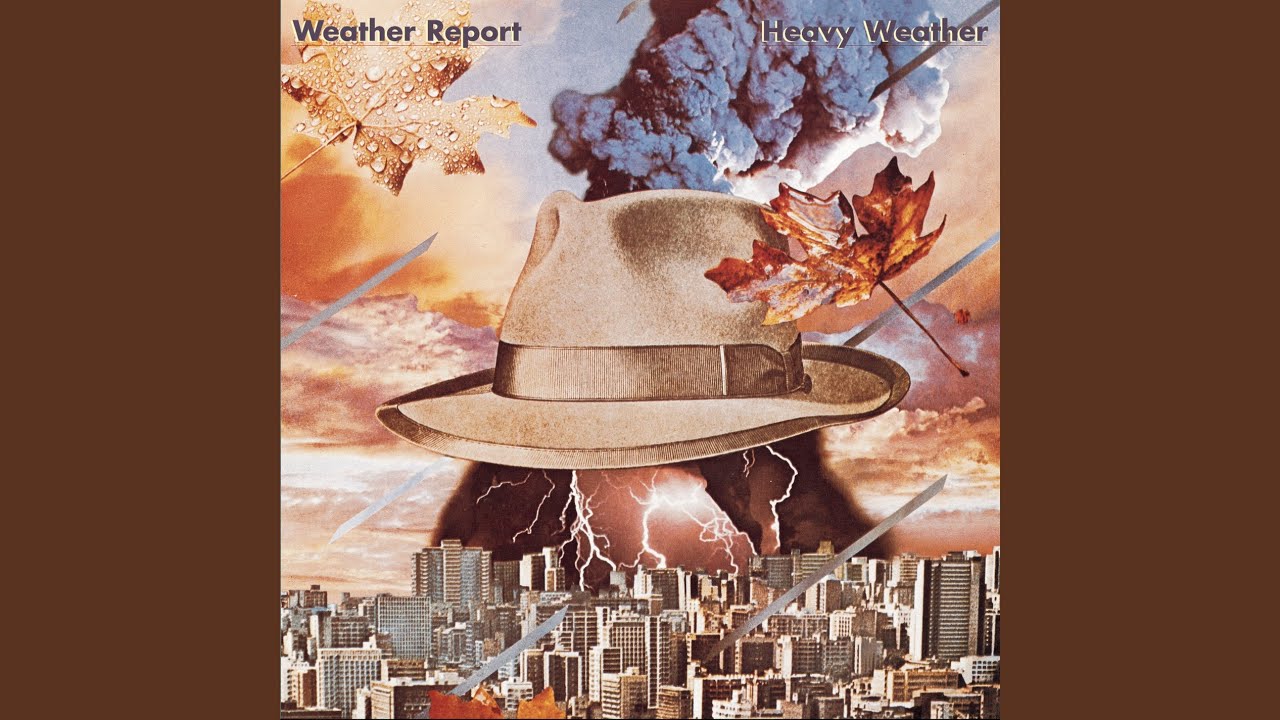
Written by the group’s founding keyboard player Joe Zawinul, the song would end up winning three Grammy awards after being covered by The Manhattan Transfer and Quincy Jones in the years following its original release in 1977 as the opening track for the seventh Weather Report album, Heavy Weather.
It featured Zawinul on piano and synths, Jaco Pastorius on fretless bass and mandocello, Wayne Shorter on saxophones, Manolo Badrena on tambourine and Alex Acuña on drums.
The song was written and named in tribute to the famous New York City jazz club Birdland which hosted many a jazz legend between the years of 1949 and 1965.
Zawinul’s connection to the music venue was certainly a strong one – it was a place he visited almost daily to witness life-changing performances by legends including Louis Armstrong, Duke Ellington and Miles Davis. It’s also where he met his wife Maxine.
“The old Birdland was the most important place in my life,” Zawinul said.
The title of the song also references bebop saxophone pioneer Charlie Parker, who was nicknamed ‘Bird’ or ‘Yardbird’ and influenced the name of the club.
The song starts with Zawinul playing a dramatic single-note melody on his ARP 2600 semi-modular analog subtractive synth, going from B to C to D and then repeating the same line with a G on the end.
After that, Pastorius joins in on his fretless bass, playing a G Major motif high up around the 12th and 14th frets on his two highest strings, almost mimicking the sound of a six-string electric.
He then plays the same exact line using artificial harmonics to go one octave higher.
In an interview with British radio in 1978, Pastorius explained more about how Birdland came to be.
“I read treble clef because of Joe Zawinul,” he admitted. “He writes all his shit in the treble clef and I gotta read it, you know? Like Birdland, for instance, the melody, man. He said, ‘Jaco, I want you to do this and hit the false harmonics’.”
He added: “I sight-read that all in treble clef. One take, man. Birdland was one take. One of the greatest tunes ever. We did it in one take. That’s it.”
Though it’s certainly a team effort that makes Birdland one of the most classic examples of ’70s jazz fusion, the interplay between Zawinul and Pastorius is truly stunning – particularly around the two minute mark, with Pastorius dropping low and Zawinul going high.
They once again swap registers around the three and a half minutes in, treating listeners to a musical conversation that feels effortlessly improvised and beautifully inspired.
In his May 1983 cover story with Guitar World, Pastorius was asked how he ended up becoming one of the most widely respected creative forces in his field. His answer started off somewhat tongue-in-cheek, before he provided more serious insight to his musical mindset.
“I am not an original musician; I am a thief,” he humbly admitted. “Like Igor Stravinsky said, man: ‘No good composers borrow – they steal!’
“You see, I rip off everything. I have no originals. Only animals and children can understand my music; I love women, children, music, I love everything that’s going in the right direction, everything that flows... I just love music. I don’t know what I’m doing!”
Pastorius also revealed how, with enough practise, he could sight-read anything he put his mind to. Staring at notes on a sheet of paper, however, wasn’t really his goal as a musician. To him, the bass was a vessel for soul-searching and creative freedom.
He stated: “I’d rather go in and just be Jaco. I improvise all the time. Hopefully, I think, I never play the same thing twice. I’m not a magician, I’m not a politician – I’m a musician. I have no goal. You don’t get better, you grow. I am a musician, and I finally realised it!”
Sadly, Pastorius died in 1987 at the age of 35 following an altercation outside a club in Florida.
His legacy and influence was felt across the bass and jazz world.
In 2014, Metallica bassist Robert Trujillo produced the documentary Jaco, celebrating his hero’s musical innovations and rare talent.
In an interview with MusicRadar around the film’s release, Trujillo described Birdland as “a classic in itself” and told us how “Jaco could adapt to any situation” because of how the late great was “centred around being creative” rather than “the ‘rules’ of who you’re supposed to play with”.
The Penguin Guide to Jazz Recordings hails Birdland as “one of only a handful of contemporary jazz tunes that everyone seems to have heard”.
It remains one of the greatest jazz songs of all time, and helped Heavy Weather become the band’s most commercially successful album as well as a bestseller in the Columbia jazz catalogue.
