


Oxygène is the album that launched and defined Jean-Michel Jarre, but also the record that, with his background and education, he was almost destined to make.
It was also (Popcorn by Hot Butter aside) the first piece of instrumental electronic music to make a serious dent on world charts (number 1 in France, #2 in the UK), eventually selling some 18 millions copies.
It not only made electronic music accessible but also paved the way for Jarre's extraordinary and diverse career, which has seen him release no less than 20 studio albums and famously perform record-breaking concerts in Houston, Paris, London and Moscow - the latter of which attracted his largest audience of over 3.5 million.
Jarre is now something of an electronic music elder then - the 10th dan of electronica if you like, or maybe the final boss of synth-Pokemon. He is a pioneering force of nature, a massive gear nerd, and charismatic performer who, as well as holding several Guinness World Records, has now shifted an incredible 80 million records.
He even became the first passenger in an electric car in 2024. What a guy…

But back in 1976, an incredible 50 years ago, Jarre was just a jobbing musician, producer, and sometime composer, with the six tracks that made up Oxygène still ahead of him.
However, everything was in place (including a collection of oddball electronic musical instruments in his kitchen) for the French composer to meet his destiny…
Jarre was born in 1948, and his father, Maurice, was an award-winning film composer, who won three Academy Awards for Lawrence of Arabia, Doctor Zhivago, and A Passage to India to name just a few.
He was not the obvious influence, however, as his father split from Jean-Michel's mother, Francette, when he was just five, leaving Jarre to be raised by her and his grandparents.
Instead, Jarre's guiding influence came by way of Pierre Schaeffer. Very much the Obi-Wan Kenobi of this story, he was the man who coined the term 'Musique concrète' when using processed and found sounds in electronic music composition, a contemporary style of music that, in its own twisty-turny way, became the precursor to sampling.
Jarre met Schaeffer after studying at the Paris Conservatoire in the early '60s, and was seeking to expand his musical horizons.
"I felt that the world of classical music, the world of rock and other forms of music were a bit narrow and living in their own [worlds]," he told Electronics & Music Maker in 1982. "I had the feeling it was the right time to explore other fields to perhaps see if a combination of different styles were possible."

Jean-Michel therefore joined the Music Research Centre in Paris, an organisation created by both Schaefer and Pierre Henry, another concrète mixer.
“When I first went there, I was immediately seduced by what they were doing,” Jarre told Louder in 2024. “Electronic music owes a lot to public radio stations - the BBC Radiophonic Workshop, the German lab where Stockhausen was working and, of course, the one in Paris.
"I stayed for three years with Pierre Schaeffer and I also went to Cologne to work with Stockhausen. He was totally crazy, but a real genius. He considered himself to be made of sound, biologically, so he had a kind of surrealistic approach. Crazy, but realistic at the same time. It was very interesting.”
It was at the MRC that Jarre also came across an instrument that would define his life - an early synthesizer.
"Obviously, it was not called that," he told E&MM, "it was just a 'wooden' synthesizer with a bank of oscillators that could be synchronised. There were also tape recorders for building up a montage."
Technology aside, it would be Schaeffer who left the biggest impression on Jarre: "He was one of the most brilliant guys of the century in terms of what he brought to the music world. He created the notion of Musique concrète and influenced me a lot in this direction."
Eventually Jean-Michel left the Music Research Centre, stating, "I felt that contemporary music had got a very elitist attitude - a bit too intellectual vis-à-vis the music and it created barriers between the audience and yourself. I wanted to be much more open to the audience."

Jarre became a freelance composer and performer, earning a living by making soundtracks for film and TV, incidental music for plays and ballet in the theatre, jingles for commercials and making songs and producing for some French rock singers.
By this time he'd also bought his own synthesizer, as he told Louder in 2024: "I started with a British-made VCS3 from EMS [Electronic Music Studios, based in London], created by a genius called Peter Zinovieff. It was a kind of poor European version of the Moog.
"In those days Europe was not as rich as the States, so the sound was drier. In a sense, it was a kind of punk synthesizer - there was something very harsh and rough about it. I loved it; I still take one on stage with me today."
In 1968 he released his first composition, an 8-minute track called La Cage (The Cage). "It was for a dance performance in Paris," he told International Musician in 1985 and was done using very primitive equipment - just the VCS3 synthesizer and a couple of tape recorders.
"I also had a sort of oscillator bank which could produce different pitches, and by switching the oscillators in at different times I could produce a very simple sequence of notes, but because I didn't have access to a multitrack tape machine I had to play and mix everything down virtually live.
"There were only a few hundred copies pressed [of The Cage] and I don't have one now, so if anyone out there has a spare copy!"
By 1976, Jarre's studio had expanded, as he explained to The Guardian in 2018, "I had done production work for some rock artists, earning enough to set up a studio in my kitchen. I didn’t have much equipment, though, just a few guitar pedals and my first synthesizer, the VCS3, which looked like a telephone exchange. I realised that using a Revox tape machine to delay the sound that came out of one loudspeaker created a huge sense of space."
Jarre produced his most famous work under these pretty constrained conditions. His Mellotron only had a few working keys, and his only drum machine was a ‘primitive’ Korg Mini Pops, which he also described as, “The sort of thing people played in pubs, but by using Sellotape I could make it play two preset rhythms at the same time, creating cool beats. Oxygene Part IV, which became iconic, was a mixture of [presets] Slow Rock and Rock, while Part VI combined Rumba and Bossa Nova."
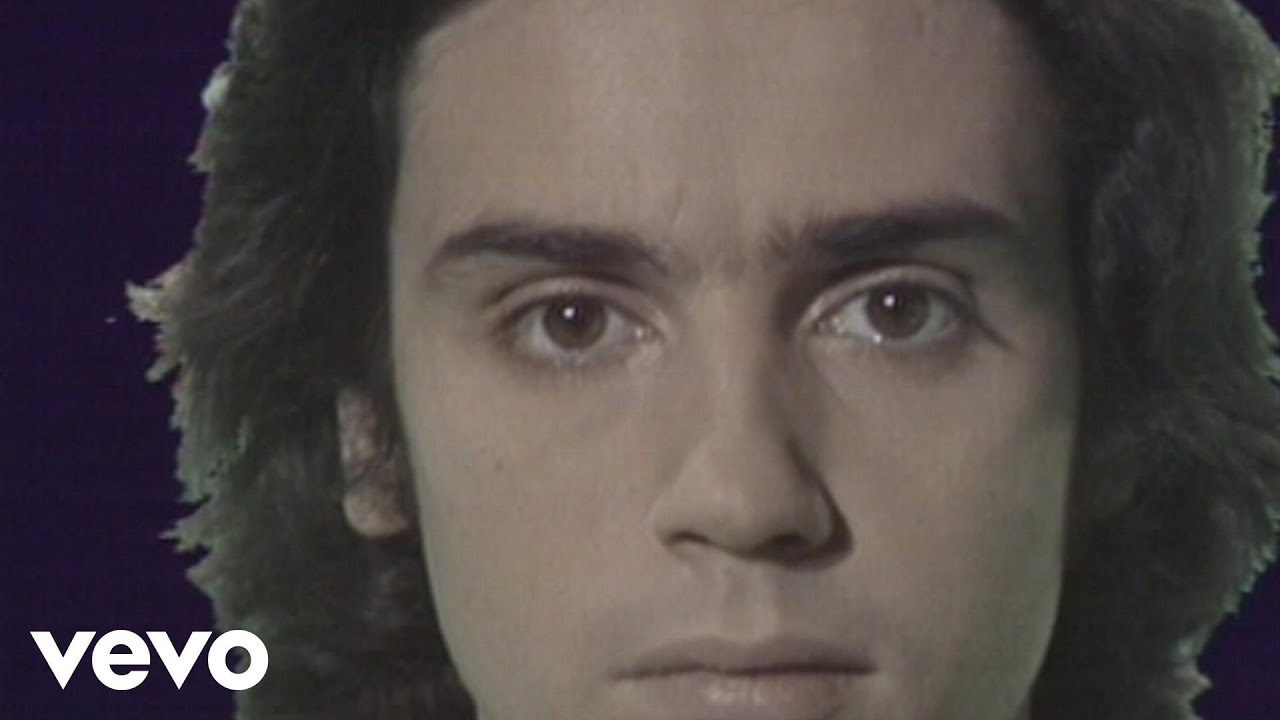
"I was obsessed with this idea of creating a bridge between experimentation and pop melody," Jarre told Louder of the recording process. "I liked this kind of challenge, playing around with sound design and integrating melodies."
The album was recorded on a Scully recorder with just eight tracks, and all through a home-made mixer. On top of the VCS3, Jarre had managed to add some other classic equipment including EMS Synthi AKS and ARP 2600 synths, an Eminent String Ensemble, an RMI Harmonic Synthesizer, and Farfisa organ, while an RMI Keyboard Computer was used for some sequencing.
Jarre told E&MM that, "Oxygène was a new start for music with analogue synthesizers", and it was certainly a very different recording for the time, with both pure electronic pop in the form of Oxygène (Part IV), and more atmospheric and introspective work across the other five tracks.
However, it was also a new sound that didn't attract much interest at first. As Jarre explained to the E&MM again in 1985, “Because Oxygene consisted of entirely instrumental music, none of the record companies thought it would work. The only people who took the risk were a small French company called Dreyfus Music.

"Even after it had become a hit in France, people said it couldn't possibly be a success anywhere else. Then eventually, after it got to the top of the charts in Britain and all over Europe, the critics explained that it was successful because of its originality and because of its use of melody. It's easy to be wise after the event!"
It was extended radio play in the UK that really brought the album the success it deserved, although some clever marketing by Dreyfus meant that the record got some momentum by being used as a reference record in hi-fi shops to sell gear.
"It’s now sold something like 15m copies [18 million now, Ed] and, no matter what I do, I am defined by Oxygène," Jarre told The Guardian. "But that’s OK. It’s funny. At first, the album was played in hi-fi shops as an example of 'state-of-the-art sound'. I didn’t tell them I made it in my kitchen."
“When you’ve been lucky enough to have some kind of success with your first project, it will always be part of your DNA, no matter what you do afterwards,” he told Louder. “It’s like the first movie for Tarantino or Kubrick. For me, it’s the same with Oxygène. I love many other things that I’ve done and I’m very proud of them all, but Oxygène is something unique.”
Jarre followed up Oxygène with the equally-brilliant Equinoxe and Magnetic Fields albums, and also created two direct Oxygène successors with 1997's Oxygène 7–13 and Oxygène 3 in 2016.
He'll hate us for saying it, though, the original Oxygène is still the best.
