


Introduction
When it comes to résumés, Steve Stevens has one hell of an entry under ‘guitarist for hire’.
He’s been Billy Idol’s right-hand man for 36 years, but also managed to build a name for himself well beyond that of your average rockstar - dabbling in worlds as far and wide as flamenco, folk and British electronica. Oh, and then there’s also that Dirty Diana solo he did for some bloke called Michael Jackson.
This April, the guitarist will be heading to UK shores to play music from across his career - giving fans the chance to see him play the legendary, Grammy-winning Top Gun Anthem with their own eyes…
“I’ve started to put the setlist together,” grins Steve.
“Not only do fans get to hear all the stuff from my career, but there’s a lot of stuff they’d never get to see - like Top Gun Anthem or Dirty Diana. I hope to celebrate not only my career, but those of the artists I’ve been fortunate enough to work with. People that really helped shape me as a musician… it’s going to be a real celebration!”
Striking the right tone

That’s not the only thing the guitarist is excited about. This year also sees the release of his new Rockaway Archer pedal, designed and manufactured by boutique American brand J Rockett Audio. It’s a high-end overdrive that gives users to shape their EQ after the gain stage, allowing the flexibility to compensate or dial in whatever frequencies their hearts desire…
“I always found no matter what lead boost I was using, I’d need an EQ after it,” he explains.
“I ended up needing more space on my board, so I asked this company if they could do two in one - I really liked their Archer pedal, which is based on the Klon. They said it sounded interesting and they’d have a look at it.
I’ve always been drawn to people with great clean voices, as well as the gainy ones
“So this pedal has an EQ post gain stage, which is fantastic on its own, but we found if you turn it down, you can get a really transparent clean boost. It’s a great tool in the studio, say if you want to make a Les Paul sound like a Strat, you can create that EQ curve - the super-shimmery highs and whatnot. It’s a toolbox that can do so many different things beyond the usual extra drive for your leads.”
That emphasis on cleaner sounds as well as beast-mode shred is something that has been consistent with Stevens over a recording career fast approaching four decades. It’s a philosophy he feels many guitarists overlook…
“I’ve always been drawn to people with great clean voices, as well as the gainy ones,” he notes.
“I went to see The Police one time and was floored by Andy Summers’ guitar sound on songs like Walking On The Moon. Or I remember watching Robert Fripp early on when he was in King Crimson. To be honest, using different amps was quintessential in the '80s!”
Here, the guitar hero walks us through the 12 records that defined his illustrious career…
Steve Stevens plays his greatest hits at O2 Academy 2 Islington on 5 April 2017, with special guest Gus G.
Don't Miss
Steve Stevens: my top 5 tips for guitarists

1. Billy Idol - Rebel Yell (1983)
“This was the one that put me on the map! It was Billy Idol’s second solo album… the last track we recorded for the debut was White Wedding - which we did in the last few days and really set the blueprint for Rebel Yell. The quality of the tunes and production and guitar sounds had to take it to the next level - and Rebel Yell really did that for us.
“When you have a winner, you know it. A sixth sense kicks in… it felt like every idea we flew at the record stuck and worked. It was not difficult to do at all. That has stayed with me to this day: if you’re trying really hard and labouring but it’s not working, there may be reasons you haven’t realised.
“The title track employs a lot of things stylistically. I started playing guitar when I was seven and didn’t get an electric until I was 13. In that time, I was playing a lot of folk and fingerstyle. The intro part got put on as the last element of the song - Billy decided we needed to let people know the cavalry is coming. I said, ‘Gimme an hour!’ and it seems to have worked.”

2. Top Gun Anthem (1986)
“The story behind this was that the keyboard player on the third Billy Idol record was Harold Faltermeyer, the composer for Top Gun. He pulled me aside and said he was working on a film, asking if I could lay down some tracks. I came down, everything was set up, they played this Wagnerian thing and then said I had 32 bars for the solo.
“I believe most of it was done first take. Nothing took more than two or three goes… and then I kinda forgot about it. The next day I’m back with Billy working. Some weeks go by and then I got a call saying we’d been nominated for a Grammy, which we eventually won! It goes to show you never can tell… expect the unexpected!”

3. Steve Stevens - Flamenco A Go-Go (2000)
“This was very much a therapy record for me. I’d finished a tour with Vince Neil, opening for Van Halen. It was the ultimate in excess lifestyle and excess guitar playing. I couldn’t have played any louder or faster or more competitively than being on the road with Eddie Van Halen.
“I took stock of many things in my life and went to see Paco de Lucía in a large venue. What felt great was that everyone could appreciate the virtuosity but you didn’t feel like holding up scorecards every time he played one of his fieriest bits.
“That’s when I made a conscious decision to stop playing guitar for a year and try to make a flamenco record, also learning how to sequence it all myself on Logic. It changed my approach to guitar, even on electric! It was a very important record for me to make.”

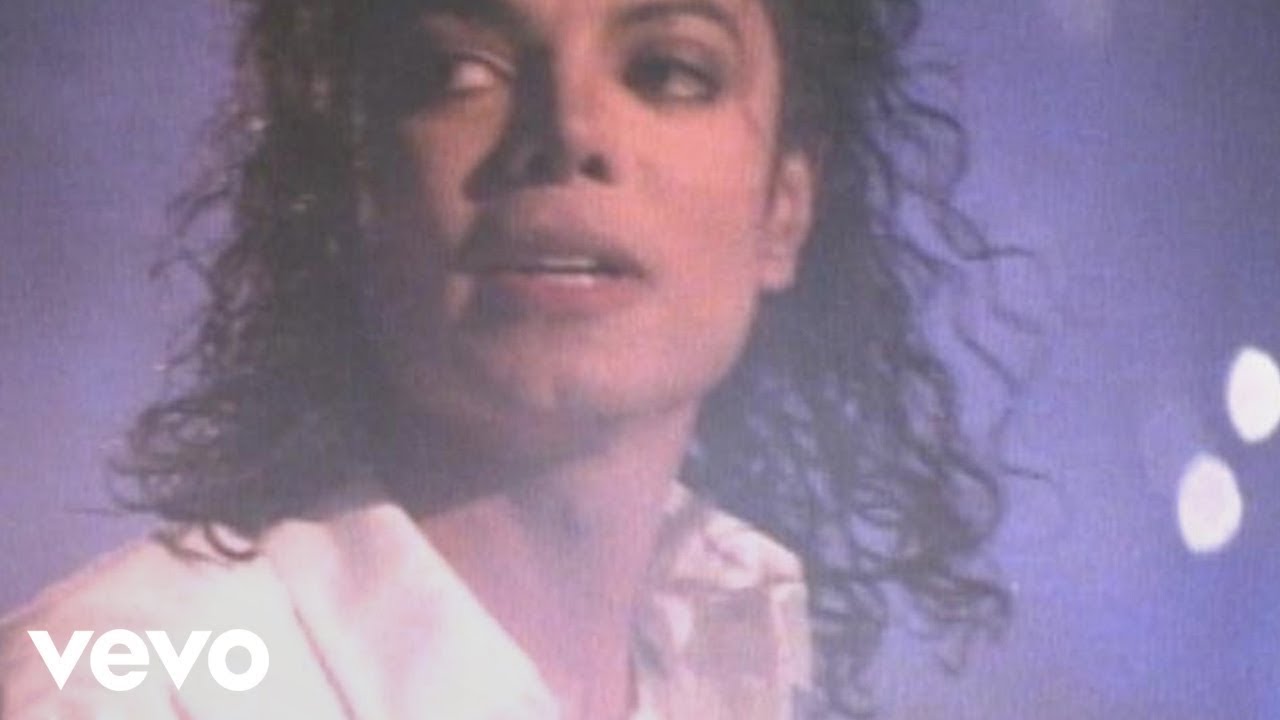
4. Michael Jackson - Dirty Diana (1988)
“Not only did this really raise my profile by playing on a Michael Jackson record, but I got to work with Quincy Jones, too. I think I was more of a fan of Quincy’s work - it was such an amazing thrill being in the studio. There was no big entourage, just the two of them and a recording engineer… what a wonderful opportunity.
“The pressure on Michael to follow up an album like Thriller was astounding. And for me, getting chosen as the rock guitar player to bring what Eddie Van Halen had done to Beat It - not saying that it was as good - was a huge honour!”

5. Vince Neil - Exposed (1993)
“I was given instructions to play as heavy and fast as I wanted to! Which is actually something I wasn’t used to - in the Billy Idol band, we tend to play more economically, keeping that punk-rock feel alive.
“Billy would always say 'Make the most out of the least amount of notes', and I totally understand that. This, however, was a whole different set of rules. It was nice to get heavy for a bit!”

6. Juno Reactor - Pistolero (2000)
“We did a track on their Shango album called Pistolero. The reason I wanted to work with Ben Watkins was because I’d become a big fan of electronic music like The Chemical Brothers and Massive Attack. I didn’t really know anything about this stuff, so getting the opportunity to come to England and mix up flamencos with electronics, the track came out great - it got licensed for a Robert Rodriguez movie...
“I love working with an artist that I can come away from with knowledge. That’s the thing for me… making records over the past 35 years, I’ve picked things that I will learn from. Staying in just one lane can get pretty boring after a few years, so doing something like this was gold for me as a player.”

7. The Thompson Twins - Here's To Future Days (1985)
“They were friends of mine that were totally from outside the rock world. They were a pop band, but somehow as a musician, you find yourself in different locations. We were recording in Paris, and ended up meeting up with them.
“They were the kindest people; it’s so much nicer to work with people like that. Great things happen when you work with people that have a special energy. After finishing this record, they asked me to do Live Aid with them, which was a once-in-a-lifetime opportunity. So I look back on the whole adventure as real good fun.”

8. Robert Palmer - Don’t Explain (1990)
“Robert was the first rockstar I ever met! Before Billy Idol, I was in a band called Fine Malibus and we were signed to Island Records. In 1980, we got sent to the Bahamas to record an album that was never released. As it turns out, Robert walked in and heard the tracks, asking who was the guitar player. I raised my hand like, ‘That would be me, sir!’
“He said he’d been writing songs and wanted to cut some demos. We became friends and he followed my career, though I didn’t get the opportunity to work with him properly until 1992, when he was living in Milan.
Robert would tell me about hanging with Jimi Hendrix or playing with Zeppelin for the first time. It was like being in the presence of greatness
“I love meeting all the guys from that English rock scene in the early '70s - they have the coolest stories. Robert would tell me about hanging with Jimi Hendrix or playing with Zeppelin for the first time. It was like being in the presence of greatness.
“He was also so musically literate - I wasn’t used to that from a singer. He’d say, ‘Try playing a G-flat 9th here!’ and I would be wondering what he was talking about - I’m not a schooled musician! He’d pick a guitar and show me in seconds. He’s a great friend and mentor to me; he’s helped me a lot behind the scenes.”

9. Billy Idol - Kings & Queens Of The Underground (2014)
“This is actually the most recent Billy Idol record. It was a real return to style and form for us, working with Trevor Horn at the legendary SARM Studios in London.
“Here’s a great story: one day I was in a room, trying to work on a guitar solo but wasn’t getting it. Trevor walked in and said, ‘Why don’t you try standing over here.’ I thought it was an odd request, wondering what the fuck was the difference. Then Trevor told me it was exactly where Jimmy Page stood when he played the Stairway To Heaven solo, haha!
“So many records I loved, from Bob Marley to Genesis to Traffic, were made there. As it turns out, we would be the last to record there before it got turned into condominiums. “Me and Billy came to London, living together in an apartment… which was definitely a test of our friendship! We get on so well. I don’t think anyone is more proud of my accomplishments than him. He’s really supportive, which is why our musical partnership has lasted so long.”

10. Steve Stevens - Memory Crash (2008)
“This was my first real instrumental solo record. I wanted to pay homage to all the guitarists that had influenced me, unabashedly. There’s a song called Josephine, which has a breakdown that I’m not ashamed to say was my tribute to Steve Howe and Yes.
“If I do instrumental music, I really go out of my way to try and make interesting to people that don’t play. That’s exactly why those early Jeff Beck records, like Blow By Blow, were so brilliant. Anyone can hear how glorious they sound. That’s kinda what I strive for. Even I - a guitar player - will get bored if someone’s there just noodling away trying to impress me. Save that for the bedroom!”

11. Joni Mitchell - Dancin’ Clown (1988)
“I got to work with Joni Mitchell on a record. Because I started out mainly playing acoustic, it was her songs that helped shape me as a person and a guitar player. Meeting Joni and talking to her about guitars and tunings was pretty mindblowing.
“It was really unexpected, too - I got a random call when she was in the studio with Billy. The phone rang in my hotel room just after midnight and Billy told me to come down and play on this song. I took a quick shower, got to the studio and there she was!”

12. Steve Stevens - Atomic Playboys (1989)
“I have to list this because it was a massive learning curve for me. I feel like my guitar playing was fantastic on this, but I was so concerned with that element alone and not the other bits of the record, the overall music suffers for it.
“The potential of this album was astounding, but I’ve never really liked the sound of it. I’d love to re-record a few of these tracks sometime. I’m playing some of this stuff live, but I’ve always felt the album was too sterile. It was the early days of recording digitally and while I like the music, it’s just hard for me to listen to this… I just wish it was mixed differently.”
Don't Miss
Steve Stevens: my top 5 tips for guitarists
