


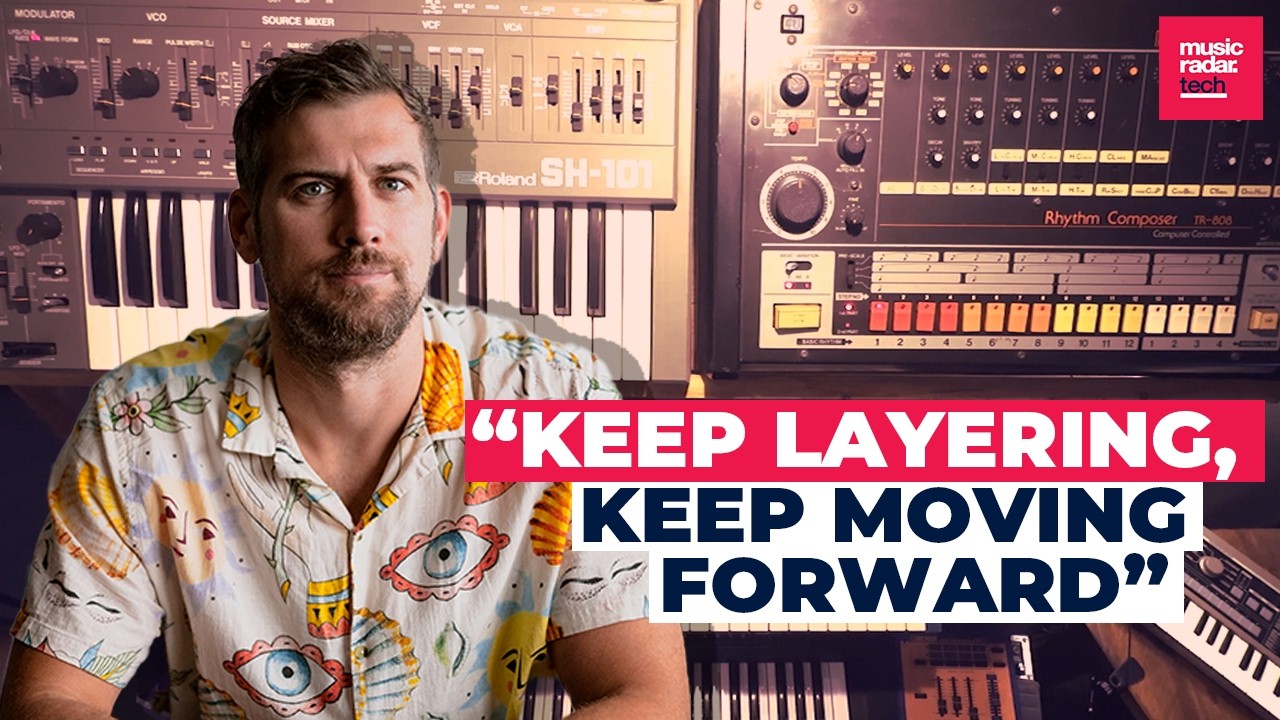
Born in Belfast and now based in Glasgow, DJ and producer Hammer (aka Rory Hamilton) spent his formative years establishing the influential Feel My Bicep blog, alongside school friends Andrew Ferguson and Matthew McBriar, who would go on to DJ and produce as Bicep.
Over the years since, Hamilton has become a key player in Glasgow's vibrant dance music scene, developing his skills as a DJ and producer, blending elements of classic house and techno with influences from disco, UK garage and beyond.
For our latest track from scratch session, we linked up with Hammer in his hardware-focused Glasgow studio to watch how he creates music.
Don’t stare at a blank DAW – rework an existing project
One of the most distinctive aspects of Hammer’s track from scratch session is that he doesn’t, technically, make a track from scratch. Sure, it’s arguably cheating a little, but we’ll allow it because it’s actually a pretty handy workflow hack.
“I don't strictly ever make a track from scratch,” he tells us. “Here I’m starting with a previous track I made with Lili Chan.”
Hammer’s approach is to load up the DAW session from a previous release and start deleting elements until he’s left with a few bare bones sounds to inspire a fresh idea.
“I love the drums in that track, so I just start by stripping it back. I always find it makes my productivity a bit quicker, faster, better, more creative.”
It’s a neat way to avoid the daunting prospect of staring at an empty DAW timeline, as well as creating sonic continuity across projects – effectively using your last track as a template for the next.
Record long takes and then chop out the best bits
Hardware synths are the cornerstone of Hammer’s studio setup.
For the session, he uses classic hardware including a Roland TR-808, SH-101 and Yamaha CS1x. He uses these to generate raw sounds for the track, sending clocks or MIDI from Ableton Live and recording long takes while tweaking filters, envelopes and other parameters.
“Normally I just record about 10 minutes of this and then chop it all up later,” he tells us.
Although he chops out small sections of these longer recordings to use as loops, he doesn’t waste the rest of the clips, saving elements for builds, breakdowns or alternative sections later in the project.
“Right now I just need to find a nice part of this bassline. But obviously use the rest of it later on somewhere,” he says.
Commit effects to audio
One upshot to Hammer’s hardware-heavy approach is that he commits a lot of sounds to audio early, which limits the ability to endlessly adjust sounds later on.
This is true of synth sounds, but also effects. In the video he uses hardware effects including Strymon Volante and Eventide Space pedals to process synths. Rather than record the parts dry and apply effects later, he captures the wet version and commits.
“I'll probably just not even record the original, just keep the effected version,” he says.
Use Valhalla Shimmer to bring vocal chops to life
One of the hookiest elements of Hammer’s track sketch is his use of chopped vocal adlibs, saved from his previous project with Lili Chan.
These vocals are edited in a classic dance music manner – roughly sliced and rearranged, creating a human, melodic tone but not a discernable lyric line.
The secret to getting these rough edits to gel, for Hammer, is using ValhallaDSP’s pitch-shifting reverb Shimmer.
“I always put a bit of shimmer on these crazy vocals,” he explains. “Valhalla Shimmer. That's my best friend.”

Embrace mess – and delete ruthlessly
The process that Hammer demonstrates in the video is one based around experimentation and hands-on tweaking of synths and effects. It is, as he says, a little messy.
“I have a pretty messy process, but it's nice using all the outboard equipment,” he says.
This isn’t necessarily a negative though. As the expression goes ‘write drunk, edit sober’. Or to put it another way, throw ideas at a project while you’re feeling inspired, then work out what’s worth using and what needs deleting later.
“I just try to keep on working and working on [an idea] and see where I could take the track,” Hammer explains. “I’ll work out what bits are best. Delete loads of bits. Keep moving forward, basically.”
