Recently, this writer was lucky enough to attend a quite unusual screening of Queen’s newly remastered Budapest concert film at London’s Roundhouse. Encouraged to respond as if we were attending an actual gig, we readily allowed ourselves to be putty in the hands of the late, great Freddie Mercury. Alive again, albeit via a massive LED screen.
It’s the only time I’ve ever experienced the thrill of being a part of Radio Ga Ga’s signature call-and-response crowd double-clap-along. It gave just a small taste of what it must have actually been like, seeing Queen during the height of their mid-eighties pomp, at a time when their moustachioed frontman was at the peak of his performing powers.
It also made this writer fully realise just how perfectly geared for a crowd the song was…
Ostensibly a democratic unit when it came to divvying up the songwriting, Radio Ga Ga was - surprisingly - the first Queen single to be penned solely by drummer Roger Taylor. Mercury, bassist John Deacon and Brian May would all be integral in shaping Taylor’s initial idea into the setlist pillar that it became, however.
Radio Ga Ga was born at a time when the band had returned to the studio after taking a year out to creatively re-energise following 1982’s lacklustre Hot Space. But Queen were struggling to land on exciting ideas…
Early sessions for what would eventually become 1984’s robust eleventh album The Works at LA’s The Record Plant were arduous, and an ever-fastidious Mercury was particularly underwhelmed by Roger’s initial song suggestions, telling him so in no uncertain terms…
“Roger wrote three or four songs… as far as I was concerned, some of [Roger’s songs] weren’t good enough. I just said ‘Go back and write some more’” Mercury said following the album’s release.
“I was desperate for inspiration!” Taylor told Sounds magazine at the time. “Then one day the radio came on in the house and my three year old son Felix came out with ‘radio poo poo’ I thought that sounded good so I changed it around a bit and came up with Radio Ga Ga.”
What Felix - the bilingual son of Roger and his French girlfriend (and eventual wife) Dominique Beyrand - had actually uttered was, ‘radio ca-ca’ - the French term for faeces. It wasn’t a million miles away from the song’s eventual name. ‘Radio Ca Ca’ in fact became its working title.

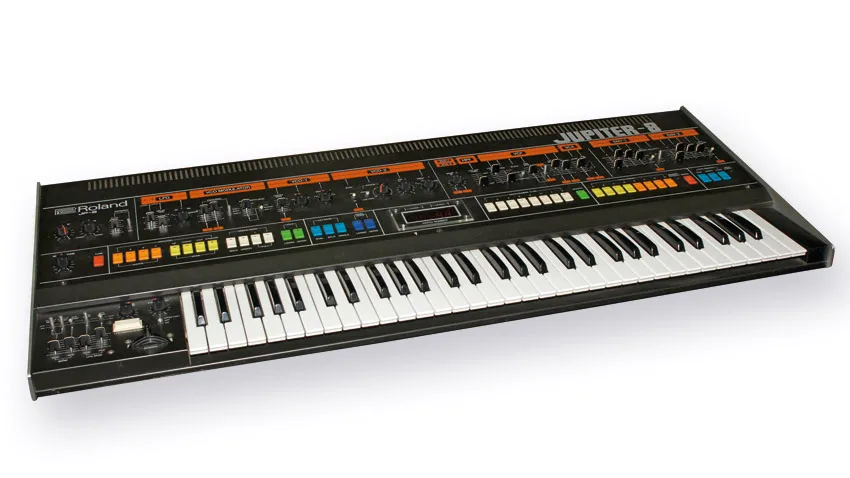
Having previously been famously sceptical of their value, Queen had finally opened the door to exploring the abilities of the synthesizer - and other electronic instruments - during the making of 1980’s The Game. Running with the 'Radio Ca Ca' idea, Roger locked himself away for a three-day stretch with both a Roland Jupiter-8 and a LinnDrum, hammering out a basic arrangement for a wistful, but powerful, new song.
With Felix’s innocent dismissal of the radio as the foundation, Taylor began to reflect about just how much he owed to that crackly old plastic box - once his central conduit to those foundational songs that changed his life. Roger also lamented the radio's diminishing relevance, as television and music video were becoming the higher priority concerns for 80s musicians.
“The song is a bit mixed up as far as what I wanted to say,” Roger later remarked to Modern Drummer. “It deals with how important radio used to be, historically speaking, before television, and how important it was to me as a kid. It was the first place I heard rock n’ roll. I used to hear a lot of Doris Day, but a few times each day, I’d also hear a Bill Haley record or an Elvis Presley song. Today it seems that video, the visual side of rock ‘n’ roll, has become more important than the music itself - too much so, really. I mean, music is supposed to be an experience for the ears more than the eyes.”
Beyond music, Taylor’s lyric evoked some particularly iconic radio moments, from Orson Welles' historic pandemonium-causing reading of H.G. Wells’ War of the Worlds, broadcast in 1938, to Winston Churchill’s ‘Finest hour’ speech. The lyric was a pointed, almost romantic dedication to the very box that had shaped his formative years.
I'd sit alone and watch your light
My only friend through teenage nights
And everything I had to know
I heard it on my radio
Taylor thought it was a stronger start than most for a song, but when he brought his new demo for the band and producer Reinhold Mack to listen to, Taylor was more than a little surprised by Mercury's immediate fixation with 'Radio Ca Ca'.
However, the architect of Bohemian Rhapsody had big ideas for what he wanted to do with the song’s shape. Not least working up that epic-scale call-and-response chorus that would soon energise crowds the world over.

Freddie was also certain that with a bit of fine-tuning, this could be Queen’s best single in years…
“I just instantly felt that you could build that into a really good strong saleable commodity, and I think Roger was just thinking of it as just another track, so I virtually took it over” Mercury told Westwood One.
“I’m an instinctive musician. I can play keyboards, guitar and drums, and I can write songs,” Taylor remarked in an interview with Making Music in 1988. “I have a facility for writing music, but I don't want to know anything particularly technical - like what the chords are called. Even in Radio Ga Ga, there are some very difficult chords. I don't know what they're called, but it doesn't matter. I'm a much better guitarist than I am a keyboard player, but now I find melodically it's much easier to write on keyboard. Radio Ga Ga was a completely keyboard-written song. I defy anyone to write that on the guitar because you wouldn't find the chords, they wouldn't come naturally to any guitar player I know.”
While Roger was away on a skiing holiday, Mercury set to work on building up the arrangement, crafting a wider scope to the now - more sensitively - re-titled Radio Ga Ga, alongside Canadian session keys-man Fred Mandel.
“It's basically [Roger's] song, you know, he had the ideas altogether, I just felt that there was some construction elements in it that were wrong to start with and he just said, 'OK, you do what you want.'" Mercury told Westwood One. "He wanted [to have a hit] very badly and I think he deserves it.”
The lyrics got a tighten-up, too…
“Initially it was to deal with the radio being too old or whatever, and I just said, 'I think you should change the lyrical content,’” Mercury was quoted as saying. “In fact, we went totally the other way, so, I mean, Radio Ga Ga… we were actually trying to say that video is trying to take over, what's the radio going to be?”
Musically, the other elements continued to be built atop the insistent, almost motorik beat that Taylor had conjured on his LinnDrum. This was later developed to incorporate cymbal accents and a heftier playing style. Building out the rhythm section, Mandel developed a swirling and throbbing bass part which later informed John Deacon’s eventual impactful line.
“Roger had done the original sequence bass part and I put down a piano part and then a synthesizer part on top of that, plus the bells you can hear throughout,” Fred told Queen Online. “Before I left the studio, I wanted the track to be more complete so I put on some bass parts, some of which were ideas that John later retained on the record.”
To heighten the paradoxical collision of nostalgia and futurism, Mercury opted to harness the then fashionable vocoder (Roland’s VP-330) to process his (and Roger's) backing vocals, with Mandel channeling their backing vox tracks via his Jupiter-8.
Oddly enough, the backing vocals still actually sing the track's original title, 'Radio Ca Ca';
Roland's colourful powerhouse synth was also relied on for the song’s distinctive arpeggiated rising-and-falling cascade of notes. Even at the time, this kitsch ‘futuristic’ sound felt - for want of a better word - naff, but these robot-like bleeps served to embellish the childish naivety of Taylor's lyric.
Not naff at all were the song’s stratospheric pads, which were also generated by the Jupiter-8 and stretched out each chord's thundering impact to gargantuan proportions.
Freddie's new chorus section stripped away many of the arrangement elements to emphasise his punchy delivery of the following lines:
All we hear is radio ga ga
Radio goo goo
Radio ga ga
All we hear is radio ga ga
Radio blah, blah
Radio, what's new?
This part of the chorus's stilted melody was balanced by Mercury's passionately delivered, descending line…
Radio, someone still loves you
Crucially, these lines were punctuated by double handclaps, responding call-and-response style. We'll come back to that…
Bolstered by a yearning, Roxy Music-inspired searing slide guitar solo from Brian May as the song nears its conclusion, Radio Ga Ga was undoubtedly the best thing the band had conjured since 1981’s stirring Bowie collaboration, Under Pressure.
It all but demanded to be released as the record’s lead single. And so, on January 23rd 1984, Radio Ga Ga hit the airwaves - and small screens - across the globe. Reaching number 2 in the UK chart, Ga Ga went on to top the charts of 19 countries globally.
The single was backed with a David Mallet-directed video which leaned into the wide-eyed nostalgia of the lyrics with clips from Fritz Lang's innovative sci-fi masterpiece, Metropolis (alongside other newly shot Metropolis-esque clips and eerie archive footage). These clips were interspersed with studio-filmed sections where the band traversed this long-forgotten vision of tomorrow in a flying car.
As we indicated earlier, the video also stressed the live-power-potential of its chorus by depicting the band performing live to 500 extras from the Queen fan club, each of whom enthusiastically engaged in the synchronised handclap-ritual in tight unison. It demonstrated to viewers at home how to behave when the band played this song on their next tour.
“One of David Mallet’s great contributions, of course, is when the chorus comes you get a hand clap. It was repeated electronically, on the record, and so it sounds like a double handclap. And Mallet kind of seized upon it and made it a double handclap done by the audience." Brian May said in the Queen web series The Greatest. “I think it became one of the first great proofs of the power of television.”
However, the bright red-clad band and vaguely fascistic aesthetic of Mallet's video put off some. In fact, more than a few (the NME in particular) suspected the band were being a little too casual with this perceived Nazi-esque totalitarian cosplay…
“That was so absurd,” Roger said in the Queen web series The Greatest. “It was meant to mirror the film… the oppressed workers. The Nazi thing is laughable. People will always find an agenda if they need one.”
Queen devotees were all-in, however.
This was evidenced across the band’s ensuing live dates when the hook-laden Radio Ga Ga became a fresh new centrepiece of the live set - with the crowd eagerly responding to Mercury’s lines with gusto.
First the hardcore, then the world…
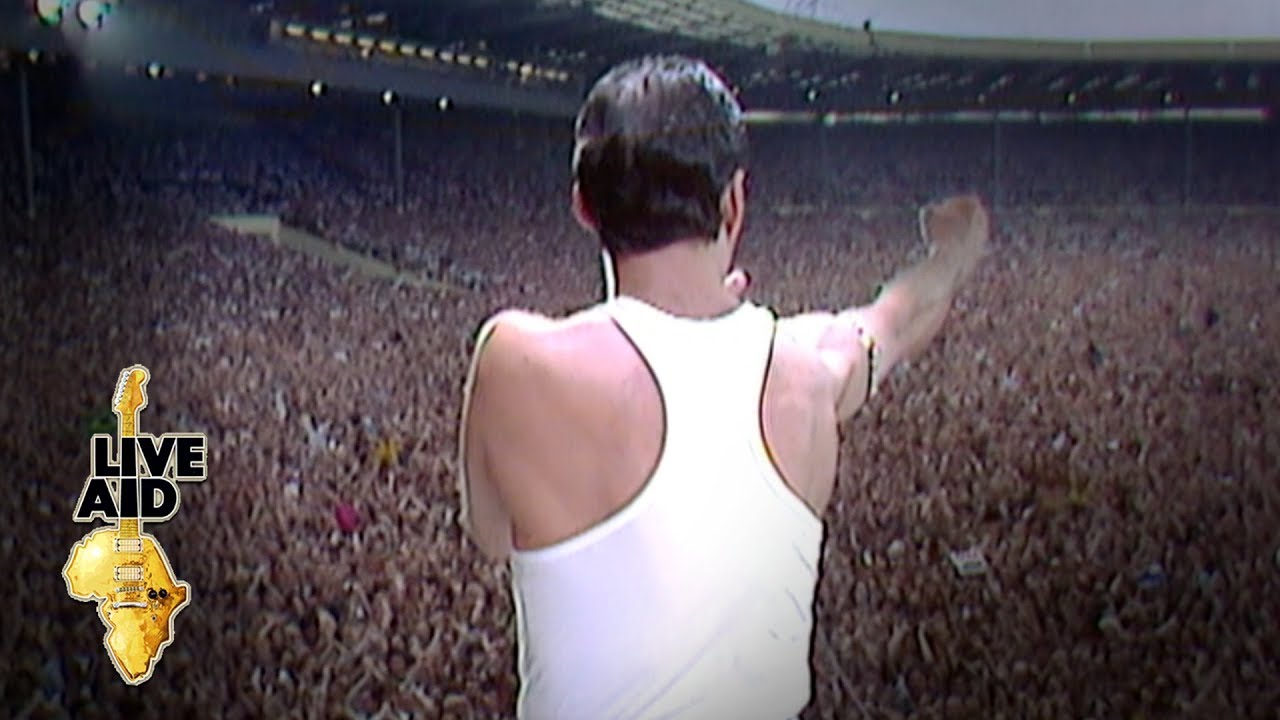
Live Aid not only re-cemented Queen's status as one of the world’s most beloved stadium rock bands (and lock-in Freddie as the frontman for the ages in the eyes of the public) but it also was the perfect platform for Radio Ga Ga to reach its full potential.
The shots of the tens of thousands of Wembley attendees double-clapping in tandem to the song meant that it very quickly became not just another one to chalk up for Queen’s next Greatest Hits, but one of the most well-known songs around the globe in the mid-1980s.
Ironically, this paean to the waning wireless found its largest audience via a global television event.
“Freddie rose to the occasion,” Brian May recalled in an interview with Mojo magazine. “He was already a master of the art of communicating with a football stadium full of people. And when we did Radio Ga Ga and the whole audience all did the double handclap thing, I remember getting chills in that moment.”