


"I think I have more punch and force alongside the finesse..."
“I’m really pleased with the drum sounds on this record,” says Stone Sour’s Roy Mayorga. “We didn’t use any samples or any of that crap. We went natural on everything.”
The record that Mayorga speaks of is Hydrograd, the band’s sixth and the first since 2013’s House of Gold and Bones Part 2. The former Soulfly man admits that his 2016 stint on the road with Ministry had an influence on his beats on his latest Stone Sour effort.
“[Touring with Ministry] taught me even more about how to punch into the drum and to keep my hits more consistent. I think that comes across in this record. I think before there was a little bit more finesse involved and now I think I have more punch and force alongside the finesse.”
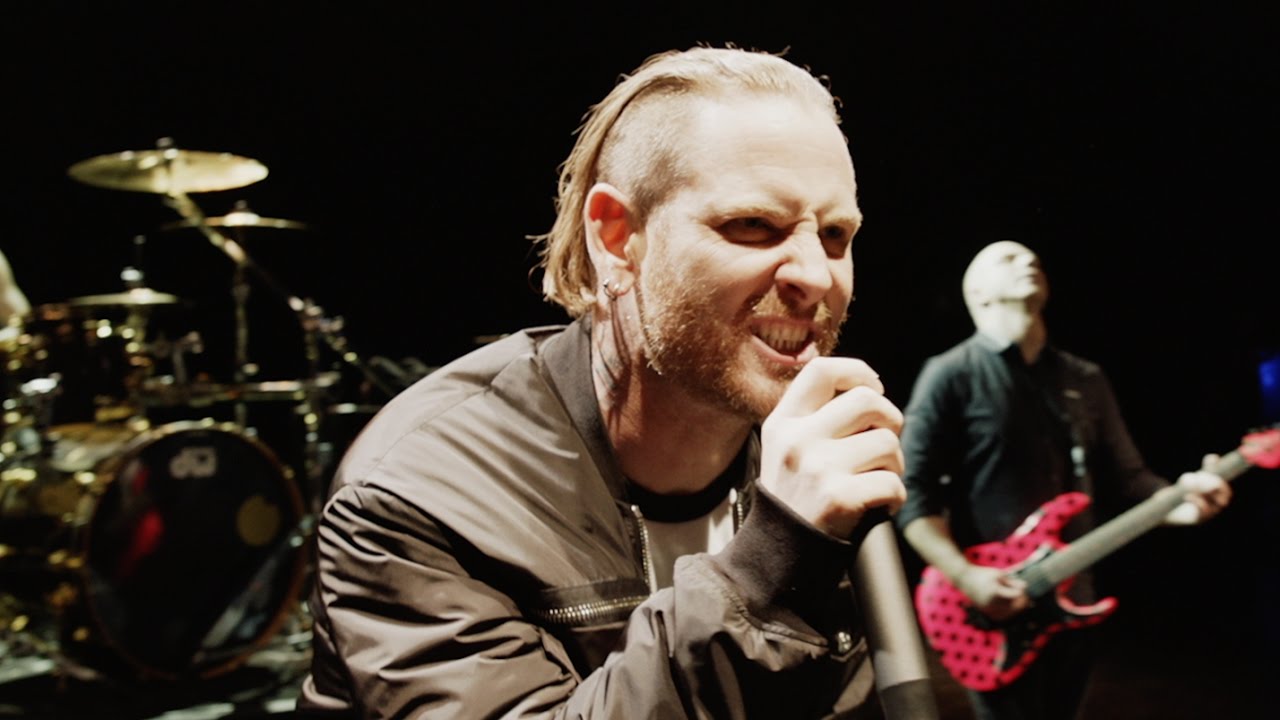
It’s a marriage of raw power and feel that pays off throughout the record, and Roy tells us that it has thrown up an album full of tracks that he can’t wait to take on the road.
“I’m really looking forward to playing Fabuless, which is the single we’ve just released,” he says. “I think the drumming on that song is really cool and high energy. There’s a song as well called Somebody Stole My Eyes which is probably the heaviest song on the record. I’m going to have a very fun time playing all of these songs live.”
With Hydrograd set to drop on 30 June, what better time to pick Roy’s brain on how to record killer parts and get stunning tones in the studio? Here we give you Roy Mayorga’s top ten tips for recording drums.
1. Sketch out your parts
“I don’t get too crazy when I’m writing, I just get a raw sketch of what I’m going to play.
“By the time I get to the studio to record it I will have lived with it for a few months and I will play the parts differently with more confidence and with a little flash here and there.
“On this album, the structure and foundations of what I came up with originally when writing is still there but I also added some fills and a few little details.”

2. Don’t overthink your tuning
“I tune the kit and that’s it. I don’t think about it too much, I just tune the kit how I usually tune it and however it comes out it comes out. I don’t overthink it.
“My sound and my tone has been the same since I started. I like really wide-open tuning on my drums. I don’t like muffling or anything like that. We didn’t even use any Moon Gel on this record.
“It’s an open sounding kit and the toms just ring out for days and it has this punch and attack on the initial hit and it just swells and fills up the foundation of the room and the low-end spectrum.”
3. Remember time is money
“You have to prepare thoroughly before going into the studio because time is money.
“You should know what you are doing before you walk in, you don’t want to waste any time.
“The whole band needs to be prepared, that is essential. If you have the time to sit and write in the studio then that’s great but if not then you’d better all know what you’re doing when you walk in there. That is definitely important.”

4. Know when it’s time for flash
“Don’t overplay. There are other things going on in the music. My job in the band is literally to keep the beat, to keep that pulse and the tempo.
“You should flash when it is time to flash. You can do your drum rolls between parts to make transitions happen from part to part.
“Every young drummer goes nuts and plays a million things, a million notes per second.
“I have learned over the years to tone it down and to play as simple as you can. It’s all about playing for the music. You can have takes where you do go crazy.”
5. Capture a master take
“If you capture a good take use it as a master take. If you capture a take where you like how the fills work then you can splice that into the master take. That is how we did the new record.
“We used ProTools as if it were a tape machine. We didn’t do the trickery where you ‘massage the drums’ and ‘massage the guitar’ and get everything on the grid.
“We did several takes and went with one take that was awesome from beginning to end and that was the master. Then we would add in things like more guitar.
“That’s how we used to make records and for some reason that went out of the window in the last 15 years and I don’t know why it did.”

6. Conserve your energy
“When you play live you’re just going for it. Your adrenaline is up and you’re hitting hard. In the studio you need to be a little more focused and not so animated.
“You can still animate it a little though, I do. But if you’re doing seven takes in an hour and a half then you need to be focused and think about your energy. Your energy is definitely different in the studio to live, for sure.”
7. Check your ego at the door
“I have learned that you need to leave your ego at the door and listen to other people when you’re recording.
“You need to listen to your band and listen to the producer. Give every suggestion ten minutes in the studio; if it doesn’t work, move on. Don’t be the guy saying, ‘No, that’s wrong, I know this and I know that and that won’t work.’
“Everything deserves to be tried. Ten minutes man, that’s the rule. Of course, I didn’t listen to other people the first couple of times. I got all defiant and said it had to be my way. Every kid goes through that.
“By the third or fourth time in the studio I had learned what my place is. When you’re 19 years old you’re not going to listen, at least I didn’t!”

8. Don’t get too attached to demos
“Don’t get demoitis, a lot of people get that. That comes with experience.
“Sometimes I have had demoitis. We didn’t have much of that on this new album because we sketched the songs out so simply and didn’t add any of the ear candy or layering until later.
“Nothing was set in stone and that helped with us not having demoitis because we were able to elaborate more and make the songs better in the studio from the sketches that we were working with.
“When you write your songs don’t think it is complete. Write your verse-chorus-bridge-verse-chorus-ending and then make it a work of art in the studio.”
9. Understand how your kit is recorded
“As a player you should have an understanding of what is used on your instrument in the studio and how and why it is used, like the microphones used when recording the kit.
“I have learned a lot about that, and I learned cool tips and tricks from this latest session. I learned some cool miking techniques.
“I went a little simpler on my drums in terms of microphones. That gives you less of a chance of phasing and all of that stuff.
As a player you should have an understanding of what is used on your instrument in the studio and how and why it is used
“We had these Josephson microphones on my toms and a 57 on the snare with a Josephson next to it and a 441 underneath. My kicks had a pair of Audix D6 microphones on the inside and a pair of RE20s on the hole.
“But, every room is different, every microphone is different, it is good to have a Rolodex of ideas in your mind regarding miking technique but it applies differently in every room. You learn from every session and what worked in the last session might not work in the next one but it’s worth a try. It gives you a starting point in the studio.”

10. Don’t lose the push and pull
“I personally feel that if the band is really great then you don’t need a click. I prefer recording without a click. This is the first record I’ve done without a click since the first Soulfly album.
“For me, this is pretty special to play with the band altogether and come out with this vibe that has a natural push and pull. I think every band should go for that and that is what is missing from a lot of music today, that urgency and that push and pull.
My advice to bands out there is to f***ing go for it. Don’t hold back, just go.
“When I say push and pull I mean that the tempo rushes forward for the choruses and naturally comes back on the bridges or verses. That is what is happening on this record.
“My advice to bands out there is to fucking go for it. Don’t hold back, just go. That is the best advice that I can give.”
