


When Dennis Chambers was just 13-years-old and gigging around his hometown of Baltimore, he was already so precociously talented that he was asked to join James Brown’s group.
Chambers’ mother turned down the offer on her son’s behalf as Brown wouldn’t pay for a tutor for Dennis while on the road; Chambers has no regrets.
“Thank god I didn’t play with him when I was 13 because he would probably have ruined my life and what I mean by that is that James had a lot of demons,” he says.
The drummer credits his musicality to his mother, who was a Motown backing singer before moving back to Baltimore where she formed a band. “They used to rehearse in my mother’s apartment or my grandmother’s backyard and that was the only thing that would keep me still, sitting there watching the drummer play,” says Chambers whose real name is Milton. “Somebody called me Dennis the Menace and the name stuck.”
In the 1970s, Chambers joined George Clinton’s Parliament-Funkadelic before becoming one of the most in-demand fusion drummers in the world, working with everyone from John McLaughlin and John Scofield to Greg Howe and Mike Stern. In 2014 it appeared Chambers’ drumming days might be over when he fell gravely ill on tour, but after a year’s hiatus he picked up right where he left off.

What was it like joining Parliament-Funkadelic as a teenager?
“They were like Spinal Tap, drummers would just disappear or they just weren’t cutting it because of the abuse they were going through with drugs. Me being a young guy, I didn’t do any drugs, still don’t: I had the stamina, the energy to play three-and-a-half/four-hour gigs because that’s how long the shows were back then.
“When they brought me in I was playing with a group called The Brides Of Funkenstein, an offshoot of Parliament-Funkadelic. Back at that time, George had the Horny Horns, Bootsy Collins, the Brides Of Funkenstein, the Parlet band, the Sweat Band and he had Sly Stone too.
“I joined them when I was 18 in ’78 or maybe the beginning of ’79. Try to imagine, I’m playing at a jazz club one night, five days later I’m at Madison Square Garden, all I can see is people and I can’t even hear myself count off because all you hear is [imitates a crowd roaring]. I had goosebumps all over the place. It took me a minute to get over that.”
You went from Parliament-Funkadelic to playing with John Scofield?
“Well, no. The tail end of my thing with Funkadelic, I got plugged into Sugar Hill Records, so I was doing a lot of rap stuff. I ended up playing with Grandmaster Flash, I did ‘The Message’ and ‘White Lines’, and by being plugged into that, there were so many rap artists that were a part of that, you end up doing a lot of different things with all these different people.
“I would come up from Baltimore, go right into Jersey, and we would start recording. We would record the whole day and even at night. Sometimes, we’d come out of the studio at daybreak the next day. We were just coming up with grooves, not knowing where they were going to go. Doug Wimbish, the bass player from Living Colour, was part of that and he was the one who brought me into that whole thing.”
Was it the gig with Scofield that put you on the map as a fusion player?
“Funk-fusion, yeah. That’s my take on it. I believe that’s what it was because the whole time I’m playing with Parliament-Funkadelic, which was a big band as far as recognition. We were headlining stadiums and that’s how the musicians knew who I was. With Scofield, he brought me to the audience.”
I didn’t do any drugs, still don’t, I had the stamina, the energy to play three-and-a-half/four-hour gigs
You’ve played with Mike Stern and John McLaughlin, two serious heavyweight guitarists. What do they want from a drummer?
“Mike Stern wants a guy who can support his music and make it feel good. Sometimes I’ll have disagreements with some of the stuff he comes up with, where he feels things should go this way and I feel it should go that way. It ends up me pretty much telling him, you play guitar, I play drums. I don’t tell him how to play guitar, so don’t tell me how to play drums.
“John McLaughlin is a beautiful guy to work for. You can’t play enough drums for him. I remember when I joined his band, he would send me tapes, because I don’t read music and it sounded like four drummers playing on it.
“I would call him up: ‘John, I got the tape, which direction are we going with here?’ ‘Denny-o,’ (he called me Denny-o) ‘Hey, man, you’ve just got to find your own way. I’m not going to tell you what to do. If you hear it, go with it. The tape is just a guide sheet, whatever you feel. If I don’t like it, I’ll tell you.’ And that’s the way he was.
“I’d come up with things, he’s over there laughing. A few times at rehearsal I had to stop: ‘What are you laughing about?’ ‘Man, it just sounds so f**king great!’ He’s beautiful, man. I really miss playing with him. He’s one of the few guys that won’t tell you what to do.
“George Duke was another one. He wouldn’t tell you what to do. He’d hire you for your brain and your heart. That’s how John is.”

How do you approach soloing?
“I don’t read music, I don’t write out things, I just do it when it happens and sometimes I hear something that may not have anything to do with that song at the moment, because sometimes I think of beat displacements and rhythm displacements and I just go with it.
“Or I hear the melody of Coltrane or Holdsworth or John, sometimes I hear ‘The Dance Of Maya’ and ‘The Dance Of Maya’ has nothing to do with what’s going on onstage at that time but I’ll just play that.
“By doing that, if the thing is in 4 and the bass player is playing the vamp, it throws them for a loop because they’re trying to figure out where I am and they can’t hear where I am because they don’t have the depth of music that I listen to.
“I listen to everything. Some guys do have the depth but they try to figure out how I arrived at that from what’s going on in reality and how I make that work. They sit there counting, like Billy Sheehan, he’s stomping on the floor, trying to make sure he’s right where he’s supposed to be. I’m laughing my butt off and when it’s over he’s going, ‘Phew!’”
Is it true you told Mike Stern not to listen to you while you’re taking a solo but to just play the vamp?
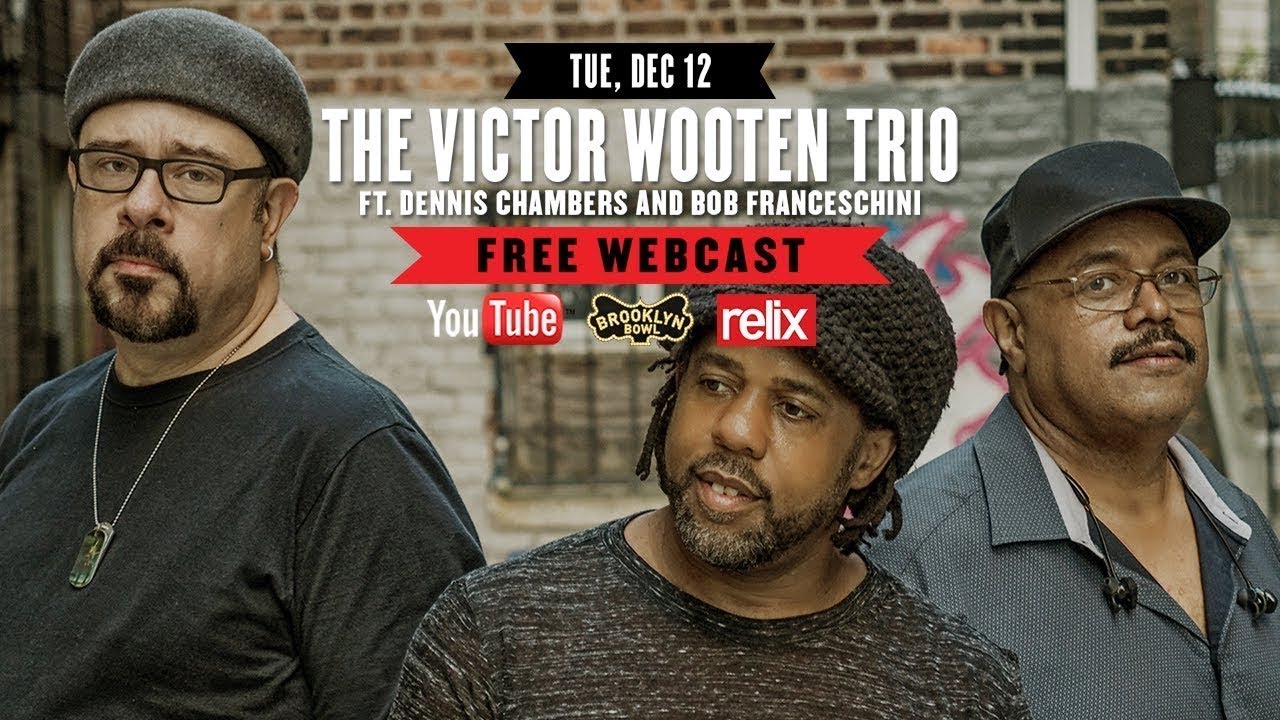
“Just play the rhythm, yeah. And it worked. He learned that you just can’t listen to me. Even with Victor [Wooten], if you listen to me, you’ll get thrown off. If you listen to me and you’re not concentrating on where you’re supposed to be, then you get lost and you stop and you throw up your hands.
“Victor’s done it a couple of times, some bass players just throw up their hands, they couldn’t figure out where they were because they got lost by listening to me. You can’t listen to me. The only people that can listen to me are the audience, the people that are not up there performing.”
I used to sit with a mirror in the room and look at myself when I play. I wanted to be balanced, back straight, and not develop bad habits like leaning over
You always look very balanced and poised behind the drums. How do you stay so relaxed?
“I used to take martial arts when I was younger. Back then I used to jog a lot. When you’re jogging, in order to maintain stamina you have to breathe a certain way, same thing with martial arts when you’re dealing with Tai Chi and stuff like that. In order to gain energy you have to breathe a certain way and I used the same approach with drums.
“Of course, I gave up martial arts at a very young age and I don’t run anymore, I don’t even ride a bike anymore, but with drumming, I used to sit with a mirror in the room and look at myself when I play. I wanted to be balanced, back straight, don’t develop bad habits like leaning over, and I was practising with phonebooks under my arms just to keep the arms down.
“The only times my arms come up is if I’m going to play the cymbal or hit the crash but anything related to hitting the drums, the arms stay down. After doing this for 50-something years, it better be easy.”
You played with Santana for over a decade. Was it a challenge to leave enough space for the percussionists?
“No and the reason why is because I’m dealing with two geniuses. Karl [Perazzo] is a genius at the timbales, Raul Rekow, I love him to death, he’s like my brother, he died not long ago, he was an absolute genius at the congas.
“When musicians, especially younger musicians, walk into a band setting, the only thing they think about is them, because they’re selfish. When I walk into a band setting, it’s not about me anymore, it’s about how do we make this work?
“That’s what music is about. How do we make it work? How do we make it feel good and how do we make it enjoyable for ourselves to do it? When I walk onstage or in the studio, I’m listening to what’s going on around me that will make me respond and make this thing feel great.
“The same thing with them. Karl and Raul, sometimes we’d leave big holes and we’d laugh because Karl thought I was going to take it, I thought Raul was going to take it, Raul thought Karl was going to take it and we just bust out laughing. Meanwhile, Carlos is looking back, ‘What the hell happened back there?’
“In the beginning it was a little challenging because Karl has a way of playing where he takes the lead on a lot of things and at that time, he didn’t leave spaces too much. He learned very quickly that I’m not there to prove anything, the only thing I’m there to do is make this feel good, make this enjoyable for everybody around us on that stage.
“Once he figured that out, and it didn’t take him long, it was cool. Right from day one Raul was onboard. We’re in the studio, I’m looking at him playing, he’s smiling and laughing, I’m smiling and laughing, it’s a blast.”
Santana will make a set-list up, 18, 19 songs, two-and-a-half hour shows, the first three songs are etched in stone... By the time you get to the songs that you think he’s going to call, even he forgot how to play it. Thank God!
What’s Carlos Santana like as a bandleader?
“Man, that’s a good question. He’s a great bandleader. He can be confusing sometimes, and I think the confusion is because he listens to a lot of music. Somebody like him, he can’t just open his door and go out and have nobody bother him. He’s always being bothered, so when he really wants to go out, he’s got a bodyguard with him or somebody around him to keep people away from him.
“With that being the way it is, it’s a drag for him so he’ll sit in his hotel room and listen to music all day or read books. He’ll throw stuff at the band on the day of the gig, four or five songs. Every day that there’s a gig, there’s a rehearsal and that’s when he throws this music on you and you’ve got to learn all these things before the concert.
“Now you’re not backstage being loose, hanging out and laughing, everybody’s sitting there trying to learn music and then the gig starts and half the time we don’t even play that music.
“He’ll make a set-list up, 18, 19 songs, two-and-a-half hour shows, the first three songs are etched in stone. After that, that set-list is a set-list of lies. You can’t follow it. By the time you get to the songs that you think he’s going to call, the ones you rehearsed, even he forgot how to play it. Thank God!
“But he’s a beautiful cat, man. He’s one of those guys, he’ll give you the shirt off his back if he really digs you. He’s got a big heart. A lot of people don’t know what he does for kids, he gave away a lot of money.”
Is there a certain pressure that comes with being a ‘drummer’s drummer’? Do you feel under a microscope?
“Well there’s certainly no pressure from me because I don’t think of myself as a drummer’s drummer. However, I am aware of what I contribute to the drum community and a lot of times with drummers, they come to see what you do that they can’t do, or just to say, ‘Well, I can do that, what’s the big deal?’
“Or they come to see you fail. I’m one of those guys that refuses to fail – so far. Even after being sick and not playing drums for a year – a whole year I didn’t touch the drums, in fact, I didn’t think I was going to play drums again.
“Then Mike Stern offered me the gig at The Blues Alley in DC. That was the first time I’d touched drums in a year and I wanted to see how it felt if I was going to play again, but the place was packed and I noticed there were a lot of my so-called friends who would never come out to see me play. They came out to see me fail because they knew I had a big drum kit set up in my living room for a year and I never touched it.
“I do understand there are some guys standing off the side of the stage just watching me to see what they can get from it. You’re under a microscope at that point but hey, man, I was the same way when I was a kid watching Tony Williams or Billy Cobham. Sometimes, I look over and I see Billy Hart or Billy Cobham, Lenny White, my peers, but I know the reason they’re there.
“In their heart, they’re there to support me not to criticise me. If I make a mistake they may give me a little rib punch for it, but they’re good-hearted people and they’re there because they love me and I’m there because I love them.
“When I see Vinnie [Colaiuta] play, Vinnie’s the same way, Dave Weckl, great-hearted people. There’s no animosity, none of that crap. Some people ask me questions about what’s the relationship between you and Dave, or Vinnie, or whoever. I’m a big fan of the drums and drummers, that’s it.”

Dennis Chambers On Record
John Scofield
Blue Matter (1987)
Scofield invited Chambers to record with him after seeing the drummer play live with the band Special EFX. “As far as I know, I’m just doing the session, I didn’t know I was in the band,” says Chambers, who lays down a powerful foundation for Scofield’s fusion guitar workouts.
John McLaughlin/The Free Spirits
Tokyo Live (1994)
The combination of John McLaughlin on guitar, Joey DeFrancesco on organ and Chambers behind the kit produces combustible results. Captured live at
The Blue Note, Tokyo, there’s plenty of blues in the music, and the interplay between the trio is always inventive. Check out the shifting moods of ‘Little Miss Valley’.
CAB
CAB (2000)
Chambers always excels in trios and his group with guitarist Tony MacAlpine and Bunny Brunel on bass is a fine example. Chambers uncorks some positively blistering fills in ‘Night Splash’, ‘One For Stern’ grooves hard, and they fearlessly launch into a dangerously uptempo shuffle on ‘Boogie Me’.
Dennis Chambers
Outbreak (2002)
Chambers’ second solo album is packed with big names – John Scofield, the Brecker Brothers, and bassists Gary Willis and Will Lee all contribute. The music is as funky as you’d expect, with Chambers crafting a host of memorable grooves. ‘Otay’ is wicked with Willis’ lightning basslines giving Chambers a run for his money.
Greg Howe, Victor Wooten, Dennis Chambers
Extraction (1999)
Greg Howe can shred with the best of them and this set offers a fierce blend of funk, jazz and rock. The band covers ‘Proto-Cosmos’ (originally recorded by The New Tony Williams Lifetime) with style, and Wooten and Chambers lock together on the knotty groove of ‘Lucky 7’.
Scott Henderson, Jeff Berlin, Dennis Chambers
HBC (2012)
Another fusion supergroup as Chambers, alongside Henderson and Berlin tackle tunes by Herbie Hancock, Billy Cobham, Wayne Shorter and Joe Zawinul as well as throwing two originals into the mix.
‘D Flat Waltz’ is funky in waltz time, as strange as that sounds, and Chambers cuts loose in ‘Stratus’ to thrilling effect.