Much like her teenage hero, David Bowie, Madonna’s career has been defined by change. From the hip street-pop of her early 80s ascendancy to the glacial electronics of the William Orbit-helmed Ray of Light, and the euphoric, glitter-strewn dance-pop of her mid-2000’s' Confessions on a Dancefloor-era, Madonna’s persistent drive to evolve resulted in a colourful body of work.
But it was back at the close of the 1980s that Madonna proved beyond any doubt that she was set to become so much more than just a pop cultural relic from the decade of excess.
1989’s Like a Prayer dug into Madonna’s own feelings of repressed guilt and the inherent contradictions between her Roman Catholic upbringing and her stature at the very summit of fame.
The stuff of standard chart-fare Like a Prayer wasn't, but millions would soon regard this soul-stirring belter as Madonna’s strongest work to date.
Part hymn and part ecstatic expulsion, the song, and its controversial video, also set a new, fearless manifesto for Madonna ahead of the looming decade.
“It’s sad. It’s joyful. It’s carnal. It’s spiritual. It’s the whole human experience in one song,” was an apt summation of Like a Prayer’s brilliance by Madonna super-fan and author Abdi Nazemian on his Talking Madonna podcast in 2020.
The first track written for her fourth LP, Like a Prayer was born out of a tumultuous surrounding context. Madonna’s brief marriage to Sean Penn was coming to an abrupt, messy end, and the warring pair would finalise their separation in January 1989. This emotional upheaval was exacerbated by Madonna hitting the age of 30.
Although a milestone for anybody, the age had a particularly painful resonation for Madonna Louise Ciccone; It was the same age that her mother was when she passed away, when Madonna was just five years old.
"It was like a part of my heart was ripped out,” Madonna said in an interview with People, when asked how her mother’s loss had affected her.
On an artistic level, Madonna was at a crossroads. Since exploding into the public consciousness almost overnight with her brash 1983 debut and its salvo of chart-scorching singles (Holiday, Borderline and Lucky Star to name just three) and proving herself as a daring controversy-stirrer with its insolent follow-up, Like a Virgin a year later, Madonna was losing interest in writing for a teenage audience.

Her most recent album, True Blue had been angled at the more mature-end of the market - and had been a massive success when released in 1986.
But, as the decade approached its final year, Madonna realised that bolder steps were needed to maintain her relevancy in an increasingly complex pop universe. With these recent personal torments swimming about her head, Madonna was more motivated than ever to turn the spotlight inward.
In September 1988, Madonna and True Blue producers Stephen Bray and Patrick Leonard set to work on album number 4, with Madonna encouraging the pair to bring their distinct musical sensibilities to bear on a record that would set a new tone for Madonna's future.
“True Blue was about feeling romantic and wanting to be unabashed about love,” Bray recalled in an interview with The Guardian, “Then she changed chapters. ‘Things didn’t work out the way I thought.’ That’s how Madonna processes fear, in Freudian pop writing - free association turned into pop songs.”
In-studio tension had long been essential for the Madonna songwriting engine room. With Bray and Leonard’s competing attitudes toward arrangements pushing everyone to up their game.
Their collaborative process was swift. “We wrote Like a Prayer, Spanish Eyes, Till Death Do Us Part, Dear Jessie, Promise To Try and Cherish in a two week period,” Patrick told Billboard. “I was working on another album at the time, so she’d just come in on Saturdays or days off. Nothing took more than four hours ever.”
It was Patrick that hit upon Like a Prayer’s musical foundation. Constructed in the key of F major, Patrick devised a shimmering chord sequence on a Hammond B3 organ.
Rising and resolving, the organ-based chord cycle felt reverent. It was clear that whatever this song would end up being, it was going to be something quite different to previous Madonna tracks.
“I came in with the music, the gospel influence, and Madonna added the words,” Patrick told The Guardian. “The protest against the church came later in the video. But it’s a testament to the weight of the song that this vessel could hold it. When we wrote it, it felt like being on fire.”

When Madonna heard Leonard’s foundation, it sparked an inrush of creativity.
“Pat had the chord changes for the verse and the chorus. We hadn't written the bridge yet,” Madonna told Paul Zollo in SongTalk magazine. “I really wanted to do something really gospel-oriented and acapella, with virtually no instrumentation, just my voice and an organ. So we started fooling around with the song, and we'd take away all the instrumentation so that my voice was naked. Then we came up with the bridge together, and we had the idea to have a choir. In almost everything I do with Pat, if it's uptempo, there's a Latin rhythm or feeling to it. It's really strange.”
Penning her lyric in a staggeringly brisk three hours, Madonna imbued the dissonant threads of her own Catholic upbringing, her sexuality and its role in her life, as well as intimations of a higher power overseeing the twists and turns in her extraordinary journey to date.
“What was it I wanted to say? I wanted [Like a Prayer] to speak to things on my mind. It was a complex time in my life,” Madonna was quoted as saying in Madonna: An Intimate Biography.
Beginning with that meditative, organ-and-choir-backed first verse, the song exploded outwards via an irresistible drum fill into the exuberant, choir-backed chorus.
Madonna's lyric intertwined the iconography of faith with a not hugely-shrouded sexual subtext:
Life is a mystery
Everyone must stand alone
I hear you call my name
And it feels like home
When you call my name, it's like a little prayer
I'm down on my knees, I wanna take you there
In the midnight hour, I can feel your power
Just like a prayer, you know I'll take you there
These suggestive undercurrents didn’t sit well with Leonard initially. In particular, the fairly overt line, ‘I'm down on my knees, I wanna take you there.’
Despite arguing that the chorus's cheeky double entendre diluted the weight of the piece, Leonard relented when Madonna explained her vision for the song was that it would purposefully muddy the waters between religious rapture and sexual passion.
Finally convinced, Patrick ultimately got on board with what Madonna was trying to do.
“I think there was a point when we realised that it was the title track, and the lead track, and it was going to a powerhouse,” Leonard told Billboard. “It became obvious that there was something unique about it. And that somehow we made this thing work: with its stopping and starting, and a minimalistic rhythmic thing, and the verses, and these bombastic choruses, and this giant choir comes in. This is ambitious, you know?!”

When expanding upon the arrangement, the The Andraé Crouch Choir was given the instruction to release all the tension of its pensive verses, and unleash their own feel-based gospel improvisations.
“It’s a song that explores the word ‘prayer’,” said Andraé Crouch, the leader of the The Andraé Crouch Choir in an interview with The Guardian. “Madonna wanted something very churchy, so I tried to blow up what she did and make it as powerful as I could.”
Undulating between its contemplative verses and the jubilant choruses, the song gathered pace via a tunnelling (bass-led) bridge sequence into a lengthy outro vamp. Like a Prayer was quite the most ambitious track Madonna had cut to date.
On a musical level this was a statement of intent. On a lyrical level, a masterstroke of pop catharsis.
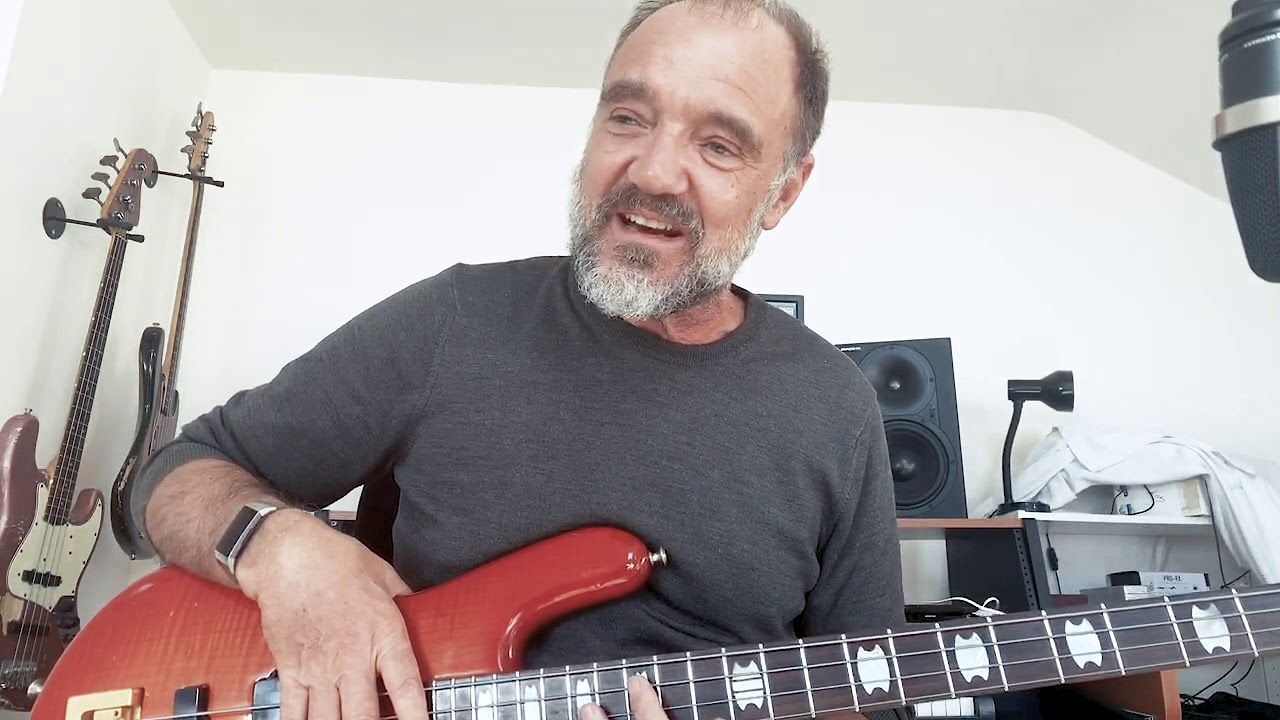
A key part of the mix was some standout bass playing from bassist Guy Pratt.
“I still have very vague memories of [Like a Prayer]. But I'm pretty sure that what I wrote, when I did what I did, that I was just mocking about,” Pratt told Ultimate Guitar. “I’m sure it was one of those, 'Okay, we've got it! Now let's do one, just go nuts!'. And when I clearly did, somehow it stayed on the album.”
Pratt’s bass playing was doubled by a Minimoog to double the oomph.
“As I was playing Madonna was going: ‘Guy, more! More!’ By the fade I had run out of licks and had to go back to the beginning again,” Pratt told The Guardian. “It’s amazing having that bassline on that song.”
Another interesting note, which we’ve previously explored in a separate article, was the fact that, aside from Madonna’s own studio cabal of musicians was one Prince, whom Madonna had enlisted to co-write album track Love Song. He’d also interspersed additional guitar work throughout the record, namely on Keep It Together and Act of Contrition.
As Leonard told Billboard, Prince also makes a brief, uncredited appearance on the title track, during its brief introductory segment.
“When you start Like a Prayer, the guitar that you hear before the door slams, that’s Prince. What happened is, [Madonna] sent him something to play on and he played on it and sent it back. And we didn’t feel that what he did served it. But that piece, that beginning, is him.”
“I just have the utmost respect and admiration for him,” Madonna said in SongTalk. “An incredible songwriter. Incredible.”
To stress that she was at the peak of her powers, Madonna - as with every other song on the Like a Prayer album - was rapid when it came to recording vocals. Getting them down in just one take.
“The really crazy thing about this, and I know this is out there already, she only ever sang these songs one time,” Leonard told Music Business Worldwide. “I mean, she didn’t sing the songs on Like a Prayer more than once, ever. There were no re-takes, there was the demo vocal and that was the record. It was absolutely extraordinary.”
As a song, Like a Prayer was a triumph. But it would be the provocative video, directed by Mary Lambert, that made the biggest mark (which, of course, helped sales of the single tenfold!)
The video’s overt usage of sacred religious imagery, charged eroticism and a narrative that also took the law’s racial biases to task was jaw-dropping in 1989.
“I wanted to explore the correlation between sexual ecstasy and religious ecstasy,” Mary Lambert said in an interview with The Hollywood Reporter of the iconography of the video.

The video’s story began with Madonna witnessing a white gang beating and murdering a white woman down an alley, and the resulting arrest of a young black man for the crime. A terrified Madonna runs away, and takes refuge in a church.
There, she witnesses the face of the same young black man now rendered upon the statue of a saint within a shrine. As the saint begins to weep, Madonna then falls into something of a dream state. Surrounded by clouds, she meets a black female figure who propels her back to reality.
Back in the church, the saint comes to life, and tenderly kisses Madonna before leaving the church. This prompts Madonna to pick up a knife and carve her hands with stigmata-esque cuts.
“That’s the guilt in Catholicism that if you do something that feels good, you will be punished,” Madonna explained, when asked about this moment by the New York Times.
Back to the video. Suddenly Madonna is able to relive the events from earlier, and change them. Now empowered by her vision, she's compelled to act. Going to the police and, we assume, providing a witness statement which releases the wrongly-accused young black man.
Back within the church, she dances with a now fully-impassioned choir and kisses the young black man (or is it the saint?) sensually.
If that wasn't enough to chew over, scenes of Madonna dancing and singing in front of burning crosses are also intercut… providing an extra helping of outrage.
So let’s just run through that shopping list; There’s burning crosses, weeping idols, self-imposed stigmata, implied sex within a church (as well as some pretty racy dance moves), and the spotlighting of racial prejudice.
This latter theme is explored in both by the law’s knee-jerk arrest of the young black man and by the video itself triggering some of the more conservative viewership, some of whom would be aghast at the idea of a non-white saint.
It was strong stuff at the time, particularly for a household-name pop star like Madonna, who relished in unloading these weighty concepts into the homes of middle America.
As legendary journalist Greil Marcus perfectly assessed in the 1990 documentary, Madonna: Behind the American Dream, “[It’s] blasphemy on about ten levels at once, which as a story is as upsetting a piece of public work [as] you’re going to see anywhere. You have interracial sex, you have sex between a human being - a woman played by Madonna in the video - and a saint, a black saint, who may not be a saint at all; he may be Jesus. That’s just for starters.”
For Pope John Paul II, settling in for a nice evening of MTV in his Vatican HQ, the Like a Prayer video was tantamount to Madonna declaring open war on the Catholic Church.
After he publicly decried it, the video was banned across Italy. The Vatican called upon God-fearing fans to boycott Madonna’s upcoming Blond Ambition tour as well as those commercial partners whom Madonna had worked with.
“The video is a blasphemy and insult because it shows immorals inside a church,” Italian Roman Catholic historian Roberto de Mattei railed.
Nerves had been successfully touched.
With the Vatican’s public pronouncements hanging in the air, a recently struck $5 million advertising partnership with Pepsi was hastily pulled by the soft drink giant. Their Madonna-starring ad (that also premiered Like a Prayer ahead of the video) was promptly dropped from the airwaves.
Pepsi later changed tack, and reaffirmed their support of Madonna (and quietly allowed her to keep the $5 million advance).
Years later, and with decades of hindsight behind them. Pepsi's position shifted. "Our prayers have been answered! Cheers to disrupting the status quo," A less backlash-fearing Pepsi said in the description of the officially uploaded clip on their YouTube channel.
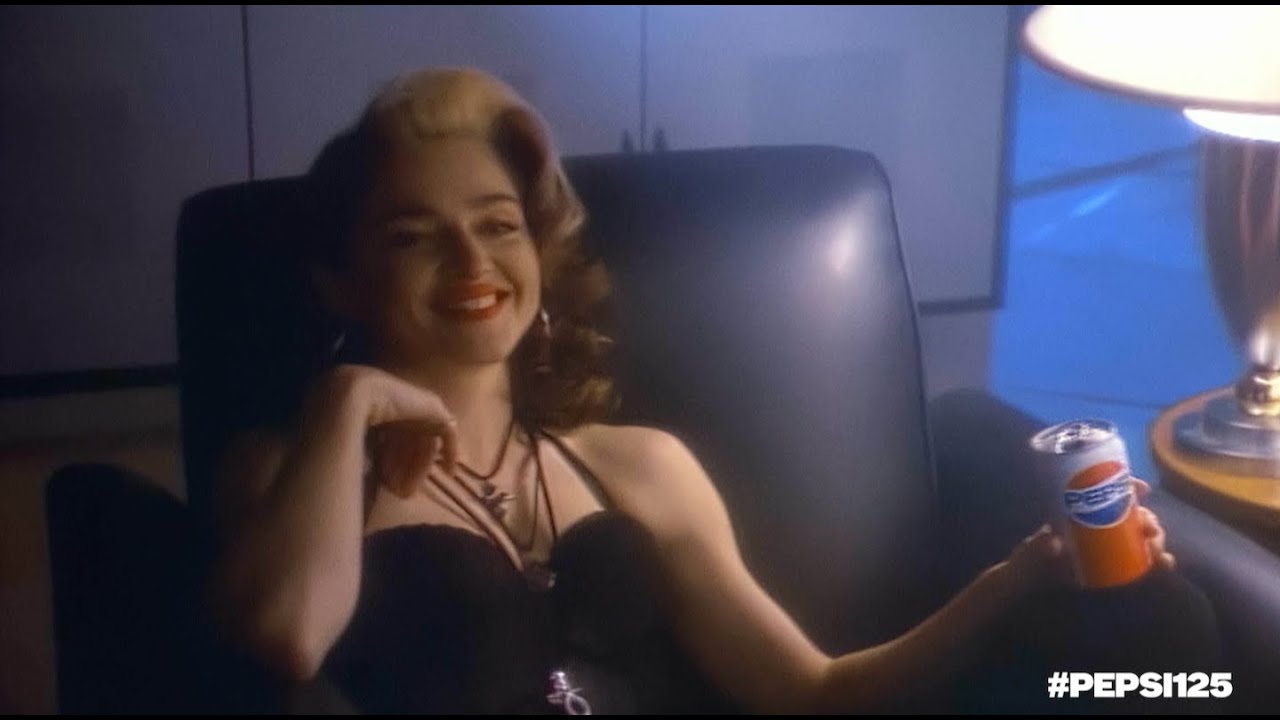
Upon the re-airing of the ad at the 2023 MTV Music Awards, Madonna put out a statement that said, "34 years ago I made a commercial with Pepsi to celebrate the release of my song. The commercial was immediately canceled when I refused to change any scenes in the video where I was kissing a black saint or burning crosses. So began my illustrious career as an artist refusing to compromise my artistic integrity. Artists are here to disturb the peace.”
All this surrounding controversy would just put more wind in Like a Prayer’s sails, helping Madonna fulfil her main aim - to gain credibility as a serious artist.
Even those who’d previously been staunchly anti-Madonna scrabbled to watch Like a Prayer's allegedly ‘sacrilegious’ video.
The single was everywhere, and hit the top of the charts internationally and soon became regarded as her most important work to date. In the words of Rolling Stone, it was “As close to art as pop music gets”.
In just one complex single, Madonna had repositioned herself as a bastion of free expression, and someone who was clearly keen to ruffle the feathers of the establishment. This would only be underlined on the ensuing Blond Ambition tour when she, famously, took to simulating masturbation with a crucifix.
If you thought the Pope couldn't get any angrier, you'd be wrong. "[It's] one of the most satanic shows in the history of humanity," was his review.

Over 35 years later, and Like a Prayer is a firm part of the 20th century pop canon, and is still regarded by many as Madonna’s finest hour.
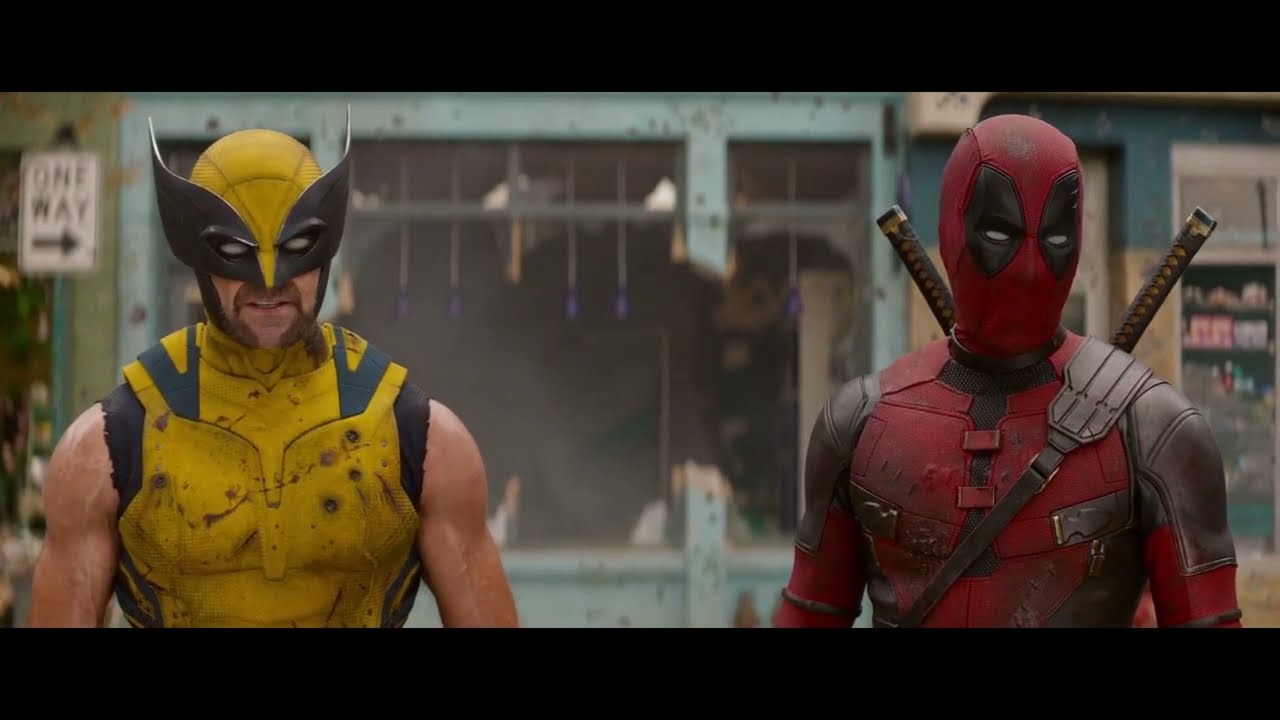
Its popularity was recently rekindled thanks to its Madonna-approved usage in 2024’s Deadpool & Wolverine, during a ludicrously visceral climactic action scene.
“Madonna doesn’t just license the song, and particularly that song has not been licensed,” the film’s co-lead Ryan Reynolds told SiriusXM. “So it was a big deal to ask for it and certainly a bigger deal to use it. We went over and met with her and showed her how it was being used and where and why. She gave a great note. My God, she watched it and, I’m not kidding, she was like, ‘You need to do this, this, and this in this moment.’ And damn it, if she wasn’t like spot-on and right.”