


Charli XCX’s seventh studio album, Music, Fashion, Film, will be released on July 24, following up 2024’s world-dominating Brat project with a stylistic move away from the brash electro-pop of its predecessor that leans into a more reflective and guitar-led sound.
Ahead of the album’s release, Charli and co-producers AG Cook and Finn Keane sat down with John Kennedy for an episode of the Tape Notes podcast to talk through the making of three tracks from the project: Card Declined, Rock Music and No One Lasts Forever.
Finishing the record on a contemplative note, No One Lasts Forever features a spoken-word cameo from David Cronenberg, as the renowned director recounts a near-death experience in a monologue that mirrors the themes of impermanence Charli explores in the track’s lyrics.
“This song has made me change the way I think about my life and my art,” Charli tells Kennedy. “That was the journey I was going on while I was writing it.”
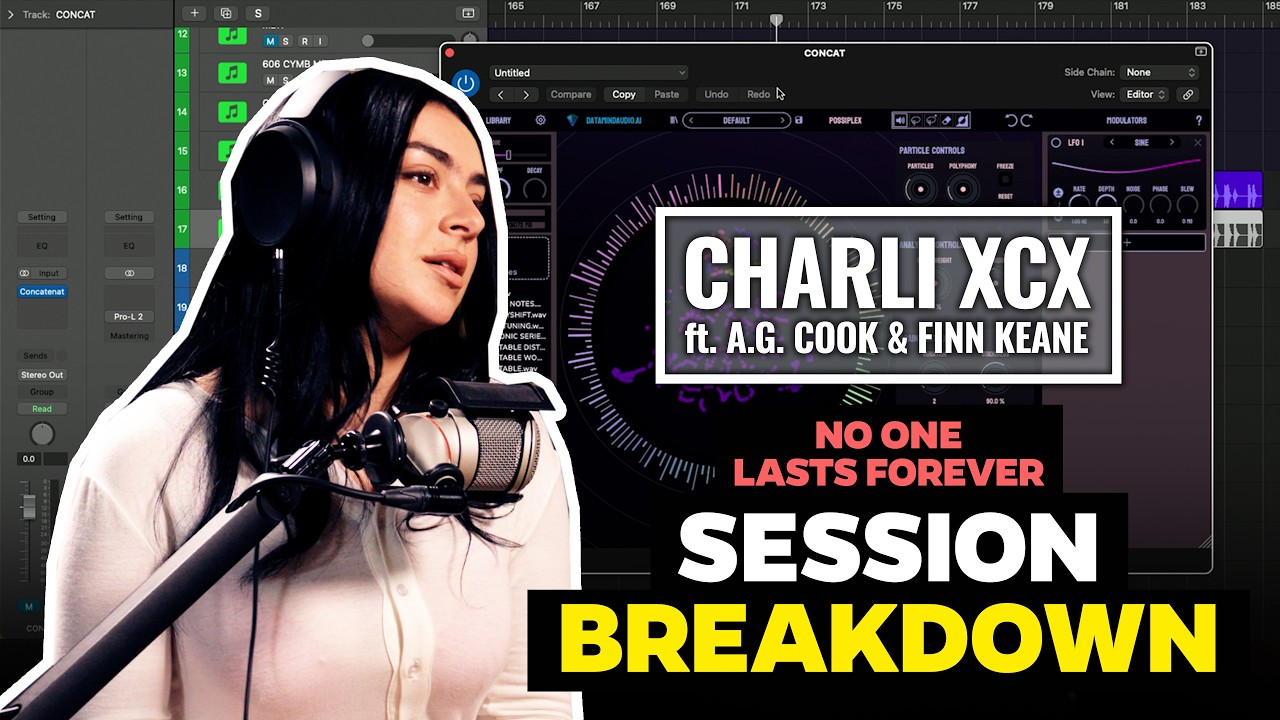
The song’s production was handled by longtime collaborators AG Cook and Finn Keane, who made use of heavily distorted guitar and vintage synths (namely the Minimoog and the PPG Wave) to fashion its distinctive sound, along with some unconventional sound design techniques and an AI-powered “audio mosaicing” plugin called Concatenator.
“The biggest difference in general compared to so many tracks that Finn and I have done together separately, and on any project, is this is so audio-heavy,” Cook says. “There’s pretty much no MIDI. Any MIDI that's in there is all chopping up something that we actually recorded or edited. A lot of the guitars, bass, all that, we're playing it in, drum kits and drum machines.”
Cook and Keane tell Kennedy that much of the material for the track came from an impromptu jam session that saw the pair recording and manipulating small fragments of sound from various sources – detuned guitars, processed synths, analogue drum machines and even snippets of other songs on the album – to create textural elements that take the production to a different dimension.

“We have all these little sounds that are throughout the track, all these little bits and pieces,” Cook says. “It’s funny because we’re literally running around the studio with as many things plugged in as possible and just doing the worst sounds.”
“We were trying to find the ugliest things,” Keane adds, “but then we actually did something kind of cool with the drums.”
“The whole second half [of the track] uses bits and pieces of this jam, and one tool I used to really bring the most out of it – apart from selecting and chopping, which felt a little bit predictable – is this weird plugin called Concatenator,” Cook says.
Developed by Datamind Audio, Concatenator is an innovative AI-powered “audio mosaicing” plugin that can transform an entire sample library into a playable instrument using a technique called concatenative synthesis.

AI meets sampling: Coalescence uses machine learning to reimagine what a sampler plugin can do
Analyzing large numbers of samples using machine learning, Concatenator then indexes each sound by timbre, pitch and amplitude, organizing the samples as a mosaic at the centre of its interface. As audio runs into the plugin, Concatenator rebuilds the input in real time by stitching together tiny fragments of sound from its library that bear the most similarity to the incoming audio.
Cook used Concatenator to create a drum pattern out of the “bits and pieces” he and Keane recorded during their jam session. “This is like a drum loop, but it’s actually made out of pretty much all of those files,” he says. “You can see that we’ve loaded all of these [samples], MS-20, Vermona, Prophet stuff… and any audio file you throw underneath this will actually start finding tiny bits of all the samples that are similar in pitch.”
“It’s weird because it’s a very digital, new plugin, but we’re doing it with all these other things,” Cook says, comparing the glitchy aesthetic of the drum loop to the sound of skipping through stations with a radio dial. “It was a nice way of being able to sample tons of stuff in this really ambiguous, uncanny way that I tend to like. It’s a mix of selecting little regions and letting some bits be chaotic and random and very 3D.”
Listen to the full Tape Notes episode with Charli XCX, AG Cook and Finn Keane on Spotify.
For more track breakdowns and interviews with artists and producers, check out Tape Notes’ YouTube channel or subscribe to their Patreon, where members can access full-length video episodes, exclusive offers, merch discounts, artist gear lists and behind-the-scenes content.
Tape Notes also runs a monthly giveaway offering one Patreon member of their Extended Players Premium tier the chance to win music-making gear: this month, the prize will be a pair of D3V Desktop Monitors from Adam Audio.
