
Popular music is littered with stories of incredible bands folding under the pressure of internal conflict, managerial intrusion, competing ambitions, and the simple reality that success often pushes people in different directions.
Among those many examples, British band Japan stands as one of the most fascinating and revealing. What's particularly noteworthy is that the group dissolved when they were arguably at the peak of their creative powers - and on two separate occasions.
Formed in Southeast London in the early 1970s and composed of five core members - David Sylvian and his brother Steve Jansen, Mick Karn, Richard Barbieri and Rob Dean - Japan grew out of teenage friendships with a shared interest in glam rock. While Sylvian became the public face and principal songwriter, all five members were significant contributors with strong musical identities of their own.
Working together in close proximity for years, fame was anything but immediate.
Early albums, Adolescent Sex and Obscure Alternatives, both released in 1978, were heavily influenced by glam rock, funk and the space-age theatrical futurism of Ziggy-era David Bowie and Roxy Music.
But Japan’s hungry ambition, spiky rock riffs and somewhat pioneering use of electronics neither fitted into the established rock scene nor emergent punk. Instead, they arrived as glam's remaining embers were seemingly dimming forever.
Both albums failed to chart in Europe despite the band, ironically, developing an enthusiastic following in Japan - and it was this success that effectively allowed them to continue recording and touring despite poor record sales.
The turning point would arrive with the album Quiet Life (1979). Marking a dramatic artistic leap forward, the group incorporated a more sophisticated blend of synthesizers and atmospheric arrangements.
Five years into their formation, Japan's sonic universe had solidified; David Sylvian’s vocal style had notably matured and Mick Karn's fretless bass had become an increasingly distinctive component of their arrangements. Also, Richard Barbieri's elegant, cinematic keyboards had become pivotal.
Speaking to us recently, Richard Barbieri reminisced: “For the Quiet Life album we all changed in different ways. By now I was using the Roland System 700 with an Oberheim sequencer, so a lot of the tracks were sequenced, which almost became a click track for Steve Jansen’s drum patterns. We were right there with the technology of the time and were really starting to create quite lush and interesting textures. Quiet Life was also the first album where we could actually spend time layering things.”

Ironically, as their success dipped in Japan itself, the Quiet Life album saw the group finally crack the UK album charts for the first time, albeit at a lowly No. 72, while the eponymous single failed to chart the first time around.
Despite laying a foundation for everything that would follow, sustained commercial success remained frustratingly elusive for the group. Cynical critics often dismissed Japan’s sound and visuals as passé style over substance.
Japan had missed the boat, they surmised, by a scant handful of years…

While a fourth album, 1980's Gentlemen Take Polaroids, further refined the group’s approach and attracted the flickers of praise from some critical quarters, it too was a commercial flop.
For many bands, this might well have signalled the end, but as the synth-and-Bowie obsessed New Romantics began to spill from London’s trendiest clubs and into the charts themselves, the wider public - and the trend-conscious critics - were beginning to rediscover Japan’s oeuvre.
With that rediscovery came a realisation. It wasn’t so much that Japan were behind-the-times stylistically, but they were actually prefiguring what was happening currently, as the hyper-colourful Blitz-kids began turning up on Top of the Pops.
As their reputation finally began to build, Japan’s breakthrough finally landed with their fifth and notoriously final album, Tin Drum in 1981.
Widely regarded as something of a new wave masterpiece, Tin Drum was a meticulously crafted blend of complex rhythms, textured electronic atmospheres and Eastern influences, with Sylvian’s more mature vocal and Karn's distinctive fretless bass now fixed hallmarks of the band's sound.
Basking in its unexpected (but deserved!) high praise, the group could finally enjoy the sort of esteem they’d so envied in their peers. With top 10 singles such as the cover version of Smokey Robinson’s I Second That Emotion and the haunting, discordant Ghosts, Japan had at last taken their seat at the high table of the electronic pop aristocracy.

At this moment, then, Japan’s future seemed almost limitless, and yet, unbeknown to the pop press or their rapidly expanding fan base, behind closed doors, relationships were beginning to strain.
In a 1982 interview, Sylvian remarked that Karn’s involvement during the recording of Tin Drum had become intermittent, with the bass player more focused on his own projects.
Although denied by the rest of the band, frictions between the two cannot have been helped when Karn’s girlfriend, photographer and stylist Yuka Fujii, moved in with Sylvian.
Was this apparent deceit the reason why Japan ultimately disbanded?
Not entirely. According to Sylvian, manager Simon Napier-Bell had already played a critical role in the breakup of the group by encouraging divisions at this crucial moment in their career.
Indeed, Sylvian recalled a dinner with Napier-Bell prior to the release of Tin Drum during which the manager - strategically angling to monetise two careers rather than one - advised him to break up the band and pursue his own solo direction.
Having already grown tired of Napier-Bell’s interference, David rejected the suggestion.
In an interview with The Guardian in 2005, Sylvian recalled: “Simon would talk to me endlessly about what Japan was capable of and what we could achieve, as if I should automatically want to pursue the same goals as him. I had to find another, less commercial, way of working, which was why during the recording of Tin Drum we kept Simon as far away from the studio as possible.”
Barred from communicating with Sylvian, Napier-Bell instead turned to Karn who was evidently more open to persuasion.

Under Napier Bell’s influence, Karn suggested to the group that he wanted to find his own musical voice whilst keeping one foot in Japan as a safety net.
In a 2000 interview with the now-defunct Barcode magazine, Karn reflected on his state of mind at the time: “At the start of recording for Tin Drum, we were told by our manager and record company that we would no longer have their support once we had finished recording. Thoughts of what the future may hold were probably one of the reasons for friction between David and myself.”
Ultimately, Sylvian believed that such divided focus would jeopardise the band's momentum just when it was finally achieving success. After Karn said he could not choose between the two paths, Sylvian chose for him and decided to disband the group.
In subsequent years, Napier-Bell would offer a markedly different version of events. Writing on his own website in 2017, he argued that Japan's breakup was primarily the result of internal tensions within the band, specifically the love triangle-dynamic involving Karn, Fujii and Sylvian.
Maintaining that he tried to prevent the group’s breakup, Napier-Bell urged them not to immediately announce their split while furtively arranging further releases and a farewell tour to cash in at the peak of their success.
According to his recollection, lingering personal animosities resurfaced during the group’s final Sons of Pioneers tour, particularly when Karn's former partner Fujii appeared backstage with Sylvian.
Years later, and in a rather unusual step for the now reclusive Sylvian, the solo singer responded to Napier-Bell’s version of events in an open letter posted on his Samadhi Sound website: “The question isn't about the relevance of the band or otherwise, it's about the suffering caused by a man who thought it was all fun and games until it came to the question of finances. I'm painfully aware that to most this is of no significance outside of a little geeky gossip. But for the four of us, we're talking about the direction of our lives and, more importantly, the pain inflicted upon one another.”
A more cryptic Sylvian then noted: “I'm placing a few cards on the table without showing the full hand. There's far too much that could be said and there's no need for most of it to go public.”
Japan would split in December 1982, with the final bittersweet irony being that their live LP Oil on Canvas became their highest charting UK album (at No. 5).
Post-break-up, all of the band members went on to work on other projects throughout the ‘80s. Sylvian’s solo career spawned a triad of really quite beautiful solo albums, from 1984's Brilliant Trees, to Gone to Earth in 1986 and the following year's peerless Secrets of the Beehive.
Meanwhile, Karn established himself as a highly sought-after session musician, contributing his characteristic fretless bass sound to a multitude of recordings, including ones by Bill Nelson, Kate Bush and Gary Numan.
He also formed the short-lived Dalis Car project with former Bauhaus frontman Peter Murphy and collaborated with ex-Japan drummer Jansen as The Dolphin Brothers.

Jansen and Barbieri would also work together, pursuing more experimental territory with the ambient-leaning record Worlds in a Small Room.
Rob Dean, meanwhile, had already departed Japan prior to the recording of Tin Drum with his role increasingly viewed as unnecessary due to their new synth-driven sound.
Despite the tensions surrounding Japan’s breakup, relations between Sylvian and his former bandmates would, over time, gradually improve.
Over the following decade, Jansen, Barbieri and Karn all contributed to various Sylvian solo projects, suggesting that old wounds were largely healing.
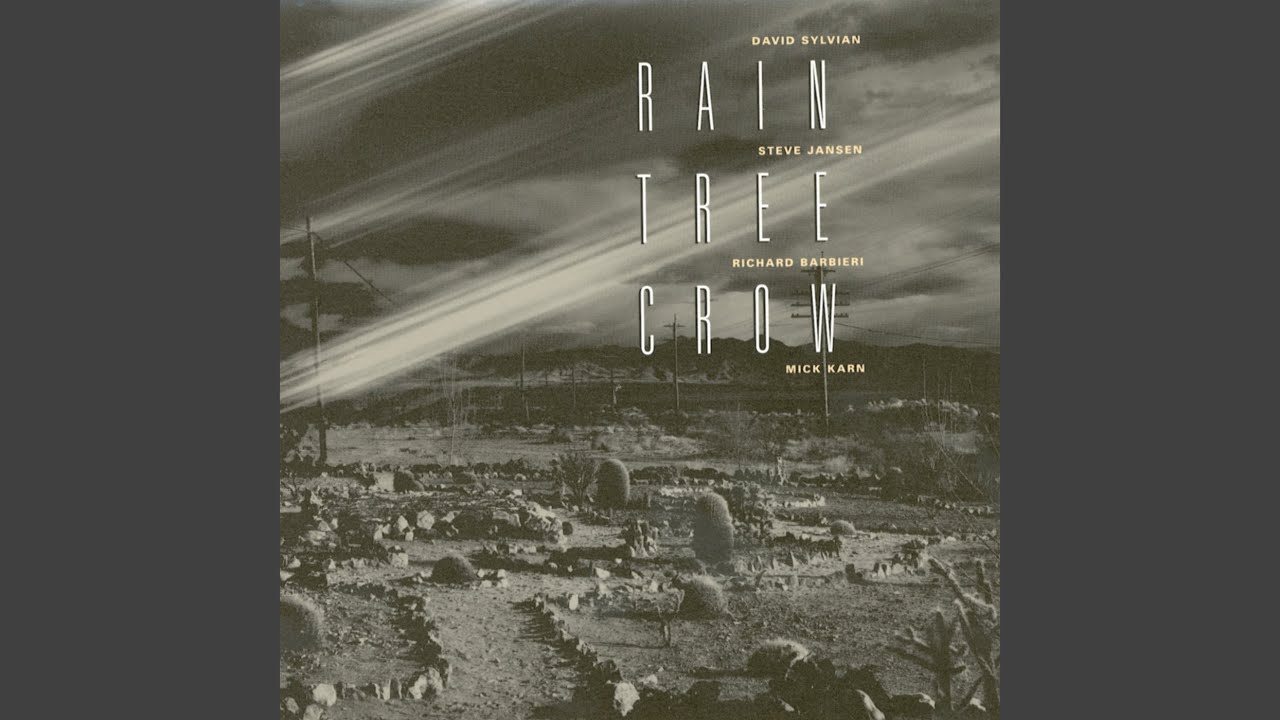
Such reconciliations would ultimately lead to what every Japan fan had hoped for, as the four musicians announced they would reunite under the name Rain Tree Crow.
A happy ending at last. Surely?
Work on the first (and only) Rain Tree Crow album began in September 1989 with the project intended as a fresh start rather than a Japan reunion - yet, true to form, the project would end not in renewal, but another bitter collapse.
Almost a decade after their acrimonious split, the original members of Japan (minus Dean) finally came together to collaborate on the album.
Remarkably, the project had initially been conceived as a six-album deal. To mark a break from the past though, Sylvian insisted that the name Japan not be used in conjunction with the album’s promotion, which all members of the group agreed to.
Initially at least.
Taking a new more collaborative approach to the recording sessions, rather than writing songs around Sylvian’s ideas, the majority of the material was written as a result of group improvisations over the space of four to five weeks at Miraval in the South of France, and later Condulmer near Venice.
With no pre-rehearsals, Jansen’s setup would include a variety of drums, cymbals, snares and ethnic percussive instruments. For the only single from the album, Blackwater, he would record brush drum samples on an Akai S1000, sequenced on an Apple Mac using Performer software.
Barbieri, who had worked closely with Sylvian programming many of Japan’s synth sounds on the Prophet 5, set up a range of keyboards in the live room at Miraval with effects processing going to tape.
“My relationship with David continued with us working closely together with the keyboards and spending a lot of time working on a different sound," Barbieri told us recently. "We were using digital keyboards more, so we both had Roland D-50s, I had an Ensoniq VFX and David had a Korg M1 or Wavestation alongside the Prophet and System 700. The idea was to make the synths sound quite earthy and organic and we didn’t actually want any synth-like sounds on it. I guess Rain Tree Crow turned into this sort of natural-sounding album - there was no artifice, it just sounded like a band in the studio playing together.”
With the group allocated a £250,000 budget by Virgin Records for recording and living expenses, they entered the project with a renewed positivity and a determination not to let egos clash.
And, at first, the sessions went pretty well. That is, until Jansen began to use up what little budget remained by spending several weeks on a single drum track. The funds began to trickle away…
When the group’s coffers were completely empty, the band requested more from Virgin, who, having spent this much already, were eager for the project to be completed, and had already heard rough mixes of Blackwater and a couple of other songs.
Excited about the forthcoming material, the label were happy to comply with the request, but with one stipulation - that the project should revert to the band’s former Japan name.
After a bit of reluctance, Karn, Jansen and Barbieri eventually bowed to Virgin’s demands. However, an enraged Sylvian - who, we must remind you, didn't even want the name 'Japan' to be referred to at all during promotion - refused point blank.
But, with the budget dissolved, the album still needed to be mixed.
Rebuffing Virgin, but wanting to complete Rain Tree Crow, Sylvian raised additional funds through one of his publishing deals, and covered the cost of the extra studio time himself.
Armed with both the financing and the leverage that it provided, he elected to finish the mixes with Steve Nye - and effectively shutting his bandmates out of the process.
Speaking to Barcode magazine, Drummer Jansen’s distaste for Sylvian’s actions could not have been clearer: “David became somewhat dictatorial towards the latter stages of the mixing. The budget had been exhausted and it was his company (Opium) that was solely in a position to raise extra funding. He then felt justified in mixing our work alone, which by any other name would be known as hijacking.”
Whatever goodwill had briefly resurfaced during the project was now exhausted, and rather than what fans hoped would be a cleansing rebirth, the Rain Tree Crow-era became yet another bitter and acrimonious chapter in the Japan story.
Sadly, it closed the door for good on any prospect of the four musicians working together again as a collective.
Amidst the fallout, Sylvian and his sibling Jansen would not speak again for at least five years, although tensions had cooled by 2000 when Jansen remarked: “Previous disagreements are, as far as I’m concerned, water under the bridge. I feel we’ve all made certain misjudgements under the pressures of the time. Personally, I wouldn’t be involved if the band tried to reform.”
Barbieri, meanwhile, reminisced: “I’m not sure if I worked with David again after that, so there was a bit of fallout - even between the brothers. The recording sessions were really enjoyable, but all of the old problems resurfaced.”
Ultimately, Rain Tree Crow justified its existence. For many Japan fans, it provided one final hurrah for the compelling creative vehicle that had produced some of the most innovative art-pop of its era.
Although often characterised as untrained musicians, the four members compensated with imagination, experimentation and an acute aesthetic sensibility that prioritised mood, texture and emotional depth.
In many respects, then, the Rain Tree Crow record represented the furthest realisation of the band’s ideals; fusing art rock, ambient textures and pop-hooks into a stunningly accomplished feat of rare maturity. It was a truly great record.
However you might view the events that caused the Rain Tree Crow rancor, all three subsequently registered their appreciation of the completed project - in some cases even hinting at a third reunion!

In a 1996 interview with Anil Prasad of Innerviews, Karn mentioned: “I do think that when the four of us are together, there is something unique produced, and I’d like to see that happen again. I think Rain Tree Crow was a huge step away from the sound of Japan, and I’m really curious to see what the next step would be if we did get together.”
Three years later, Innerviews put Karn’s quote to Sylvian who remarked: “Do I desire that it happen again? What happened at the break-up of the Rain Tree Crow project and all the animosity that surfaced as a result of external pressures, which I viewed as being terribly unfortunate, meant that a trust was broken between myself and the other members of the band. Had the recording of the Rain Tree Crow album been completed without any animosity, we were talking about doing a second and third project, and a tour. I think that would have been absolutely wonderful. It didn’t happen and I’m not sure we can ever re-establish that trust again, but I try to remain open-minded to it.”
Although Barbieri has not worked with Sylvian since the Rain Tree Crow project ended, there is no lasting angst. For Jansen, blood is thicker than water – the brothers would work again on Sylvian’s 1999 album Dead Bees on a Cake, the 2005 Nine Horses project and on the live stage.
Karn’s final meeting with Sylvian happened over coffee in Chelsea in 1991, where he expressed his gratitude to the frontman for getting the best out of him during the Rain Tree Crow sessions while requesting he produce his next album.
Tragically, following the group’s breakup, the collaboration would never happen and Karn, who'd become something of a legend in bass circles, sadly died of cancer in 2011.
During the late stages of Karn's illness, the two former bandmates were unable to reconcile in person, although Sylvian reportedly sent him a personal note, in which he referred to Karn as his ‘brother’, a gesture said to have been very warmly received.