Click here for all 'Production tips in every style' lessons
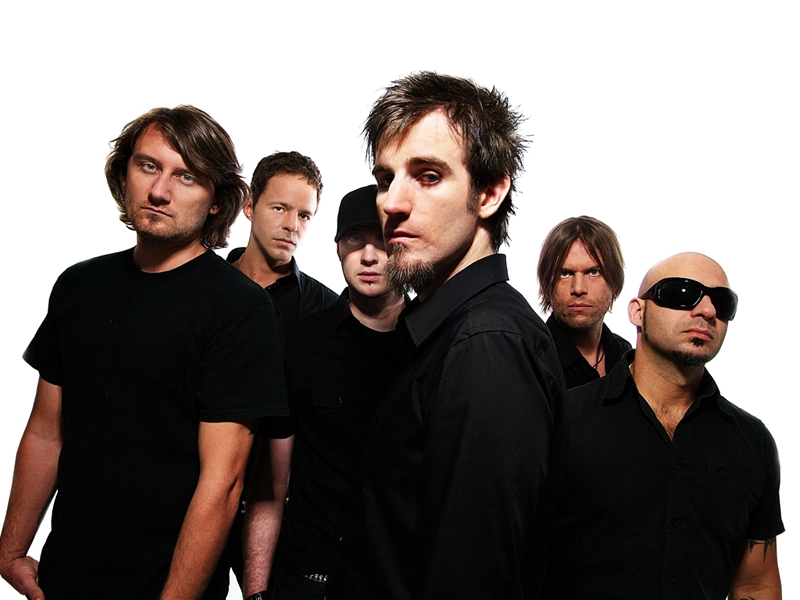
Drum 'n' bass remains as popular as ever - Pendulum's new album In Silico is currently riding high in the UK album charts - and its influence continues to be felt on a wide range of other genres. MusicRadar presents a selection of tips that will help you to make your basses big, your leads searing and your breaks, err, broken.
1. When using single hit percussion samples, appropriate processing is extremely important: have a listen to the intro of Doc Scott's iconic Shadow Boxing (remix) and note how the kicks and snares have been beefed up with overdrive and compression. The DJ-friendly intro and minimal nature of the track make it ideal for A/B comparison with your own work to make sure your rhythm section has the necessary highs, lows and general dynamics.

2. Layering chopped-up breakbeats is a good way to get that authentic DnB flavour. For a tight, modern sound, put each hit's end point before the next drum sound occurs: simply leaving the end point at the end of the sample makes it easier to program junglistic beats, but you'll have to either tune or timestretch it to make sure it plays at the correct tempo.
3. One of the main advantages of using really tightly chopped beats is that you can easily pitchbend your drum part up and down without it ever going out of time. This technique can be used to create vertiginous percussive effects, as showcased by the Ram Records crew on Ram Trilogy's classic No Reality. For the best results, try combining this method with other forms of processing, such as filtering or degrading effects.
4. If your track's switch lacks bite, try using a different breakbeat or rhythm pattern to keep the crowd on their toes - processing such as pitchshifting or flanging can work a treat here.
5. When using heavy compression on your rhythm track for that phat breakbeat sound, you may find that your beat gets overpowered when a big kick drum sound is triggered. Consider putting any such sound on a separate channel with its own compression. If your kick drum needs enhancing, try beefing it up with a layered TR-909 kick drum sample, but resist the temptation to turn it up too loud - make sure the sub-bass and beat still have enough room to breathe.
6. By using a variety of layered, reprogrammed breakbeats, you can quickly build up a complex rhythm track. The trick is to make it sound like one cohesive part that develops and builds, rather than several different parts fighting for space. The golden rule is to accurately cut and program your drums in the first place, although additional EQing of flabby kick drums, cymbals or hi-hats may help reign in errant beats.
7. Another good way of keeping the energy levels up on a switch is to introduce a kick drum roll underneath the main beat.
8. To create the familiar wah-bass effect you'll need a synth with an oscillator set to a wave shape with at least a few harmonics (ie, not a sine or triangle), filtered with a low-pass filter. An LFO - or, alternatively, a short attack and decay envelope - can control the cutoff of the filter. When using an envelope, the note must be retriggered quickly to create the requisite undulating bass riff.
"Layering chopped-up breakbeats is a good way to get that authentic DnB flavour."
9. Variation can be added to wah-bass riffs by modulating the LFO speed or envelope amount via key-following - eg, the higher the note played on the keyboard, the quicker the LFO oscillates or the more envelope is applied to the filter cutoff. Try varying amounts of one or both of these techniques to create progressively more twisted bass flutters.
10. When adding overdrive effects to filters, try out the different distortion types available and experiment with varying amounts of your chosen effect. Using vast amounts of overdrive may sound menacing, but in the context of a track, less is often more. Try starting out with a small amount of distortion and increase the levels slowly until you reach the optimum settings for your sound. Experimentation is the key!
11. Another parameter that requires judicious tweaking when creating distorted bass noises is resonance. While it's very tempting to whack everything up to the most ear-bending levels, try to stick to subtler settings - the highest dB filter won't necessarily sound the best. Experiment with a combination of filter types and resonance settings until you get just enough harshness to offset the deep, rumbling bass end.
12. If you're using an LFO to create your wah-bass, there are a couple of options available to you. Syncing the LFO to the track is a convenient way of getting it to play in time, but you may find the flexibility of the LFO rate control is worth making use of instead. Try any alternative phase and shape settings to create a variety of sounds.
13. Try using your synth or sampler's pitch envelope to automatically bend notes downwards. Experiment with different attack, decay and level values and additional LFO pitch modulation to create some unusual effects. If your instrument is capable of it, try applying different pitch modulation settings to each voice for yet more twisted bass acrobatics. Have some fun!
Big bad bass
14. A proper sub-bass is all-important when producing DnB. In order to create the desired wall of sound effect, the bassline has to hit the low end of the frequency spectrum. The easiest way to create a sub-bass is to use a sine wave with a very short attack time and quick release. Try using this sound to double a lead part, thereby adding beef, but remember to watch the levels, as you can have too much of a good thing.
15. If you're going for a sample-based approach to creating your basslines, the ubiquitous TR-808 and 909 sounds can be processed with effects such as overdrive, tube amplification, chorus and filtering to create devastating new bass tones. This can be played as-is, or a single note can be sampled, loaded into your sampler and processed further.
"A proper sub-bass is all-important when producing DnB. In order to create the desired wall of sound effect, the bassline has to hit the low end of the frequency spectrum."
16. Another classic DnB sound is that of the 'Reece' bassline, as used in Renegade Feat Ray Keith's Terrorist. You can create your own version by layering up detuned square waves with a touch of low-pass filtering. This can then be resampled and further processed to create your own fearsome basslines.
The lead sound
17. For those liquid funk moments, a housey organ bass always goes down a treat. You can make your own using sine, pulse or triangle waves low-pass filtered until you get just a few harmonics poking through. Try detuning one oscillator up seven semitones for a handy fifth that will bring back many old-school memories.
18. These days everybody's rocking the saw wave lead. This sound is easy to create - short attack and release amplitude envelope, a little chorus or pitch modulation on the saw wave and you're there. Things can be made more interesting with a little degrading effect, and a bit of glide can add a cheeky twist to your nasty lead noise. Keep the portamento time short, though, to avoid that pissed-up feel.
19. When it comes to creating a tearing hoover sound, the filter's everything. If you're lucky enough to own Access' awesome Virus synth, apply some saturation between the filters in Serial mode. Use a low-pass filter, then a sweeping band-stop filter for some Raiden-style hardcore action. Remember that the Virus can be used as a powerful effects section too - perfect for adding grit to drum loops and other sounds.
20. For Artificial Intelligence-style warbling synth lines, an LFO tied to the filter cutoff is your best bet. Make sure the LFO's phase is synced to the start of the note and try a variety of rates and phase positions until you come up with a suitably mellifluous noise. Experiment using different waveshapes, LFO amounts and filter cutoff settings, and try further developing the sound with a little LFO-based pulse width modulation.
21. When using 'real' instrument samples or presets, it's important that they sit comfortably alongside your more processed sounds. If possible, create reverb and delay send effects so you can place all your sounds in the same virtual space. Along with good playing or sequencing, reverb can help disguise synthesized instrument sounds. For an even more pronounced effect, try applying a reverb pre-fader for soundscape style effects.
22. Make more sophisticated arpeggiator leads by applying frequency or pulse width modulation envelopes to the sound and varying the decay time. High-pass filters work well with this style of sound. When filter sweeping the sound in or out, try automating another synth setting, such as one of the envelopes' decay time or filter envelope amount. For a trancey sound, delay is a must, but don't make it too extreme or you may mask any chord changes.
23. These days, most virtual analogue synths feature a whole load of wave shapes for you to experiment with. Instead of using a sine wave, try a variety of different wave shapes and low-pass filter them to remove all but the lowest frequencies. This will give you a sub-bass with more interest than a standard sine tone, which can be enhanced further with tube amplification and other effects.
