
MusicRadar MusicRadar The No.1 website for musicians
UK EditionUK US EditionUS AU EditionAustralia SG EditionSingapore
Sign in
  • View Profile
  • Sign out
  • Artist news
  • Music Gear Reviews
  • Synths
  • Guitars
  • Controllers
  • Drums
  • Keyboards & Pianos
  • Guitar Amps
  • Software & Apps
  • More
    • Recording
    • DJ Gear
    • Acoustic Guitars
    • Bass Guitars
    • Tech
    • Tutorials
    • Reviews
    • Buying Guides
    • About us
Don't miss these
Neil Finn
Artists “I played it with the band and it sounded like a bag of…”: How Neil Finn created Crowded House's classic hit
Keith Richards, Mick Jagger, Bill Wyman and Charlie Watts at the Kensington Gore Hotel, where they staged a mock-medieval banquet for the launch of their new album 'Beggars Banquet', 5th December 1968
Singles And Albums “This is where we had to pull out our good stuff. And we did”: Beggars Banquet – the album that made the Rolling Stones
The Knack
Artists “It was like getting hit in the head with a baseball bat. I fell in love with her instantly. And it sparked something”
Mark Tremonti plays a big chord on his signature PRS electric guitar as he performs a 2025 live show with Creed
Artists “If I sit down with a Dumble, the last thing I’m going to do is do any kind of fast techniques”: Mark Tremonti on why he is addicted to Dumble amps
Justin Hawkins
Artists “We don’t use simulators because we’re a real band”: Why Justin Hawkins and The Darkness rock the old-fashioned way
Steve Morse poses in the studio with his Ernie Ball Music Man signature model – not the guitar synth at the bridge.
Artists “Nobody can play better than that guy, man!”: Steve Morse on the supernatural powers of Petrucci, Johnson and Blackmore
Elton John and Davey Johnstone perform at the piano during their 2012 tour, with Johnstone playing the Les Paul Custom 'Black Beauty' that John originally bought for himself, but gave it to Johnstone after the band had all their gear stolen.
Artists Davey Johnstone on guitar shopping with Elton John – and how he ended up with his iconic Les Paul Custom
teed
Artists How TEED went back to basics with a bedroom set-up and a borrowed synth for third album Always With Me
Fender has made an exacting replica of Tom Morello's 'Arm The Homeless' guitar, the mongrel S-style made from parts that became the cornerstone of the Rage Against The Machine guitarist's sound.
Artists Tom Morello’s favourite 'Arm the Homeless' electric guitar has just been recreated by Fender
Josh Freese
Artists “It was all done on GarageBand – it’s live drums, but over this goofy funk drum loop I’d done on my laptop out on tour”
Strymon Fairfax Class A Output Drive: the first in the Series A range, this is an all-analogue pedal inspired by the Herzog unit made famous by Randy Bachman
Guitars Strymon debuts Series A analogue pedals range with the Fairfax – a “chameleon” drive that can “breathe fire”
Lily and Blue
Artists We speak with Lily Allen’s co-songwriter and executive producer about the extraordinary fast-paced creation of West End Girl
Tom Morello
Artists How Tom Morello used his guitar to drill into the off-limits domain of the turntablist
Justin Hawkins
Artists “He wanted it to sound tinny, so he literally put the mic in a tin”: When The Darkness teamed up with Queen’s producer
Steve Cropper in 2007
Artists “My mom said, ‘I’ll lend you a quarter if you become a guitar player.’ I think I did!”: Steve Cropper dies aged 84
More
  • "The most expensive bit of drumming in history”
  • JoBo x Fuchs
  • Radiohead Daydreaming
  • Vanilla Fudge
  • 95k+ free music samples
  1. Guitars

Fink on guitar gear, production tricks and the challenges of making an authentic modern blues record

News
By Matt Parker published 17 March 2017

“‘I woke up this morning’ - that’s off the table”

When you purchase through links on our site, we may earn an affiliate commission. Here’s how it works.

Sunday Night Blues Club

Sunday Night Blues Club

Singer-songwriter Fin Greenall is best known by his nom-de-plume Fink, a name shared with his trio, completed by bassist Guy Whittaker and drummer Tom Thornton.

The Ninja Tune-signed songwriter has always been an individual, a genre magpie channeling trip-hop, desert rock and dub, while others endlessly rehash their Dylan influences. Similarly, his production and songwriting credits extend well beyond your typical folk club, to work with John Legend, Professor Green, Amy Winehouse and Banks. 

Now based in Berlin, Fink has released 10 albums (including side-projects/live records) in 10 years and recently took time out to tackle a new challenge: a contemporary blues record.

The response is Sunday Night Blues Club, Vol 1, an album that has been produced by Flood and places luminaries like Colin Stetson (Arcade Fire, Bon Iver), Mike Dawes and New Orleans sticksman David Shirley in the role of pick-up band.

Prizing feel and a run-and-gun writing process over six-string dick-swinging, it’s a powerfully effective, left-of-field take on 21st century blues. 

We spoke to Fin to find out more about the challenges of taking on one of the most thoroughly “rinsed” areas of modern music history…

You’ve previously been something of a genre-spanning type. Is Sunday Night Blues Club, Vol. 1 your first genre record?

Some of my records are too ‘genre-spanning’, maybe, so on this blues record it was a really great opportunity to do the opposite of that

“Genre-spanning! I like that. Some people see it as a fault and I think that’s kind of justified - some of my records are too ‘genre-spanning’, maybe - so on this blues record it was a really great opportunity to do the opposite of that and actually have some focus. 

“There’s one track on the record, She Was Right, which was this amazing, epic orchestral piece with Colin Stetson, who’s a genius at this wind, circular-breathing stuff. That’s the only track where it’s really ‘blues meets…’; every other track on the record, the whole raison d’être is, ‘If you don’t like blues, you’re not going to like it.’

“That kept me on the straight and narrow with this one, because every time I wanted to add some electronic influences, or add a poly-synth, or say, ‘Maybe I’ll just do a little folky, major, Joni Mitchell thing here’ it always stopped me, because I thought, ‘I want to make a blues record and I want to keep the focus.’ So, yeah, this record is probably the first one where I’ve made a genre record.”

You can trace links to the blues in so many of your other influences – trip-hop, folk, rock, desert rock. Why now for a blues album?

“I’ve just needed to do it to get something out of my system. I’ve always loved the blues, and I just needed to see if I could do it. This is the first time I’ve had the confidence to own it all, to say ‘this is going to be my blues’ - ‘my accidental life’, as Big Bill Broonzy used to say.

“Having said that, one of the real challenges of the record was to write original blues, because it’s one of the oldest genres that we’ve got in modern musical culture, so it’s been used and abused for 70/80 years now.

“Most of the ideas have been done, rinsed and repeated, so to try and find the right balance was a real challenge. I didn’t want to do any lyrics like ‘I Whatsapped you’, but I also didn’t want to go too retro, putting in lyrics about rivers and Mississippi, because that’s not my journey at all.”

Page 1 of 3
Page 1 of 3
Gear of yore

Gear of yore

You have many different collaborators on this album yet there’s a real uniformity to the sound. Did you issue a tight brief to your musicians?

“No brief at all. With the Colin Stetson collabs I just sent him the tracks and used whatever he sent back. With the drummers, I briefed one of them for this track Black Curls. It was this guy Hugo [Degenhardt], who’s drummer for the Bootleg Beatles, and I wanted a rolling, 10-minute 'Ringo Starr in 1965' kind of feel to it and he did it perfectly. But, again, I used his take, unedited and plopped it over the top. 

“I think the coherency comes from Flood, the producer. When I took my tracks, which I thought were pretty done, to Flood for mixdown, he was so clever. He took the one track that he thought was the closest to the sound we wanted - I think it was Keep Myself Alone Now - and he said, ‘Right, the mission is to bring all the tracks to the level of this one, so we’ll bring them up or scruff them down and make them sound like they’ve come from the same moment.’

“After Flood had got his grubby little fingers on it, what came out of the mixdown was next-level shit. He would mix it down so loud that all the levels on all of the machines were red. I think that captured some of the energy, cranking it right to the edge.”
Was that all-analogue at the root then? Not a lot of people like to crank digital signals, for good reason…

“Flood used a really nice balance of in-the-box tricks and nice outboard. We re-taped a lot, I re-amped a lot in the studio, just to get the air and the space, so when we took it to mixdown the bits and pieces were all very legit. I really didn’t do much to them.

Those guys were geniuses back in [the '60s]… they were using the room as their plugin

“It’s that old-school technique of, ‘If you wanna put reverb on it - put it on it and record it’, so you use the reverb on your amp. You do what John Lee Hooker would have done in 1962 - those guys were geniuses back in those days, with the balances and EQs, because they were using the room as their plugin, rather than outboard gear.

“I talked to Flood about some of the artists he’s worked with over the years, and quite often he’d be telling me stories where he’d be like, ‘Oh, the microphone I used for that take was a Beta 58’ and you’d be like ‘What? It wasn’t a Neumann £20,000 ribbon mic?’ He’d be like, ‘No. It’s a Beta 58 and it sounds great.’ It’s the take not the kit that counts.”

What kind of gear did you use to record Sunday Night Blues Club?

“The Gretsch is an old Tim Armstrong model. I bought it because it was matt black, and I believe the terminology was ‘murdered-out’ back in those days. It’s toured with me and had a bit of road wear. I played it quite a lot on the Hard Believer tour.

“The nylon-string tracks are on my Brady III, which is made by this guy called Mal Brady up in north of England. Then I’ve got, we call it the Orwell, it’s a 1984 Martin D-28. 
“Amp-wise, I used this beautiful Fender ’68 Silverface, which I rented from this amazing guitar-maker in Berlin called Dr. Lutz [aka the GuitarDoc]. He’s got a shop and I saw this Silverface in there and I rented it out for the first half of the record, so now I’ve got my own, which is really delicious.

“Then a straight-up Fender Twin, which is one of the Tweed-y ones. It’s been on the road for 10 years now and it looks like it’s really been toured. It sounds beautiful.

“I rarely used my pedalboard. On a few tracks, like Little Bump, I used my Space Echo to get a kind of modern effect on some key notes, just pulling it into my space, as opposed to being super-retro and having a double-bass and shuffle-y drums. The subject matter is pretty modern, too, on that one.”

Page 2 of 3
Page 2 of 3
Nothing but the truth

Nothing but the truth

What did having that desire to create a contemporary blues record do for your lyrical content? Did you find yourself falling foul of cliché?

When a white guy from Europe is tackling the blues, you’ve definitely got to make it your own

“Of course. Obviously, with blues, the clichés are very, very obvious - you know when you’re going off-piste. So, ‘I woke up this morning’ - that’s off the table. ‘My baby left me’ - that’s off the table. It’s so obvious what’s not cool, you know?

“Really, it was about channeling a feeling. With a track like Boneyard, I’m going through a big issue - death - and I can’t write an essay; I’ve got three lines to do it in. 

“It’s just: ‘don’t think too hard; what are you feeling right now?’ If the answer is, ‘Man, I’m feeling really shit right now’, you’re off. It’s honest and you’ve got to own it. You’ve got to anyway, but when a white guy from Europe is tackling the blues, you’ve definitely got to make it your own or it’s going to be pretty obvious that it’s not your music.”
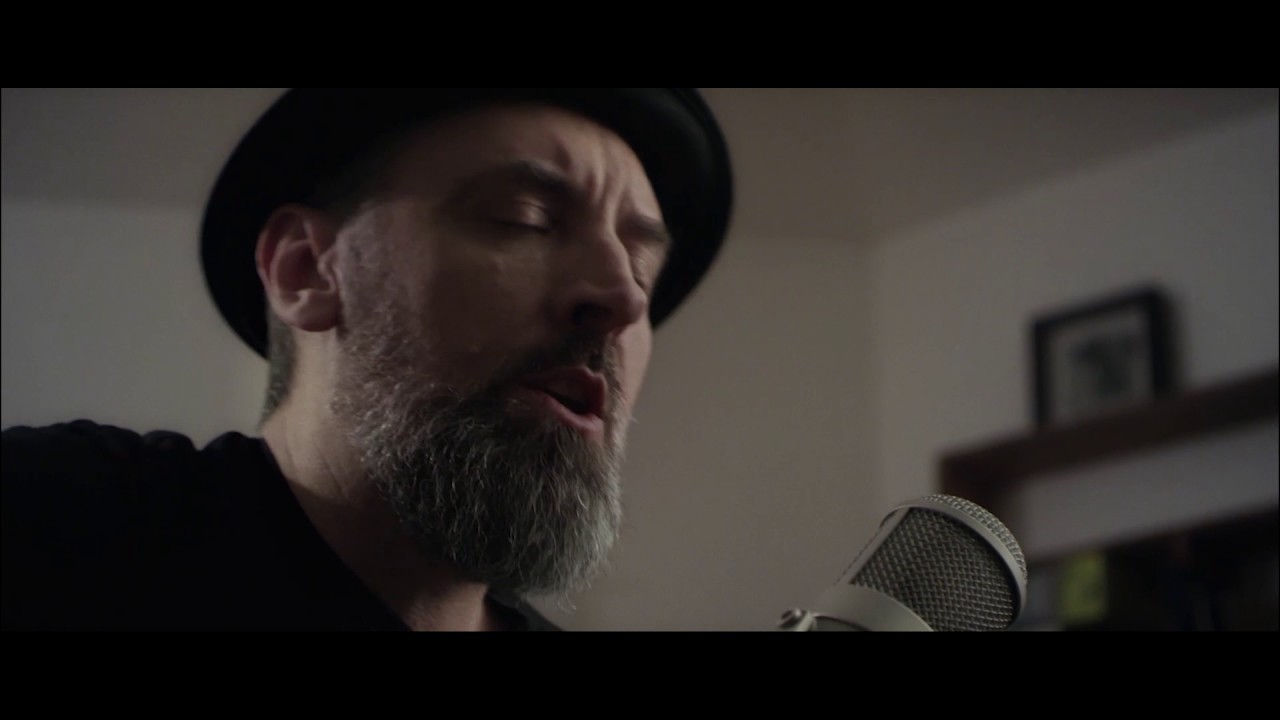
What was the most enjoyable thing about making this album?

“Just the fact that every day you might have that feeling that when you get home, something that didn’t exist this morning now exists. It might be ugly and stupid, but it still exists. It didn’t and now it does, so it’s almost like birth and rebirth on a daily basis.

“I really, really loved that process with the blues, because three/four days a week I’d get nothing but clichés and then on the Friday I’d come home with Hour Golden in my pocket, which didn’t exist that morning.”

That’s creativity in its most pure form, really, isn’t it? At first it didn’t exist and now it does…

“Yeah, channeling your inner feelings. The minute you start double-thinking yourself, you lose so much good shit. You can’t lose if you’re honest.“

Sunday Night Blues Club, Vol 1 is out now on R'COUP'D.

Page 3 of 3
Page 3 of 3
Matt Parker
Matt Parker

Matt is a freelance journalist who has spent the last decade interviewing musicians for the likes of Total Guitar, Guitarist, Guitar World, MusicRadar, NME.com, DJ Mag and Electronic Sound. In 2020, he launched CreativeMoney.co.uk, which aims to share the ideas that make creative lifestyles more sustainable. He plays guitar, but should not be allowed near your delay pedals.

Read more
Justin Hawkins
“He wanted it to sound tinny, so he literally put the mic in a tin”: When The Darkness teamed up with Queen’s producer
 
 
Greg Mackintosh of Paradise Lost plays his custom 7-string V live onstage with red and white stagelights behind him.
Greg Mackintosh on the secrets behind the Paradise Lost sound and why he is still trying to learn Trouble’s tone tricks
 
 
Dave Davis pictured on the left in black-and-white, circa 1964, playing a Guild semi-hollow and singing into the mic; Dave Davies pictured from behind, slashing a speaker to show us how he got the distorted tone on You Really Got Me.
“So, Dave, how do I slash the amp?”: Dave Davies picks up a razor and slashes a speaker on camera to demonstrate how he got the Kinks’ iconic proto-fuzz guitar tone
 
 
Blues phenom Christone "Kingfish" Ingram with his new signature Fender Telecaster Deluxe in Daphne Blue
Christone “Kingfish” Ingram on how the Telecaster won him over – and his new Delta Day signature Tele Deluxe
 
 
alex g
"No piece of gear was more important": Alex G on the rare vintage compressor that shaped the sound of Headlights
 
 
Christone Kingfish Ingram performs during the 2018 Montreal International Jazz Festival
“People are craving more music that’s authentic”: Christone ‘Kingfish’ Ingram talks about his new blues label
 
 
Latest in Guitars
Deals of the week
MusicRadar deals of the week: Score big savings on music gear ahead of Christmas from the likes of UAD, Casio, Waves, PRS and more
 
 
JHS Pedals x Electro-Harmonix Big Muff 2: This limited edition fuzz pedal was created from a long-lost blueprint that was unearthed while researching the upcoming book about the NYC pedal brand.
Electro-Harmonix and JHS Pedals team up for a Big Muff based on schematic that had been lying forgotten for 50 years
 
 
Seymour Duncan Dino Cazares Machete: the new pickup looks passive, but it's a fully active design, with bite, clarity and nice cleans too.
Seymour Duncan teams up with Dino Cazares for signature Machete humbuckers – and their versatility might surprise you
 
 
Crazy Tube Circuits Orama: the orange/peach coloured pedal combines classic preamp and fuzz circuits and promises a wide range of sounds
Crazy Tube Circuits squeezes out another sweet twofer with the Orama preamp/fuzz pedal
 
 
Brian May performs live with his Red Special, and on the right, his old pal, Black Sabbath guitarist Tony Iommi, plays the custom-built Red Special replica that Iommi got him as a festive gift.
Brian May just got Tony Iommi the best Christmas present ever
 
 
Strymon Fairfax Class A Output Drive: the first in the Series A range, this is an all-analogue pedal inspired by the Herzog unit made famous by Randy Bachman
Strymon debuts Series A analogue pedals range with the Fairfax – a “chameleon” drive that can “breathe fire”
 
 
Latest in News
GLASTONBURY, ENGLAND - JUNE 28: (EDITORIAL USE ONLY) Danielle Haim of Haim performs on the Park stage during day four of Glastonbury festival 2025 at Worthy Farm, Pilton on June 28, 2025 in Glastonbury, England. Established by Michael Eavis in 1970, Glastonbury has grown into the UK's largest music festival, drawing over 200,000 fans to enjoy performances across more than 100 stages. In 2026, the festival will take a fallow year, a planned pause to allow the Worthy Farm site time to rest and recover. (Photo by Jim Dyson/Redferns)
Danielle Haim names her biggest guitar influences, including the player she calls “the most underrated”
 
 
Ed Sheeran in front of guitars
Council gives go-ahead for Ed Sheeran to convert pig farm into private recording studio
 
 
arturia
Arturia's MiniFuse 2 OTG promises to make recording and streaming easy for content creators
 
 
Liam Gallagher (L) and Noel Gallagher (R) of Oasis perform during the opening night of their Live 25' Tour at Principality Stadium on July 04, 2025 in Cardiff, Wales
“Noel has said, ‘No rest for the immensely talented'”: Gem Archer on the chances about future Oasis activity
 
 
Taylor Swift
Taylor Swift names her favourite Taylor Swift song… but she’s going to need some time to come up with her top 5
 
 
Lily Allen
“I’m definitely having some conversations about it”: Lily Allen’s West End Girl album could end up… in the West End


MusicRadar is part of Future plc, an international media group and leading digital publisher. Visit our corporate site.

Add as a preferred source on Google
  • About Us
  • Contact Future's experts
  • Terms and conditions
  • Privacy policy
  • Cookies policy
  • Advertise with us
  • Accessibility Statement
  • Careers

© Future Publishing Limited Quay House, The Ambury, Bath BA1 1UA. All rights reserved. England and Wales company registration number 2008885.

Please login or signup to comment

Please wait...