So my friend Chris has decided he wants to become a record producer - this despite the fact that has hasn't so much as helmed a decent demo in all his years of music making.
"What's the big deal?" he said to me. "All you've got to do is push some buttons and twist a few knobs. People make records on laptops nowadays - and you know I got a kick-ass laptop!"
True, Chris's laptop does kick some major ass. But when I put it to him that being a record producer takes a little more than owning a bitchin' computer, that one should have a vision, be a keen spotter of talent, and should know how to dissect a song from top to bottom, his eyes merely glazed over. "Dude, I just don't think you believe in me."
Chris, I do believe in you. And because I believe in you, I've decided to put together the following list of the greatest record producers of all time. Not that I want to sway you from your new career - far from it. But I think it's important to understand the size of the footprints you're following. Granted, some of the record-makers mentioned here didn't employ kick-ass laptops when they worked on little-known albums like Revolver and Pet Sounds, but imagine if they did.
This first installment of great producers focuses on Legends and Pioneers. In the coming weeks, we'll look at The Next Wave and The New Guard.
Without whom, there might never have been this thing called rock 'n' roll. Having set up shop at a little recording studio in Memphis, Tennessee, Phillips started his own label called Sun Records. At Sun Studios, which it was eventually named, Philips recorded early blues artists such as BB King, Howlin' Wolf, and Ike Turner. But it was white artists who adopted this new sound - Carl Perkins, Johnny Cash, Roy Orbison, Jerry Lee Lewis and a greasy-haired kid named Elvis - who put Philips on the map. Early '50s recordings were sometimes lacking in vocal punch, so Philips decided to use tape delay to give more of a kick to Elvis's singing. Things were never the same.
It was called The Wall Of Sound, Spector's dramatic assemblage of echo, meticulous overdubbing and ambitious orchestration. His wizardly guidance of studio aces (known as The Wrecking Crew) led to masterful and emotive "teen dramas" that defined the sound of the early '60s on records by artists such as The Ronettes, The Righteous Brothers, The Crystals and The Teddy Bears. His one commercial misstep was also his artistic peak, Ike and Tina Turner's River Deep, Mountain High.
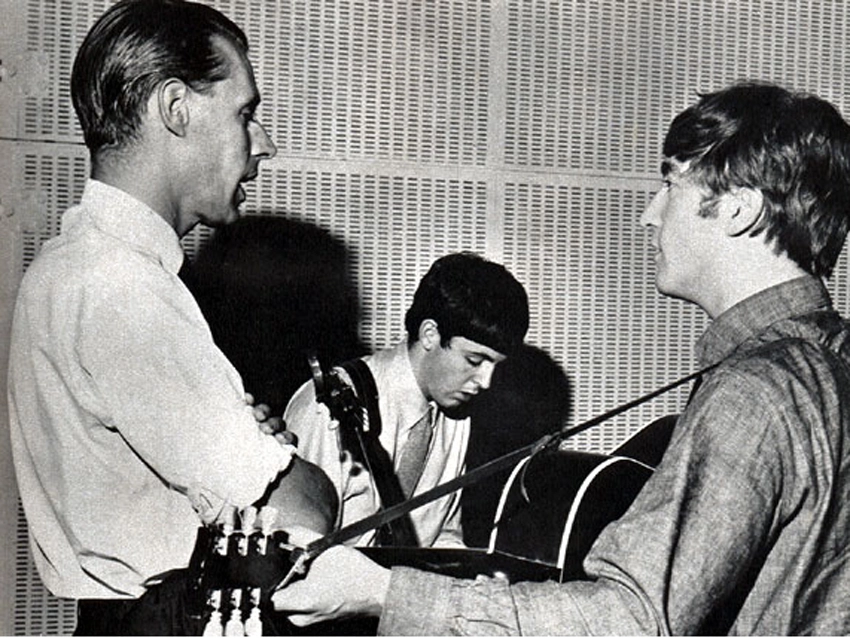
Just as it's hard to picture rock 'n' roll or the '60s or much else without The Beatles, so too is it difficult to imagine modern culture without the stamp of George Martin. A classically trained musician who worked at EMI Studios, producing classical, jazz, light pop and comedy records, Martin made history with his throw-out-the-rules production of The Beatles's music. Singling out specific songs or albums is ludicrous - they all matter, they're all timeless. But what counts is that, when everybody in Britain had written off this little pop group from Liverpool as nobodies, Martin saw a spark.
As Motown's leading songwriting-and-production team of the early to mid '60s, Brian Holland, Eddie Holland and Lamont Dozier wrote and produced over 25 top ten hits including Heat Wave, Nowhere to Run (Martha Reeves And The Vandellas), Can I Get A Witness, How Sweet It Is (Marvin Gaye), I'm Losing You (The Temptations), Baby I Need Your Loving (Four Tops) and Baby Love (The Supremes). When it came to the spectacular success of the "Motown sound," Holland/Dozier/Holland were as integral as any of its performers.
As the lead singer of The Miracles, Robinson possessed the kind of voice that could melt butter. Behind the scenes, he was no slouch either, writing and producing stellar hits such as Just To See Her, Tracks Of My Tears, Ooh Baby Baby, Tears Of A Clown, My Girl, My Guy and Get Ready. Other Robinson production credits include Mary Wells, The Temptations, Marvin Gaye, The Four Tops and the Supremes.
Joining Motown in 1963 as a composer/producer for The Temptations, Velvelettes and The Marvelettes, Whitfield set out to toughen up the acts he saw as too mellow on songs like Ain't Too Proud To Beg, Beauty Is Only Skin Deep and I'm Losing You. Whitfield's writing and production of I Heard It Through The Grapevine yielded hits for both Gladys Knight And The Pips and Marvin Gaye. Later, he scored triumphs with The Temptations's I Can't Get Next To You and Ball Of Confusion and Edwin Starr's War. A huge force in black music.
Veteran Atlantic label producer Tom Dowd began his career in the '50s and went on to record Aretha Franklin, Allman Bros, Eric Clapton, Rod Stewart, Wilson Pickett, Ray Charles, Otis Redding, Ornette Coleman, Joe Turner, Charles Mingus, The Drifters, The Young Rascals and James Brown. His working relationship with Eric Clapton lasted from the guitarist's days with Cream through Derek And The Dominos and his later solo successes. Dowd also supervised such classics as Live At Fillmore East by The Allman Brothers Band.
John Hammond Sr.
The guy knew how to pick 'em. As an influential influential talent scout, producer and critic for over five decades, Hammond was responsible for starting the careers of artists such as Billie Holiday, Count Basie, Charlie Christian, George Benson, Aretha Franklin, Bob Dylan, Pete Seeger, Bruce Springsteen and Stevie Ray Vaughan. Hammond was no mere A&R man kicking back listening to tapes and saying "I don't get it." He went out and found it - and then made damn sure it happened.
Besides The Rolling Stones, The Beach Boys were the only band that made The Beatles sweat - and in truth, it was Brian Wilson who caused the real perspiration. As lead songwriter, bassist, singer and producer for the American surf pop combo, Wilson pioneered eight-channel multi-tracking. His "teenage symphonies to God," exemplified on shimmering tracks like Wouldn't It Be Nice and Good Vibrations, inspired Sgt. Pepper. Wilson would eventually opt out of touring with The Beach Boys so he could commit to writing and producing - and going crazy.
The guitarist's groundbreaking production of the first two Led Zeppelin records would warrant his inclusion on this list. But before those albums, Page was a Yardbird and an in-demand session player, and his productions for Screaming Lord Sutch, John Mayall, and Paul And The Fleur De Lys were causing a panic in the UK. Those early recordings taught Page much about mic placement, ambient sound and reverse echo - all of which would loom large in Led Zep's future.
By Joe Bosso
