
Now well into their fourth decade, few hip-hop artists have pushed the boundaries of what the genre can sound like quite like Cypress Hill. With their eleventh album, Dios Bendiga, the Los Angeles pioneers are shaking things up once more by returning to their Latino roots and releasing their first full-length album recorded entirely in Spanish.
At the heart of that journey is Eric ‘Bobo’ Correa, who joined Cypress Hill as a touring percussionist in 1994 and became an official member that year, before appearing on the more sonically subdued LP, Cypress Hill III: Temples of Boom.
The son of legendary Latin jazz percussionist Willie Bobo and a former touring and studio percussionist with the Beastie Boys, Bobo has brought a distinctive approach to Cypress Hill, combining traditional percussion with electronic sampling.
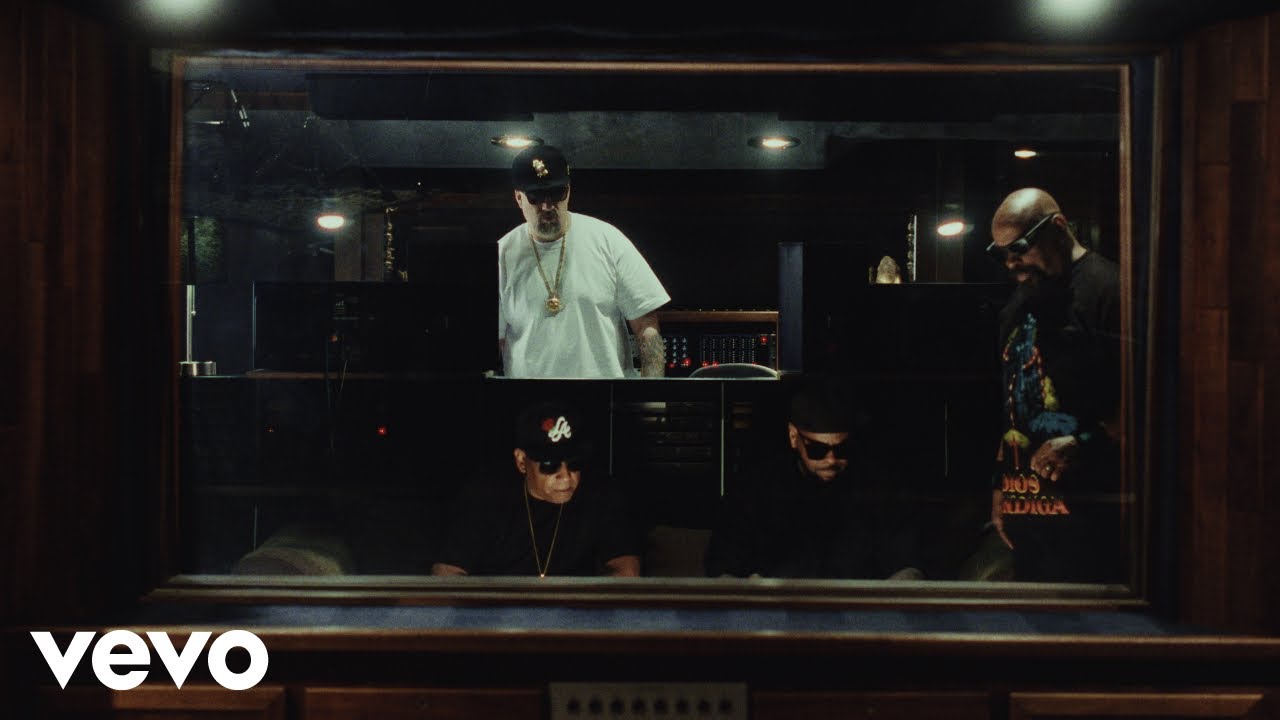
On Dios Bendiga, that versatility has been particularly important. Recorded during an intense two-week creative period, the album sees Cypress Hill reconnect with their heritage while collaborating with artists including Mellow Man Ace, Alemán and Trueno.
For Bobo, the challenge was not simply to make a Spanish-language record, but to ensure that, beneath the new rhythms and influences, the album would still unmistakably sound like Cypress Hill.
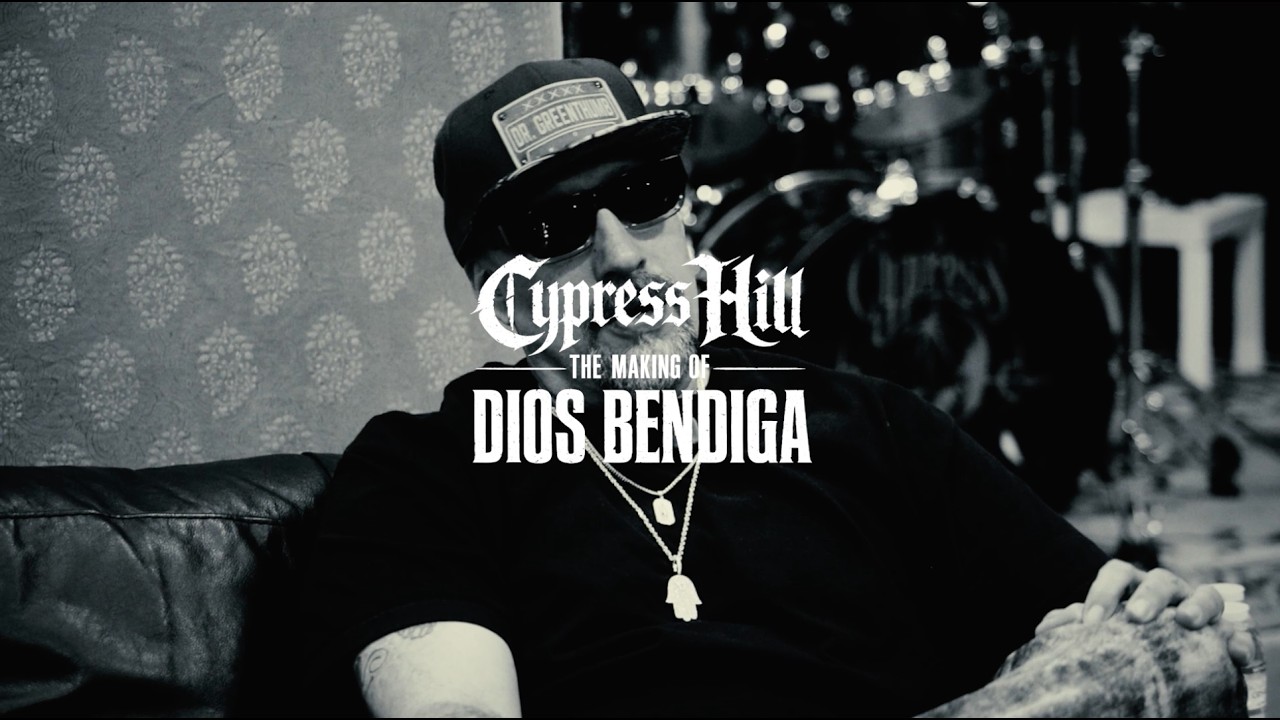
We spoke to Bobo about his musical upbringing, the making of Dios Bendiga, his hybrid percussion setup, and why, after almost 40 years of playing, he still believes a musician should never stop learning.
MusicRadar: As the son of the famous Latin jazz drummer Willie Bobo, what are your earliest memories of rhythm, and when did you realise that music was going to be your life?
Eric Bobo: “As far as the rhythm part is concerned, I just think it was always there. I’d forever be playing some sort of beat on pots and pans until the rhythm eventually connected and my parents saw there was something going on there.
“Watching my dad play and being able to perform with him also really helped shape me. The first day I was on stage with him at five years old, I knew this was something I wanted to do for the rest of my life.”
MR: You obviously built your career in hip-hop and rock, but were there any lessons from playing with your dad that still shape the way you play today?
EB: “He always told me to listen to everything and feed my ear and mind with different genres of music, because you never want to be pigeonholed into doing just one thing. Through that, I've been able to record with artists of different genres who would hear something I did and say, ‘Yo that sounds good, let's keep it’.”
“It's important to be a sponge and listen to all types of music no matter what part of the world it’s from because there's always going to be something in there that will catch your attention.”

MR: You joined Cypress Hill during their Black Sunday world tour. Did you immediately feel at home with the band and think this could be long-term?
ER: “I was definitely looking for a place where I could fit in, but I was surprised that Cypress took a chance by having me on stage because, back then, it was not typical to see a hip-hop group with a percussionist.
“I knew it could work because I’d done some stuff prior with the Beastie Boys, but with Cypress it was more organic and we were cool with each other, which helps a lot. You can't make magic with people that don’t fit your vibe.”
MR: You mentioned the Beastie Boys. Did you learn anything specific from them that you could take into Cypress Hill?
“It was the discipline. These guys were doing something that they weren't known for and had to almost retrain everybody into accepting a new style of Beastie Boy-speak, which I think was genius.
“Personally, I feel that helped a lot when Cypress came to do albums like Skull & Bones and Stoned Raiders, and later when we tried to mix things up with electronic DJs such as Rusko to put our stamp on things.”
MR: Your latest LP Dios Bendiga is your first full-length album that's entirely in Spanish and it's very rare for a band with your longevity to suddenly make that leap. What was behind the decision to make this record at this point?
EB: “It’s something that we’d promised our fans long ago when we did our Los Grandes Éxitos en Español record in 1999. That album was a collection of Spanish interpretations of our greatest hits, whereas this one is all original material.
“Recording an LP in Spanish is something that we’ve always wanted to do but hadn’t found the time to craft, and it was a great journey. We didn't have any expectations; we just wanted to make some cool music, but even if you don’t speak Spanish, we still feel the music is going to hit.”

MR: Do you feel that the Latin influence is growing globally and therefore this was something that would be interesting to further explore?
EB: “We weren't really following anything in terms of trying to make the most of the current surge in Latin music, but when you have artists like Bad Bunny doing the Super Bowl, that opened up a lot of people's eyes and brought attention to many of the Latin artists that were coming through.
“For us, it just kind of fell into our lap and we were one of the pioneers when it came to making an album in Spanish so a lot of people followed our lead. Now it's a different ball game because there are so many incredible and talented Latin MCs and singers out there, so for us to be able to work with them felt like we were giving back.”
MR: Was there a moment during the recording process where you felt everything was starting to come together and you had something special or unexpected on your hands?
EB: “Honestly? That came rather quickly. We weren’t sure how this was going to go before we stepped into the studio, but from the very first day we were surprised by how well it all flowed.
“After we started working on the first two songs, we already felt that we were meeting the challenge, and by the third day knew that we had something really special here – it felt like we were blessed.”
MR: From a personal perspective, did recording the album inspire you to explore different instruments, rhythms and playing styles?
EB:“It helped me to expand what I could do with some of the different Latin and cumbia rhythms, which were all new to us, but the thing about percussion is that you can lay it just about anywhere and it will still give you a cool sound.
“DJ Flict’s production also lent itself naturally to what we were trying to do. We didn’t want everything to be programmed, so I’d play with different percussion instruments and also use a normal drum set to give the sound that live feel.
“All we really had to do was make sure that our sound wasn't lost within all this. We wanted people to say, “Wow, that's Cypress Hill?” I guess we wanted an updated version of our sound, so it was important to keep our essence as opposed to thinking, let's just try all this other shit and see what happens - that wasn't going to be the best look for us.”
MR: How did the rappers you worked with like Alemán, Trueno and Coyote help shape the final record?
EB: “We have a mutual respect for their solo work and were interested in revisiting some of the stuff that we’d done before with some of those artists. Alemán is an incredible MC who we’d worked with previously and we were on a remix of one of Trueno’s songs called Fuck el Police.
“Coyote are a dope underground group from LA that's really bubbling. They rhyme in both English and Spanish, so it was great to give them that opportunity to shine too.”
MR: As well as your role on the percussion side, you're also Cypress Hill’s musical director. When did you take on that responsibility and what does it involve behind the scenes?
EB: “It goes back to our time with the London Symphony Orchestra. Being able to work with classical musicians and speak their language helped us to bridge the gap between hip-hop and classical, but we didn't want to jump on a bandwagon or have it not sound authentic.
“When you're playing with an orchestra, you have 60 or 70 people filling in all the musical gaps and we want to continue blending the power of that into our live sets and show the production side by setting a mood and taking everybody through the highs and lows of a concert.
“Classical music lends itself to that, and bringing that over to hip-hop or an alternative sensibility brings good theatre. We're in the entertainment business. You can listen to the songs on the record, at home or in your car, but when you go to a concert you want the experience to have that extra oomph and for everything to take on a bigger scale.”

MR: Obviously, Cypress Hill has a huge back catalogue. How do you balance the songs the fans expect to hear with the new material from this LP?
EB: “You have to be careful because when you want to introduce new songs into a set a lot of people in the audience might not know them - so playing three in a row might not be the best way to go about it.
“We try to kind of sprinkle them in-between the classics or put them in medleys so the people can get a feel for the songs, then go home and run with it.”
MR: Can you walk us through your current on-stage set up?
EB: “My percussion and drum set is both acoustic and electric, so I’m able to have timpani sounds when I need them and work with samples on the drum side. For me, having the Roland HandSonic HPD-20 is incredible because you can play it with your hands or sticks and it's very adaptable.
“As far as building a drum set is concerned, I have two drum setups but my weapon is the djembe, which gives me that natural 808 drum sound but adds the boom that we all love in hip-hop. The djembe is rarely used in hip-hop, but we have it gated because we don’t want to rely on 808 presets. As a percussionist, I also want to put my hands on an instrument.”
MR: You mentioned that live percussion is not very common in hip-hop. Do you think Cypress Hill has helped change perceptions of what a live hip-hop show could be?
EB: “I would definitely give ourselves credit for that because we think like a band. You know, we're fortunate that we're still able to do what we’re doing at this level and have always prided ourselves on being a good live hip-hop act that shares the stage with some of the best artists in the business from hip-hop to rock and beyond.
“A lot of the younger generation are used to seeing hip-hop artists go up there and do their own ad libs without really performing, so when they see a group like us they hopefully think, wow, they're doing their own vocals and giving us an upgraded experience.”

MR: How do you think hip-hop is developing?
EB: “Hip-hop is so global now that it's hitting all demographics - we’re even having hip-hop groups from the '90s or even before that doing tours and they’re very well-received. It's cool that some of the OGs are coming back to celebrate their music because they’re the foundation of hip-hop. The genre has gone through stages, but right now it's coming back to lyricism. Lyrics matter. So it’s good to see that evolution right now.”
MR: What advice would you give young drummers and percussionists today who want to develop a sound that’s uniquely theirs?
EB: “You have to learn the basics and then go and practice and let your creativity flow. It's good to be influenced by other people and try some of their drum licks, but ultimately you’re your own person and have to march to the beat of your own drum.
“Expanding your mind and allowing the creativity to come through is what will make you uniquely you. I can mimic my dad’s playing and borrow some of his elements, but my style is different to his and that's how you have to do it, so I’d say don’t be ashamed to borrow from others, but use that to make your own style.”
MR: In terms of your evolution, did you have to adapt from live playing to using electronic drum kits?
EB: “You're never too old to learn, and a true master never stops learning. There are drummers out there that can do any gig or any style, no problem - they know their instrument and it's important to be able to get that across, but I was really late coming to electronic drums because I was a purist and they didn’t sound the same to me.
“Now, my setup is a hybrid, but it's not about what you have, it's how you use it. You're not using technology to replace your style, but to enhance it, and you embrace it for what it is because technology is going to keep moving whether you like it or not.
“My advice is to use it for your benefit and adapt your style to the technology, because that will usually bring your style out even more.”
MR: The next Cypress Hill tour begins in September. What can fans expect and where will you be heading out?
EB: “We're going to be doing a few US dates and then maybe head back up to Canada. We’ll introduce a couple of new songs and put a whole new set together, so even if people saw us six months ago they're not going to see the same show.
“It's hard sometimes to keep that element of surprise down with social media and everybody having their phones out recording and posting things up, but at the end of the day nothing replaces being at a show and taking the music in.”

MR: After all these years on the road, have you had to become more disciplined about life off stage or are you still partying?
EB: “No, things have changed and are a lot calmer these days. It's great to be able to celebrate, but as far as trying to do that stuff nightly, it's very draining and wears on you. When you're a young group coming out, you need to get stuff out of your system, but after a show, we’re usually getting a little grub in, showering up and heading back to the hotel.”