


Before they reached Wichita, there was Phoenix. When you think of Jimmy Webb and Glen Campbell collaborations, Wichita Lineman and its poignant imagery immediately leap to mind, but the hit Webb fashioned for Campbell prior to that is no less moving.
You’re probably familiar with the song. The lyrics tell the tale of a man who has left his lover and is driving eastwards across the US. The narrator wonders what his ex will be doing by the time he hits the various cities along the way.
It contains a number of heart-wrenching details (the note, the unanswered lunchtime phone call) that intrigue the listener – just what happened in their relationship? Why is it that leaving is such a wrench for him? And what happened next?
Webb penned the song while he was a staff writer at Motown. Signed at just 17, he’d been asked to provide a hit for the actor/ singer Paul Petersen, who was signed to the label. In a 2011 interview with Song Facts, Webb remembered: “They came to me and said, ‘We need a song for Paul Petersen.’ And I wrote By the Time I Get to Phoenix. And they didn't like it for him.
"They didn't like it for anybody. They ended up cutting it with a couple of different people and not really being happy with it. And when I left the company they gave me the song and said, ‘You can take this one with you.’ And I said, ‘Okay, I will. I like it.’ They liked verses and choruses there. Verses and big choruses. And By the Time I Get to Phoenix is three verses, very simple, very direct storyline.”
The lyrics came from a place of real pain. Webb had broken up with his girlfriend of the time. “I never even got as far as Riverside,” he said in a 2007 interview with the Los Angeles Times. “But I lost her. She married some other guy. We’re still friends. Her name is Susan Ronstadt” (a cousin to singer Linda Ronstadt.)
Many have commented on the physical impossibility of the narrator driving so quickly across the country.
“In fact, a guy approached me one night after a concert, and he had a map, and he had all the times, and he had a stopwatch,” Webb told NPR in 2010. “And he showed me how it was impossible for me to drive from LA to Phoenix, and then how far it was to Albuquerque and then - in short, he told me, 'This song is impossible.' And so it is. It's a kind of fantasy about something I wish I would have done, and it sort of takes place in a twilight zone of reality.”
Webb reflected that part of its eventual success lay in its lyrical economy. “I think that the appeal of the song lies in its sort of succinct tale - its beginning, middle and end - and the fact that it sort of has an O. Henry-esque twist at the end, which consists merely of the guy saying, 'She didn't really think that I would go,' but he did. And, in fact, I didn't. I didn't go. I stayed for more punishment."
Having left Motown armed with the song, Webb gave it to Tony Martin, a popular crooner of the old skool pre-rock n’ roll era. He recorded a version with a florid orchestral arrangement, but for one reason or another it never came out.
Next it landed on the lap of the pop/ soul singer Johnny Rivers, who cut a version in 1965. In the end, Rivers decided to not to release the record and decided to pass it on to a talented guitarist and singer who had yet to find his niche within the industry: a well-regarded session musician called Glen Campbell.
Campbell at the time was best known as a member of the so-called Wrecking Crew, an informal group of sessioners who invariably ended up playing on the many pop hits that were made in the LA studios.
He’d played guitar on Pet Sounds and indeed had become more involved with the Beach Boys – he’d replaced Brian Wilson in the touring line-up of the band during 1964-65, before being replaced himself by Bruce Johnston.
But Campbell really hankered after a proper solo career. He’d signed to Capitol as a solo artist in 1962 but only enjoyed sporadic minor hits. Even the gift of a Brian Wilson-penned A-side Guess I’m Dumb hadn’t led to an upturn in his fortunes.
Campbell fitted the song in a way Martin and Rivers did not. A tall, stolid individual who seemed to evoke the stoic American everyman, Campbell was perfect for Phoenix, a song where so much is left unsaid for the listener to puzzle over. His version is brilliantly restrained but still full of emotion.
There’s tenderness and resignation in his voice. His delivery wins you over to the narrator’s side of this breakup – it really sounds as if this is something he had to do, painful as it may have been for them both.
Campbell’s previous single Gentle On My Mind had been a modest hit in the summer of 1967, reaching Number 62 on Billboard. Released as the follow-up that autumn, Phoenix reached Number 26, Campbell’s biggest success to date. It won him a Grammy the following year for Best Male Vocal Performance. For both him and Jimmy Webb, it represented a breakthrough. Ahead lay Wichita Lineman, Galveston and, for Campbell, mainstream fame.
The version that Campbell recorded was a succinct two minutes forty. But the following year came a cover that elongated Webb’s original piece into a piece of groundbreaking aural cinema.
Isaac Hayes’s take on By The Time I Get To Phoenix stretched out for nearly 19 minutes, including an eight-minute spoken-word introduction that gives a shout-out to Webb (“one of the great young songwriters of today”) and takes up a whole side of his 1969 album Hot Buttered Soul.
If Campbell’s version is an exercise in restraint, Hayes spills his soul out for all to witness. It’s a beautiful example of how an imaginative artist can remould something fresh out of existing material.
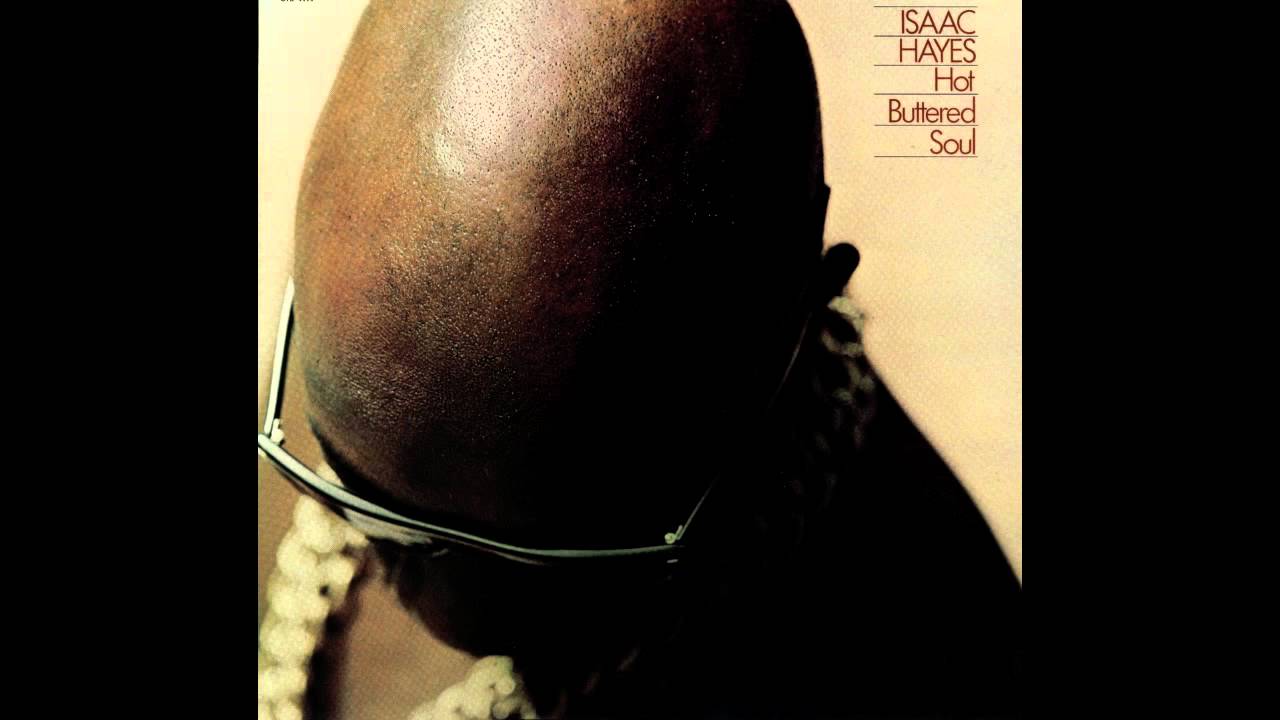
In an NPR interview, Hayes explained how he got the idea: “There's a local club in Memphis, primarily black, called The Tiki Club. One day there I heard this song by Glen Campbell - By the Time I Get to Phoenix. I thought, 'Wow, this song is great, this man must really love this woman.' I ran down to the studio and told them about the song, and they said 'yeah, yeah.' They didn't feel what I felt, I thought maybe they weren't getting it.”
“The Bar-Kays were playing the Tiki Club a few days later, so I told them to learn the song and that I would sit in. I told them to keep cycling the first chord, and I started talking, just telling the story about what could have happened to cause this man to leave. Halfway through the song, conversations started to subside, and by the time I finished the song, there wasn't a dry eye in the house."
There have been other covers of Phoenix – Sinatra had a go at it and indeed once described it as “the greatest torch song ever written”. Nick Cave also covered it on his 1986 album Kicking Against The Pricks. But really Campbell’s and Hayes’ are the only two worth talking about.
They show that a song only truly becomes great once it meets the right interpreter, someone who can make you believe they really have lived the heartache of the lyrics.
