


In a record as musically diverse as perennial ‘best album ever’ list-topper Revolver, it’s hard to pick out just one song as a highlight. If pushed, though, And Your Bird Can Sing would be our choice (please forgive us, disappointed-looking Here, There and Everywhere). The song’s interlocked lead riff alone is – in our mind – one of the very best things the Beatles ever recorded.
Written primarily by John Lennon, the truth of And Your Bird Can Sing’s origin has been long obfuscated by a number of competing theories. There’s those that repeat the under-evidenced claim it began a cheeky allusion to Frank Sinatra, who, it was reported in a contemporary piece in Esquire magazine, began using the word ‘bird’ excessively. But, despite him (or his press team, at any rate) calling out the Beatles as “kid singers wearing mops of hair thick enough to hide a crate of melons” – which might have caught the Fab Four's attention – we just find this a little tenuous.
Then, there’s the often-repeated interpretation of it being a cheeky, pally dig at chart rival Mick Jagger, and the fact that his ‘bird’ (‘bird’ being a now dated, informal term for girlfriend) was singer Marianne Faithfull. However, this theory falls apart when you study the chronology. The song was written before the two started their relationship (on a public level, at least). Scratch that then…
John’s first wife Cynthia believed the song’s trigger point to have been her gifting her then-husband a small clockwork bird that was inside a cage. Allegedly, Cynthia left the wind-up mechanism outside the wrapped present and wound it up when giving it to him. The mechanical bird sang as John unwrapped the mysteriously shaped package, Cynthia recounted in her book A Twist of Lennon. As Cynthia recalled, John was left with a look of absolute disbelief on his face.

Perhaps the best source to fully understand the song’s elusive lyric is Lennon himself.
“That’s another of my throwaways,” Lennon disappointingly told Playboy’s David Sheff in 1980. “Fancy paper around an empty box.”
But John, forever his harshest critic, hadn’t clocked that his little mid-60s throwaway actually housed one of the era’s most prescient lyrics, while perfectly bottling the sound of a band on the verge of immense change to boot.
Lyrically, it hinted at Lennon’s nascent utopian ideals, the Beatles’ growing interest in all things profound, and, via its carefully-constructed arrangement, founded a principle of hard rock guitar playing.
On And Your Bird Can Sing, Lennon was seemingly eyeing the spoils of fame and thinking, ‘Is this all there is?’
When your prized possessions start to weigh you down
Look in my direction
I'll be 'round, I'll be 'round

This was spotlighted in an interview with his journalist friend Maureen Cleave in March 1966 for The Evening Standard (the one in which he casually proclaimed/pointed out the perception that the Beatles were more popular than Jesus).
In the interview, Cleave observed the vast amount of extravagant items in Lennon’s Weybridge home. “One feels that his possessions – to which he adds daily – have got the upper hand,” wrote Cleave. The implication that John was submerging himself in materialism would have certainly stuck in his craw when reading the printed interview back.
Similar to the previous year’s Nowhere Man, Lennon’s self-critique is externalised onto another figure. In this case, it could be read as a romantic partner, but is vague enough to be perhaps a formerly good friend, who now boasts about having ‘everything they want’, having seen ‘seven wonders’ and heard ‘every sound there is’, but is distant from Lennon.
The target of the song doesn’t ‘get’ John, nor see or hear him. The implication here seems to be that the ephemeral nature of possessions, bragging about achievements and being coolly switched-on to the latest thing in culture or music has completely consumed their mind. Limiting their potential.
Ultimately, as Lennon anticipates, these things will one day prove to be hollow, and lead to a feeling of spiritual emptiness…
But, John says reassuringly, he’ll ‘be round’ when the realisation happens. The day when the target of the song is ‘awoken’ from the lie of materialism.
When your bird is broken, will it bring you down?
You may be awoken
I'll be 'round, I'll be 'round
Imagining no possessions in 1966… Lennon’s direction of travel was being set.

Instead of a coy reference to Frank Sinatra’s favourite term, the constant reference of birds (which are typically invoked in songs to signify freedom) instead are used to represent the very things that are weighing down the lyrical subject.
While this is just our reading, and of course, is open to interpretation, one thing we can certainly lock in with regard to the song’s backstory is that it was penned at some point between January and April 1966, during a four-month sabbatical following a frenzied 1965.
On April 20th, the song was brought into the studio on Revolver’s eighth recording day. Initially dubbed ‘You Don’t Get Me’, the lyrics had at least some small input from Paul.
Not that McCartney – then in the midst of perfecting his own triumvirate of stone-cold Revolver masterpieces, For No One, Here, There and Everywhere and Eleanor Rigby – would remember…
“I suspect that I helped with the verses because the songs were nearly always written without second and third verses,” McCartney recalled in Barry Miles’ Many Years From Now. “I seem to remember working on that middle-eight with him but it’s John’s song, 80-20 to John.”
Initially framed within a Byrds-esque jangle of descending chords, played on George Harrison’s Rickenbacker 360/12, the first pass of the song was substantially different to what listeners would become familiar with on the finished album.
Originally more of a duet than the tightly harmonised final version, Paul and John’s early take vocals were abandoned after they descended into fits of laughter. High on life, amongst other things…
“One of my favourites on the Anthology is And Your Bird Can Sing, which is a nice song, but this take of it was one we couldn’t use at the time,” Paul said when promoting The Beatles Anthology in 1994, which featured this hilarious original version. “John and I got a fit of the giggles while we were doing the double-track. You couldn’t have released it at the time. But now you can. Sounds great just hearing us lose it on a take.”
The suspicion that Paul and John had been indulging in, what they referred to as, the old ‘herbal jazz cigarettes’ was seemingly confirmed by producer George Martin: “They were stoned out of their minds of course but it was also very funny,” Martin told Rock Cellar Magazine in 2013. “When I played it to Paul after I discovered it, I’d forgotten about it. We actually fell around laughing listening to it too. We had marvellous times. We had such fun in the studio. I have such happy memories.”
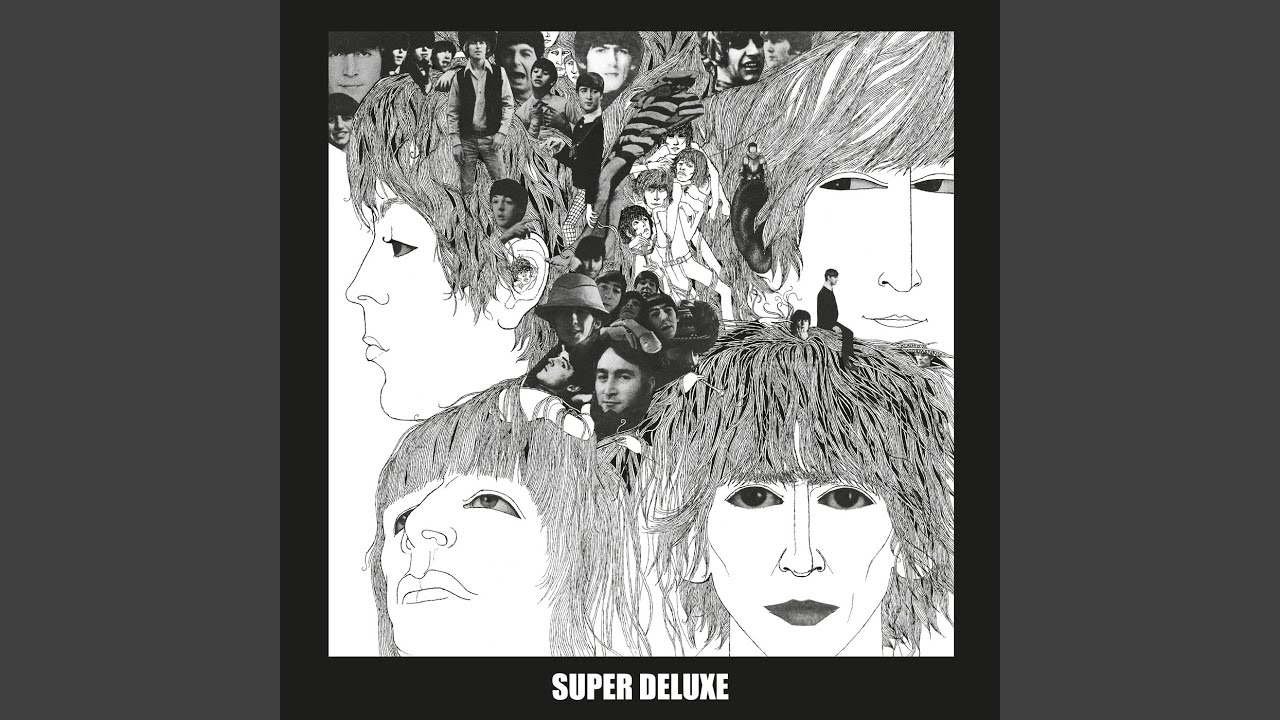
After a particularly laborious day-long session to work-up the mix of the first arrangement, it was decided that a comprehensive re-think was needed. Something that accentuated the inspired wheeling guitar riff that George Harrison had created for the song’s outro.
Rather than the breezy descending shimmer in D Major that the song originally began with, the pitch was adjusted to E Major, and Harrison’s lead riff screamed out of the gates from the first second. Lennon's Epiphone Casino (playing his original chord shapes but pitched up to the new key of E via a capo on the second fret) chimed in tight synchronisation with Ringo's 133bpm beat.
On the lead part, Harrison recalled in a 1987 interview with Guitar Player, “I think it was Paul and me, or maybe John and me, playing (guitars) in harmony. [It was] quite a complicated little line that goes through the middle-eight.”
Although vague on how much of the lyric he contributed, McCartney remembered that it was indeed himself who added the lower register harmony part atop Harrison’s lick – both using a pair of workhorse Epiphone Casinos.
“We wrote [the duet] at the session and learned it on the spot,” McCartney told Musician Magazine in 1990. “It was thought out. George learned it, then I learned the harmony to it, then we sat and played it.”
Although commonplace today, back in 1966 this approach to harmonising a lead guitar line was quite a novel idea. It’d later, of course, become a signature of bands such as Lynyrd Skynyrd and metal monoliths like Iron Maiden and Thin Lizzy. As with many now-typical attitudes towards production, the Beatles got there first, likely taking their cues from the sound of country pedal-steel players.
Zigzagging across the arrangement manically, the riff ran diatonically through the E Major scale in thirds, Later in the song, the motif unfurled into its full, snaking form - re-shaping itself into an elaborate solo across a vocal-free verse.
The frenetic movement kept the listener on their toes, complementing the urgency of Lennon’s upfront vocal, and Ringo’s pounding beat.
Years later, The Eagles' Joe Walsh meticulously learned how to play both parts of the riff simultaneously on two strings, only to later discover from his pal Ringo that the riff was actually recorded by two separate players…
“I think I’m the only guy who can play it, including George,” Walsh told The Chicago Tribune.
Paul’s bass part is another key fixture of the song – at times propulsive and at times melodic and ornamental. As was becoming increasingly evident, McCartney knew precisely how to augment a gap, striving to make the low-end as captivating as the high across Revolver and the Beatles’ ensuing albums.
As illustrated in Andy Babiuk’s Beatles Gear, working on shaping the low-end in interesting ways was becoming a central consideration for The Beatles in ’66. “By then bass was coming to the fore in mixes… you listen to early Beatles mixes and the bass and bass drum aren’t there,” Paul said in Musician magazine. “I was listening to a lot of Motown, Marvin Gaye and Stax stuff, [who] were putting some nice little basslines in.”
The song's final mix also stressed how exquisite Lennon and McCartney's vocal harmony writing was - with Paul supportively backing his songwriting partner, his vocals descending and coiling beautifully during the line 'You tell me that you've heard every sound there is', while Lennon tightly kept to the rhythm-locked topline. It's a perfect example of McCartney's natural musical instincts wringing more brilliance out from a song.
The final take of And Your Bird Can Sing was captured during an all-day session on April 26th 1966. Interestingly, the track was actually omitted from the US pressing of Revolver. The group handed it and Lennon's other Revolver gems, Doctor Robert and I'm Only Sleeping, over to Capitol Records for their own in-house compilation Yesterday and Today (you know, the one with the infamous ‘butcher’ cover).
Whereas on the UK (and now definitive) version of Revolver, the track was sequenced as the ninth track, and the second track on the record’s second side.

As the years have passed, and Revolver has found its place amongst the pantheon of the greatest albums of all time, And Your Bird Can Sing has regularly been cited as one of the Beatles’ most ebullient studio recordings. It’s a crying shame the group never performed it live (trying to knock-out that harmonised, locked-in riff every night would have been incredibly difficult though, to be fair) Younger fans would become familiar with it however, as it was used as the theme tune to The Beatles’ cartoon series' third season.
In a retrospective published in Uncut Magazine, Canadian singer-songwriter Frazey Ford explained just why it still conjured so much magic…
“It has this manic quality. It’s so short, like soul records, like Otis Redding songs that are so fucking fast that all you can do is play them again. It’s the combination of Paul’s sweet harmonies and George’s cool, scratchy guitar – there’s such visceral immediacy to it, and then there’s a Beach Boys vibe too, where suddenly it’s very lush. It unfolds really quickly, like origami, then it goes away. It’s a very fast feeling that you’re not expecting.”
Ford concluded her take with an analysis of the song’s lyric; “What I get from that song is that for people who are very famous it’s very hard to keep your humanity. You can be surrounded by all of these riches, but you’re still missing something. The song feels like a storm, and a reminder. [It’s] also funny. John’s not taking it too seriously, and making it seem ridiculous puts it all in perspective.”
But the legendary Phil Collins perhaps summed it up in the most succinct way possible in an interview with The Guardian; “It’s one of the best songs ever written, and it's only a minute and a half long.”
