
Progressive rock supergroup Emerson, Lake & Palmer were always prepared to go the extra mile. But the scale of their ambition almost resulted in an epic fail on a momentous 1977 tour.
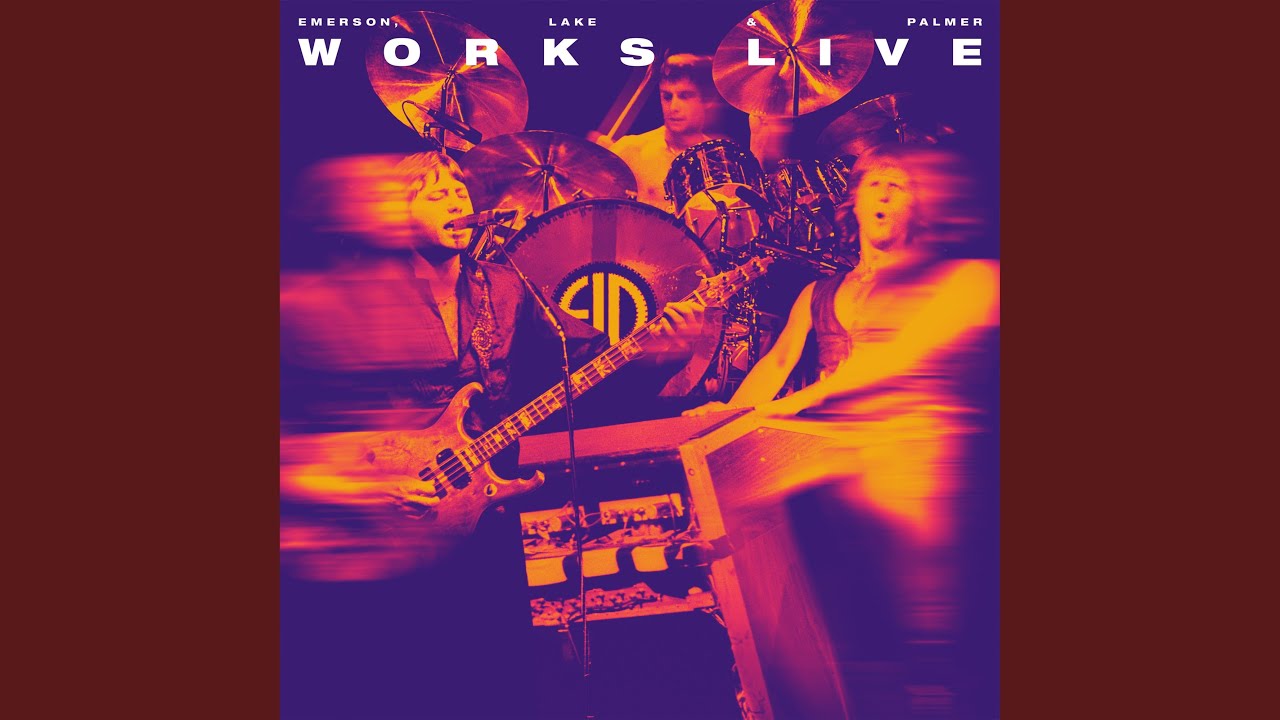
Performances from that tour – featuring a full orchestra alongside the group – were recorded for ELP’s 1979 album In Concert, which was expanded into the double album Works Live in 1993 and is now expanded even further in a new reissue.
For the trio – keyboard player Keith Emerson, guitarist/bassist/vocalist Greg Lake and drummer Carl Palmer – touring with an orchestra was a hugely ambitious and expensive project.
And as Palmer now tells MusicRadar, it very nearly blew up in their faces.
He recalls: “We had the orchestra for three weeks, and during that time we made a video and recorded a live album. We had the orchestra booked for six weeks, but at the very beginning we weren’t sure if we were going to use all of that time. But we had to book a period, so we booked it.
“It was successful from the point of view that the orchestra was fantastic and Godfrey Salmon, the conductor, did a great job. But after we toured with the orchestra for three weeks it was better for us to stop with the orchestra and tour on our own.
“Now, the rumours came out that Emerson, Lake & Palmer were broke and they needed the money. Had to get rid of the orchestra. That is not true.”
Palmer admits that financial considerations did play a part in their decision.
He continues: “We got the recording done and we thought, ‘Well, this is great, but this is an incredible amount of expense. Maybe we should just hold back now.’ Because we weren’t making money. But we didn’t do it to make money. We did it to make a product, and we did that.”
However, the main reason for ditching the orchestra was to avoid any further drama following a near-disaster at the most high-profile show on the tour – at the Olympic Stadium in Montreal on 26 August 1977.
78,000 people were in attendance that night, and as Palmer reveals, there was panic backstage before the show started.
“This is what happened,” Palmer says. “The problem that we had – and we didn’t get a second chance – was when the album was recorded in Montreal.
“The orchestra had one 24-channel desk, and the group had another 24-channel desk. There’s only three of us, but we needed 24 channels. We did all the run-throughs, did all the rehearsals. But 20 minutes before the band was about to go on to the stage, the desk for the orchestra went down.
“We didn’t know what it was. Everyone was panicking, trying to sort this out, sort that out. We had things called multicore, where there’s lots of cables going through one very thick cable – one from the orchestra’s desk, one from the group’s desk. And we think maybe a forklift truck went over it and maybe broke one of the cables inside, because the multicore didn’t have the guard bevel on it.
“To tell you the truth, we could not trace it with all the technology, with all the people we had there, and we were panicking. So we flipped the orchestra over to our 24-channel desk. Some of the tracks were taken from the drums, like the electric drums that weren’t playing all the time. We used those tracks. And in the end we got everything. We got all the orchestra across eight tracks.
“So we recorded it on one 24-track instead of the two 24-tracks that we wanted. There was no way out of it because there was a curfew at the Montreal Olympic Stadium. You had to start on time, and you cannot go over. I think they’d throw you in prison if you did!”
He adds, laughing: “Anyway, long story short, we recorded it that way. So it was one of those scary, scary moments. But you know, we liked a bit of pressure. ELP always liked a bit of pressure! And we pulled it off.
“The sound was good, and then we took it to the studio. We doctored up whatever we could, and tried to improve the sound.”
It was in the immediate aftermath of the drama in Montreal that the decision was made for ELP and the orchestra to go their separate ways.
Palmer explains: “At that particular stage, because we were so panicked, we decided that we just wanted to carry on on our own because it was a calmer environment than having 64 extra people on the road with us.”
He adds: “When you carry that many people, you have to have some form of doctor or nurse along with you because it’s like moving a small village. So we had a doctor on the road with us, but we didn’t tell the orchestra until the last week. And of course no one was ill in the first two weeks, but the third week, I remember walking down the hallway to go down for breakfast, and outside the doctor's room there was a queue all the way up the hallway to the lift of people who got something wrong. So that's what it was like.”
All told, Carl Palmer remains proud of what ELP and the orchestra created together.
“It was a real travelling circus,” he says. “And the orchestra was fantastic. To this day, some of them are still in contact with me. There’s a few of them still playing. So yes, it was a great thing to do.”
Emerson, Lake & Palmer's new reissue of Works Live is out now
